When the culvert under your driveway belongs to the state
Forsyth County has a pattern that catches property owners off guard: many driveways fronting state-maintained roads — out toward Lewisville, along the secondary routes feeding off US-421, across the mix of rural parcels and older subdivisions that ring Winston-Salem — bridge a roadside ditch that NCDOT maintains. The culvert buried in that crossing sits inside state right-of-way, and replacing it without an NCDOT encroachment agreement is how a simple pipe swap becomes a stop-work situation mid-excavation.
The encroachment process adds a few weeks to the timeline and typically a few hundred dollars in fees, but it is not optional. More consequentially, the agreement specifies a minimum pipe diameter, often 15 or 18 inches, regardless of what the original crew installed. A quote sized to match the existing pipe may undercount both material and excavation once the NCDOT requirement comes in. The right time to confirm right-of-way status is before any contractor orders material, not after the hole is open.
Private crossings — a farm lane over an internal drainage swale, a driveway on a parcel with no state-road frontage — skip the NCDOT step but still fall under Forsyth County land disturbance rules and state erosion requirements. A roadside crossing and a private crossing are estimated, permitted, and timed differently from the first phone call. Our culvert installation guide covers both paths in full detail.
What Forsyth County homeowners actually pay
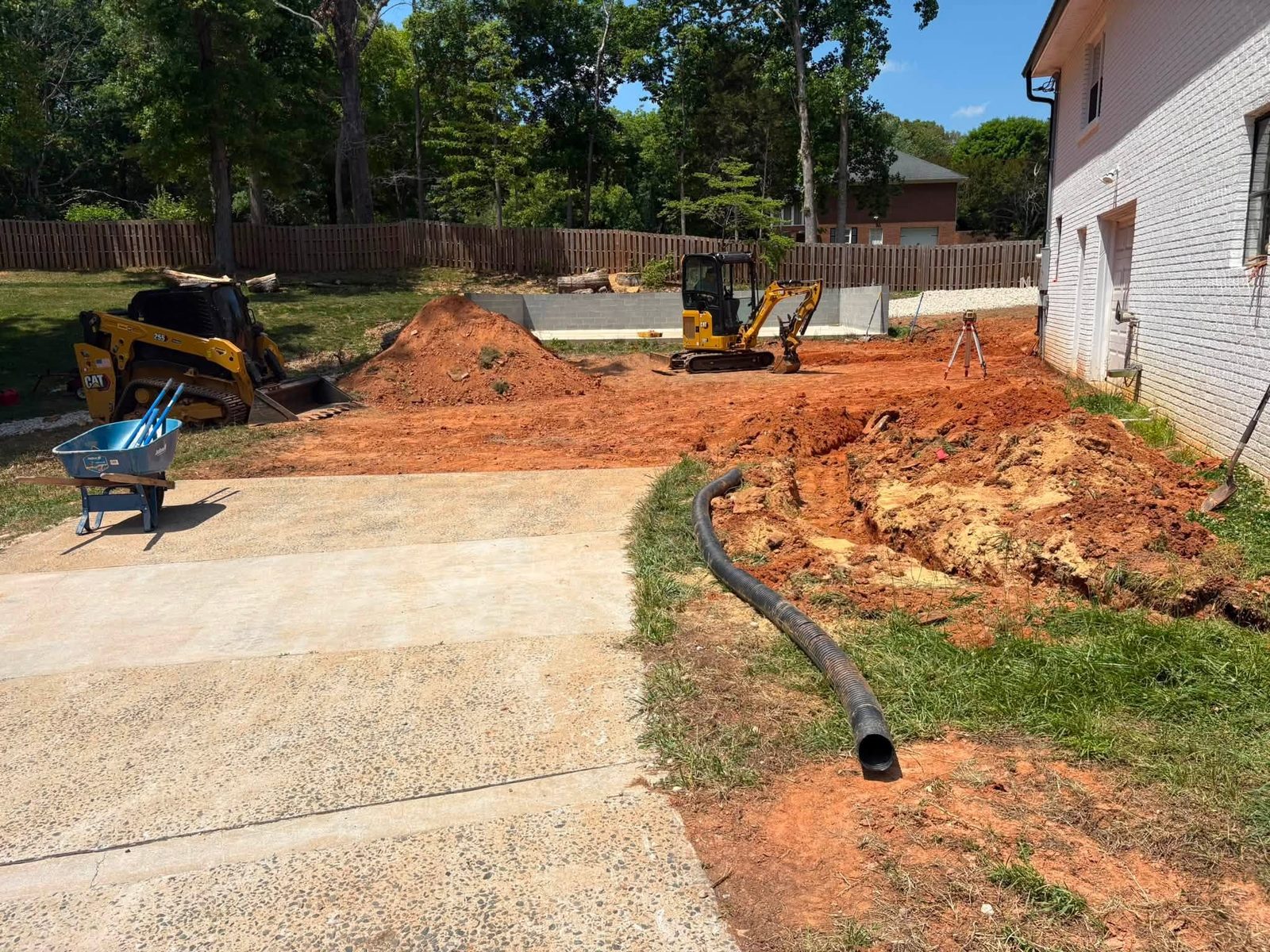
Forsyth County culvert pricing sits near the center of the NC Piedmont range. There is no mountain-lot access premium, but no coastal sandy-soil shortcut either. The county's dense red clay adds excavation time compared to looser soils, and Winston-Salem's suburban ring and the county's rural townships both carry a large backlog of aging corrugated metal pipe from mid-century installs — so a significant share of current jobs include old-pipe removal rather than a clean first installation.
| Scope of work | Typical Forsyth range | What drives it |
|---|---|---|
| Single 15"–18" HDPE culvert, short residential run | $800 – $1,800 | Standard ditch crossing, straightforward excavation |
| Replacing failed corrugated metal pipe | $1,200 – $2,800 | Old pipe removal, headwall repair, clay backfill |
| Long run (40+ ft) or 24"+ diameter | $2,500 – $4,500 | More footage, heavier equipment, compaction time |
| Concrete or reinforced pipe, engineered crossing | $4,000 – $8,000 | NCDOT spec, heavy traffic load, floodplain siting |
These are working ranges based on Piedmont conditions, not quotes. Depth to stable soil, equipment access, and headwall condition all move the number once a crew walks the site. Any contractor who locks in a hard price before seeing the ditch is pricing from assumption.
Red clay, aging pipe, and why material selection matters here
Forsyth County sits on Cecil and Vance soil series — dense red clay underlain by weathered Piedmont metamorphic rock. This soil holds moisture against whatever is buried in it rather than letting it pass through, which creates two practical problems for culverts: undersized pipes back up fast because the surrounding soil adds no drainage relief, and corrugated metal pipe corrodes from the inside out when it sits in moist clay for decades.
Most of the corrugated metal pipe installed across Forsyth County from the 1950s through the early 2000s is now 30 to 50 years old. In this soil type, that age bracket means active corrosion, thinning walls, and — in the cases already failing — partial collapse under vehicle load. The large majority of replacement work in this county today is old CMP out, HDPE or concrete in. Budget for current-spec material, not a match to what was there originally.
Undersizing is the costliest mistake. A 12-inch pipe that washes out in a moderate storm has to be excavated and redone; a 15 or 18-inch pipe in the same slot handles the same event without incident. If the crossing is in NCDOT right-of-way, the encroachment agreement eliminates the temptation to undersize by specifying the minimum for you.
A culvert that looks structurally intact but drains poorly is a different problem — root intrusion, sediment buildup, and partial collapse all present similarly at the inlet. Our clogged or collapsed culvert guide helps distinguish blockage from structural failure before you commit to a full replacement budget.
Permits, erosion rules, and flood exposure in Forsyth County
Most single-culvert driveway replacements in Forsyth County fall below the one-acre disturbance threshold that triggers a formal permit under the NC DEQ Erosion and Sediment Control program. That does not mean the rules are inactive: the state's erosion requirements apply whenever bare soil is exposed near a watercourse, and Forsyth County has active land disturbance inspectors. Silt fencing and a stabilized construction entrance are expected in place before excavation, with prompt stabilization after grading is complete — not optional cleanup.
Properties near the Yadkin River tributaries, Muddy Creek, or the Salem Lake watershed may sit inside or adjacent to FEMA-mapped Special Flood Hazard Areas. Forsyth County has 22 federally declared disaster events on record across 1977-2026, a history that reflects real flood exposure even in the county's flatter suburban zones. The FEMA Flood Map Service Center is the right first step to confirm whether a parcel is in a regulated floodway — a culvert install in a mapped floodway requires a floodplain development permit from the county in addition to standard erosion controls.
The NC residential code's drainage provisions, maintained through the NC Department of Insurance Engineering and Building Codes division, set the baseline statewide standard for drainage structures on private property. For Forsyth County-specific permit questions — floodplain development permits in particular — the county's Planning and Development department handles review and issuance.
How to evaluate bids and avoid scope surprises
Three questions separate a contractor who understands Forsyth County conditions from one quoting off a national template:
- Is this crossing in NCDOT right-of-way? A contractor who does not raise this question before quoting has skipped the most consequential site check for a roadside job in this county. The answer changes the permit path, the minimum pipe spec, and the timeline.
- What pipe material and why? HDPE for most residential crossings, reinforced concrete or heavy-wall HDPE for engineered or high-load crossings — the answer should connect to your soil conditions and traffic load, not whatever is sitting on the truck that week.
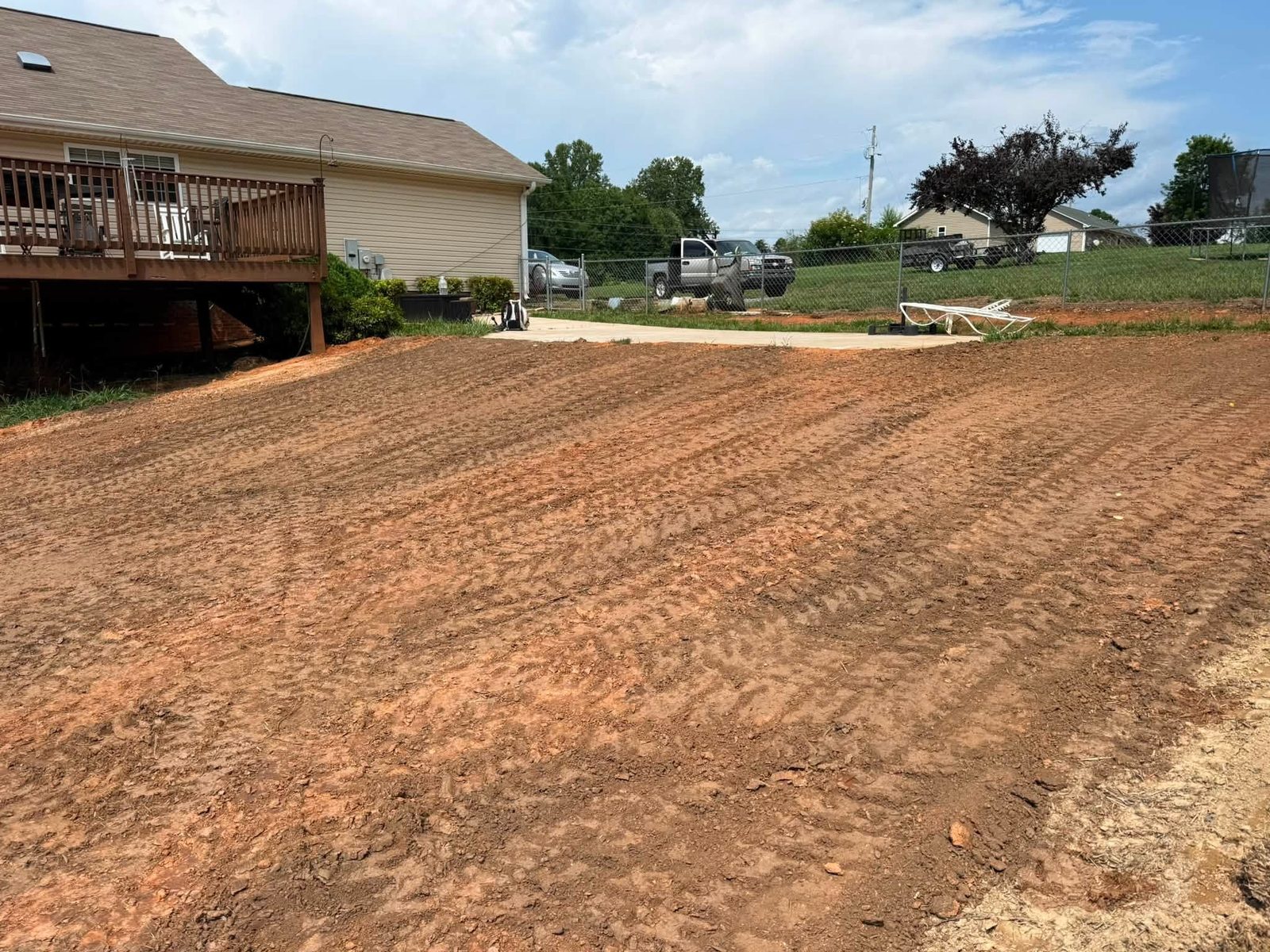
- How will you handle compaction and final grade? Red clay backfill that is not properly compacted settles within a season, and the driveway surface settles with it. Ask specifically about compaction equipment and what the finished crown looks like before work starts.
If you are pricing a gravel driveway surface at the same time, the two scopes share excavation and grading work and price better together. The gravel driveway cost guide breaks down how those jobs typically combine in this region.