Piedmont clay changes the math on every clearing job
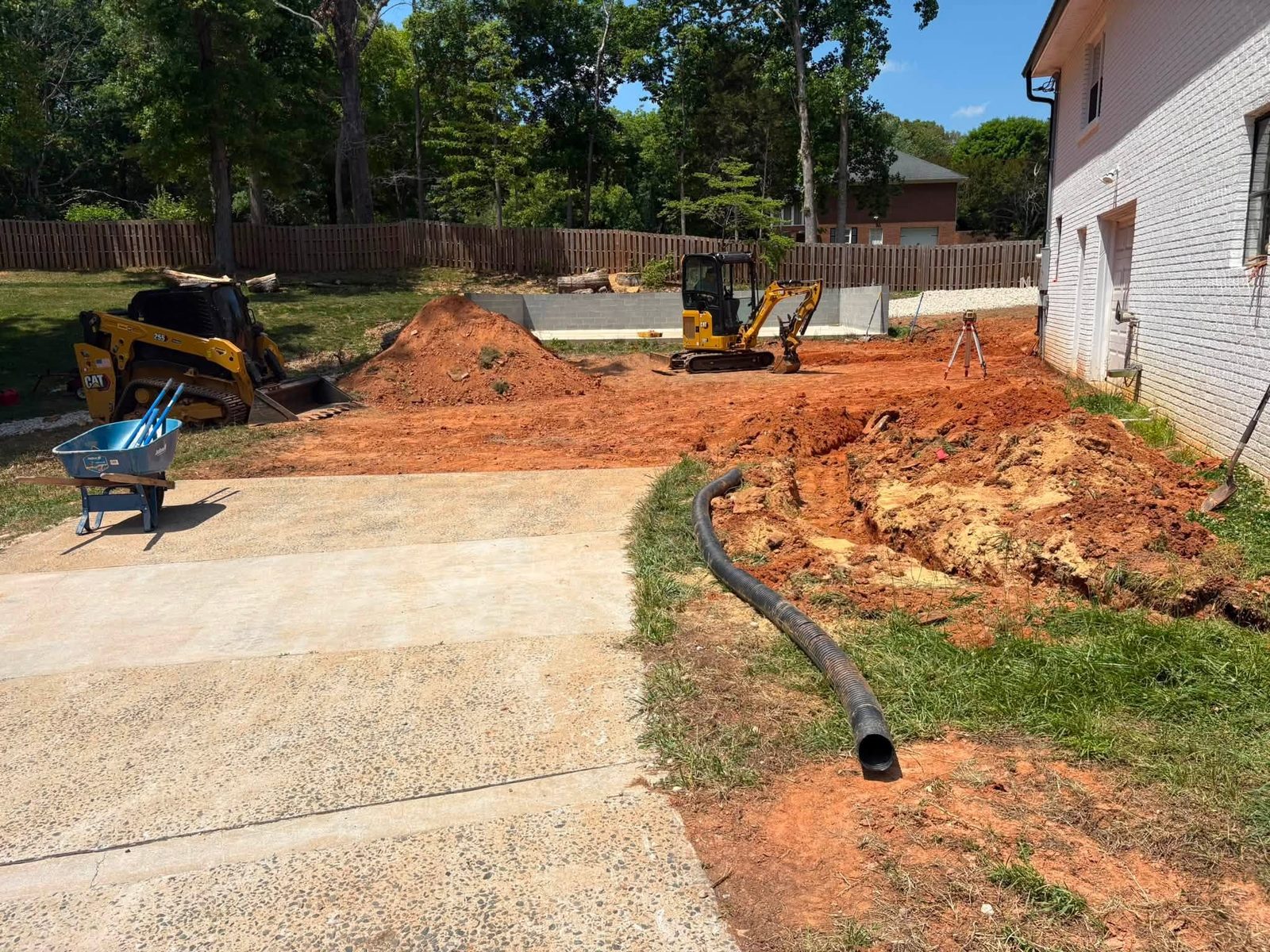
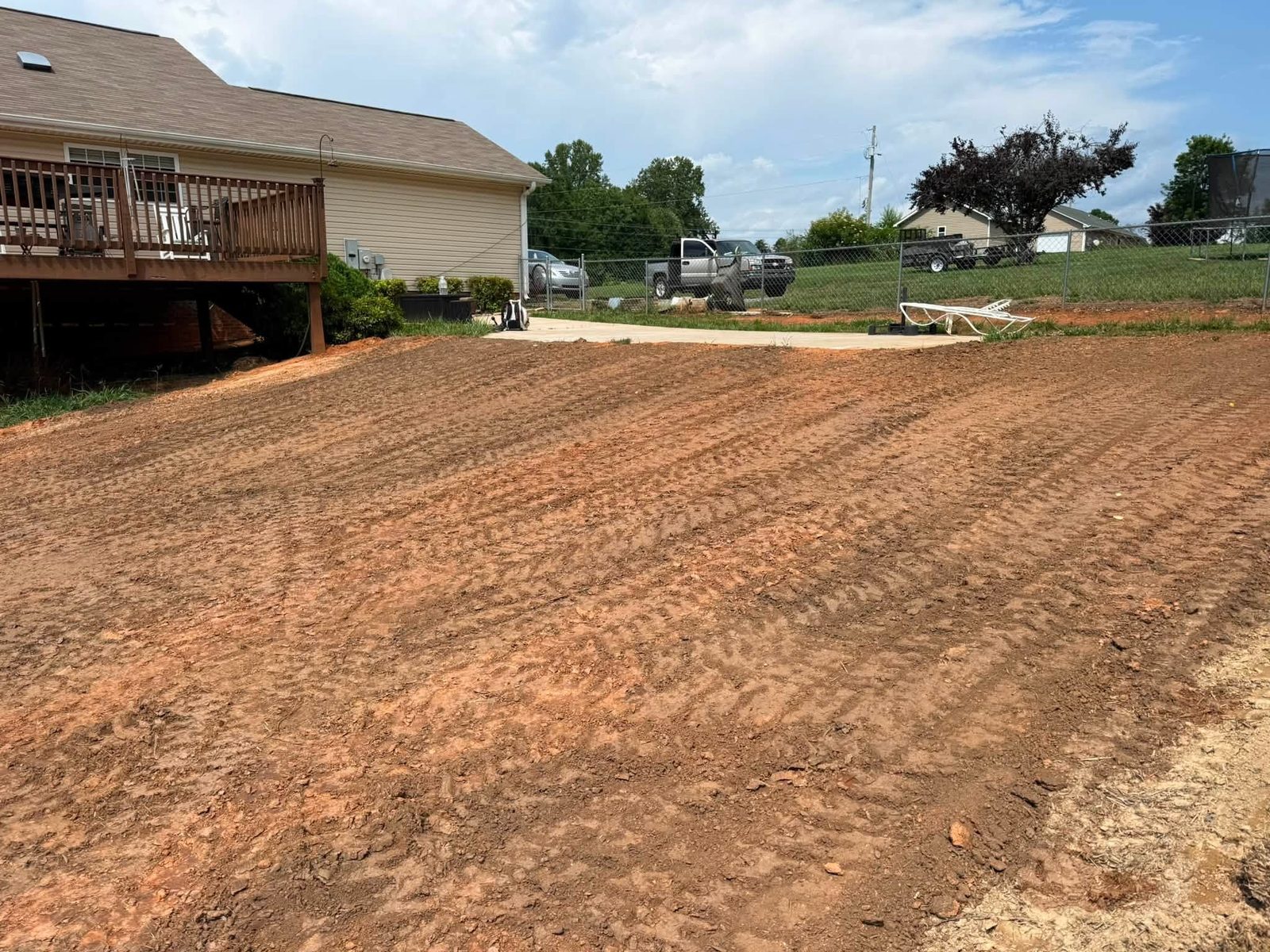
Forsyth County sits in the heart of the Carolina Piedmont, where the topsoil runs thin and the subsoil is red clay — dense, sticky when wet, and prone to sheeting off fast in summer rains. The Yadkin River watershed drains most of the county, and every acre of bare ground in Lewisville or Clemmons eventually answers to that drainage pattern. That is the first thing that separates clearing work here from the NC mountains or the coastal plain: the erosion clock starts the moment vegetative cover comes off, and it runs quickly.
A clearing crew in this county has two jobs, not one. The first is getting trees, brush, and stumps out to your scope. The second is leaving the ground in a condition that does not become your neighbor's problem or your permit problem before the next rain event. Both are the crew's responsibility — and if the quote you are reviewing does not mention erosion control anywhere, that is the question to ask before you sign anything.
What a full clearing job actually covers
Land clearing is a menu of services, not a single one, and the combination you choose drives cost more than lot size alone. A typical residential job in the Winston-Salem suburbs moves through these steps:
- Utility locates. Before any equipment moves, buried lines need marking. NC 811 handles this statewide, and any crew worth hiring waits for clearance before breaking ground.
- Tree felling and brush removal. Trees are felled, limbed, and either chipped on-site or loaded for haul-away. Chipping on-site leaves volume to manage; haul-away removes it but adds cost and truck trips.
- Stump grinding or full removal. Stumps can be ground to below grade — the standard residential choice — or pulled entirely with machine equipment. Grinding disturbs less soil but leaves a root mass that will slowly decompose below grade; full removal disturbs more but clears the volume. What you choose affects your finish grade, timeline, and what you can build over.
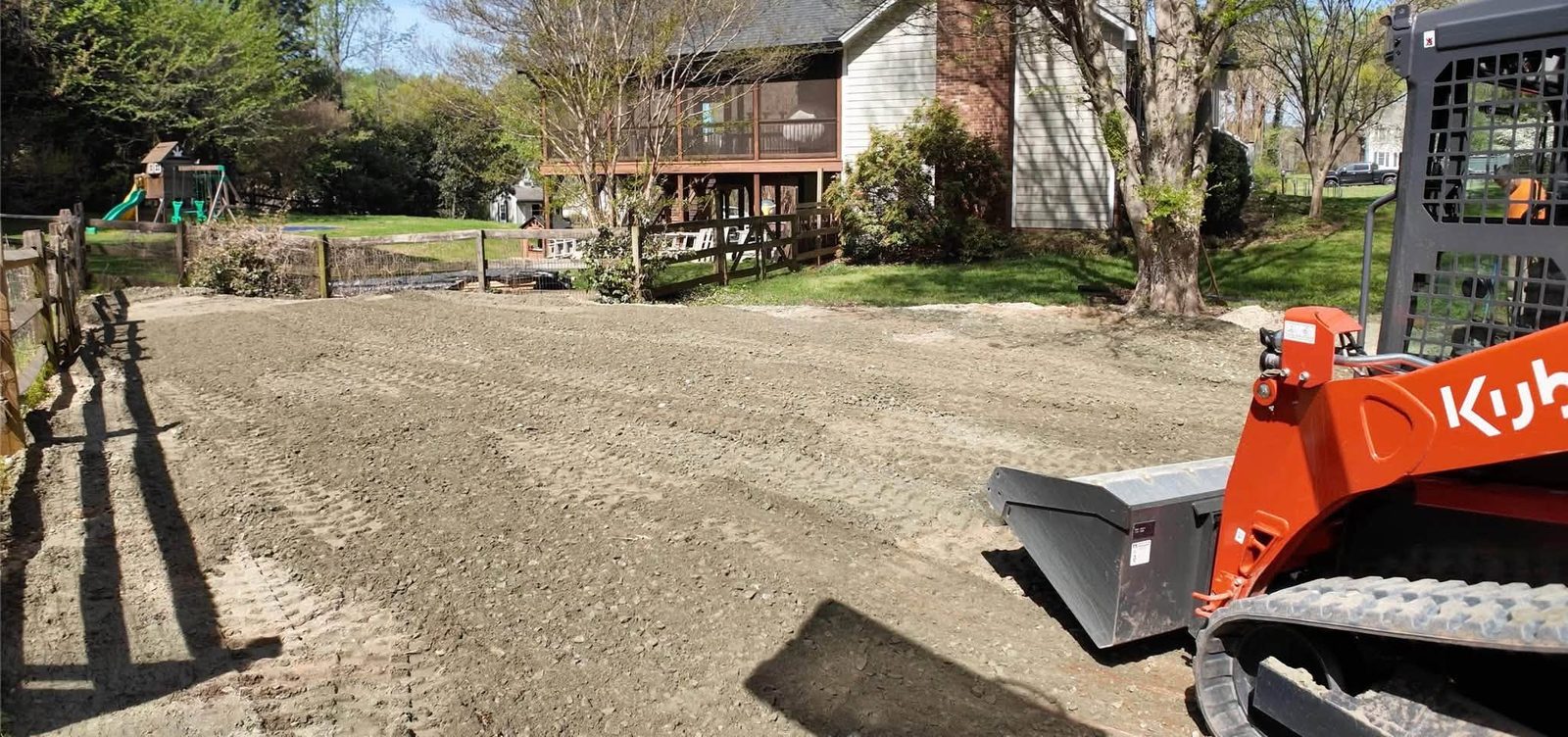
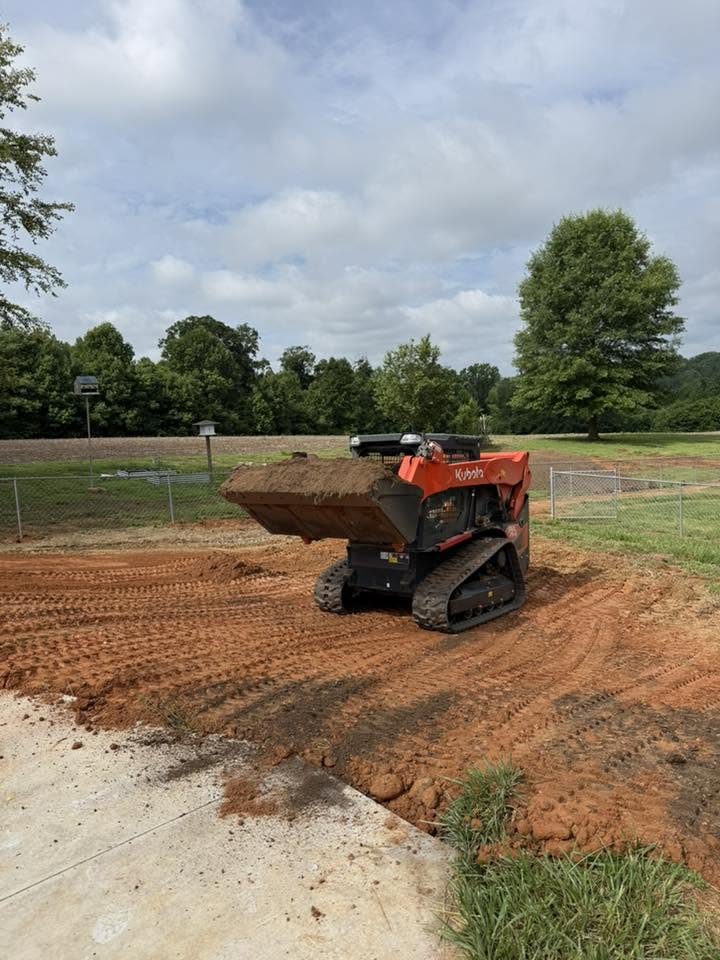
- Rough grading. Getting the lot to a workable surface grade is a separate scope item. Most clearing quotes do not include it unless you ask specifically, and treating the two as the same thing is one of the more common misunderstandings that leads to billing disputes.
- Erosion control and stabilization. Silt fencing, temporary seeding, and mulch cover are the standard measures at residential scale. Leaving bare Piedmont clay exposed through a wet season is both a compliance issue and a practical one — it deepens channels and moves material downhill fast.
Lots that have been sitting vacant and grown over — common in some of Lewisville's older neighborhoods and along the rural-residential fringe of Forsyth County — add debris volume and machine time that can surprise owners expecting a straightforward job. The overgrown lot page covers what that scope typically adds.
Scope-to-price: what you should expect to pay
Clearing prices in Forsyth County move with two things more than any other: the count and size of trees and stumps, and what the ground needs to look like when the crew leaves. The table below reflects honest ranges for residential-scale work in this market:
| Scope | Typical Range | What moves it |
|---|---|---|
| Brush and small trees only, haul-away included | $750–$1,800 | Lot size, site access, debris volume |
| Trees and stump grinding, no grading | $1,500–$3,500 | Tree count and diameter, stump depth |
| Full clearing with stumps and rough grade | $2,500–$5,000 | Grade complexity, clay depth, drainage requirements |
| Wooded acreage, 1–3 acres | $4,000–$8,000 | Tree density, site access, haul distance |
| Heavily wooded acreage, 3+ acres | $8,000 and up | Timber value may partially offset cost |
Forsyth County's development pace means crews stay busy and mobilization costs on smaller lots are real — a half-day job still moves equipment and a crew from somewhere else. That is part of why sub-quarter-acre lots in Clemmons or Lewisville often price toward the middle of these ranges rather than the bottom.
Storm history matters in this county. Forsyth has recorded 22 federal disaster declarations over 1977-2026, and saturated-soil seasons following major events are exactly when drainage problems on poorly graded lots become expensive. Getting grade and drainage right during clearing, rather than retrofitting it later, is almost always the better spend. See the land clearing cost page for the full breakdown of what moves price in this market.
What the rules actually require before a blade hits the ground
The threshold that catches most residential owners: North Carolina's Sedimentation Pollution Control Act requires an approved erosion and sedimentation control plan for any land disturbance of one acre or more. Under one acre, you are not exempt — you are subject to the state's general permit standards and best management practice requirements. The NC DEQ Erosion and Sedimentation Control Program administers these rules statewide; Forsyth County operates a locally delegated program that enforces them on active clearing sites.
For projects disturbing more than one acre that discharge to a water of the United States — which applies to most work near the Yadkin drainage system — the EPA's NPDES Construction General Permit applies on top of state requirements. Inspectors visit active sites, and jobs can be stopped mid-project for non-compliance. That stop falls on the property owner, not the crew that already left.
One more permit to verify: if your cleared lot needs a new driveway or access point onto a state-maintained road, NCDOT's driveway permit process applies before any permanent access is constructed. This step regularly catches owners off guard, especially on lots that have never had direct road access. Ask any crew you hire what they handle and what they leave to you.
When mulching beats hauling
Traditional clearing means felling, grinding, and loading debris for haul-away — multiple truck loads, longer timelines, higher cost. Forestry mulching takes a different approach: a single machine grinds trees and brush in place, leaving a mulch layer on the ground rather than a void. For lots in Lewisville or Clemmons that will sit several months before development begins, mulching holds Piedmont clay against erosion, cuts haul-away cost significantly, and leaves organic material that works with the clay subsoil over time rather than against it.
The limitation is real: mulching is not a substitute for stump removal where you need a level, compacted, build-ready surface, and large hardwood stumps often still require conventional grinding afterward. The approach fits a specific job type well and others poorly. The forestry mulching page walks through where this service fits the scope and where it does not.