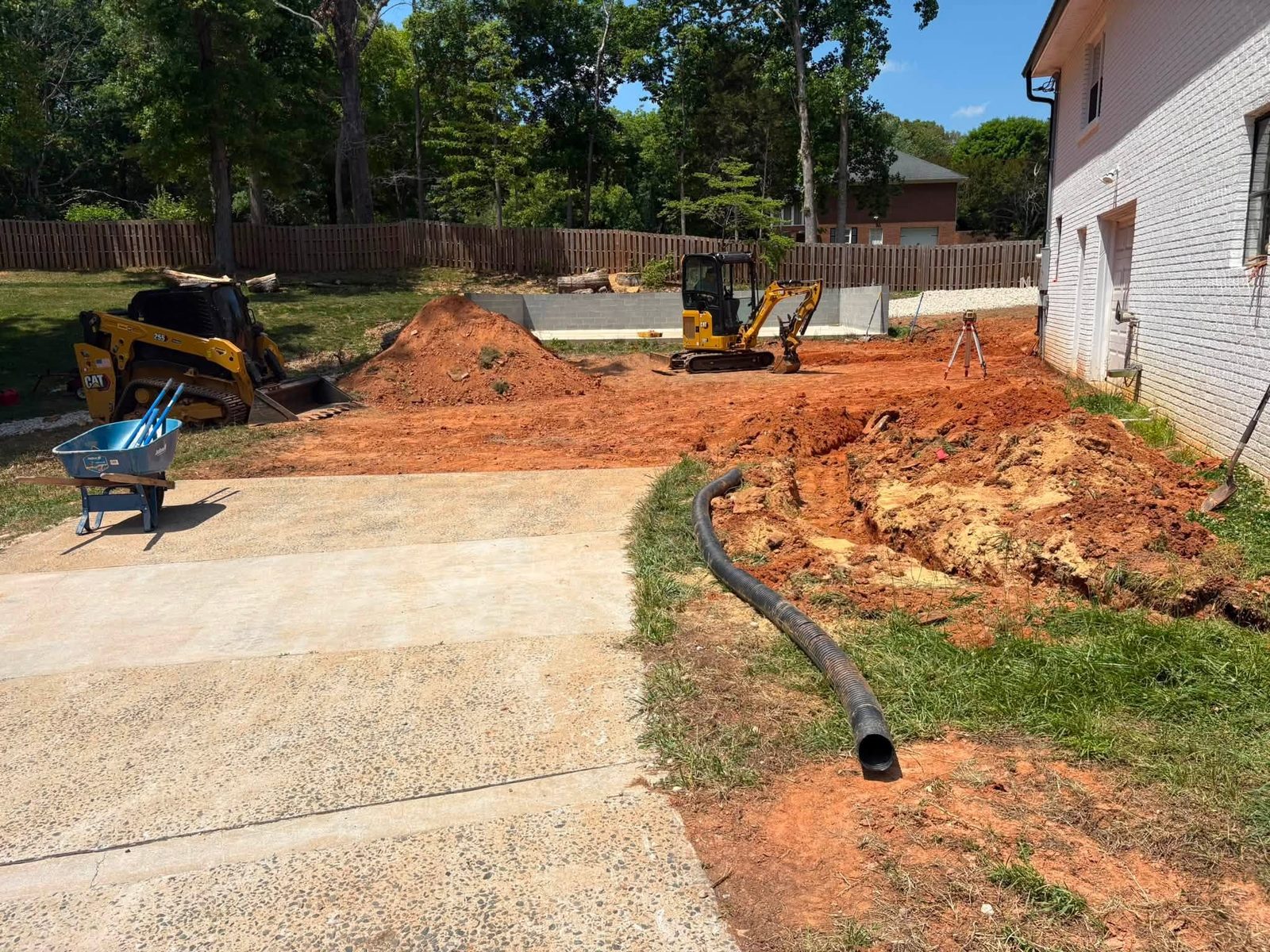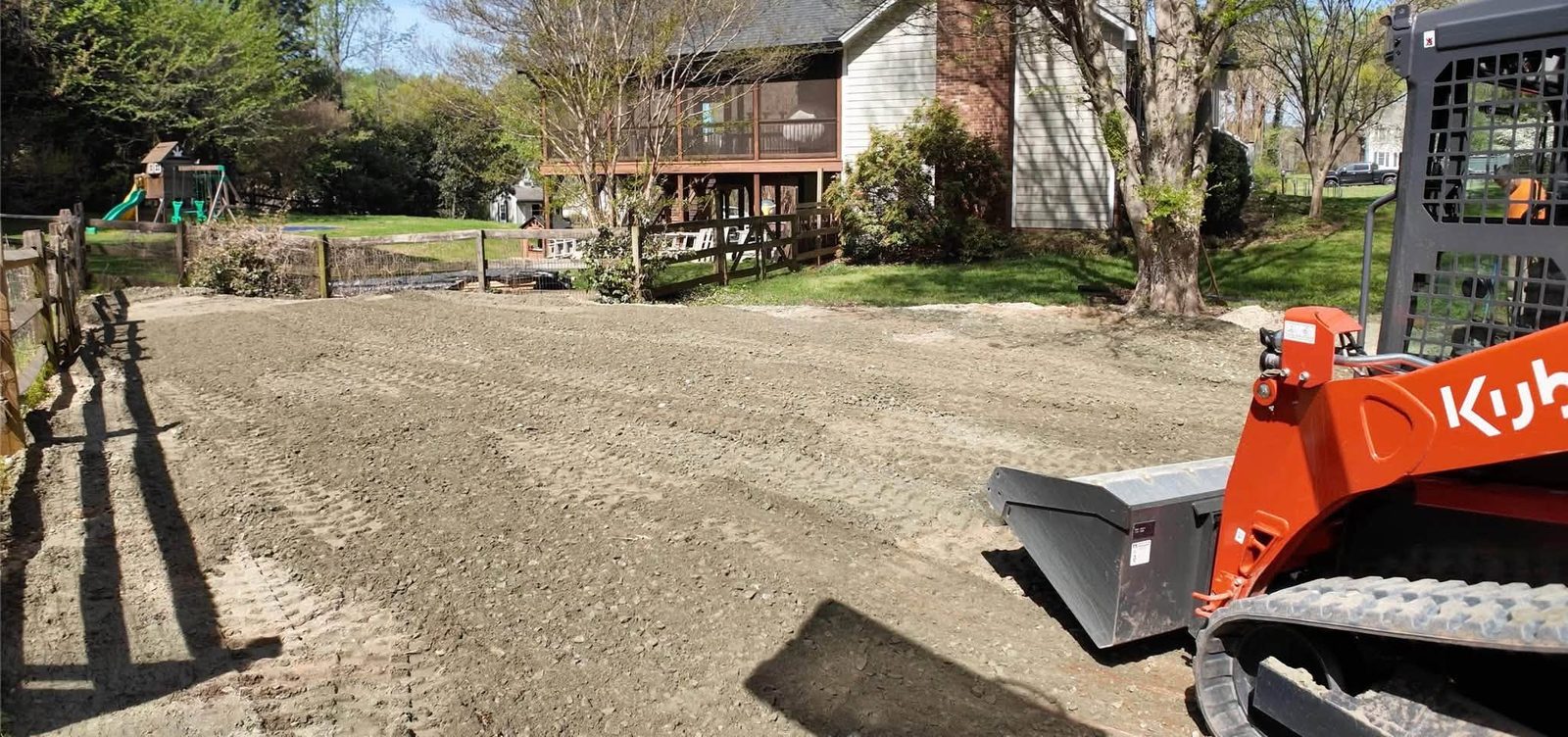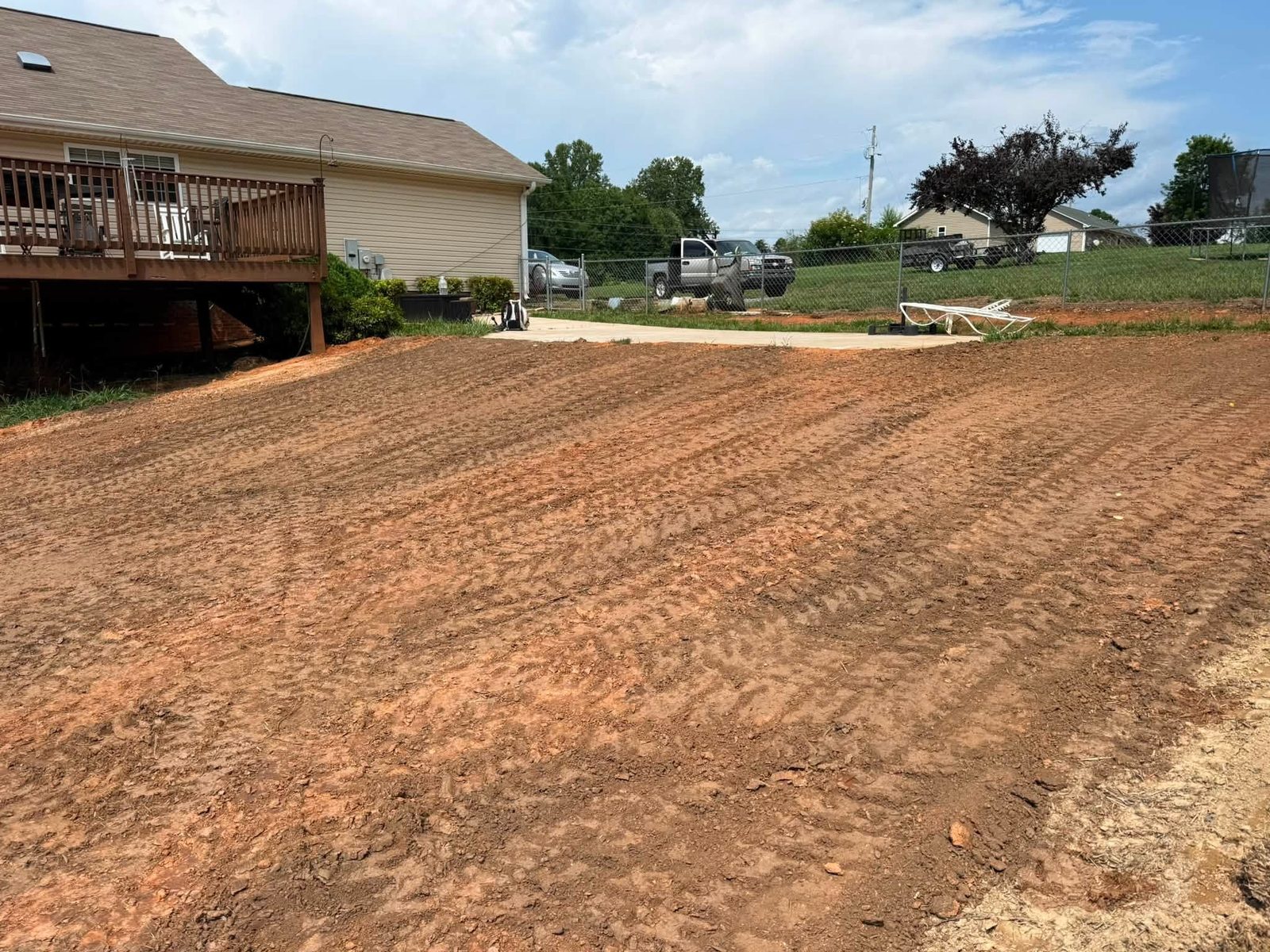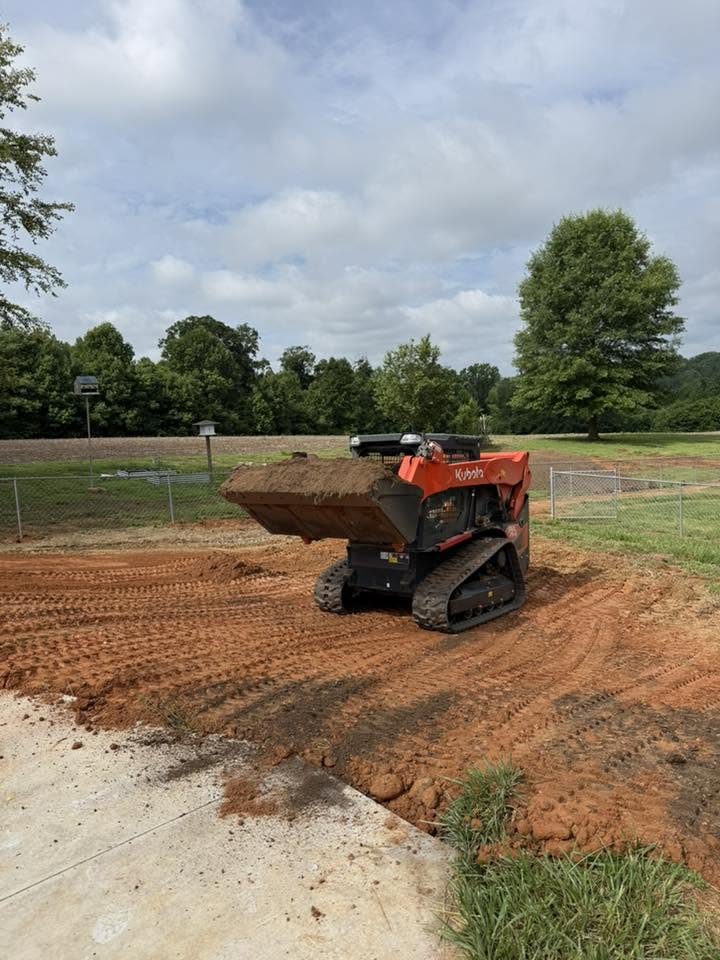
When the problem runs deeper than the gravel
Forsyth County sits in the NC Piedmont, where the native soil is dense, red, and swells when saturated. Private roads here — the shared gravel lanes serving rural residential plats outside Winston-Salem's city limits, the farm-access drives crossing the county's southern and eastern stretches, the long driveways threading back from secondary roads through older rural developments — were typically built by spreading aggregate over whatever the dozer cleared. That approach holds for a season or two. Then Piedmont clay starts migrating up through the stone.
The flat-to-rolling terrain in this part of the Piedmont creates fewer steep drainage challenges than mountain counties face, but it creates a different one: water that moves slowly and sits in the base longer before it finds a path out. What most road owners diagnose as a gravel problem is a subgrade problem. The aggregate hasn't worn out; it has been displaced by a base layer that is expanding, softening, and wicking moisture upward through the stone column. More gravel on top of that process produces a one-season fix. The subgrade has to be addressed before surface material will stay put.
Potholes versus washboard: two failure modes, two different fixes
These tend to get treated as variations of the same problem, but they fail for different reasons and need different remedies. A pothole forms where water has undermined the subbase — typically at a low crossing without drainage relief, over a clay lens that softened after heavy rain, or where vehicle loads have concentrated on an already thin base. Washboard — the ribbed, corrugated surface that shakes vehicles and rattles hardware loose — forms when aggregate is too fine to resist tire scrubbing, or when the road crown has gone flat from years of grading the same centerline and rain no longer sheds to the shoulders.
The diagnostic: if potholes appear after rain events and partially close up in dry weather, water is the driver. If the surface corrugates evenly regardless of season, the aggregate specification or crown slope is wrong. Most private roads in Forsyth County arrive with both problems layered together. The road with potholes at low crossings and washboard everywhere else needs a phased approach: drainage work first, then a full regrading pass once the water has somewhere to go. Reversing that sequence wastes both passes.
What repair work costs in this county
The price range runs wide because the required depth of fix varies — surface regrading costs a fraction of a subbase rebuild with geotextile. For full line-item ranges across every scope, see the private road repair cost breakdown. The table below covers the most common repair scopes in Forsyth County:
| Scope | Typical Range | Notes |
|---|---|---|
| Spot patch (1–3 potholes) | $200–$800 | Temporary without a drainage fix |
| Regrade and repack, per 100 ft | $800–$2,500 | Crown reshape, shoulder cleanup, compaction |
| Culvert replacement | $1,200–$4,500 | Pipe size and site access conditions vary |
| Full recrown with new aggregate, per 100 ft | $1,800–$4,500 | Aggregate depth is the primary price driver |
| Subbase rebuild with geotextile, per 100 ft | $4,000–$9,000 | Right answer for chronic clay-migration failures |
Most repair calls in this county land in the regrade-and-repack range. If the same stretch re-fails inside two years after regrading, the subbase is the answer, not more surface gravel.
Water is upstream of every surface failure
Forsyth County has logged 22 federal disaster declarations over a 1977-2026 period, the majority tied to storm and flooding events. Piedmont storms can deliver several inches in a short window — the kind of event that overwhelms a culvert that was adequately sized when the road was first built. Every one of those events pushed water at road surfaces built without adequate crown slope or drainage capacity. Blocked culverts, silted ditches, and crowns gone flat from repeated grading all direct water into the base rather than away from it. The EPA's stormwater guidance treats road drainage as a primary control for both erosion and water quality; the same logic applies to a 200-foot private drive.
Before any new surface material goes down, the drainage question has to be answered: where does the uphill runoff go, are the roadside ditches functional, and do the culverts have enough capacity for their drainage area? A culvert replacement or ditch cleanout typically costs far less than the road repair it prevents. See culvert installation for what that scope involves and when it needs to precede the grading pass.
Getting the scope right before the grader arrives
A grader can reshape a road surface in a few hours. A proper repair scope takes longer to define than to execute: crown measurement, drainage inventory, subbase depth check, and aggregate specification suited to Forsyth County's clay soils. For grading projects that disturb more than one acre — typical for longer road rebuilds — NC DEQ Erosion and Sediment Control requires an approved plan before work begins. A qualified contractor will flag this requirement and ask about total disturbed area; if that question doesn't come up, ask why not.
Work near Forsyth County rights-of-way or road junctions may also require an encroachment permit — county resources at forsyth.cc are the starting point for those questions. For a full picture of what private road work involves — shared maintenance agreements, cost-split structures between neighboring owners, and what a complete professional scope covers — see private road repair.