Clay all the way down — why King drainage jobs run deeper
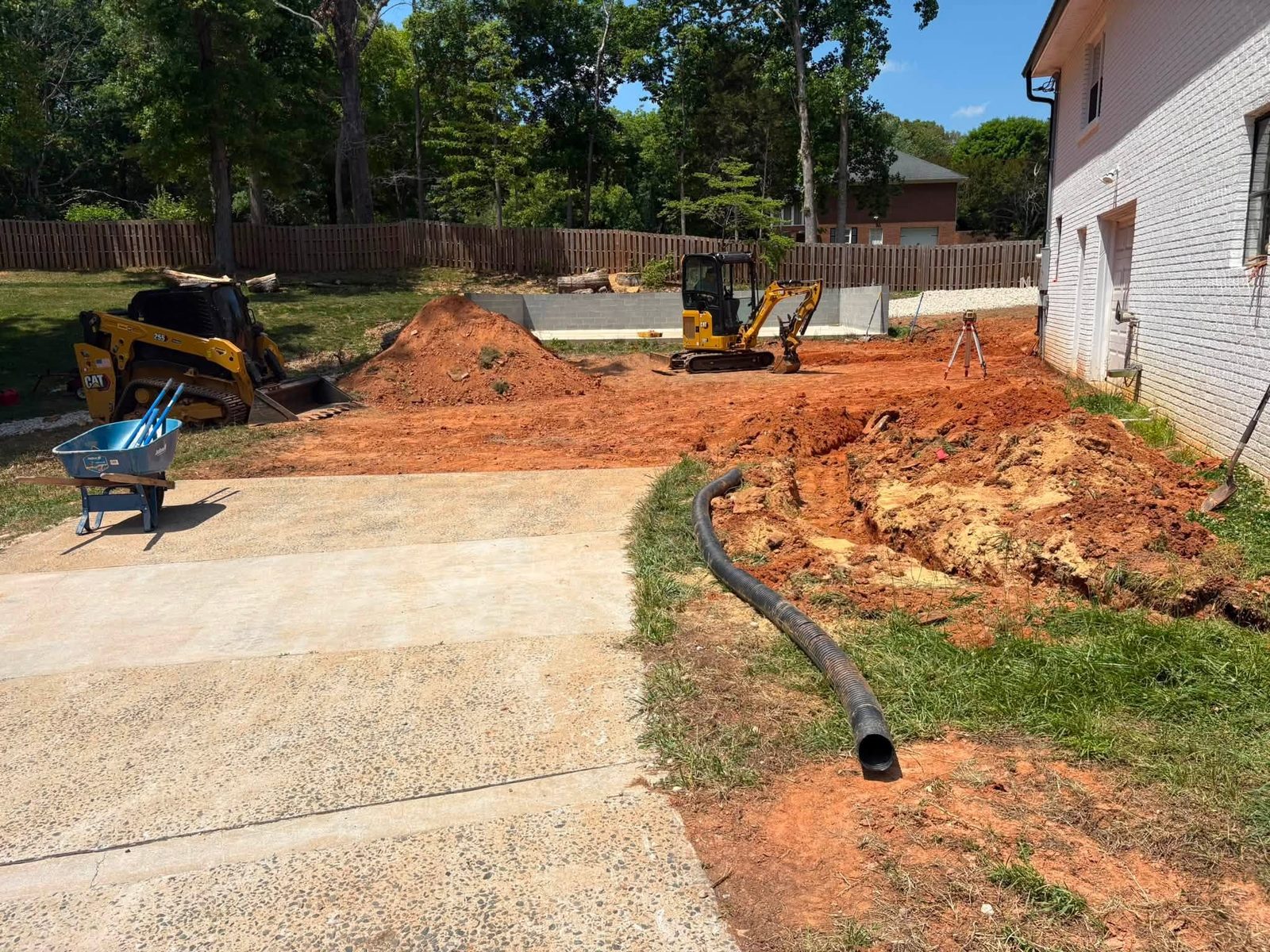
King sits about fifteen miles north of Winston-Salem on a Piedmont plateau where red clay runs deep — sometimes 15 to 20 feet before anything permeable appears underneath. Rainfall that would percolate away on sandier eastern NC soils sits on a King lot for days, moving sideways through the clay layer until it finds the nearest low point: a crawl space, a foundation wall, a yard corner that stays soft through spring. That lateral movement is the defining character of french drain installation in King, NC, and any scope that doesn't account for it will have the next contractor digging up the pipe.
Stokes County's growth pattern amplifies the problem. King and the subdivisions surrounding it have expanded steadily as a bedroom community for the Winston-Salem metro, with residential developments carved from former cropland and timber tracts. A field that drained passively toward a creek gets divided into a dozen lots, each with a roofline, a driveway, and grading done once during construction and never revisited. Water that used to sheet across open ground now pools against whoever's property sits at the end of the original drainage path — and that owner didn't sign up for the job.
What a wet yard is actually telling you
Drainage problems in King typically announce themselves one of three ways: a low spot that stays soggy for days after rain, a crawl space with persistent moisture or a mildew smell, or erosion channels cutting through a yard that sits downhill from a neighbor's lot. Each symptom points to a different fix, and misreading the symptom is the most expensive mistake a homeowner can make before calling anyone.
In King, the worst drainage calls come in late winter and early spring, when months of accumulated rainfall have saturated the clay and there is no capacity left for more. A yard that handles a summer storm without complaint can flood by February. That seasonal pattern matters when weighing urgency — a crawl space that smelled a little damp last October may be actively wet by March if the grade hasn't changed.
A French drain is the right tool when water arrives at a predictable point from a defined uphill direction — it collects at the inlet and travels down the pipe to a ditch, a daylight slope, or a pop-up emitter in the lawn. But if the yard's overall grade tilts back toward the foundation, adding pipe without regrading first just relocates where the water backs up. The difference between those two diagnoses is the difference between a $4,500 job and a $10,000 one. The standing water guide lays out how to read which problem you're facing before any digging starts.
What the work costs in Stokes County
French drain pricing breaks into four predictable line items: the trench, the pipe and gravel bed, inlet hardware, and the outfall. What varies by lot is how long the run needs to be, how deep the crew must go to clear the clay layer, and whether the outfall discharges to an open ditch or requires a pop-up emitter across a finished lawn. Short runs with a clean ditch outlet sit at the low end; long runs through tight subdivisions with landscaped yards sit at the high end.
| Scope | Typical Range | What drives cost |
|---|---|---|
| Single French drain run (50–80 ft) | $3,000–$5,500 | Trench depth through clay, outlet type |
| Extended run (100–150 ft) or multiple inlets | $5,500–$9,000 | Run length, number of collection points |
| Foundation perimeter drain | $4,500–$9,000 | Backfill, crawl space coordination |
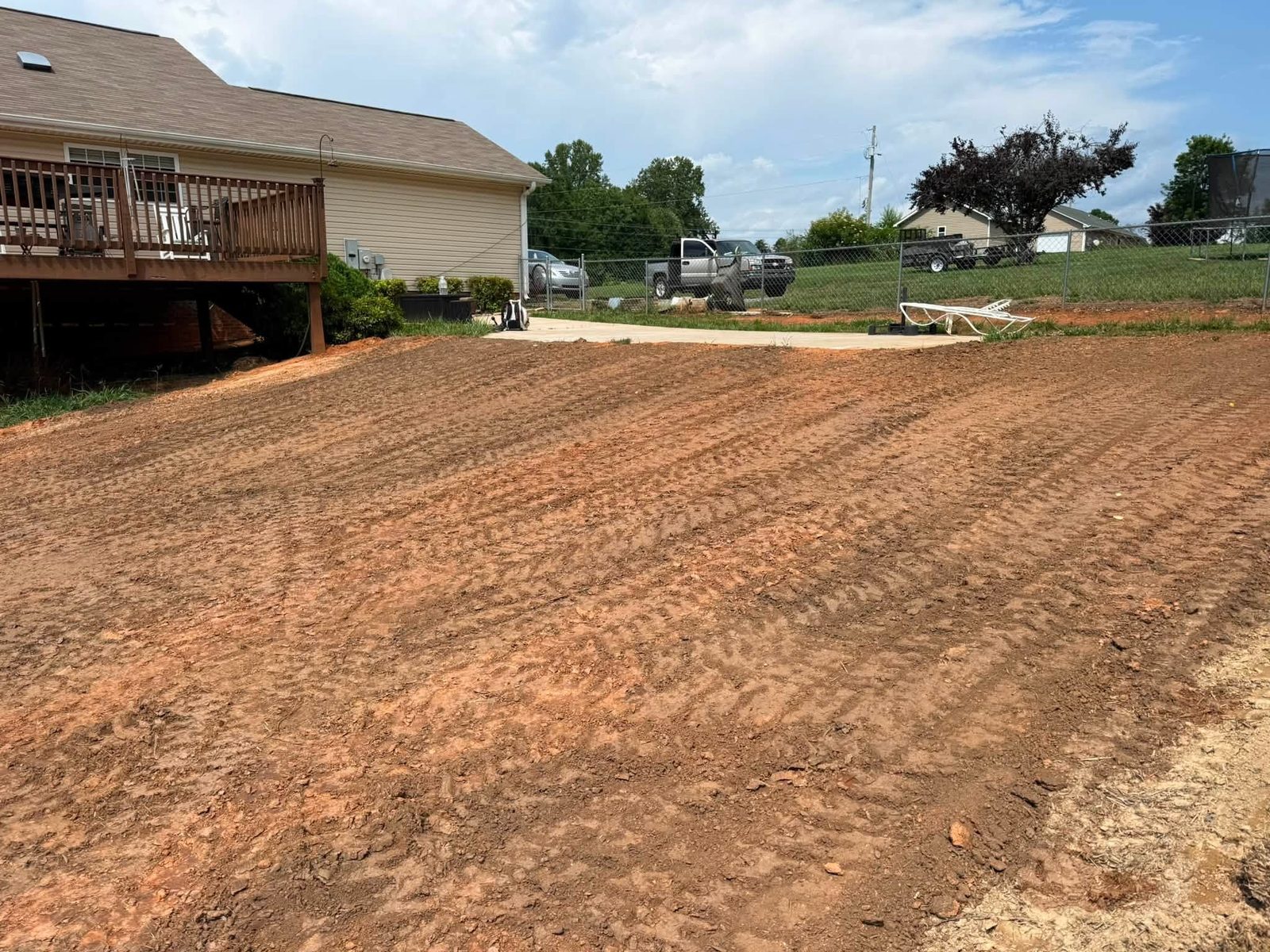
| Regrading combined with French drain | $8,000–$12,000 | Cut/fill required before pipe placement |
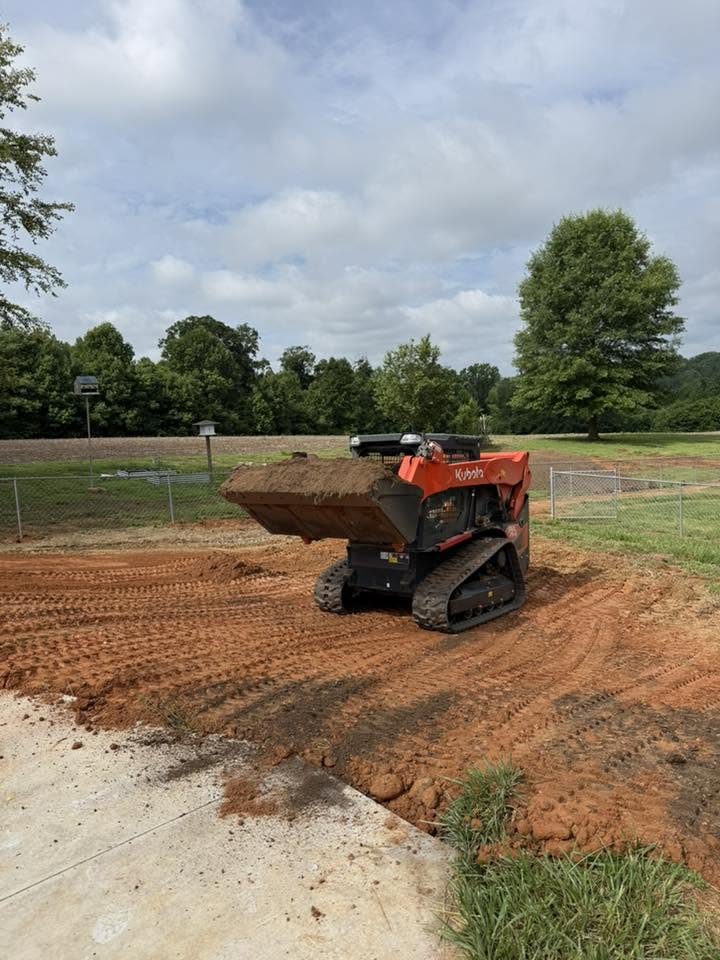
| Whole-yard regrading | Starts around $15,000 | Earthwork volume, haul-off, seed or sod |
Jobs at the high end of each band here typically involve Stokes County's deep clay and subdivision lots where outfall options are limited by fencing or neighboring grades. The full French drain cost breakdown covers what pushes each line item up or down.
Permits, erosion rules, and when they apply
Stokes County has seen 22 federal disaster declarations spanning 1977-2026, most of them tied to water — a record that helps explain why North Carolina maintains some of the more detailed erosion and drainage requirements in the Southeast. For residential French drain work, state permitting typically doesn't enter the picture until a project disturbs an acre or more of soil. But drainage jobs that involve significant regrading, new channels, or diverting surface runoff can cross that line. The NC DEQ Erosion and Sediment Control program sets those thresholds, and a contractor who won't identify when a scope is approaching them isn't worth the low bid.
Properties near the South Fork Yadkin River or its tributaries may fall within a mapped flood zone. The FEMA Flood Map Service Center lets any homeowner check their property's flood zone designation before work begins — relevant because drainage work that redirects runoff across a flood-zone boundary can affect adjacent property and, in some cases, flood insurance standing. It's a ten-minute check worth doing before pipe goes in the ground.
Getting the sequence right before anyone digs
The most common mistake on King drainage jobs is laying pipe before addressing the grade. A French drain collects and conveys water — it works when water arrives at a planned inlet and runs downhill through the pipe to an outfall. When the yard grade works against those conditions, the drain backs up in heavy rain or fills from the wrong direction. Fixing a sequence error means digging up the original work.
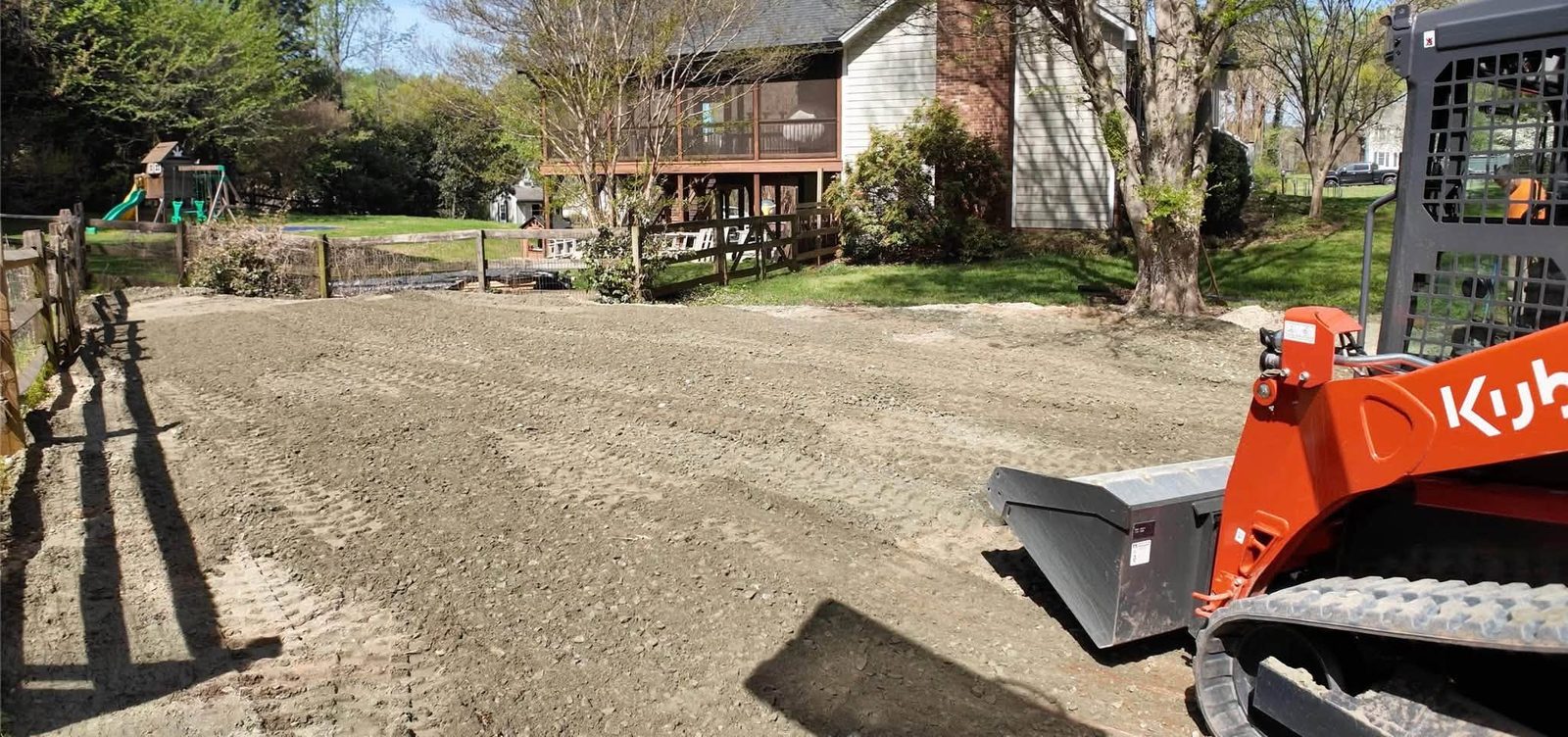
The right order: establish the final grade, identify where water will naturally collect after grading, then position the drain inlet at that point. Outfall placement matters just as much — the pipe needs somewhere to go that won't push water onto a neighbor's property or carve a new erosion channel at the exit. The French drain installation overview covers how inlet position, pipe slope, and outfall selection interact on a typical Piedmont lot. A contractor who skips the grading conversation before quoting the pipe isn't scoping the whole job.