Clay under the stone changes the job
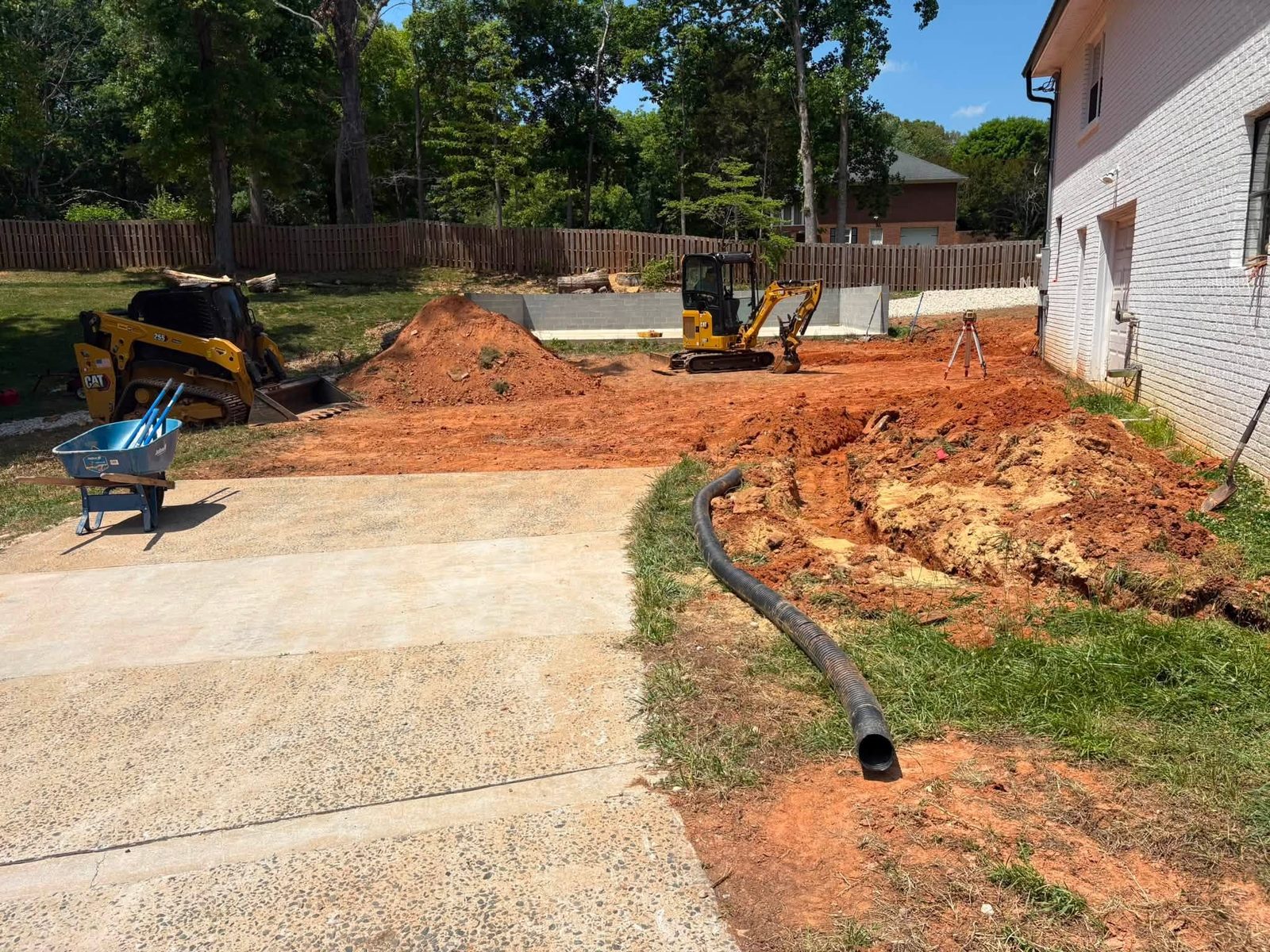
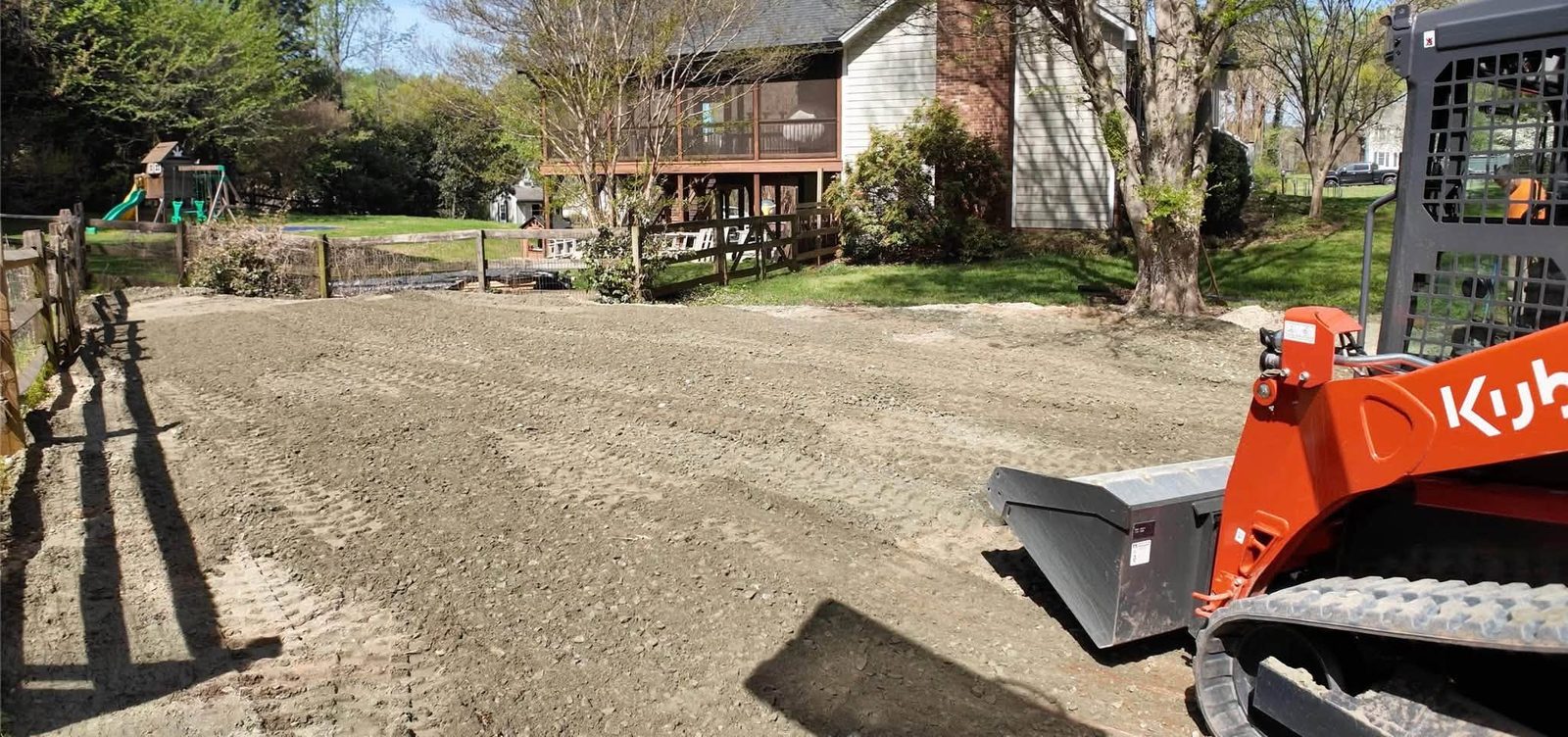
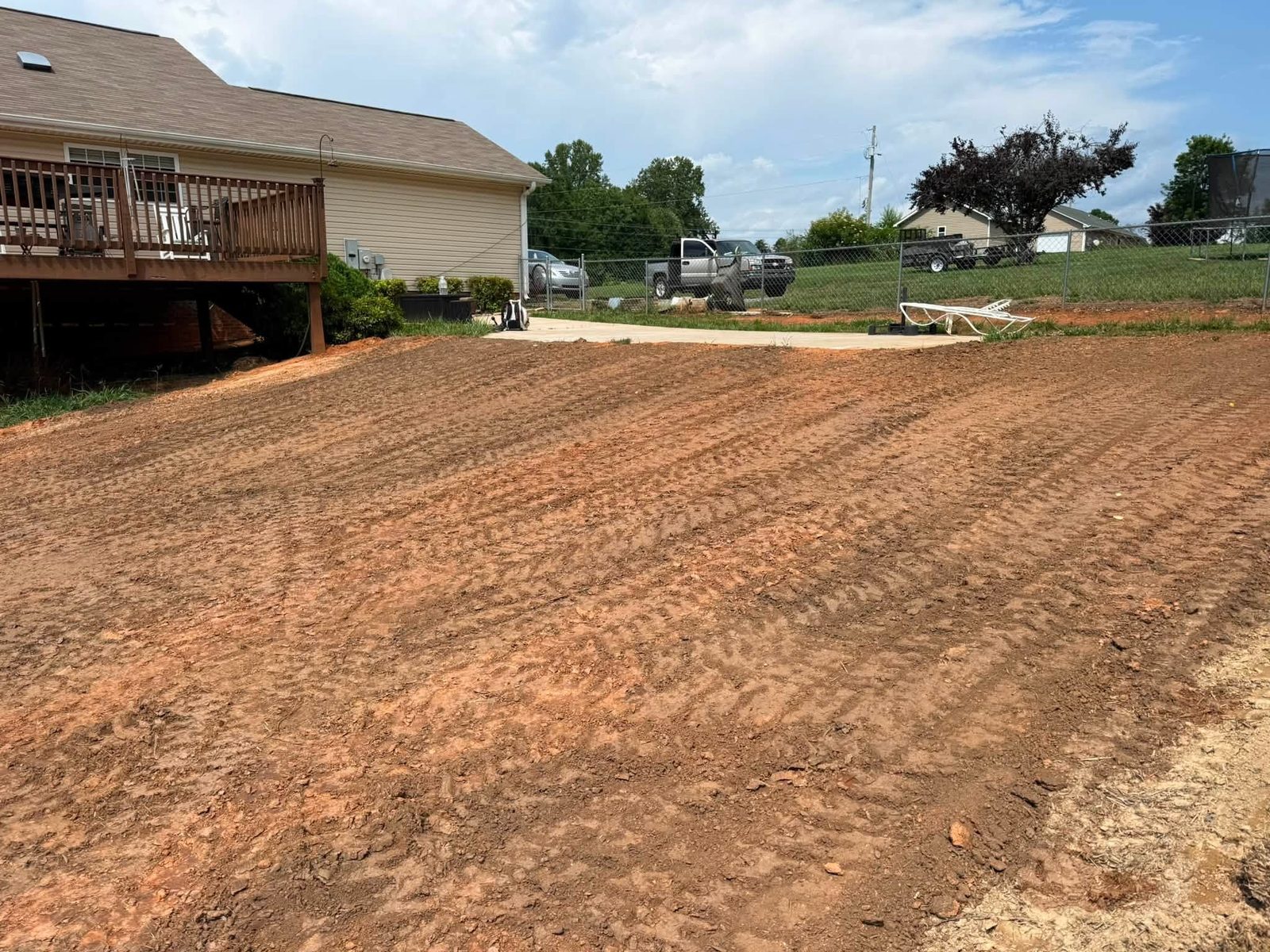
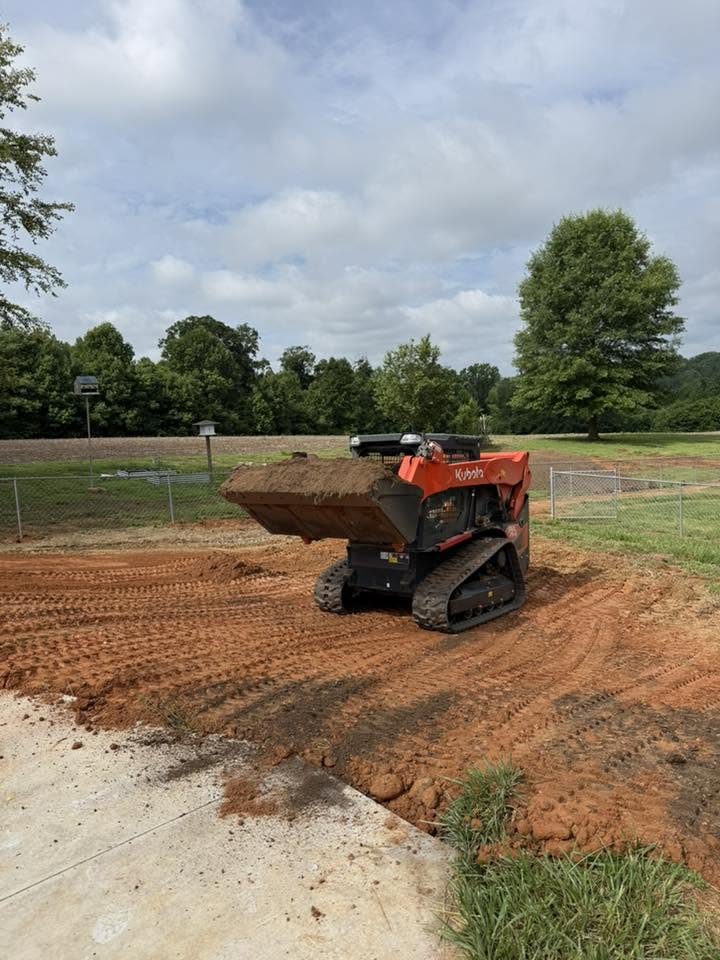
Forsyth County sits squarely in the NC Piedmont, and the red clay subgrade beneath most rural private lanes here behaves differently from the sandy soils of the coast or the rocky slopes of the mountains. When saturated, Piedmont clay loses bearing capacity fast. Gravel works down into it under traffic, stone disappears into the subgrade, and the road surface reverts to bare clay within a season or two. That cycle is the reason a top-dress alone rarely solves a Forsyth County gravel road problem — the fix has to address what the clay is doing with water before new stone goes down.
Roads cut through the rolling terrain west of Winston-Salem and along rural tracts in the county's eastern edges share this pattern: good drainage means a manageable annual maintenance cost; poor drainage means rebuilding the same hundred feet every few years. The county's mix of older farmland parcels with long gravel access lanes and newer acreage developments on the suburban fringe creates a wide range of road conditions, from lightly traveled single-lane drives to shared access roads serving several homes.
Knowing which situation you have — sound base with surface wear, or subgrade failure masked by gravel on top — is the first question any honest bid has to answer. A contractor who quotes a top-dress without probing the soft spots is pricing the cheaper version of the job, not necessarily the one you have.
What owners in Forsyth County actually pay
Gravel road repair prices here track the scope of the drainage problem, not just the road length. A dry, well-crowned lane that needs fresh stone and a blade pass sits at one end of the range; a low section that ponded all winter needs excavation, geotextile fabric, base aggregate, and surface stone before any re-crowning happens. That is a different job at a different price.
| Scope of work | Typical range | What moves the number |
|---|---|---|
| Re-crown and regrade, base sound | $1 – $2 / sq ft | road width, blade passes needed, haul distance for material |
| Re-crown with fresh gravel added | $1.50 – $3 / sq ft | aggregate depth needed, stone type (ABC vs. crusher run) |
| Pothole and rut repair, spot sections | $400 – $1,500 per section | rut depth, whether base has failed or just the surface |
| Washed-out section rebuild (per 100 ft) | $4,000 – $10,000 | excavation depth, geotextile fabric, culvert tie-in, base rebuild |
| Full road rebuild with drainage correction (per 100 ft) | $8,000 – $10,000 | clay depth, side-ditch grading, inlet and outlet structures |
These are working ranges for honest scoping, not quotes. A bid that arrives with a firm per-foot number before the contractor has walked the road and checked how the side ditches drain is pricing the easy version of the job. For surface-only problems without base failure, see our pothole and washboard repair guide for narrower ranges that apply to that lighter scope.
Drainage rules and erosion requirements
Road repair work in Forsyth County that involves grading, ditch cutting, or land disturbance above a threshold falls under North Carolina's erosion and sediment control program. The NC DEQ Erosion and Sediment Control program requires an approved plan for land-disturbing activity over one acre. A full road rebuild on a private lane several hundred feet long — including side-ditch grading and slope correction — can reach that threshold once the total disturbed area is calculated. The requirement is not a formality; sediment leaving a regraded site can create downstream liability under state rules.
Stormwater runoff from road construction can also draw federal review when drainage reaches a stream or creek. The U.S. Environmental Protection Agency's NPDES stormwater rules apply to construction site activity on land over one acre in most jurisdictions. Your contractor should determine whether your job crosses that line and handle the required notice and controls as part of the scope, not leave them to you after the fact.
Forsyth County has recorded 22 federally declared disaster events spanning 1977-2026, the majority tied to storms and flooding that stress private roads and culverts exactly the way this page describes. A properly rebuilt road with correctly sized culverts is also a more storm-resilient one. Undersized culverts and flat crowns are typically the first things to fail when a heavy rain event overwhelms a drainage system. Our culvert installation cost guide covers what adding or upsizing a culvert adds to a road repair budget.
When permits and licensing enter the picture
Routine gravel top-dressing and regrading on an existing private road generally does not require a building permit in North Carolina. Work involving culvert replacement, bridge or low-water crossing structures, or substantial grading is a different question. Forsyth County and the City of Winston-Salem each have development and grading ordinances that can apply depending on where the road sits and whether the work touches a stream buffer, a regulated stormwater feature, or a platted subdivision easement. If the road is near a drainage easement or within a platted development, the threshold for county review is lower than for a remote rural lane.
Contractor licensing also applies at a certain job size. The NC Department of Insurance oversees building code administration statewide, and North Carolina's licensing thresholds for general contractors apply to grading and earthwork scopes above the state's dollar threshold. For a large road rebuild, ask to see the contractor's license classification and verify it covers the work before signing anything — a contractor who cannot answer that question clearly is a signal about the rest of their process.
The practical rule: regrade and top-dress is typically permit-free; any work that moves significant earth, replaces a culvert, or sits near a regulated buffer is worth a call to Forsyth County before the first grader arrives. Read more about overall project planning in our private road repair overview.
Getting a bid that holds in this county
Three practices protect Forsyth County road owners when comparing estimates for gravel road repair:
- Walk the full drainage path before talking price. Ask every bidder to trace water from where it enters the road corridor to where it exits the property. A quote that does not account for a blocked culvert, a flat ditch, or a low spot that ponds will be a short quote.
- Ask about the base before agreeing to a surface fix. Visible gravel condition is the easy diagnosis. What the clay subgrade is doing under wet traffic loads is the harder one. A blade pass on a failed base is roughly twelve months of road before you are back at the same problem.
- Price by unit, not by job. Per-square-foot or per-linear-foot pricing keeps change orders honest when the contractor finds a soft section or an undersized culvert mid-job that the initial walk did not catch.
If the same stretch goes soft every spring in the same spot, drainage correction is almost always the more economical long-term investment compared to another round of surface work. Forsyth County's clay soils and its documented storm history make that pattern predictable: fix the water path, and the gravel stays where you put it. That investment in base preparation and drainage is what separates a repair that holds for a decade from one that needs to be repeated every few years.