Piedmont clay is the variable most bids underestimate
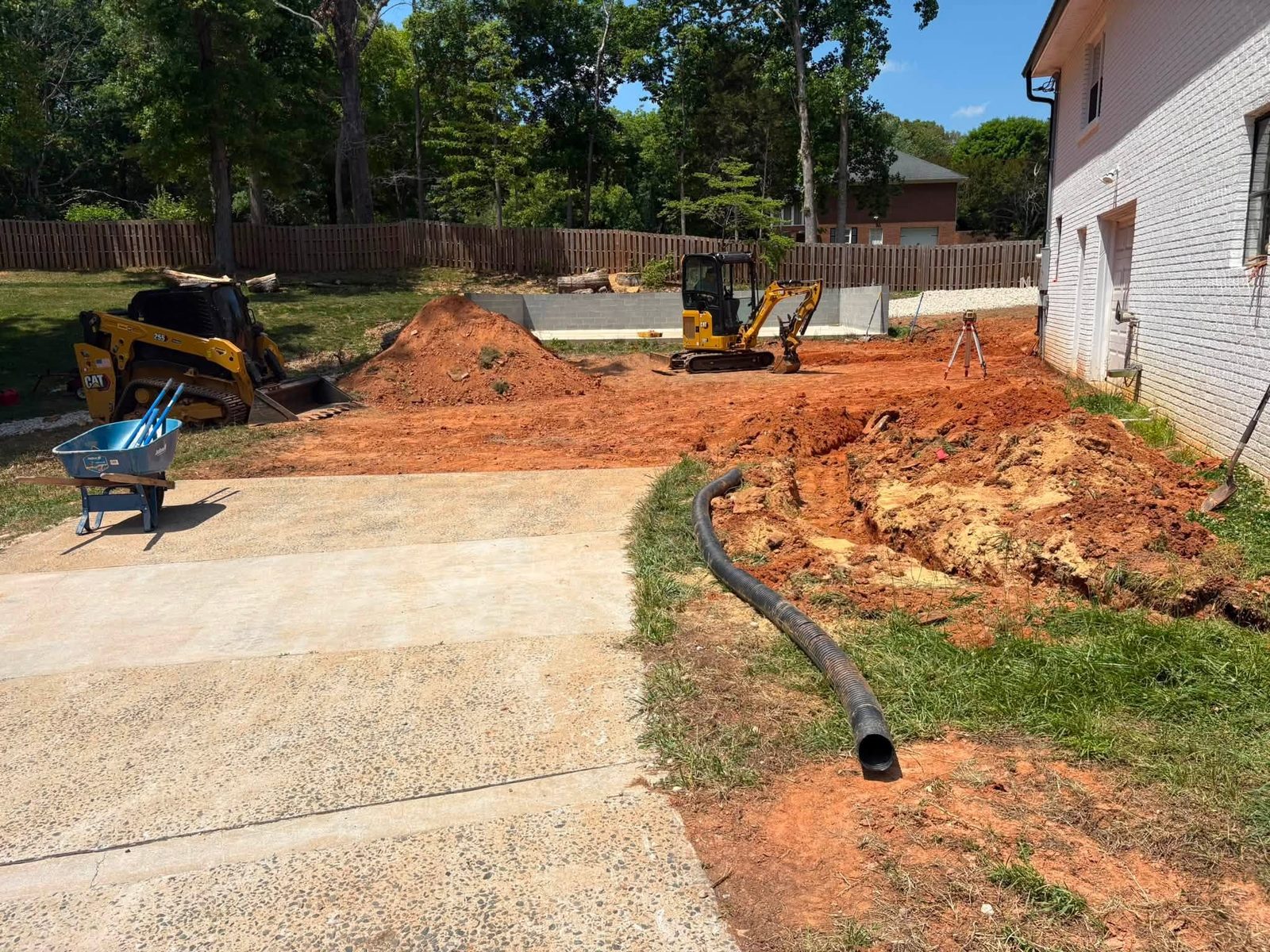
In Forsyth County, the soil itself sets the terms. The red clay Piedmont that underlies Winston-Salem and the surrounding Triad is denser than coastal plain soils and slower to drain than decomposed mountain granite — and those properties compound through every phase of an excavation job. Spoil weighs more per cubic yard and costs more to haul. Equipment selection matters more. And the moment you strip topsoil, that exposed clay face will shed sediment with the next rain, which in the Triad arrives reliably and sometimes in volume.
A crew that prices a Forsyth dig without accounting for soil type will either burn through their haul-off budget on the first lift or leave behind drainage problems the next contractor inherits. That is why site preparation here is not just rough grading — it is active water management from the first machine move. A bid that does not mention soil type in the estimate has not been built for this county.
What the work involves, scope by scope
Most residential excavation in this region falls into a handful of categories, and each interacts with Piedmont soil differently:
- Footing trenches for additions and new construction. Clay holds a trench wall well in dry conditions, but moisture swings between Triad winters and humid summers can shift bearing capacity quickly. Sequencing — when you dig relative to when you pour — matters more here than on sandy soils, and a crew that knows this prices accordingly.
- Basement and crawl space digs. Volume removal is the main cost driver, but what you find during the dig matters too: fill depth varies across Forsyth lots, and grade changes mean drainage fall off the perimeter requires planning, not guesswork.
- Utility and service trenches. Water, sewer, and drainage lines need bedding material that will not compact against surrounding clay and choke flow over time. The trenching page covers pipe bedding specifications, backfill sequence, and the grade requirements that apply to service connections on Piedmont lots.
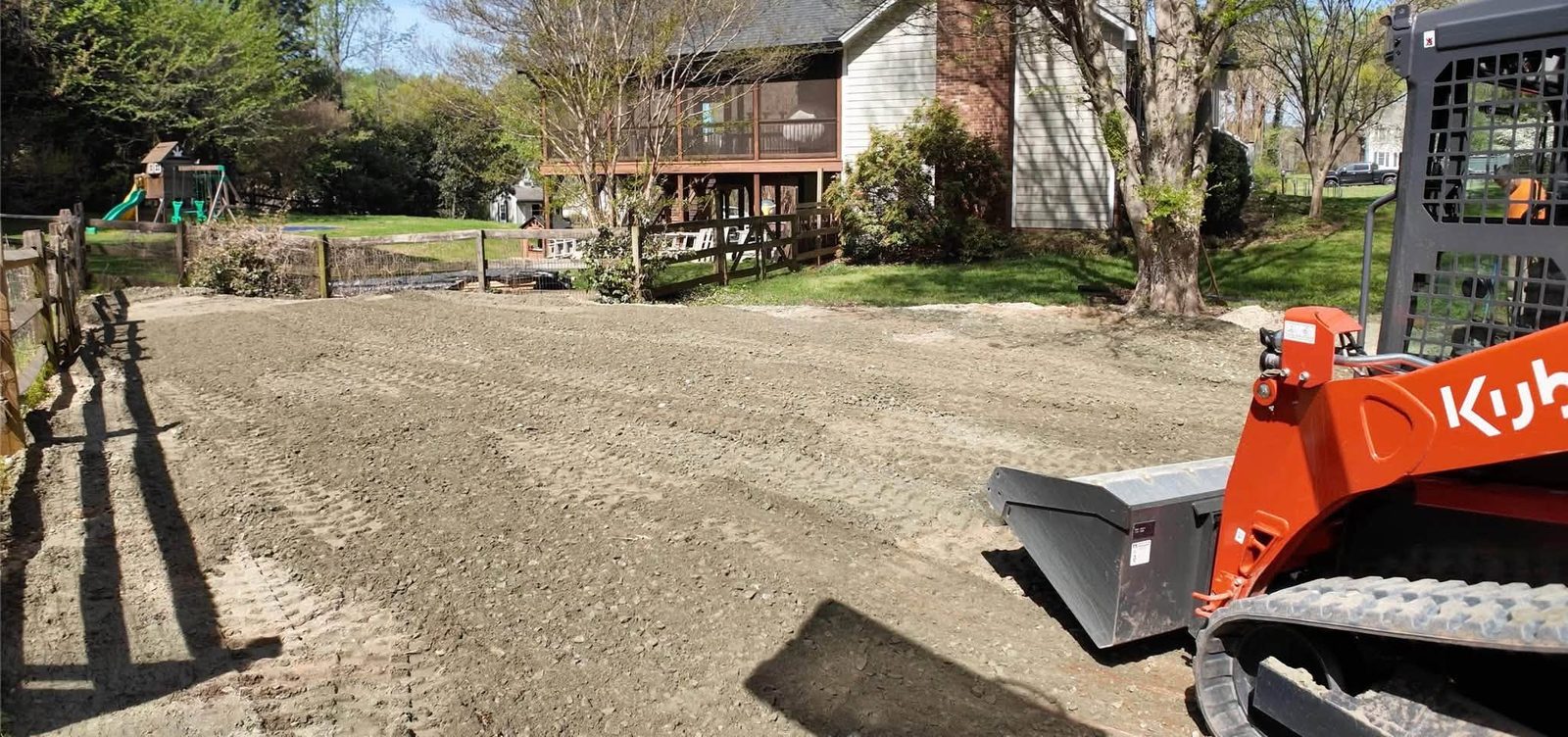
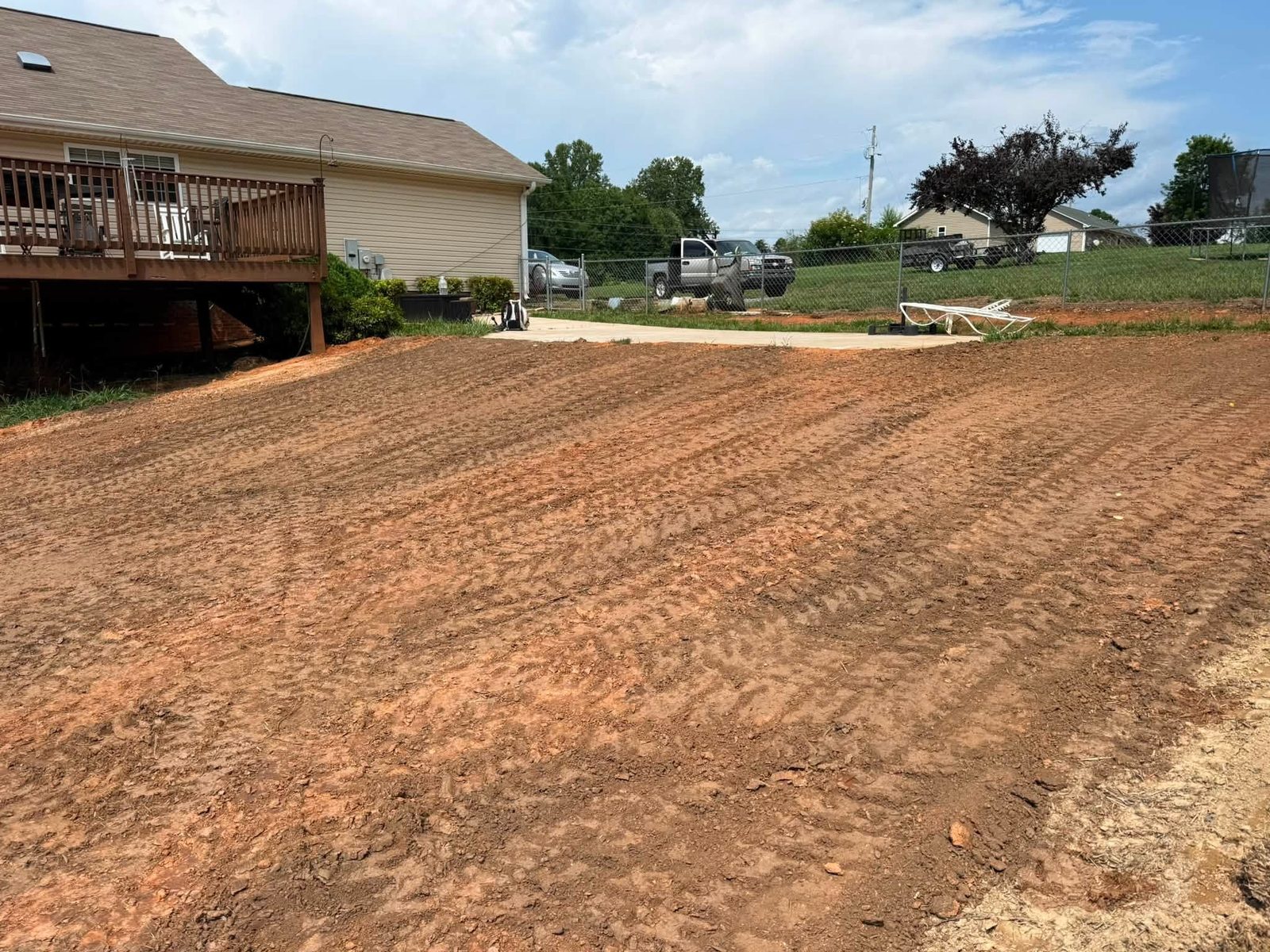
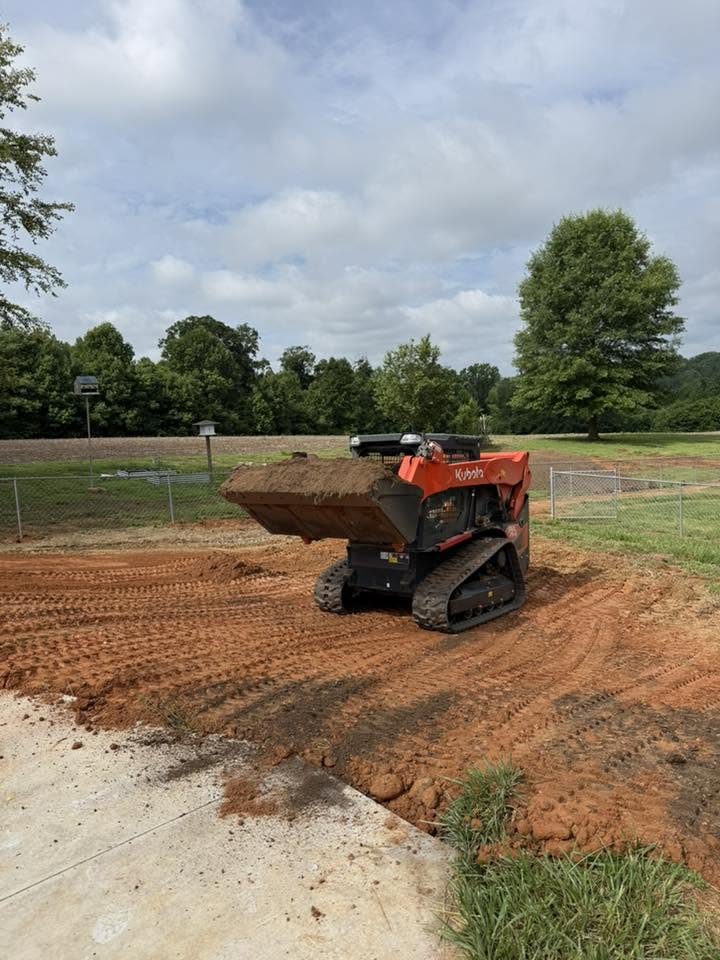
- Driveway and parking pads. Cut-and-fill on a Triad residential lot requires a surface-drainage plan from the start — a pad graded without one ponds during summer storms. With 22 federal disaster declarations on record for this county spanning 1977-2026, heavy rain events are not edge cases.
Every job regardless of scope starts with an 811 call. North Carolina requires utility locates before any excavation, and clay soils are exactly the environment where an unmarked line stays hidden until equipment hits it.
What scope costs in Forsyth County
Ranges move with depth, haul-off distance, and how much clay management the job demands. The table below reflects typical residential projects in this market; the excavation cost page breaks down what moves each number in more detail.
| Scope | What's typically included | Typical range |
|---|---|---|
| Single footing or addition trench | Layout, dig, spoil haul-off | $1,800–$3,500 |
| Utility or service trench (residential) | Trench, pipe bedding, initial backfill | $2,000–$4,500 |
| Driveway or parking pad | Cut, fill, rough grade, drainage slope | $2,500–$4,500 |
| Full lot grading, under one acre | Clear, grade, rough drainage swales | $6,000–$10,000 |
| Full site with drainage and haul-off | Grade, drainage install, erosion control measures | $9,000–$15,000 |
Depth is the most common reason a job migrates toward the top of its range. Clay that extends deeper than the initial probe adds both equipment time and spoil volume in roughly equal measure. Lots with significant grade change across the build area add cut-and-fill complexity that flat-lot bids do not reflect — and most Forsyth residential neighborhoods have at least modest elevation variation.
Permits, erosion control, and what the state requires
North Carolina treats any land-disturbing activity over one acre as a regulated event. The NC DEQ Erosion and Sedimentation Control Program requires an approved plan before work begins on qualifying projects — silt fencing, sediment basins, and stabilization timelines are permit conditions, not optional measures. Forsyth County falls within the state's jurisdiction on this, and the Triad's clay soils make compliance both more important and more visible: sediment from an uncontrolled Piedmont site appears in downstream drainage within a single storm cycle.
For projects where land disturbance exceeds one acre and involves discharge to waters of the United States, federal NPDES Construction General Permit coverage is required alongside the state plan. This is common on full residential builds and larger pads. The permit requires a Stormwater Pollution Prevention Plan kept on site throughout construction.
Driveway connections to state-maintained roads require a separate permit through NCDOT, submitted via NCDOT Connect. Driveway geometry — width, culvert sizing, sight distance — is reviewed before any cut at the right-of-way. A contractor who skips this step creates a revocation risk that falls on the property owner, not the contractor.
Work within Winston-Salem city limits also requires municipal permits pulled through the city's building and inspections process. State permits and city permits are parallel, not interchangeable. Confirm which apply before any contract is signed.
Three questions that keep an excavation bid honest
"How are you pricing haul-off?" Piedmont clay is heavy, and some contractors treat haul-off as a per-load add at the end rather than a line item up front. Ask for a haul-off estimate in writing before work starts — it is one of the more consistent sources of bid-to-invoice gap on clay-soil jobs in this county, and an honest contractor will not hesitate to show the math.
"What is your erosion control plan?" For any project near the one-acre threshold, the answer should name specific measures: silt fence locations, stabilization schedule, sediment trapping approach. "We will handle it" is not a plan. The NC DEQ program publishes the minimum standards, and a contractor who cannot speak to them is either unaware of the requirements or hoping the inspector does not show up between storms.
"Where does surface water leave this site when you are done?" Excavation that opens a site without closing it with a grading plan passes the drainage problem forward. Ask where surface water flows after the rough grade is set, and confirm that answer is in the scope of work. A rough-grade that sheds water toward the foundation is not a finished excavation — it is a warranty call waiting to happen after the first wet season.