Tobacco land grades differently than a wooded ridge lot
Tobaccoville sits at the northwestern edge of Forsyth County, close enough to Winston-Salem to feel the pull of residential development. New builds have been spreading out along NC 421 and the surrounding roads for years, but the land here still carries the character of former tobacco and row-crop farmland. That agricultural heritage shapes what a grading contractor is actually dealing with when a parcel gets subdivided and someone is ready to build.
Decades of heavy machinery and cultivation compact Piedmont clay in ways that differ from undisturbed forest soil or typical suburban fill. The surface may read as flat and manageable, but the drainage patterns left by field furrows, shallow agricultural ditches, and subtle grades toward old tobacco rows do not translate into what a residential foundation demands. A lot that moves water fine under a crop canopy can trap it against a crawl space wall once a house footprint and driveway cut interrupt the natural sheet flow.
That is the grading problem specific to this end of Forsyth County: managing water on ground that was never designed to drain toward a foundation setback. Contractors familiar with these lots start with a drainage plan, not just a blade pass. Understanding what full grading and excavation work involves before requesting quotes helps set realistic scope expectations from the first conversation.
What a grading scope covers on a Tobaccoville lot
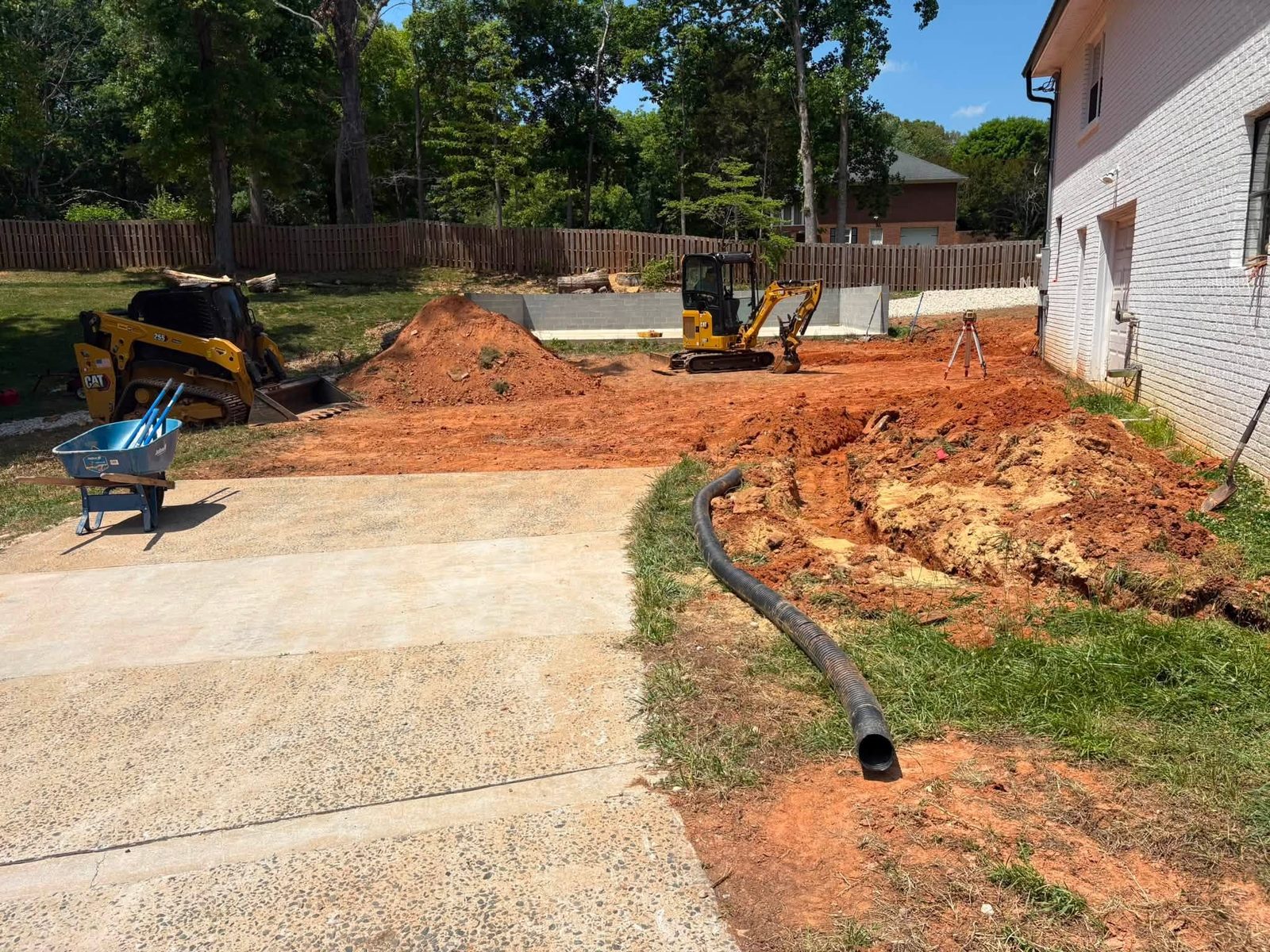
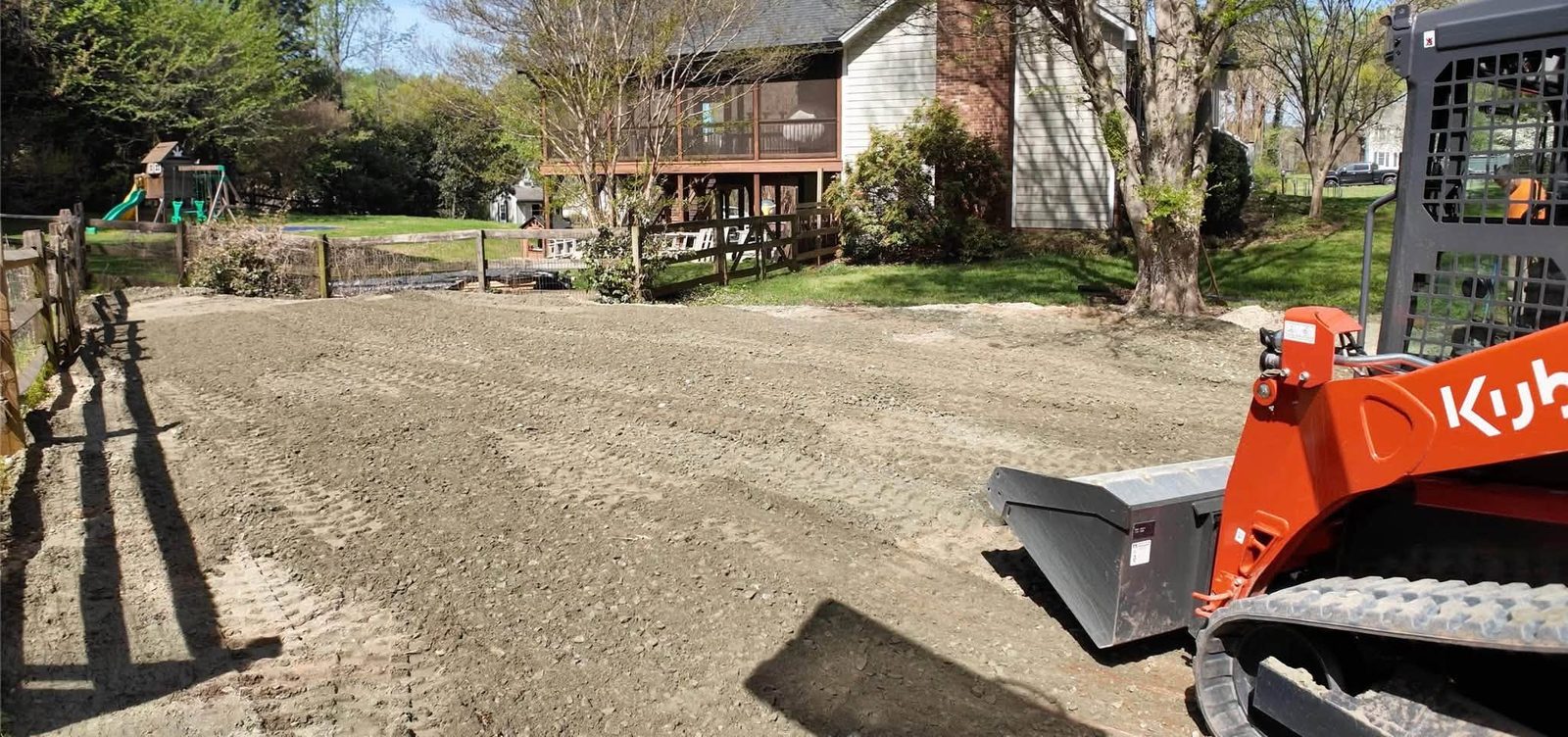
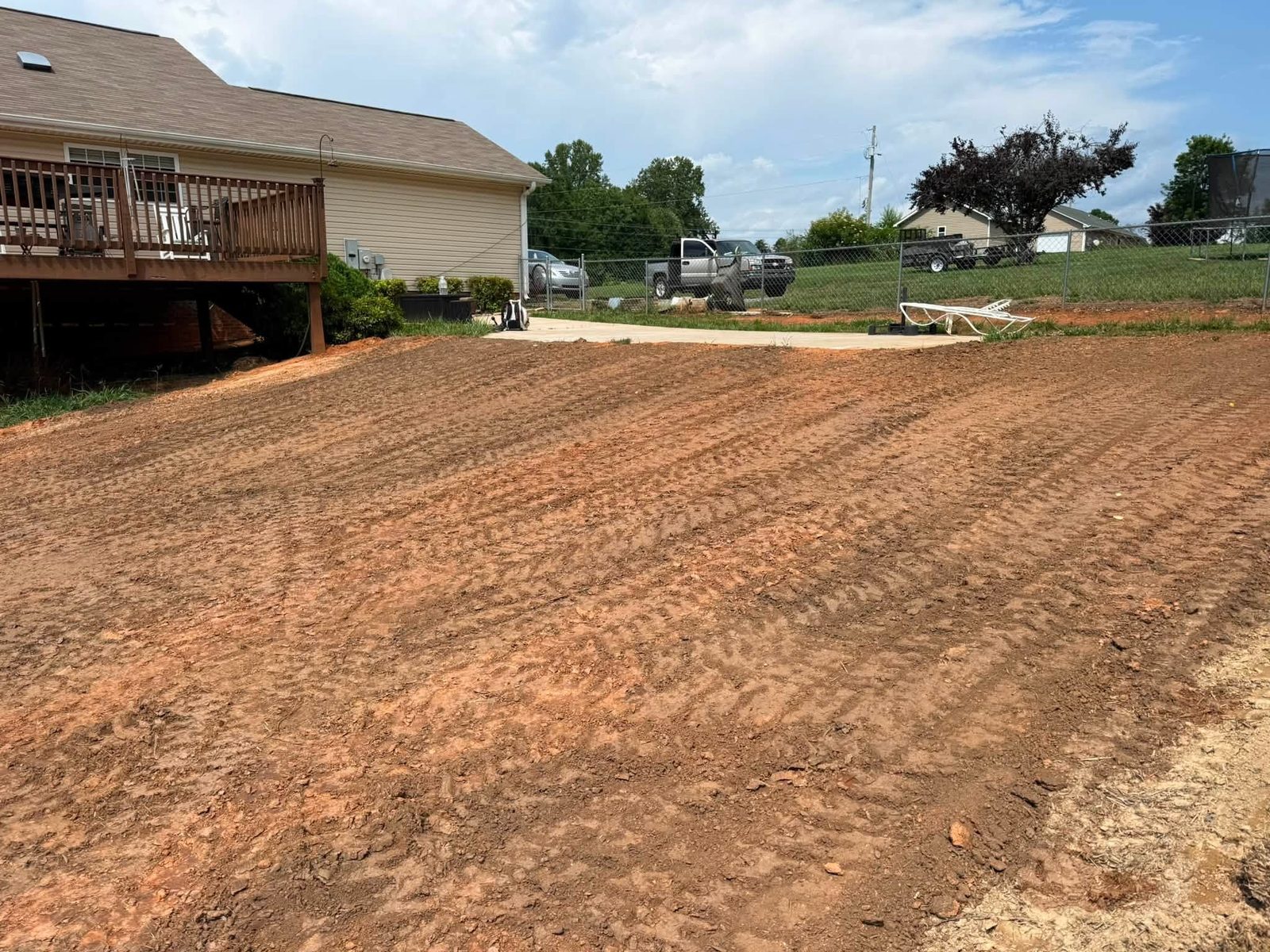
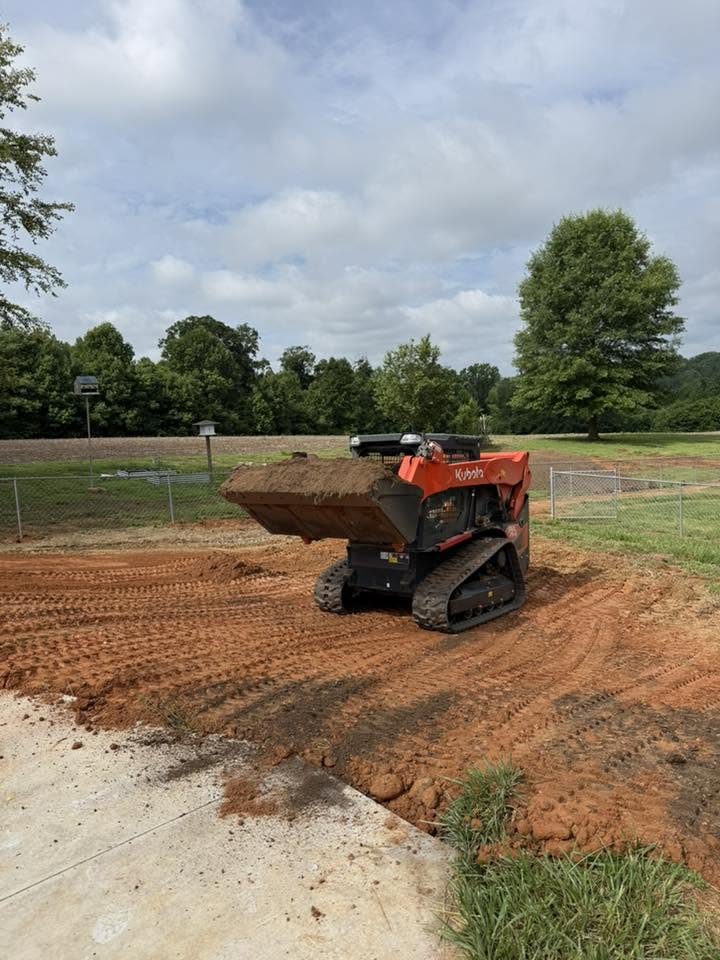
A standard residential grading engagement here covers several sequential phases. Clearing and rough grading establish the base elevation and remove organic material from the building envelope. Finish grading brings the lot to within tolerances for foundation work, driveway approaches, and permanent seeding. Drainage shaping — positive slope away from the foundation on all sides — is a code requirement and is where the most judgment is required on flat Piedmont lots where water has nowhere obvious to go.
Driveway cuts, culvert installations, and site access prep are commonly bundled into the same mobilization. On lots carved out of former agricultural tracts, topsoil stripping and stockpiling may be necessary before grading begins: the existing surface layer can carry enough organic content to be unsuitable beneath a slab or crawl space without amendment or replacement, and a competent contractor will flag that at the site visit rather than after the first inspection.
Temporary erosion and sediment controls go in before the blade moves and remain through final stabilization. Silt fencing, stabilized construction entrances, and inlet protection are required components of a compliant scope, not optional add-ons. Site preparation is the broader category that encompasses grading alongside tree removal, stump grinding, utility coordination, and the erosion controls that protect the site and neighboring properties throughout earthwork.
What grading costs in Forsyth County
The working numbers below reflect typical Piedmont residential lots — quarter-acre to full-acre home sites on relatively flat ground around Tobaccoville. Steep grades, large culverts, or engineered fill push toward the upper ranges. The full grading cost breakdown covers individual line items; the table gives the practical picture for standard residential work.
| Scope | Typical Range |
|---|---|
| Rough grade only, lot under half an acre | $1,200 – $2,200 |
| Finish grade, standard residential lot | $1,800 – $3,500 |
| Drainage shaping added to finish grade | $2,500 – $4,500 |
| Full site prep with clearing and grading | $3,500 – $5,500 |
| Heavy fill, large regrade, or acreage lots | Up to $8,000 |
Several factors push a job toward the top of these ranges: mobilization distance from Winston-Salem, soil conditions requiring additional passes, the need for an engineered grading plan, and erosion control measures that exceed the basic permit threshold. Any quote that addresses only finish elevation without a drainage plan is incomplete — that line item carries real weight on a flat Forsyth County lot.
Permits and erosion rules before a blade hits the ground
North Carolina requires an erosion and sediment control permit for any land-disturbing activity of one acre or more. That program runs through the NC DEQ Erosion and Sediment Control division and applies to residential development as directly as it does commercial work. For residential lots under an acre, Forsyth County may still require a local grading permit or land-disturbance review, particularly near streams, wetland buffers, or existing stormwater infrastructure.
The water history here reinforces that caution. Forsyth County carries 22 federal disaster declarations spanning 1977-2026, most of them tied to storm and flood events. That record explains why the county administers stormwater requirements carefully on new development — contractors working lots near drainage channels or low-lying areas should expect questions about post-construction stormwater routing as part of the permitting conversation.
For sites of one acre or more, the EPA's NPDES stormwater Construction General Permit sets the federal baseline for construction activity. A contractor who has not filed a Notice of Intent for a qualifying site creates compliance exposure for the property owner as well as themselves. Ask for confirmation of permit status before earthwork begins.
Three checks before signing a grading contract
First, ask for a site-specific drainage plan before the pricing conversation goes further. On flat Piedmont clay, drainage is not a feature of the grade — it defines the grade. A contractor who quotes a finish elevation without addressing where water routes after a heavy rain is solving the wrong problem, and correction after the fact costs considerably more than getting it right at the start.
Second, ask how erosion control is staged relative to the first day of earthwork. NC DEQ requires controls in place before disturbance begins, not after someone raises a concern. The cost of a stop-work order and required remediation consistently exceeds the cost of compliant installation from day one.
Third, ask for references from other Forsyth County residential lots, not just a general portfolio. Heavy red clay in the Piedmont responds to different equipment and technique than coastal sand or mountain rock. Crews experienced with this soil type leave a tighter finish grade and manage water during active work more effectively than those learning the material on your lot.