Forsyth County winters run on ice, not inches
A storm that drops three inches of snow in the mountains often arrives in Winston-Salem as a quarter-inch of freezing rain followed by sleet and then snow — in that order, on top of whatever the temperature is doing to the pavement. On the rolling terrain between Lewisville and the eastern suburbs, that sequence closes schools and parks vehicles in ditches. The headline snowfall number is rarely the operative threat. Snow plowing in Winston-Salem is fundamentally ice management that sometimes involves a plow.
That distinction changes what good service looks like. A provider who times arrival to accumulation thresholds — treating this like a high-snowfall job — shows up after the damage is already done. Pre-treatment and timing judgment are what separate a useful winter service from a plow running a day late on a surface that already failed.
The 22 federal disaster declarations spanning 1977-2026 in this county document the pattern: winter weather events here are serious enough to trigger federal response, and many involve mixed precipitation rather than straight snowfall. Forsyth County's geography — sitting between the mountains and the coast, with enough elevation to chill and enough warm-air moisture to ice — makes the mixed-event scenario the norm, not the exception.
What gets serviced and what falls to the county
Forsyth County and NCDOT maintain primary roads; most streets in established subdivisions fall under public maintenance. What doesn't get county plows: driveways, parking lots, HOA roads, and the private roads serving rural parcels and gated communities across the county. If the road to your property or business isn't on a Forsyth County maintenance schedule, the arrangement is yours to make.
Gravel driveways require a different approach than paved surfaces. A blade set at standard depth pulls rock, creates ruts, and damages the surface that will need attention in the spring. Proper winter service on a gravel driveway means a raised blade with a float setting and sand for traction rather than rock salt, which works down into the surface and causes heaving through freeze-thaw cycles. Longer unpaved access lanes share the same logic as private road repair work: drainage slope matters, ruts hold ice, and a marginal road surface in October becomes a real problem in January.
Commercial properties with significant impervious surfaces should confirm whether a stormwater plan governs their site. Salt-laden snowmelt from treated lots is a genuine water quality concern near drainage features. The U.S. Environmental Protection Agency NPDES stormwater program covers many commercial and industrial properties regardless of season, and regular salt application adds a consideration that warm-weather plans often don't address.
What scope and timing do to the price
Pricing in this region reflects the infrequency of events. Most residential clients pay per push rather than committing to a flat seasonal rate, because a mild winter means paying for service that never runs. Seasonal contracts make more sense for commercial clients with liability exposure who need guaranteed response regardless of storm size or timing.
| Scope | Typical Range | Notes |
|---|---|---|
| Residential driveway, single push | $75–$150 | Standard two-car length; longer runs price higher |
| Residential driveway + walks + salt | $100–$200 | Includes hand-shovel or walk-behind on sidewalks |
| Small commercial lot (under 10,000 sq ft) | $200–$400 | Open surface; islands and tight lanes add cost |
| Mid-size commercial lot | $400–$900 | Includes salting; stacking area availability affects price |
| Seasonal residential contract | $500–$1,200 per season | Unlimited pushes; trigger depth set per contract |
| Liquid anti-icing pre-treatment | $75–$200 per application | Commercial; most effective applied before precipitation starts |
Depth of snow is one variable; timing is another. A push at 4 a.m. before a business opens commands a different rate than a mid-morning run after the lot has warmed. Confirm whether a quote covers the full event or each return trip. An ice storm that refreezes after treatment is a second billing event in most contracts, not a callback covered by the original push.
Salt, sand, and when temperature overrules the formula
Rock salt loses effectiveness when pavement temperatures drop below roughly 15°F. In the Piedmont that's an edge case most winters, but the fast, cold ice events that hit Winston-Salem hardest are exactly the ones where salt spread on a sub-15° surface is doing work that won't work. Sand provides traction when chemistry can't melt; pre-applied liquid brine prevents bonding before precipitation starts, which is where most of the leverage is in a freezing-rain event. Getting the pre-treatment window right means watching the forecast for the freeze, not waiting for accumulation to trigger a dispatch.
Crew safety on winter jobs falls under NC Department of Labor OSHA standards for slip, fall, and equipment operation in adverse conditions. Any provider running a multi-vehicle winter operation should be able to describe their safety protocol — not as a box to check but because a crew that cuts corners on its own safety tends to cut corners on the job itself.
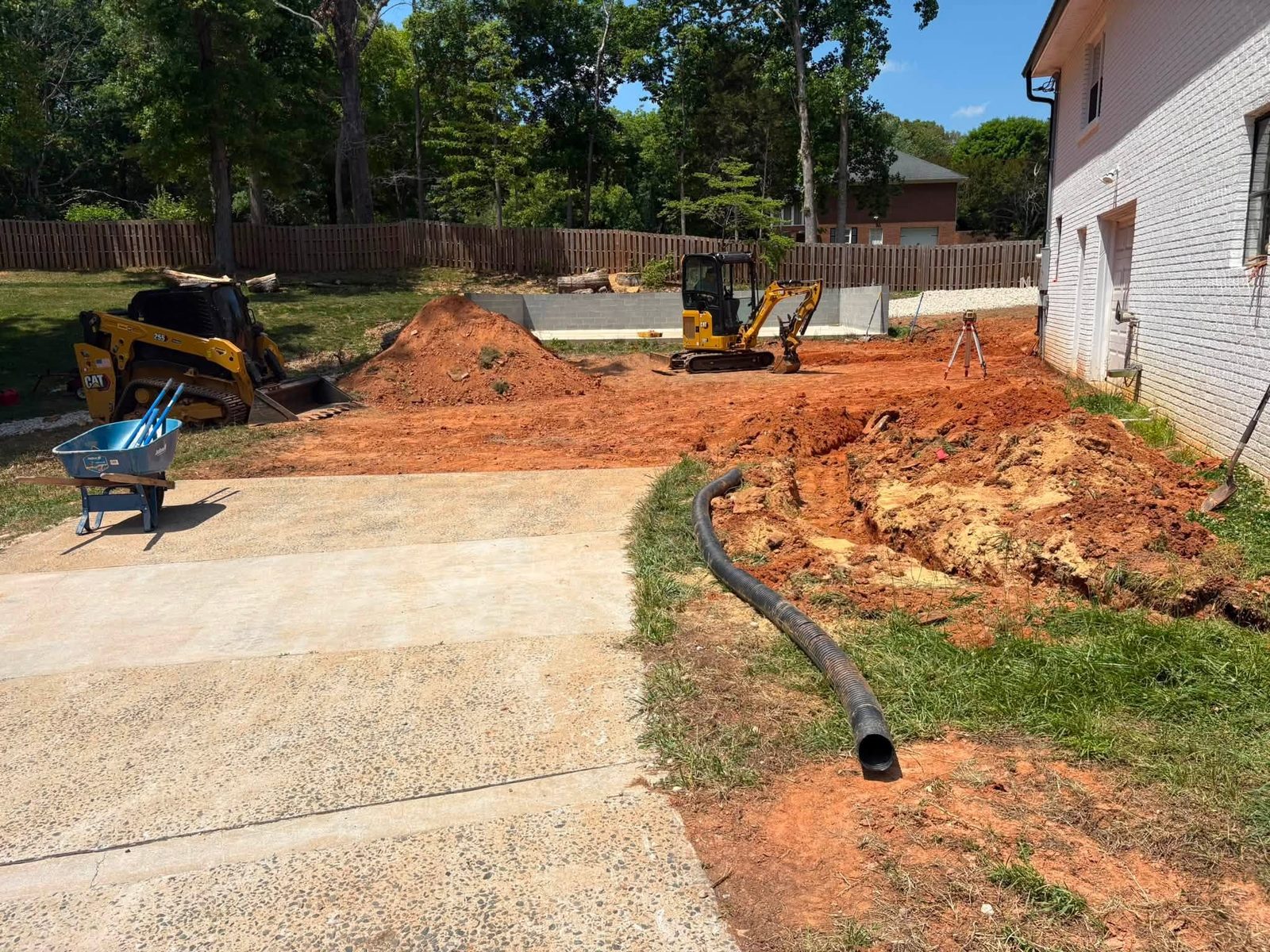
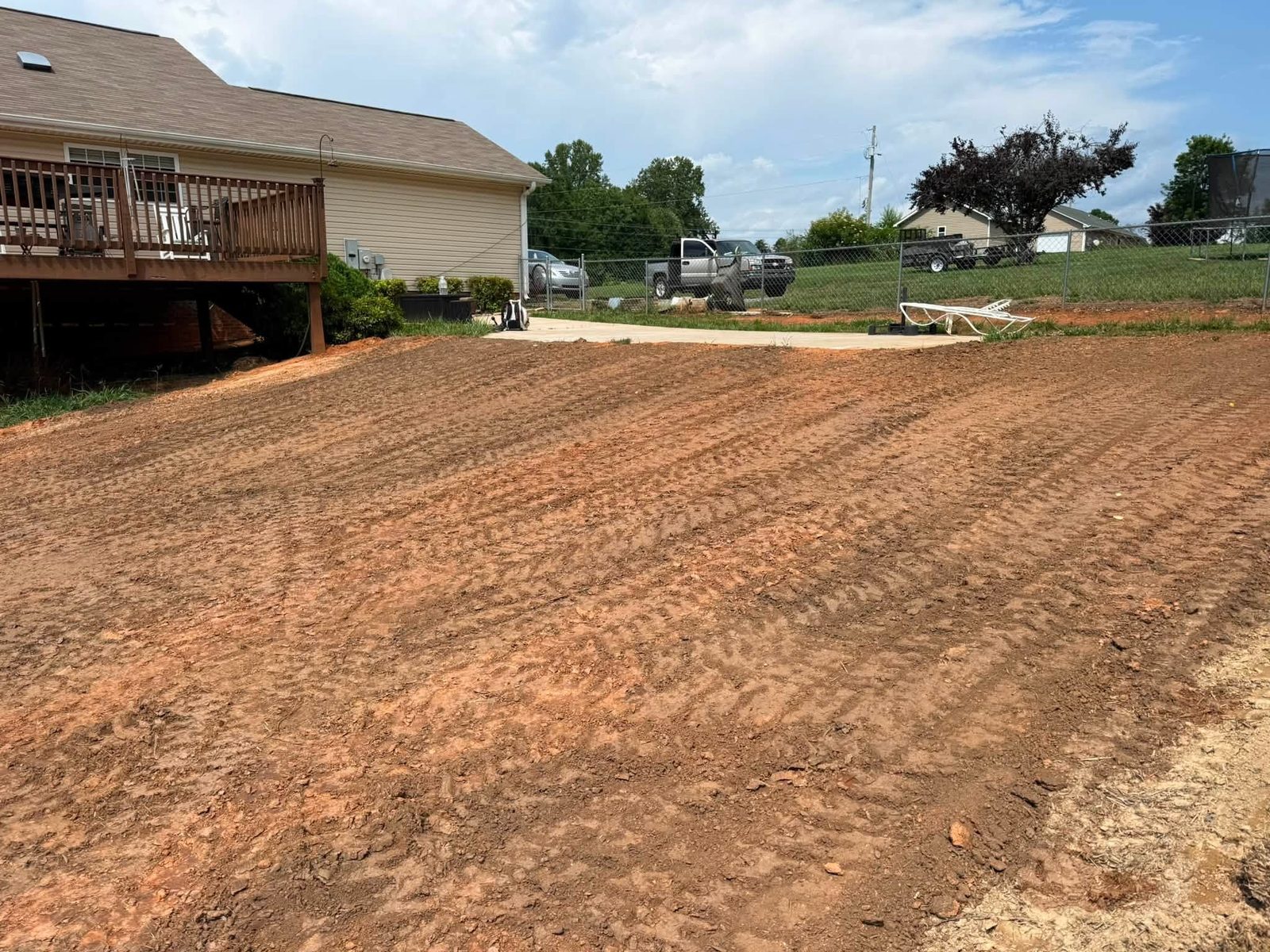
The salt and drainage questions also connect back to the site. Properties where water pools before a freeze re-ice faster after treatment because they never drain cleanly between applications. That's a grading and excavation problem rather than a winter service problem, and the right time to address it is before the season starts. A well-graded surface with positive drainage to a proper outlet holds treatment longer and requires fewer return trips to stay clear.
Three things to nail down before any winter agreement
What is the trigger? What accumulation or weather event starts the clock on your service? One inch and two inches are very different thresholds in a county where a full season might deliver four plowable events. Confirm whether a freezing-rain event with no measurable snow triggers a response. In Forsyth County, that scenario is not hypothetical — it is a typical winter.
What is the response window? How many hours after a trigger does service arrive? A commercial client who needs a lot cleared before 6 a.m. has a fundamentally different requirement than a residential client who can wait until mid-morning. Ask how many routes run simultaneously and whether your property sits on a priority tier, not just a route.
What gets documented? After a property has been serviced and a slip occurs, a log of what was applied, when, at what temperature, and by whom is the record a property owner can stand behind. The NC Department of Labor outlines employer obligations for safe working conditions; that same documentation discipline should carry over to the contractor's work log for every service call. Providers who record their runs give clients defensible evidence; those who don't are asking clients to absorb the risk on faith.