Why Forsyth County clay keeps swallowing gravel
Gravel driveways here fail on a schedule, and the reason is rarely the gravel. Forsyth County sits on Piedmont red clay — a subsoil that compresses under load, expands when wet, and sheds water rather than passing it downward. Residential areas across Winston-Salem share this subbase: older neighborhoods near downtown, newer subdivisions spreading toward Clemmons and Kernersville, rural lots on county roads — all of them rest on the same poorly draining clay horizon. When rain saturates that layer, the water has nowhere to go but sideways, and it takes the stone with it.
Adding a fresh load of crusher run on top of a wet clay subbase does not fix this. It restarts the clock. The gravel sinks into the soft layer under traffic, the edges push out, and within a season the drive is rutted and muddy again. The real question before any stone is ordered: where is the water going, and why is it staying under the drive?
Drainage before stone: the sequence that works
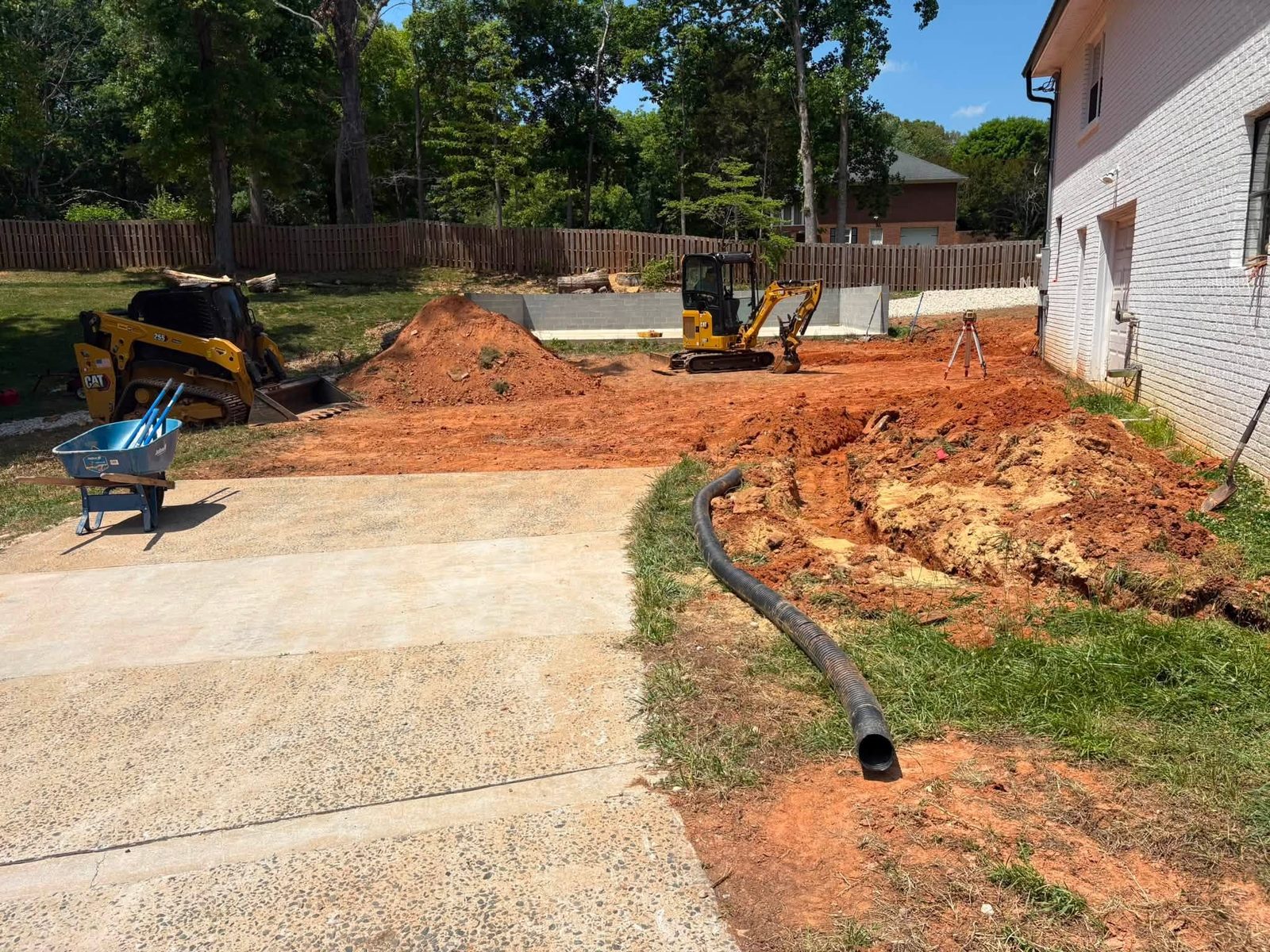
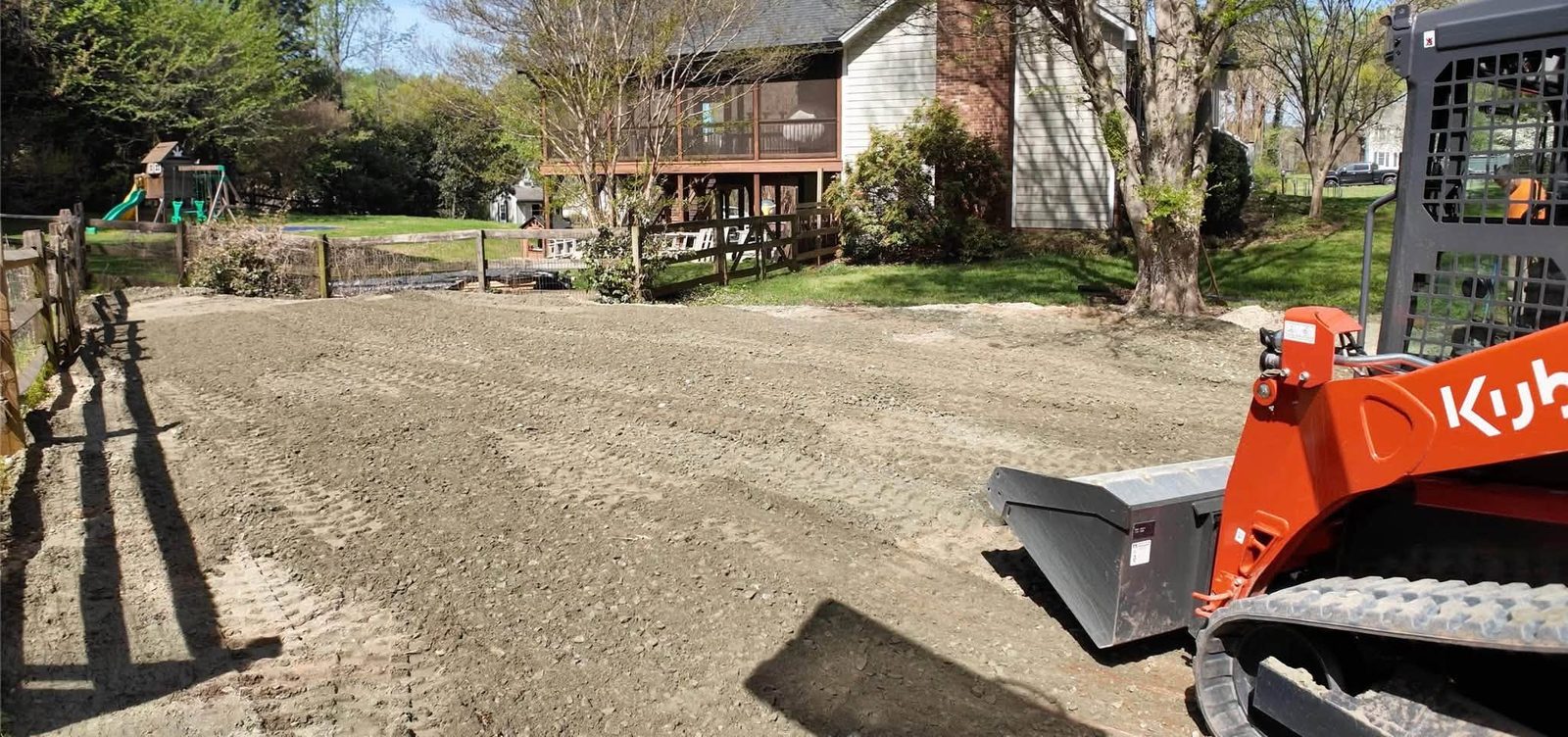
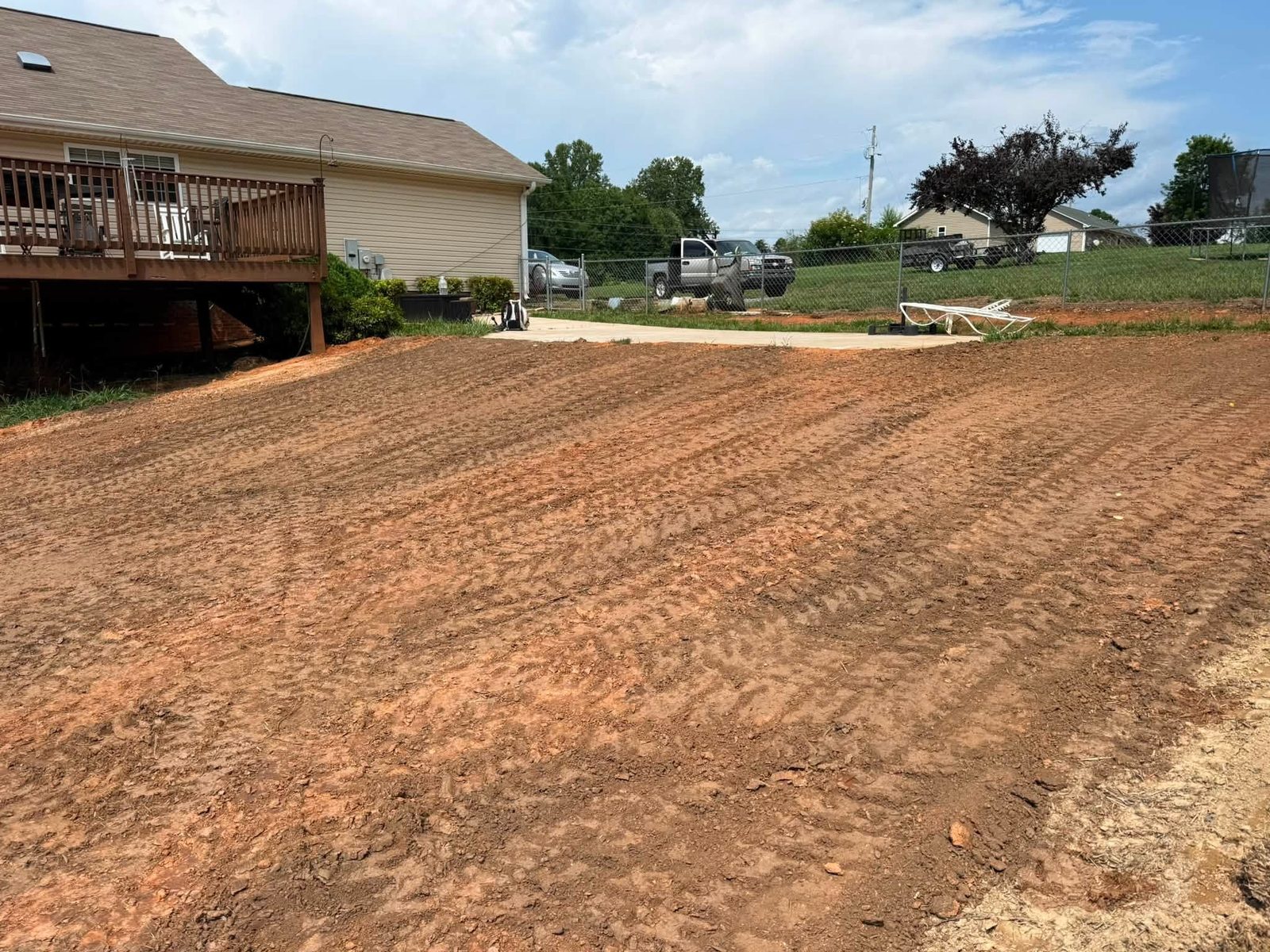
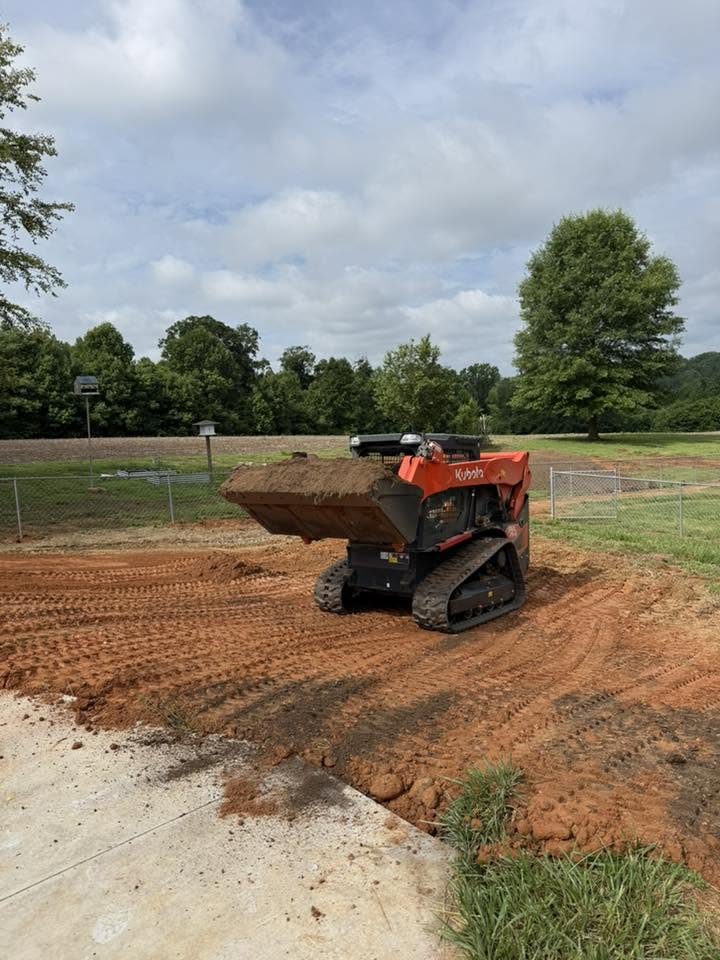
A lasting repair runs in order — subbase, drainage, then stone. Reversing steps two and three is the single most common mistake on driveway jobs in this county. The subbase needs to be cut and graded to a slight crown so surface water sheds to the sides rather than pooling in the center. If the surrounding grade slopes toward the driveway, that water needs an intercept before it reaches the subbase at all.
A french drain along the low edge of the drive is the most common intercept for Forsyth County conditions — see the full scope breakdown at french drain installation. On flat lots where the driveway bisects the natural drainage path, a cross-pipe under the drive may be the missing piece. On sloped drives, both may be needed. The NC DEQ Erosion and Sediment Control program establishes minimum requirements for how disturbed soil and redirected runoff are managed during site work — relevant whenever the job involves cutting into the subbase or routing water to a different outlet than it currently uses.
A layer of geotextile fabric between the subgrade and the gravel layer adds separation that clay cannot provide on its own. It lets water pass while keeping fine clay particles from migrating up into the stone. On any job where old gravel has disappeared into the clay — common on driveways repeatedly topped off without drainage correction — fabric is not optional.
What the fix actually costs
Price varies by length, drainage complexity, and how far the existing material has degraded. The table below shows typical scope-to-range relationships for Forsyth County residential driveways; see the full gravel driveway cost guide for line-item detail.
| Scope | Typical Range |
|---|---|
| Surface regrade and gravel topdress (drainage adequate) | $350–$900 |
| Subbase cut, geotextile fabric, and full stone relay | $1,200–$2,800 |
| French drain installation along driveway edge | $800–$2,000 |
| Culvert or cross-drain under driveway | $600–$1,800 |
| Full rebuild with drainage correction | $2,500–$5,500 |
Jobs that have been repeatedly topped off without addressing drainage tend to land at the higher end: the old contaminated gravel has to come out before anything else can go in, and that material removal adds both time and hauling cost. A drive that gets the drainage right the first time holds for years; one that skips it returns to this same problem within two to three seasons.
What storm history adds to every job scope
Forsyth County has recorded 22 federal disaster declarations over 1977-2026, the majority tied to storm and flood events. Each one pushed water volumes the original driveway drainage was never designed to handle. Subbase saturation that happens repeatedly over years does cumulative damage — the clay layer below the gravel gets worked into a finer, less stable consistency with each cycle, and the gravel above it migrates further each time.
The U.S. Environmental Protection Agency's stormwater program tracks the relationship between developed land and increased runoff: as the county has grown, rainfall that once soaked into open ground now moves across pavement and driveways to the nearest low point. For driveways that sit at or near those low points, the water load has increased even when the driveway itself has not changed. Understanding that pattern matters when sizing the drainage solution — a french drain adequate for a typical rain event may be undersized for the events this county actually records.
Choosing the right crew for Piedmont clay conditions
Grading and site work in North Carolina is subject to licensing requirements once jobs cross certain thresholds — verify current contractor license status and confirm any local permitting requirements directly with Forsyth County before work begins. For smaller residential jobs the licensing threshold may not apply, but insurance and references matter regardless of project size.
Ask any contractor the drainage question first: what is causing the saturation, and how does the proposed fix address it at the source? A bid that skips the drainage step is not a lower price — it is a deferred cost. The right answer involves a site look at the surrounding grade, the outlet for the corrected drainage, and where water originates before it reaches the drive. A contractor who has worked Forsyth County conditions will recognize Piedmont clay on sight and know it requires a different approach than sandy or rocky subgrades elsewhere in the state.
A well-built driveway on a corrected subbase can hold for a decade or more without major intervention. The gravel driveways guide covers stone selection, crown profiles, and maintenance intervals that apply specifically to Piedmont clay subgrades.