Why red clay changes every drainage job in Pfafftown
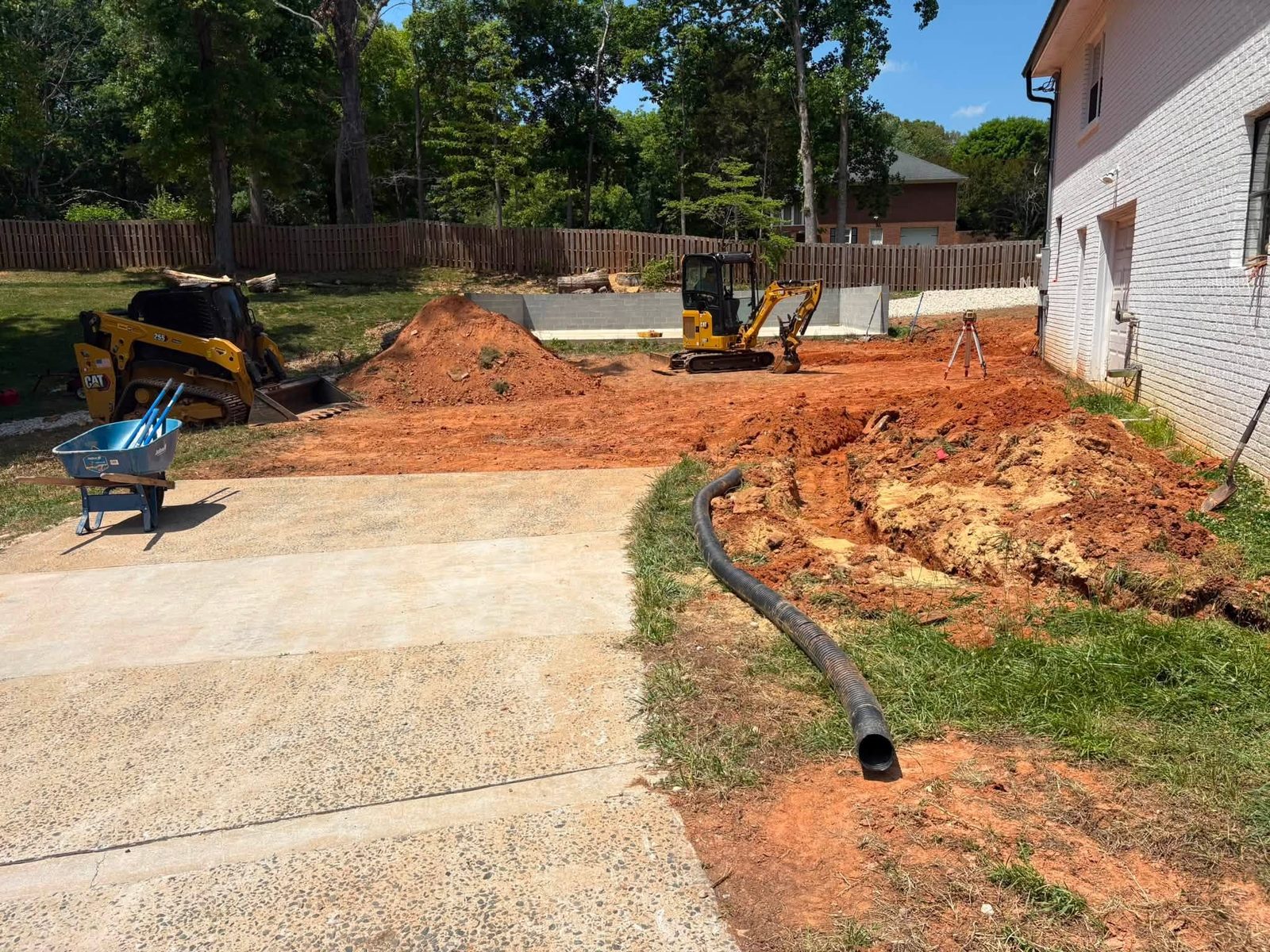
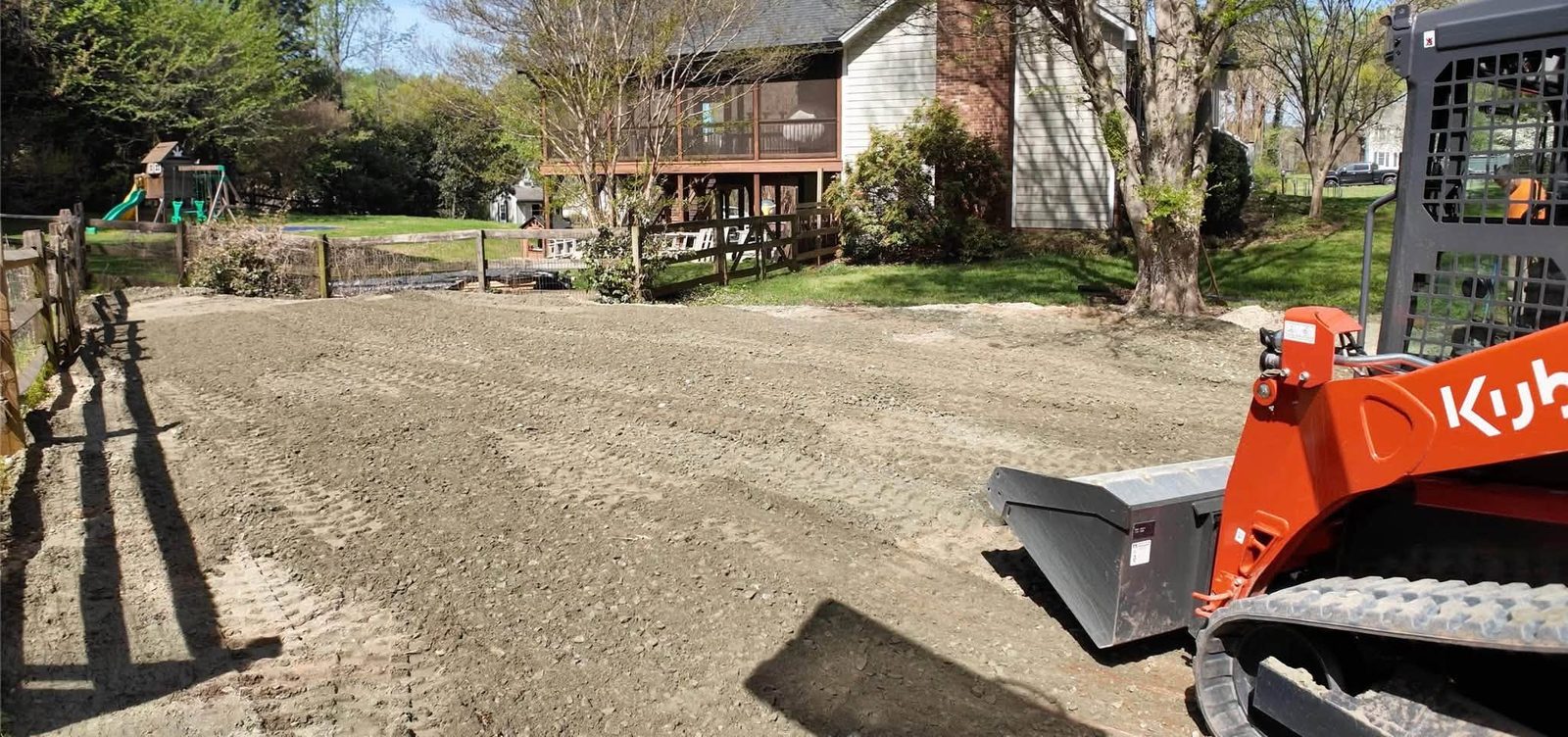
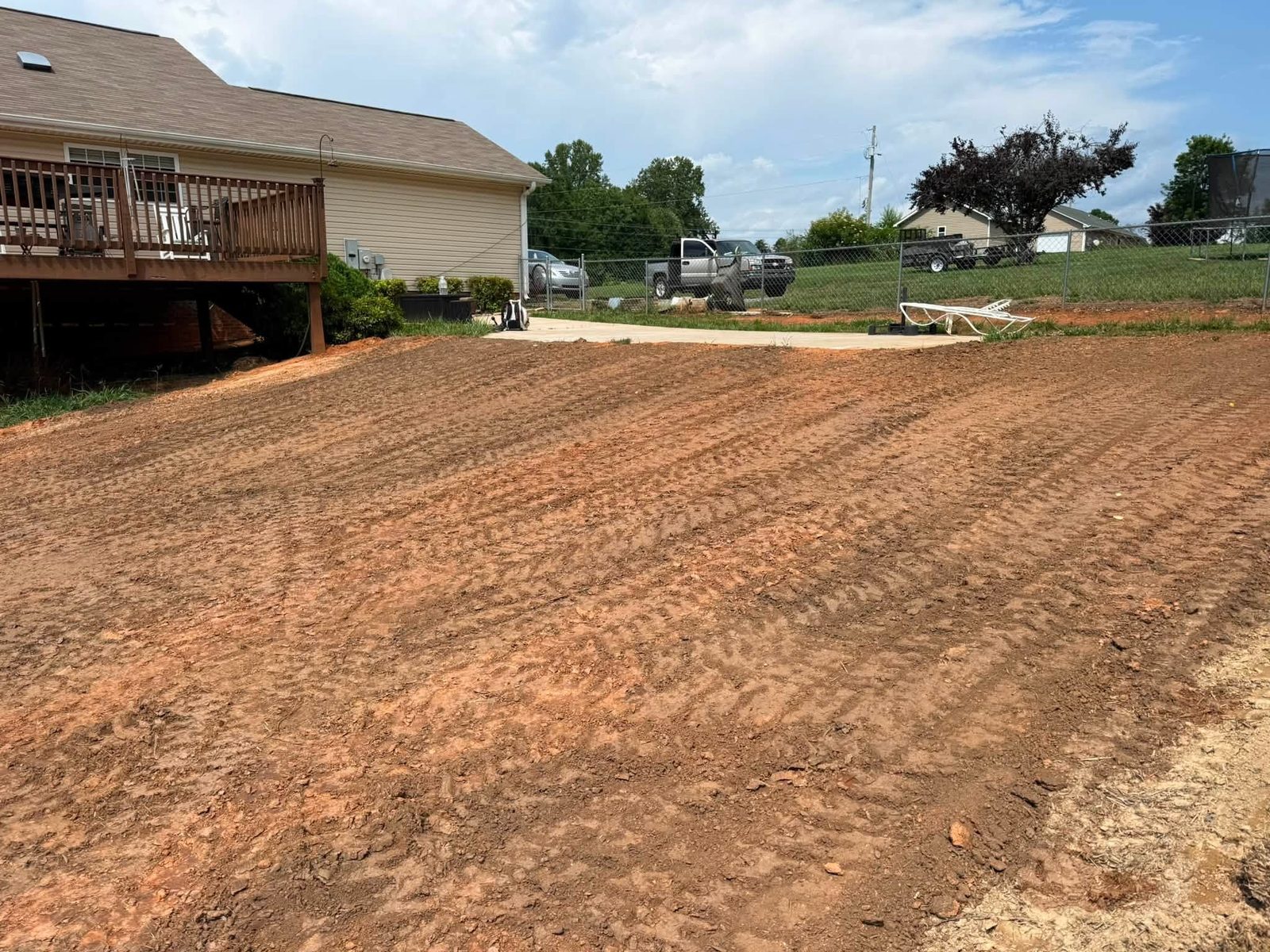
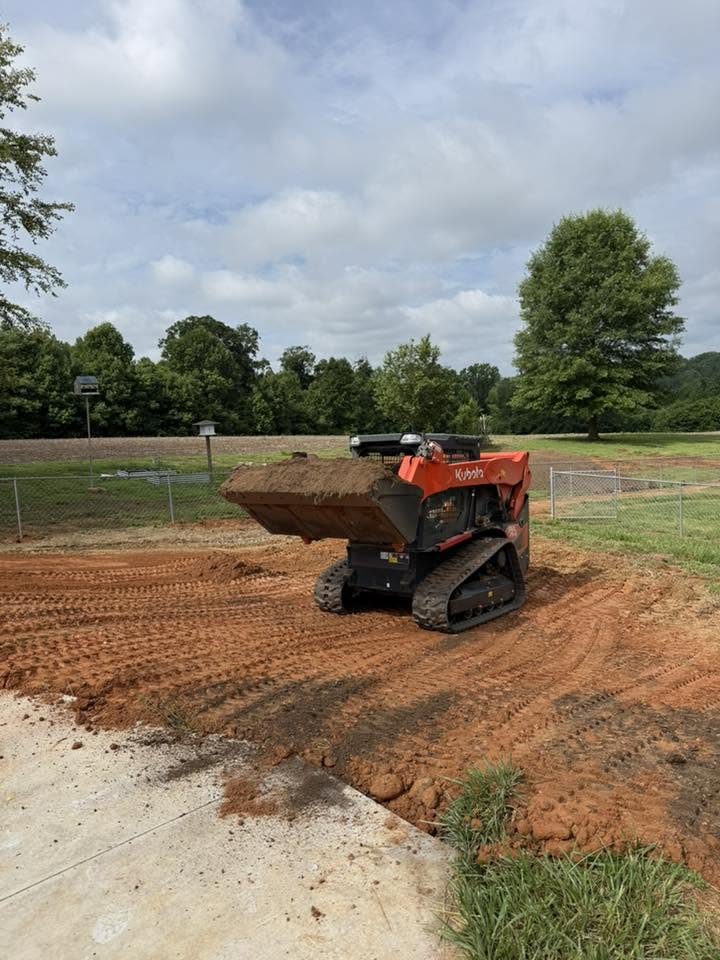
Pfafftown sits on the same Piedmont clay shelf that runs across Forsyth County's northwestern edge — the Cecil and Chewacla soil series that give residential yards a reddish-brown cast and a near-impermeable surface once saturated. That clay absorbs the first fraction of an inch of rainfall and sheds the rest as sheet flow: water pools fast, moves slowly, and stays for days. A French drain sized for a sandy-soil lot in the Sandhills will underperform here by design.
The county's terrain is gently rolling rather than dramatically sloped, which sounds like a drainage advantage until you realize flat Piedmont yards have no natural grade to push water off the lot. Older ranch-style homes off Idols Road and Lewisville-Clemmons Road were often graded with minimal pitch away from the foundation — enough for the year they were built, not enough to handle what the lot has settled into since. That's where most drainage calls in this area originate: water that has nowhere obvious to go.
Yard drainage symptoms worth acting on
Standing water that hasn't drained within 24 hours after rain is the threshold worth taking seriously. So is foundation mulch that stays dark all week, a crawl space that smells earthy in summer, soil that has pulled away from the footing on one side of the house, and erosion channels cutting through the lawn toward a downhill neighbor. The standing water in yard guide covers which symptoms carry structural risk and which are cosmetic — a useful read before calling anyone out.
Forsyth County's weather history is relevant to drainage planning. This county has 22 federal disaster declarations on record spanning 1977-2026, and storm and flood events account for the bulk of them. This is not a region that takes one big hit and recovers dry — it's a humid piedmont that applies water pressure to foundations and drainage systems across long wet seasons. French drains designed for sustained load behave differently than systems installed to handle a single flood scenario.
What Forsyth County drainage projects cost
Scope drives price more than any single variable. The table below covers the common project types in this market; the full French drain cost page breaks down individual line items — trench depth, pipe diameter, aggregate spec, and outlet structures.
| Project scope | Typical range |
|---|---|
| Single French drain run, 50–80 ft | $3,000–$5,500 |
| French drain plus surface drain combination | $4,500–$8,000 |
| Foundation perimeter drain | $5,000–$9,000 |
| Full yard system, multiple drain runs | $7,500–$12,000 |
| Whole-yard regrading | Starting around $15,000 |
Red clay adds two cost factors that sandy-soil quotes don't include: heavier aggregate requirements — washed #57 stone performs significantly better than bank-run gravel in clay — and geotextile fabric to keep stone from migrating into surrounding soil over time. Installations that skip these line items to lower the bid tend to clog and fail within a few seasons.
Outlet cost is the piece most estimates understate. Getting water to a legal outlet — a county storm inlet, a roadside drainage swale, or a downhill perimeter — can rival the cost of the trench itself when the nearest discharge point is far from the problem area. Any bid that doesn't address the outlet specifically is not scoping the full job.
Permits, runoff rules, and the neighbor question
Most single-lot French drain installations in Pfafftown fall below the one-acre disturbance threshold that triggers formal review under the NC DEQ Erosion and Sediment Control program. Grading work that redirects significant runoff is a different matter. Forsyth County administers stormwater ordinances governing where water can be discharged and whether an existing drainage easement is affected — questions worth confirming before a contractor starts moving soil.
Jobs that outlet near a natural drainage feature, an ephemeral channel, or a tributary feeding into the Yadkin River basin may fall under the EPA's NPDES stormwater program, particularly for projects large enough to constitute a land-disturbance activity. The practical check for most homeowners: ask your contractor which permits apply, get the answer in writing, and verify any outlet location against county easement maps before the crew breaks ground. Redirecting water onto a neighbor's property is a liability that no French drain can fix retroactively.
What a proper installation looks like on clay soil
The French drain installation process guide covers methodology in full. For Forsyth County clay specifically, the non-negotiables are: a site walk with actual grade measurements before any pricing is discussed (phone estimates on clay lots are guesses); perforated pipe specified for the expected flow volume; washed aggregate rather than bank-run fill; geotextile fabric lining the trench to separate stone from clay; and a confirmed, legal outlet location before any digging starts.
Two questions filter out most problems when evaluating a contractor: where does the water go when it exits the pipe, and what prevents the aggregate bed from silting up over time. If either answer is vague, the job is not fully scoped. A system that moves water to an undefined outlet, or that skips fabric to trim the quote, performs for a season and eventually becomes a landscaping problem you pay to dig up and redo.