The ground under King's expanding edge
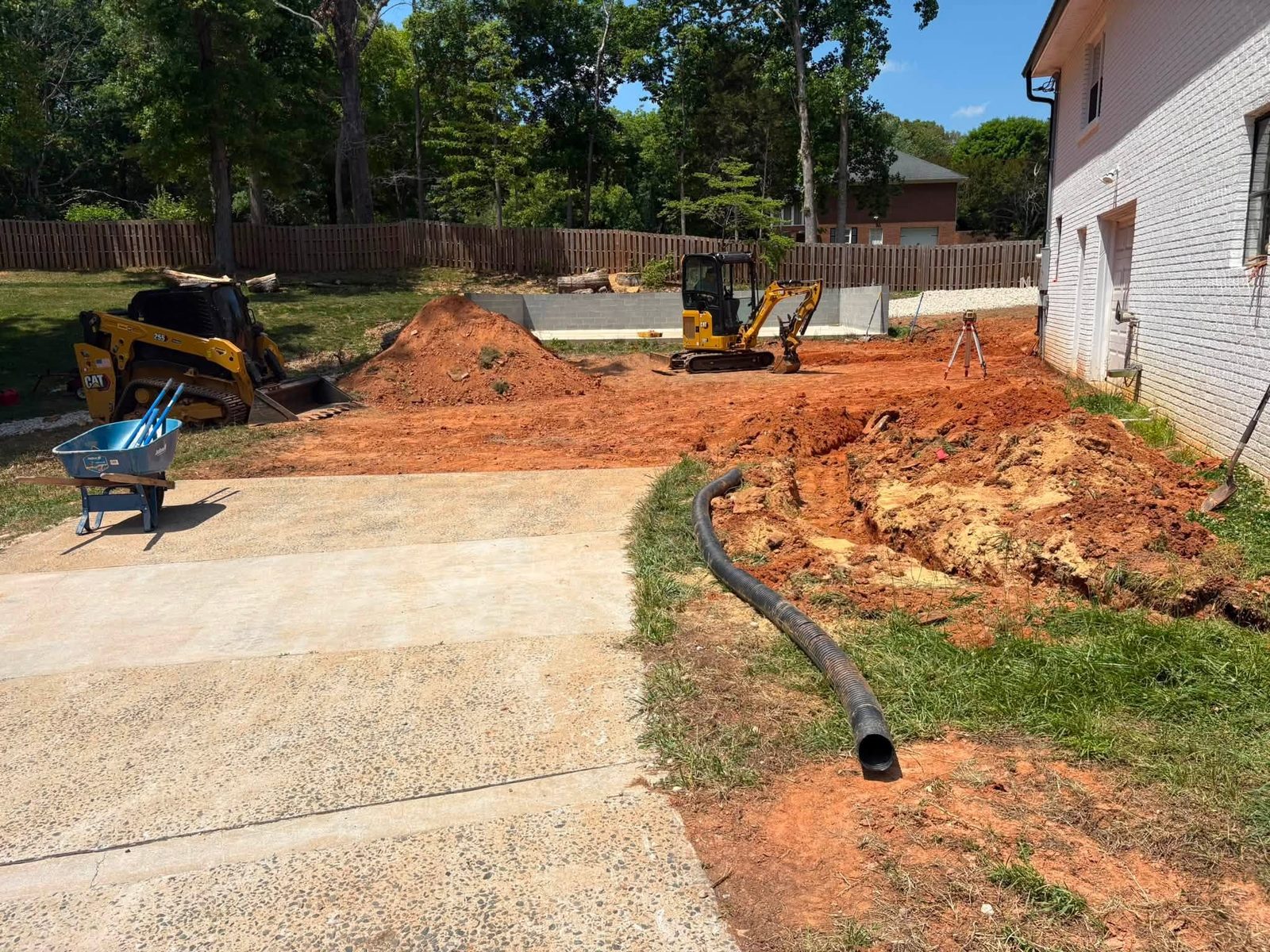
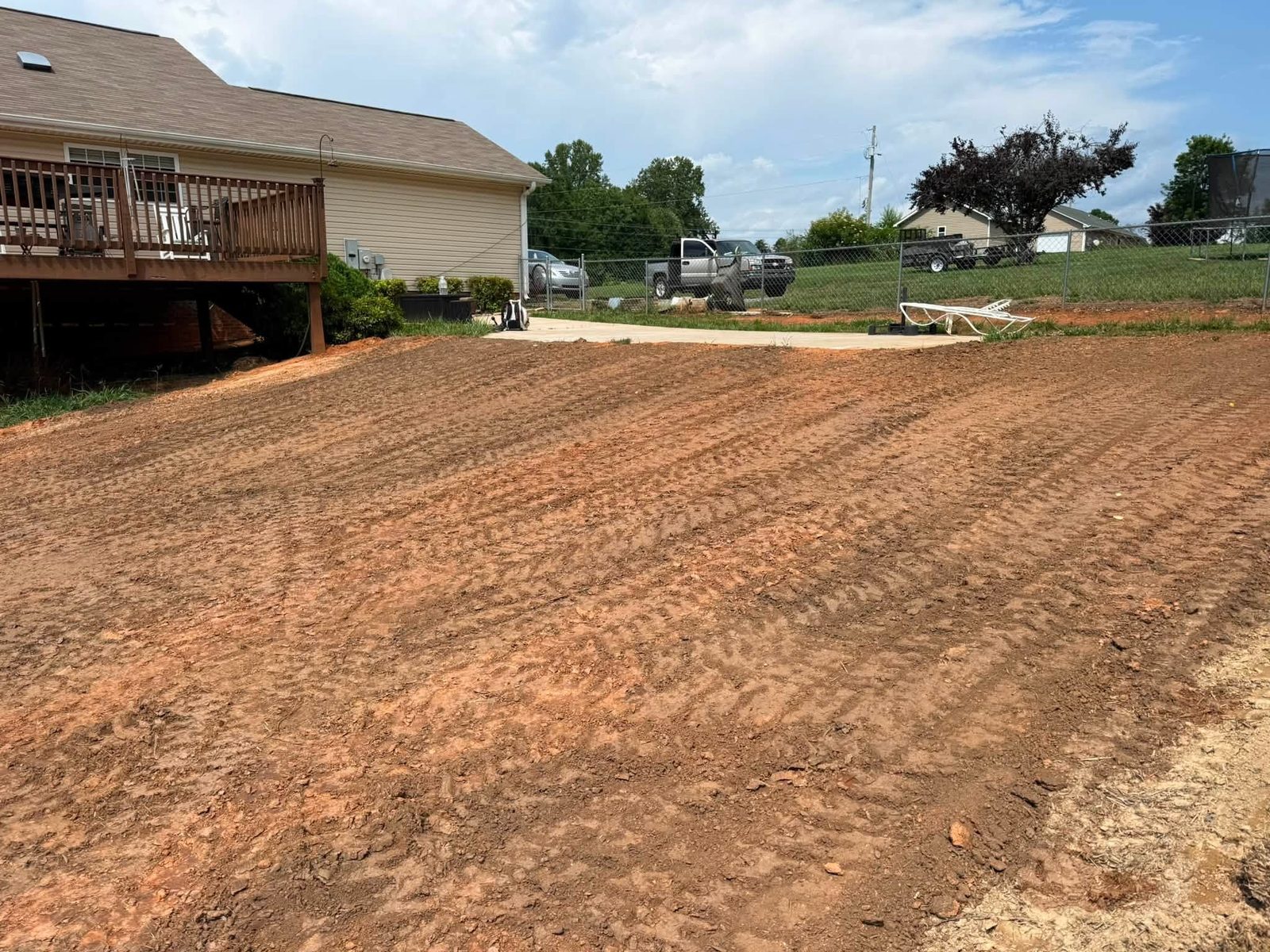
King sits on the Forsyth County line where residents working in Winston-Salem have been building out into quieter Stokes County ground for two decades — new subdivisions pressed into farmland and mixed hardwood tracts that spent the last fifty years as tobacco field, cedar edge, or second-growth oak and hickory. The soil beneath that canopy is Piedmont red clay: dense, slow to drain, and prone to moving fast as sediment when exposed. A clearing crew that breaks several acres of that clay without controlling runoff does not just create a regulatory problem — it creates a neighbor problem, washing material into drainage channels and onto adjacent properties before vegetative cover can reestablish.
That clay-and-rainfall combination is what separates a King-area clearing quote from a flatland estimate done an hour east. The best scopes address site drainage from the first site visit, not after the equipment leaves. The full picture of what general clearing involves, from initial brush work through final grade, is on the land clearing overview page.
From brush line to ready grade — what a scope actually covers
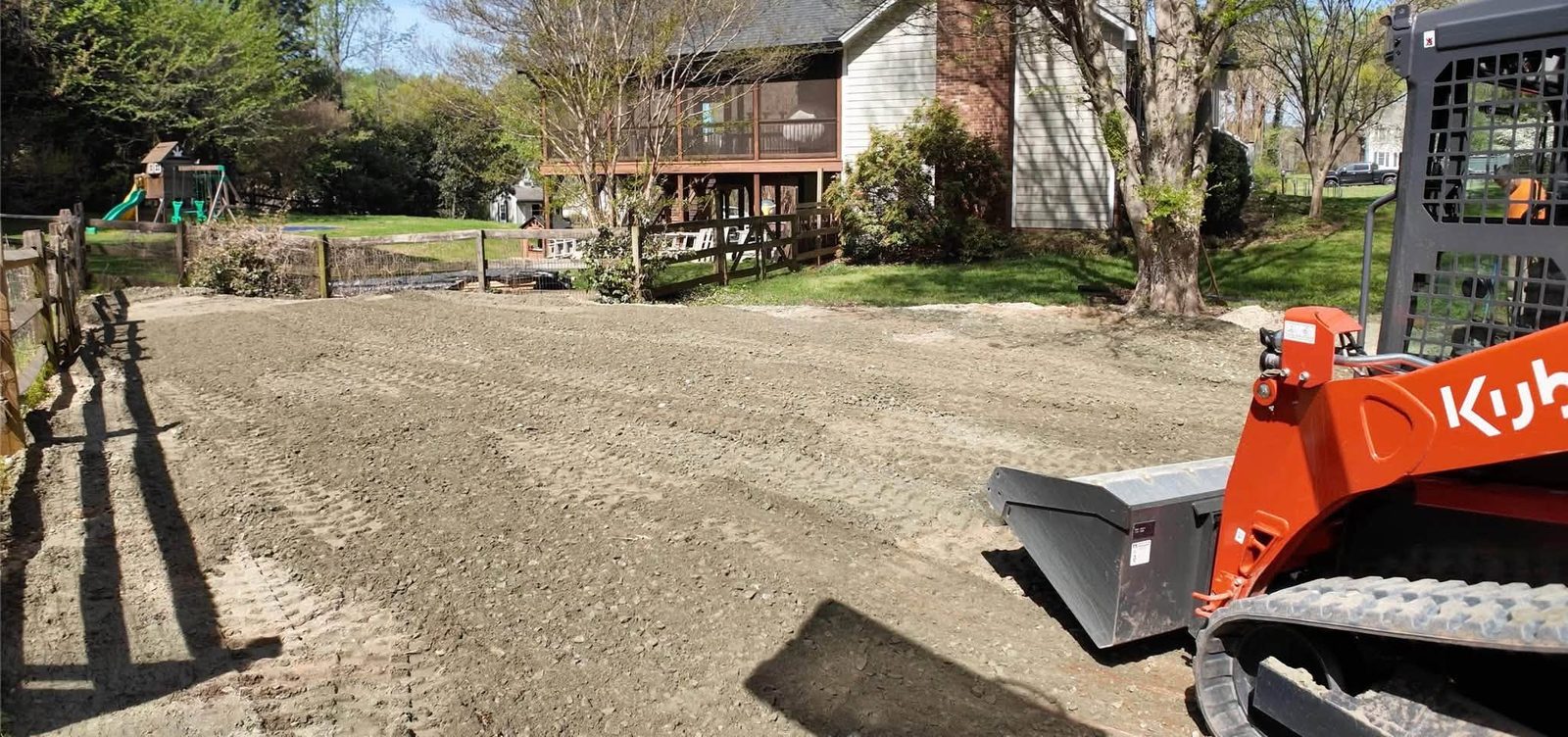
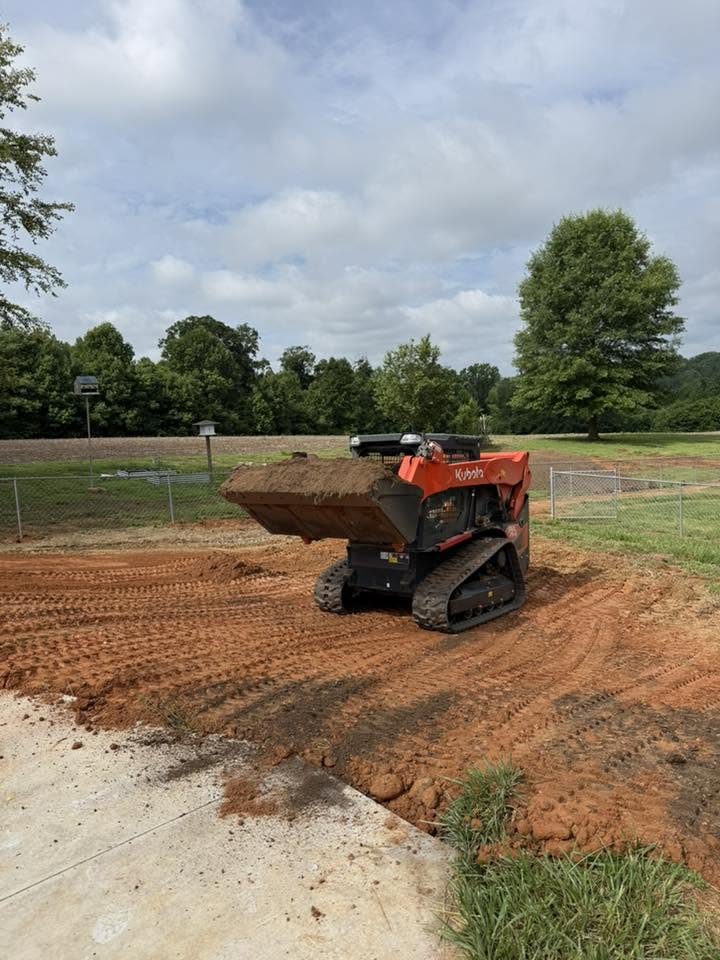
Land clearing in the King area moves through the same broad sequence regardless of lot size: remove above-ground vegetation (brush, scrub trees, and canopy hardwoods), extract stumps if specified, rough-grade the disturbed area to a planned elevation, and establish temporary erosion controls before rain events arrive. Which of those phases a given property needs determines the price more than the acreage alone.
A wooded homesite on the western side of King may need full clearing, stump grinding, and rough grading before a foundation crew can set footings. An infill lot at the edge of an established subdivision may be clear of canopy but dense with mature locust and privet — a narrower scope and a faster timeline. A farm tract transitioning to residential use may have scattered cedar, legacy hardwoods around a planned building envelope, and overgrown field margins that need selective clearing rather than wholesale removal.
For properties where conventional cut-and-haul would produce heavy slash and significant ground disturbance, forestry mulching is sometimes the better approach — equipment grinds vegetation in place, the mulch layer stays on site, and disturbance to the clay surface is reduced compared to tracked equipment and a brush pile.
What King-area clearing typically costs
The ranges in the table below reflect Stokes County conditions: moderate-to-heavy hardwood density, clay soils with real erosion control requirements, and typical residential lot sizes. Slope, access, and stump grinding depth all move individual bids within these bands. The land clearing cost guide breaks each variable down in detail.
| Scope | Typical range |
|---|---|
| Brush and light growth, residential lot | $750 – $2,000 |
| Full canopy clearing, residential lot (stumps excluded) | $1,500 – $4,000 |
| Full clearing with stump grinding, residential lot | $2,500 – $5,000 |
| Full clearing, stumps, and rough grading | $3,500 – $8,000 |
| Heavily wooded acreage, all-in | $8,000 – $10,000+ |
Jobs that involve significant cut-and-fill on rolling Stokes County terrain — common on lots with any topographic variation — often price toward the upper end of the applicable band. Any bid that omits erosion control line items on a job over an acre should be read as incomplete rather than economical.
What NC law requires before the first tree falls
North Carolina's erosion and sediment rules are enforced statewide, and they apply to King-area jobs the same way they apply in any county. The NC DEQ Erosion and Sediment Control program requires an approved erosion control plan for any land-disturbing activity over one acre; smaller disturbed areas still fall under local ordinances that Stokes County administers. Federal NPDES stormwater permit requirements from the U.S. Environmental Protection Agency layer on top for sites disturbing one or more acres — a threshold that a residential lot with clearing and grading can reach in a single mobilization.
Stokes County sits in a watershed area that has seen 22 federal disaster declarations over 1977-2026, most of them storm and flood events. That is the practical backstory behind rules that can feel like overhead until the first heavy rain hits a freshly cleared clay lot. A compliant contractor installs silt fencing, inlet protection, and any required sediment controls before clearing starts — not after.
Ask to see the erosion control plan before signing. Ask whether controls go in before or after equipment arrives. Both questions are standard on any compliant job and separate the crews that clear sites from the crews that generate complaints.
What to ask before hiring a clearing crew in Stokes County
Three checks that matter in this area: First, ask how erosion controls are sequenced — silt fencing before or after clearing. On a clay lot in Stokes County that question has a right answer, and a crew that installs controls after the fact is already behind the sediment. Second, ask about stump grinding depth if the site will be built on — stumps ground to four inches and stumps ground to eight produce meaningfully different outcomes under a slab or pad. Third, ask whether temporary seeding or straw cover is included if the site will sit more than sixty days before construction begins.
For jobs that include grading alongside clearing, confirm that the contractor understands finished-grade drainage requirements under state building code, which North Carolina enforces through the NC Department of Insurance Engineering and Building Codes division. Grading provisions under the International Residential Code require positive drainage away from the structure — the clearing and grading contractor is responsible for meeting that condition, not the builder who arrives after them.
When to schedule and what the cleared site needs next
King and Stokes County receive meaningful rainfall in every season — spring convective storms, summer thunderstorms, and remnants of late-season Atlantic systems all produce events that move sediment on disturbed clay sites. Clearing in late spring and leaving a site unsupported through a wet summer is the scenario that generates violations, neighbor complaints, and costly sediment cleanup.
The practical sequence: clear, install erosion controls the same day, rough-grade to planned elevation, and if the site sits idle for more than sixty days, establish temporary seeding or straw cover on the disturbed area. Permanent vegetation and final grading follow construction — those are separate tasks from clearing, and it is worth confirming in writing whose scope covers them before the clearing invoice is signed.
Jobs closer to the Sauratown ridge in northern Stokes County — rolling to steep terrain — require more attention to cut-and-fill quantities and finished drainage than the flatter ground near King's established subdivisions. A site visit before pricing is the only reliable way to know which situation you're in.