Clay soil is the defining factor on most Yadkinville lots
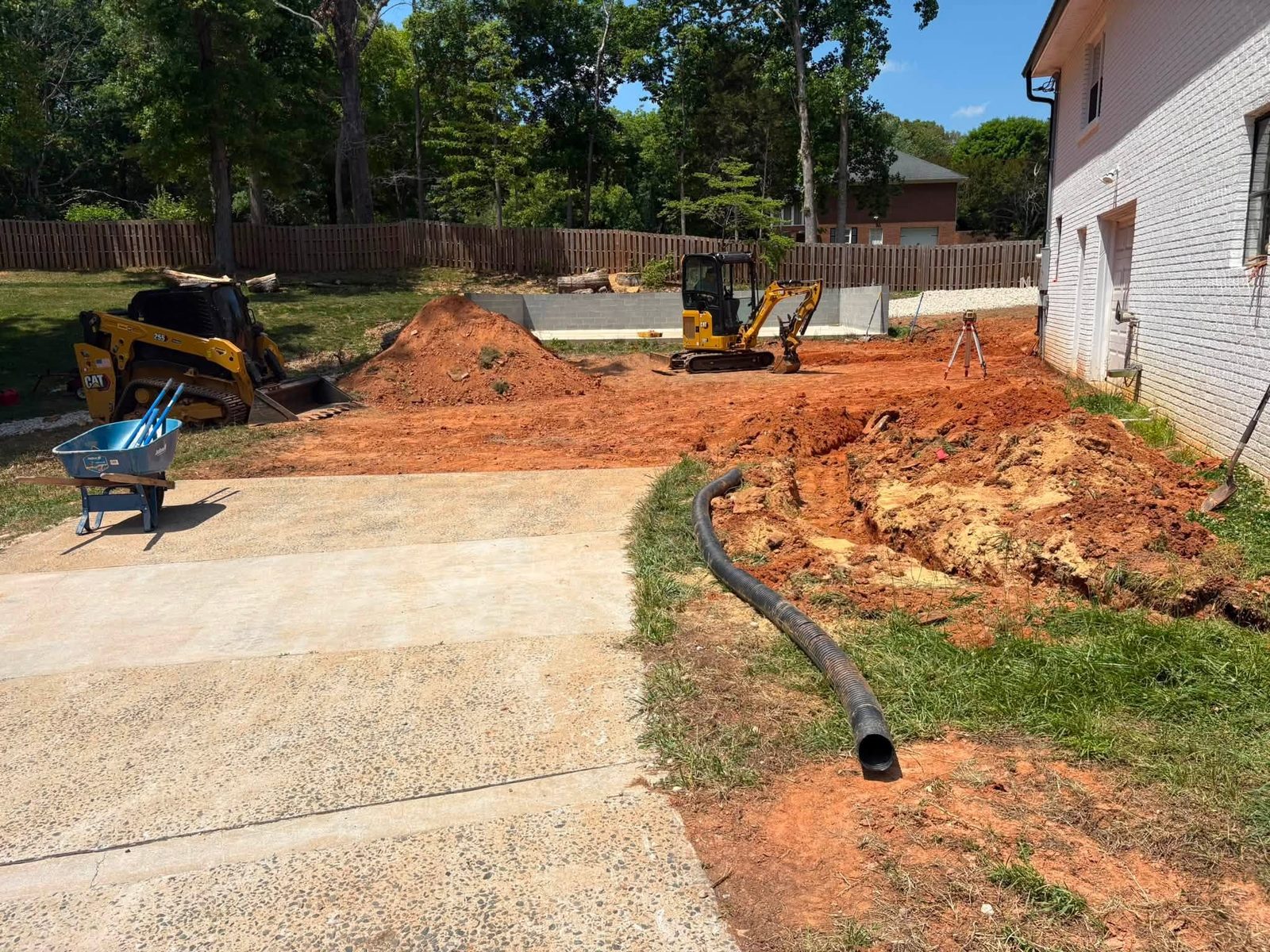
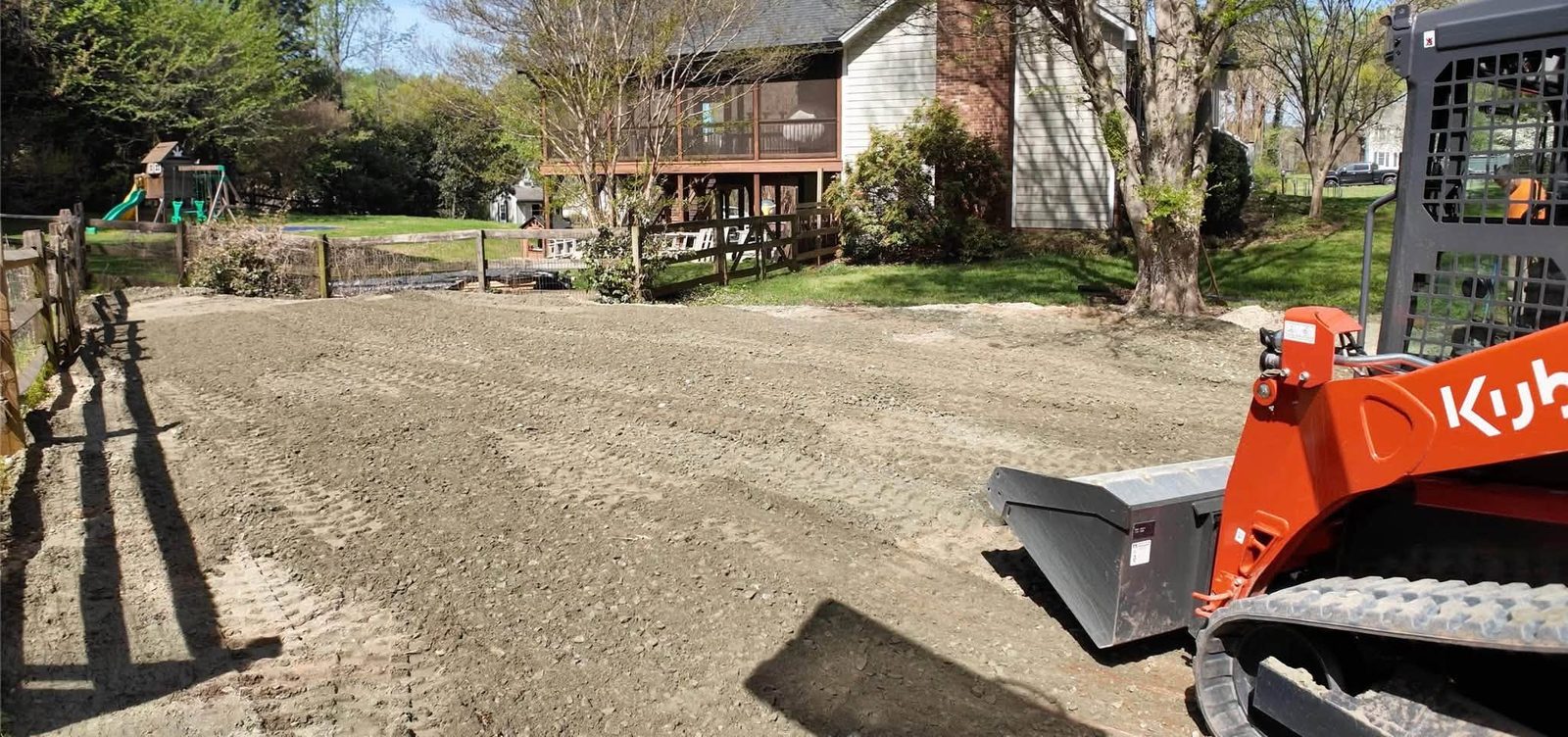
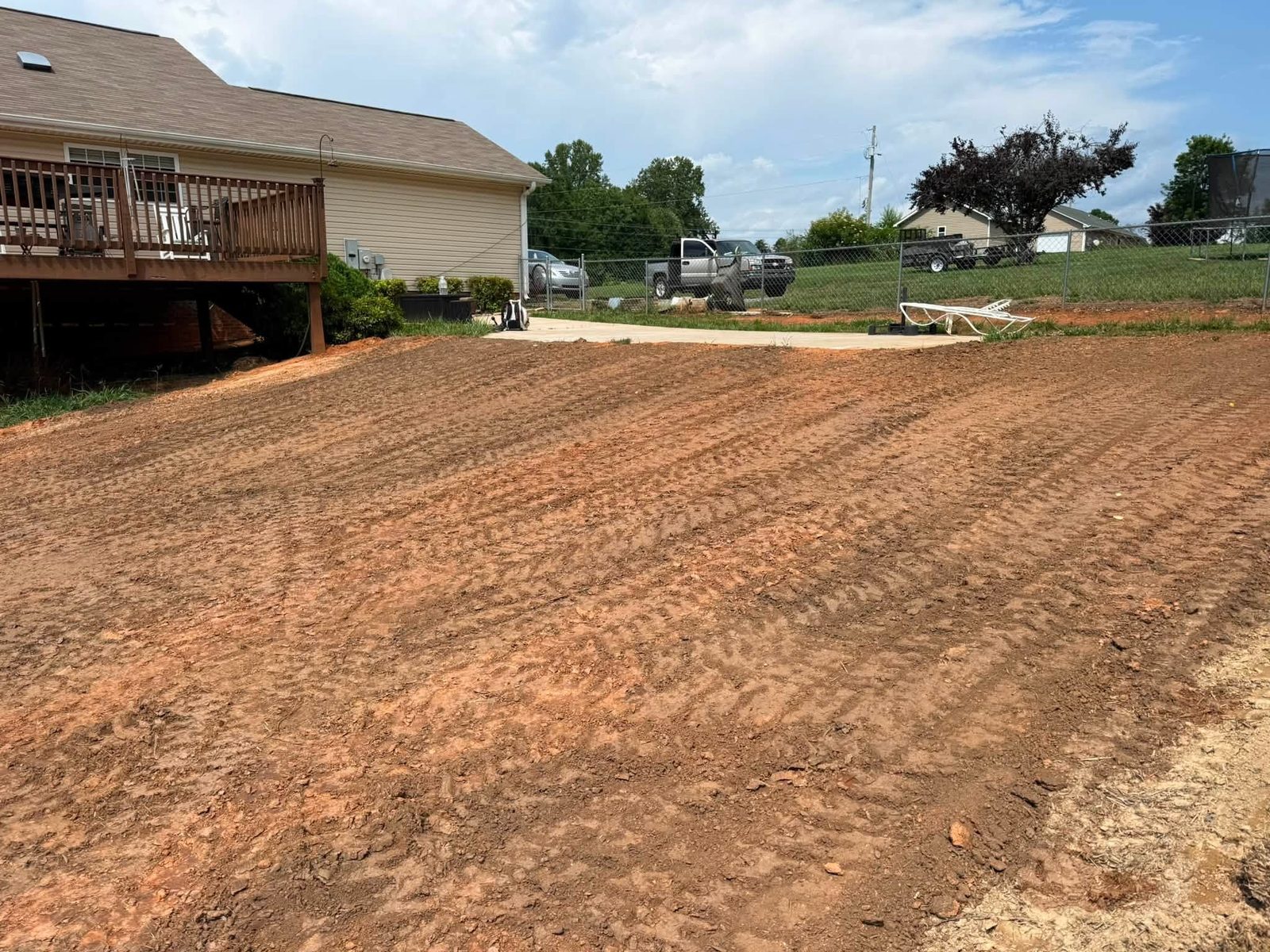
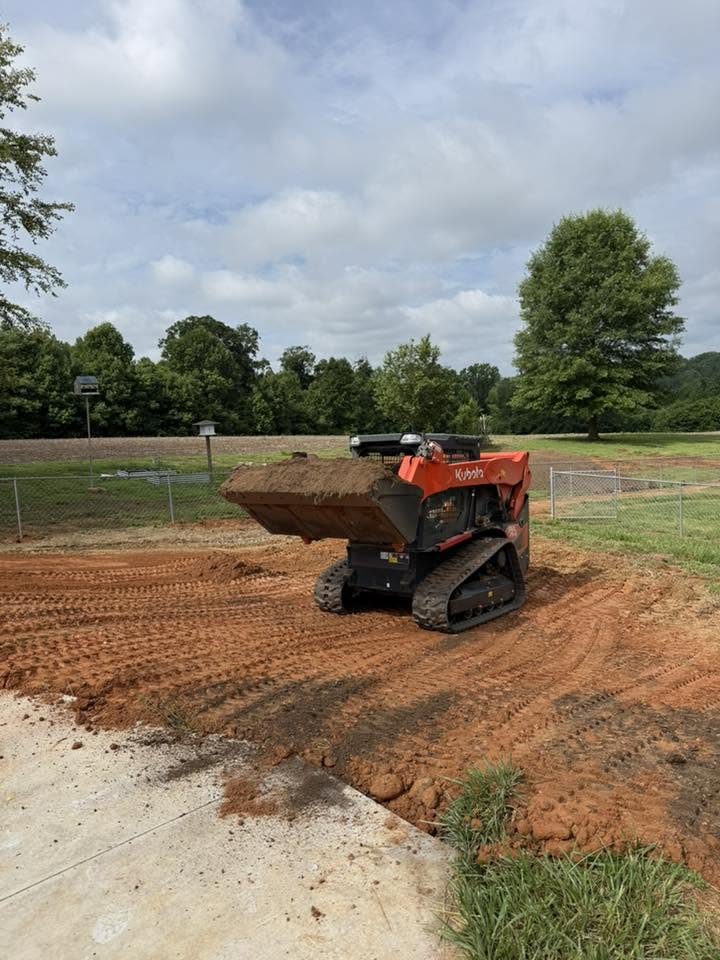
Yadkin County sits squarely in the NC Piedmont, where the top few feet of soil run red and heavy. Clay doesn't drain; it sheds. Water from a two-inch rain doesn't percolate down through a clay lot — it moves sideways, pools in low spots, and sits until it evaporates. On older rural residential lots carved from former tobacco farmland, the subsoil is often compacted from decades of agricultural use, which makes the problem worse. On newer subdivisions developed from that same farmland, grading during construction stripped the topsoil and left raw clay at grade.
That history shapes every drainage project in this county. A French drain that functions well in sandy coastal soil needs a different aggregate spec, a different trench depth, and a different outlet strategy when installed on a Yadkinville clay lot. Getting those specs right from the start is what separates a drain that lasts from one that fails in the second wet season.
What failing yard drainage looks like on a Piedmont lot
The signs worth acting on are not always dramatic. After a moderate rain, water pooling for more than 24 to 48 hours in the same corner of the yard is the clearest indicator. Ruts that form along fence lines, near downspout discharge points, or at the base of a slope show you where water is concentrating and where soil is beginning to move with it. Grass that persistently thins in a specific low zone — even in seasons that are not especially wet — points to chronic saturation just below the surface.
Foundation seepage is the consequence that compounds fastest. When a drainage problem in the yard goes unaddressed, water follows grade toward the house, and a wet crawl space or damp basement wall usually traces back to a yard issue that could have been addressed for a fraction of the eventual repair cost. The full picture of what standing water does over time is covered on the standing water in yard page — worth reading before deciding how urgent your timeline is.
How a French drain is engineered for clay and slope
A French drain is a gravel-filled trench with a perforated pipe at the bottom, sloped to carry water to an outlet. The details are where clay soils change the specification entirely. The gravel must be clean crushed stone — not recycled fill, not mixed aggregate — so fine particles don't choke the void space over time. The pipe and trench walls must be wrapped in filter fabric to prevent clay from migrating into the aggregate and sealing the drain from the inside. Depth has to reach below the zone of densest clay, which on many Yadkin County lots means going deeper than a standard 18-inch trench.
Outlet placement is the piece most often underspecified. Daylight outlets, where the pipe exits to open air at a downhill edge or roadside ditch, are more reliable than dry wells on clay sites because clay soil doesn't give a dry well anywhere to drain to. Where daylight isn't available, an oversized collection basin with a controlled overflow is the correct fallback. The full design requirements are covered on the French drain installation overview page; residential drainage specifications in the International Code Council's IRC establish the baseline slope and drainage requirements any properly engineered system should meet.
What Yadkin County drainage work costs
The table below reflects what residential drainage jobs in this market actually scope and price at. A single drain run on a lot with one problem zone is the most common starting point; multi-zone work and whole-yard regrading are a different scale of investment. See the full French drain cost page for line-item breakdowns by material and labor component.
| Scope | Typical Range |
|---|---|
| Single French drain run (50–100 ft) | $3,000–$5,500 |
| Full residential drainage system, 1–2 zones | $5,500–$9,000 |
| Complex multi-zone system with basin or outlet work | $9,000–$12,000 |
| Whole-yard regrading (includes drainage) | Starting around $15,000 |
Clay adds cost to every row in that table: trench walls cut harder, more aggregate is required to compensate for limited soil permeability, and filter fabric is non-negotiable rather than optional. Jobs near the upper end of each range typically involve restricted equipment access in a backyard, an outlet that requires boring under a driveway, or downspout tie-ins and surface grading corrections performed at the same time.
Permits, disturbance limits, and sediment control
Most residential French drain installations in Yadkin County fall below the land disturbance threshold that triggers a formal erosion and sediment control plan, but that threshold matters. The NC DEQ Erosion and Sediment Control program requires permitted plans for disturbances over one acre, and larger drainage projects — particularly whole-yard regrading — can reach that line. Even below the permit threshold, contractors are expected to follow standard best practices: silt fence at downslope edges, inlet protection for any nearby storm drains, and bare-soil stabilization before the next rain event.
Yadkin County has seen 18 federal disaster declarations over 1977-2026, the majority linked to storm and flood events along the Yadkin River basin and its tributaries. Proper residential drainage reduces the runoff that reaches those systems during heavy storms, which is the intent behind the EPA's stormwater and NPDES standards that govern how drainage outlets should be designed and discharged. Any outlet directed toward a stream, wetland, or defined waterway may need a separate environmental review before installation begins.
Hiring the right drainage contractor in Yadkin County
Three questions separate contractors who design drainage systems from contractors who dig trenches. First: ask how they handle clay specifically — what aggregate specification, what filter fabric weight, and how they determine outlet location when daylight discharge isn't straightforward. Vague answers here produce vague results. Second: ask for references on projects in similar soil conditions, not just in the nearest zip code. Third: ask what happens in ten years if the drain slows — a properly built system can be cleaned with a hydro-jetter; one built without filter fabric or with the wrong aggregate requires full replacement.
Contractor licensing for grading and drainage work in North Carolina is regulated for projects above certain thresholds; the NC Department of Insurance and the relevant contractor licensing board define what requires a licensed contractor. For any project that involves significant earthwork near a foundation or cut-and-fill grading, verify licensure before signing a contract. A proper site visit — where someone walks the grade, identifies the high and low points, and locates where water is entering the property — should happen before any written proposal is put in front of you.