What Piedmont clay changes about every driveway quote
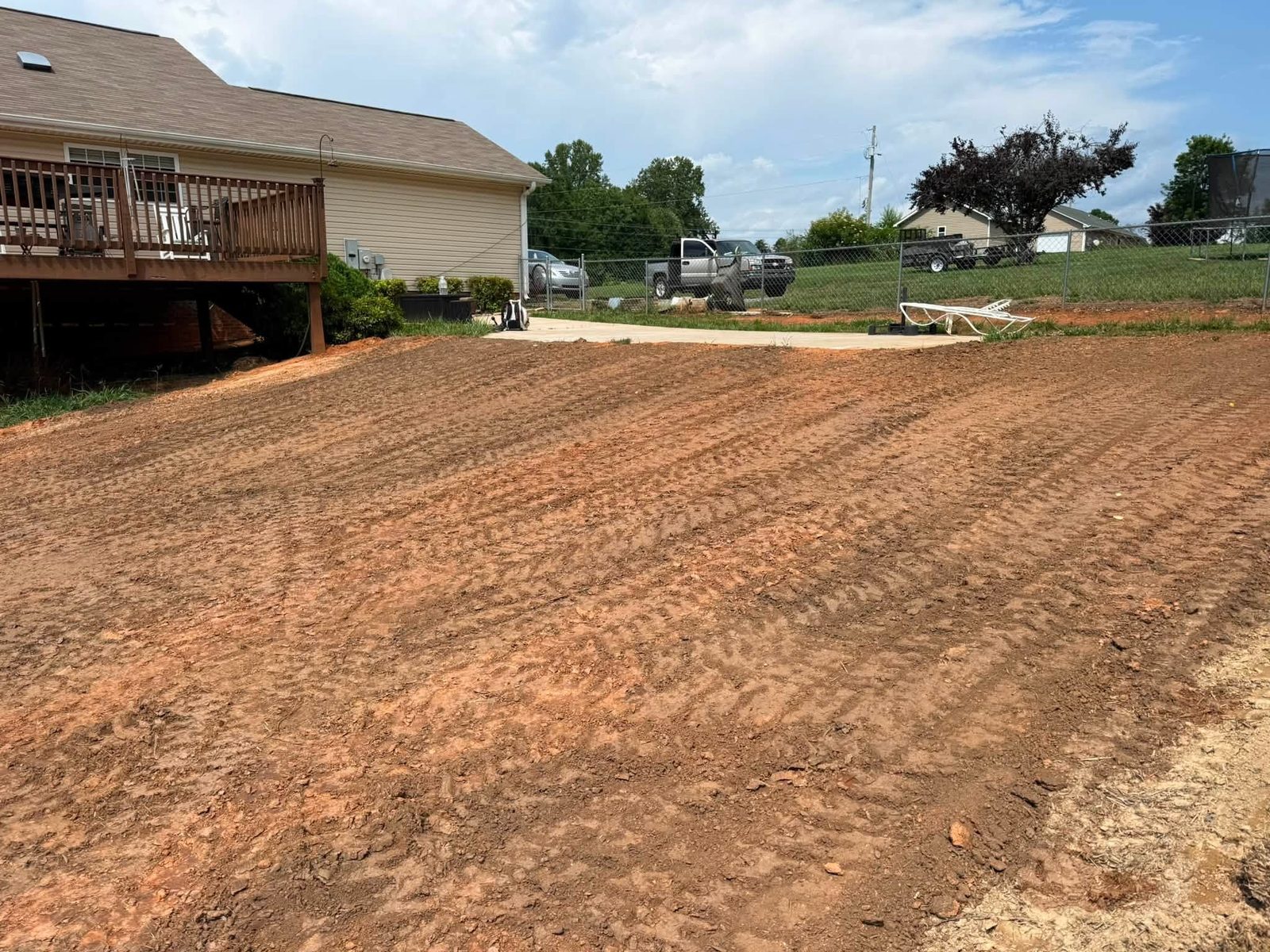
The rolling terrain around Winston-Salem sits on dense Piedmont clay — the kind that holds moisture for days after a rain event and loses bearing strength when saturated. That is not a footnote in a gravel driveway estimate; it is the reason two driveways at the same length and gravel depth can perform completely differently depending on what happened before the first load of stone arrived.
A surface pour on Forsyth County clay without proper base prep will rut, migrate laterally, and shed fines into the lawn within two wet seasons. The clay does not compress under load the way sandy or loam subgrades do — it deforms and recovers, pushing gravel outward on every saturation cycle. Geotextile fabric between the clay and aggregate base is not an upgrade; it is the mechanism that keeps the stone matrix intact over time. A quote that never mentions fabric or excavation depth is a quote for a surface, not a driveway.
Forsyth County has recorded 22 federally declared disasters over 1977-2026, a stretch that includes the kind of multi-day rainfall events that saturate clay subgrades to full depth. The city-swap test is quick: a quote built for well-drained sandy soil in the coastal plain is not the same job as one engineered for the Triad's clay profile. Ask what the contractor found when they dug down — and whether the depth changes the number.
What a proper installation involves on a Triad property
A residential gravel driveway installation here typically runs one to three days depending on scope. The sequence matters as much as the materials:
- Site assessment and drainage layout. Grade, natural flow paths, and the connection point to the road are evaluated before equipment arrives. A driveway sloped toward the house or positioned to collect off-lot runoff needs a drainage plan before it needs gravel.
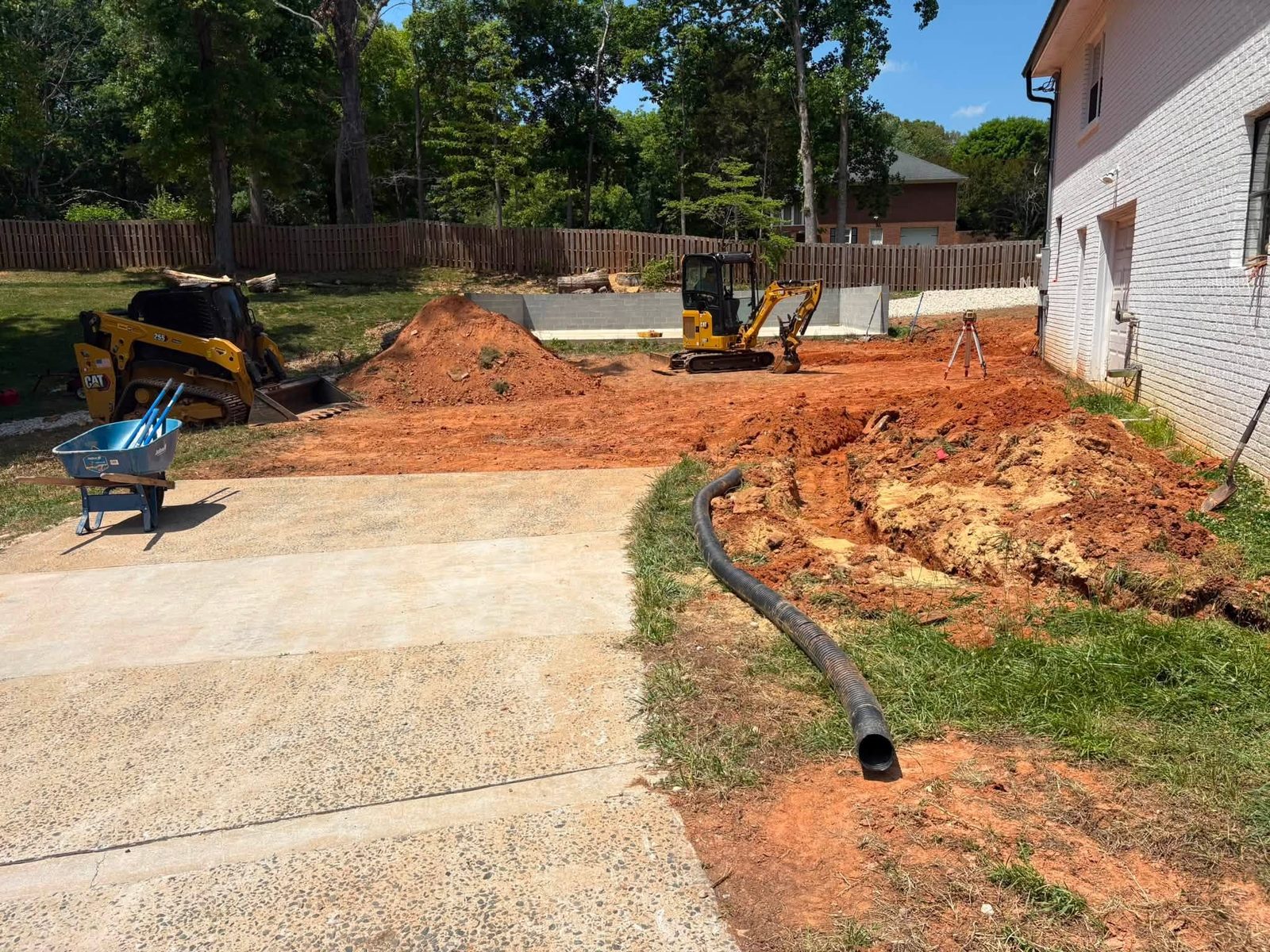
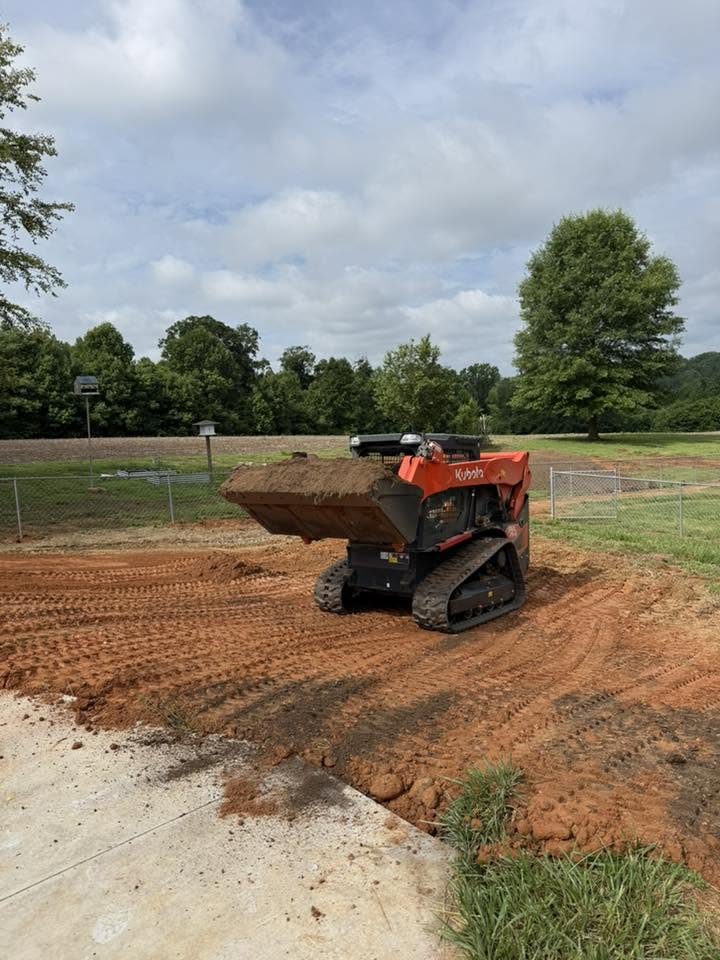
- Excavation and subgrade prep. Topsoil and soft material are stripped — on Forsyth County clay, typically 6 to 10 inches. Skipping depth here makes a surface pour look reasonable on paper while setting it up to fail in practice.
- Geotextile fabric placement. A non-woven fabric layer separates clay from aggregate, preventing stone migration downward and clay migration upward into the surface layer. This is the step that most distinguishes a lasting installation from a patch job.
- Base layer and compaction. A dense-graded aggregate base — commonly NCDOT-spec 21A or equivalent — is placed and compacted in lifts. Surface gravel placed over an uncompacted base settles unevenly and traps water in low spots.
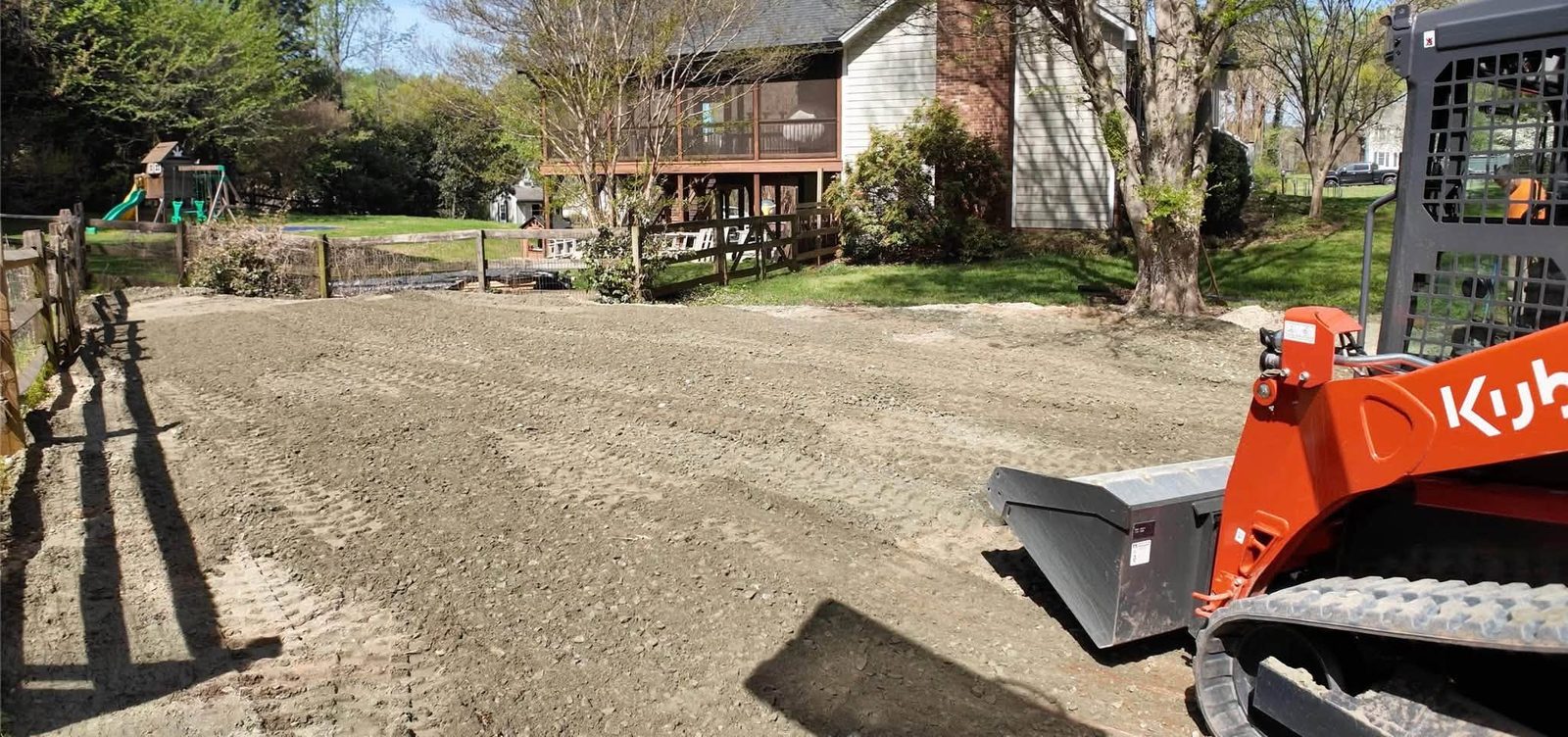
- Surface gravel and crown grading. Crusher run is the standard choice for Triad residential driveways — it compacts well and holds under regular traffic. Crown grade is set to move water to the edges rather than down the center of the drive.
- Culvert installation where needed. Any drive crossing a drainage swale or low point in a flow path typically requires a culvert. See culvert installation for what that adds to scope and schedule.
What it costs and what moves the number
Installed prices follow scope closely. The table below reflects honest installed ranges including excavation, base prep, fabric, compacted aggregate, surface gravel, and equipment — not surface-only quotes that leave the clay problem buried under new stone. See the gravel driveway cost page for a full line-item breakdown.
| Scope | Typical Installed Range | Key Variable |
|---|---|---|
| Short drive, existing stable base, resurfacing only | $1,800 – $2,800 | Minimal excavation; stable subgrade already in place |
| New drive, 100–200 ft, clay subgrade, full base prep | $3,200 – $5,500 | Excavation depth, fabric, compacted base layer |
| Long or sloped drive with drainage complexity | $5,500 – $8,000 | Extended equipment time, culvert likely, regrading needed |
| Long drive, heavy base, culvert, and significant regrading | $8,000 – $12,000 | Full site-work scope, engineered drainage, long mobilization |
Depth to stable subgrade is the single biggest cost variable on Forsyth County clay lots — especially any property with a history of fill or prior grading disturbance. Contractors who quote by the load of surface gravel rather than by excavation scope are pricing for themselves, not for the driveway's performance over time.
When NCDOT enters the picture and what permits apply
Any driveway connecting to a state-maintained road in North Carolina requires a driveway permit through NCDOT before work begins. In Forsyth County, most rural and suburban driveways connect to state-maintained roads — which means this requirement applies more often than homeowners expect. The permit governs the location, width, and sight-distance requirements at the access point; those rules exist because a poorly placed driveway connection is a road-edge hazard, not merely a property inconvenience. Applications go through NCDOT Connect. A contractor handling full project scope should manage this step — not leave it to the homeowner to discover after ground is already broken.
Separately, any grading that disturbs more than one acre triggers the NC DEQ Erosion and Sedimentation Control Program, which requires an approved erosion control plan before work begins. Most residential driveways fall under that threshold, but a long driveway combined with a parking area, swale regrading, or adjacent clearing can cross it. Measure total disturbed area, not just the driveway footprint, before assuming no permit is required.
Why Triad driveways wash out and what stops the cycle
Washout in Forsyth County follows a consistent pattern: water finds a low point in the crown or edge of the surface, cuts a channel through the fines, and carries stone laterally or downhill. Within a season the surface softens, ruts, and sheds material into the yard. The cause is almost always one of three things — crown slope too shallow to drain, no edge containment so stone migrates off the sides, or a low point in the drive path where a culvert should have been part of the original scope.
The common response — adding a fresh load of surface gravel over the same conditions — restarts the same failure on a one-to-two-year timer. The gravel driveway washing out page walks through the full diagnostic. In a county with Forsyth's storm record — 22 federal declarations across 1977-2026 — fixing the water path before adding stone is the sequencing that determines whether a repair holds or just delays the next call.