Clay is the job
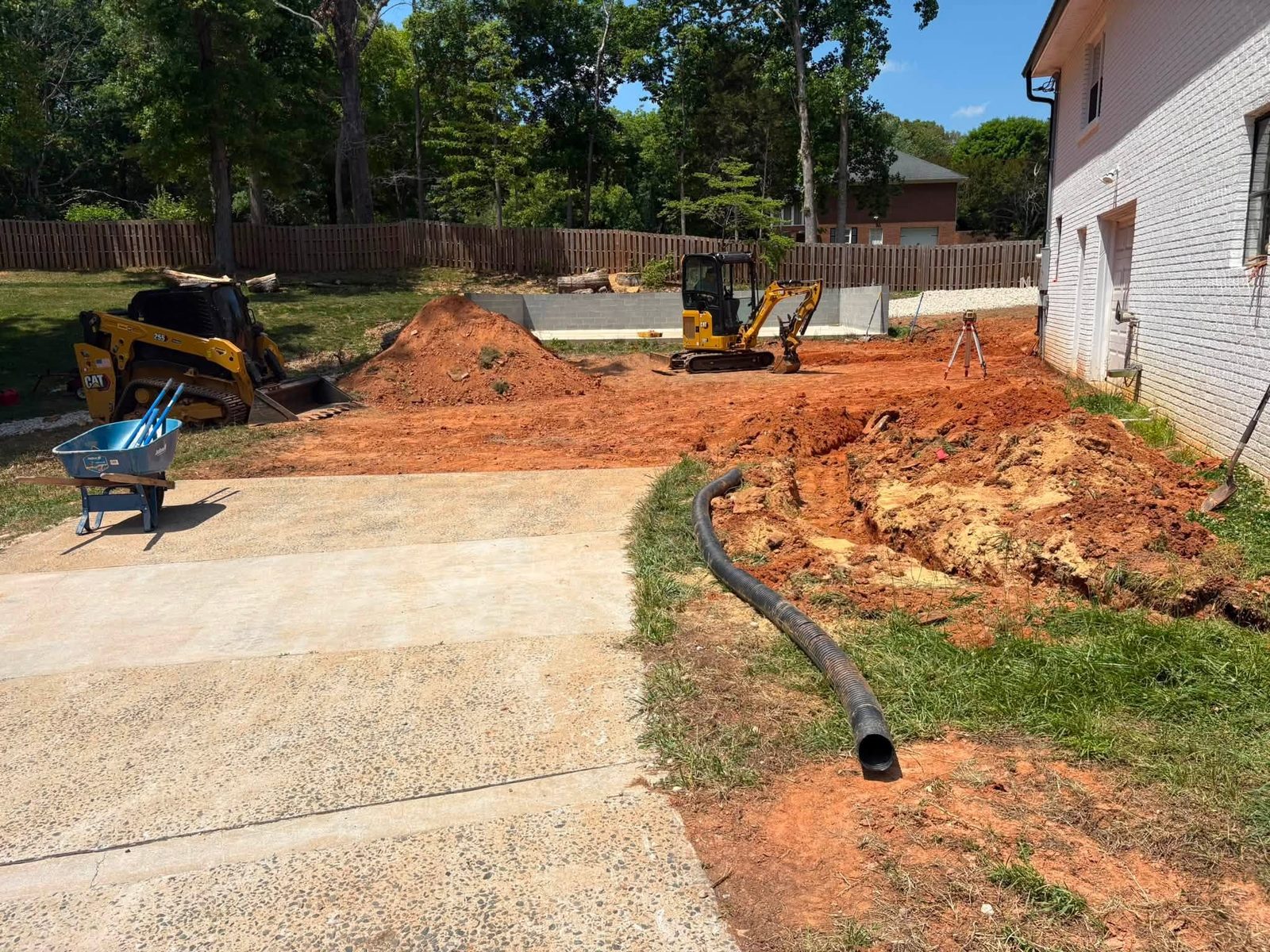
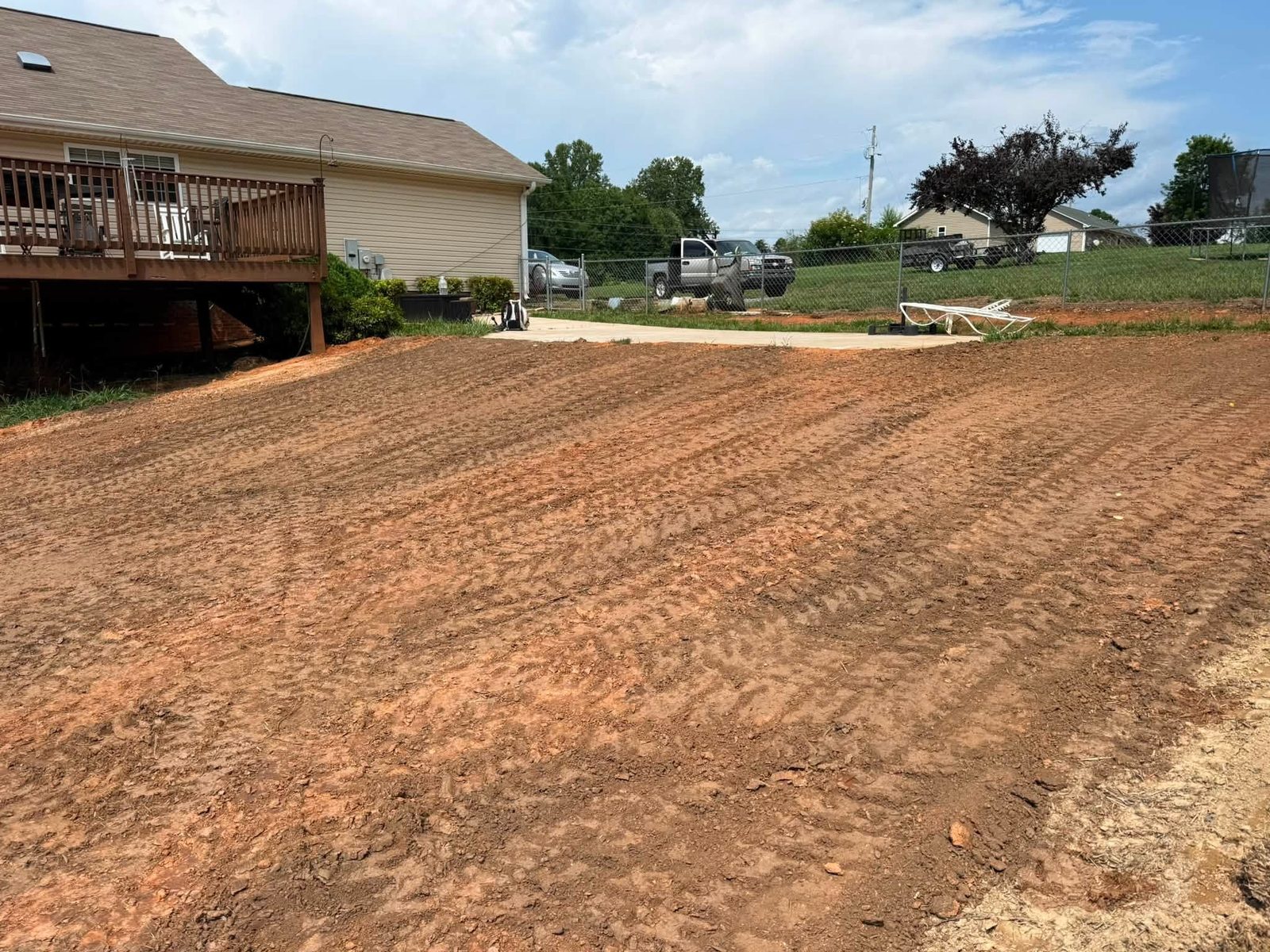
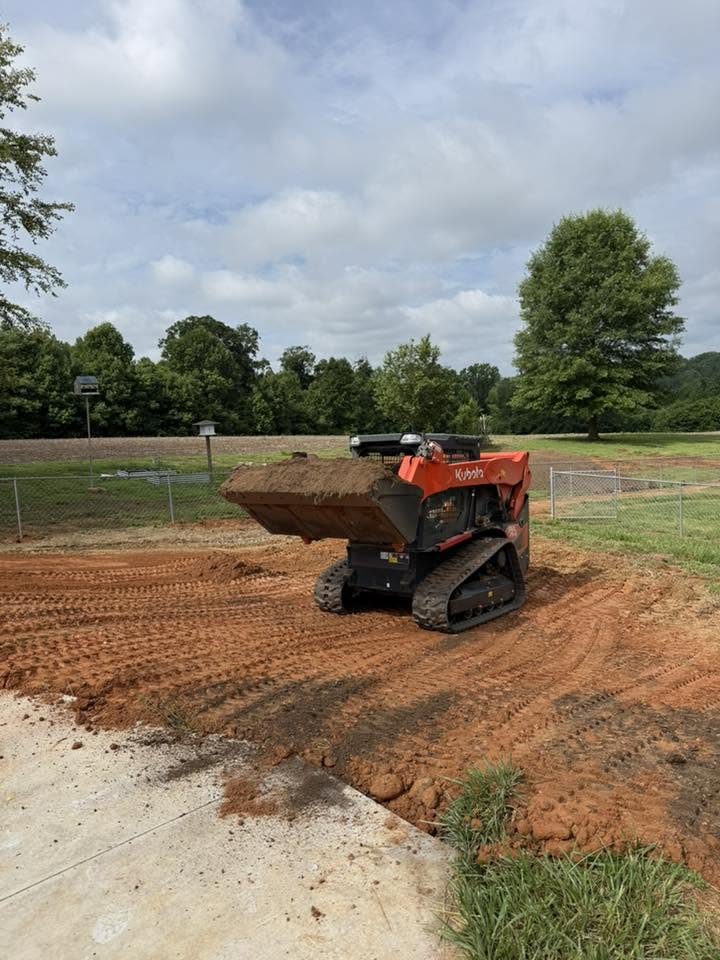
Clemmons sits squarely on Piedmont red clay — the same dense, low-permeability soil that runs from Winston-Salem's western suburbs out to the Yadkin River. Most national pricing for gravel driveways assumes sandy or loamy ground where aggregate settles cleanly and drains fast. Red clay does neither. Water pools on top, gravel sinks under load, and lateral migration starts within a season or two if the contractor didn't address the clay base before laying stone. The crews that do this work well in Forsyth County treat base preparation as the main event, not a footnote.
That doesn't make gravel the wrong choice — it's often the right one here. Properly built, a gravel driveway handles Forsyth County's freeze-thaw cycles better than asphalt without asphalt's cracking and patching costs. It just has to be built for what's underneath it, not for some other county's soil profile.
Clemmons is largely a suburban community built across the 1970s through 2000s on rolling Piedmont ground. Gravel is common on larger lots along the US-421 corridor, on properties with long runs from road to house, and on newer rural-residential parcels along the county's western edge. Conversion from failing asphalt to gravel has also picked up — it's often the honest cost choice when a cracked driveway needs replacement and the run is too long for asphalt to pencil out.
What a Forsyth County install actually costs
The full gravel driveway cost guide has line-item detail; the table below applies specifically to Forsyth County conditions, where red clay base work is a real cost line that out-of-area quotes often omit entirely.
| Scope | Typical Range | What moves the price |
|---|---|---|
| Top-dress existing driveway (gravel only) | $400–$900 | Tonnage, haul distance |
| New single-lane install, 40–60 ft | $1,800–$3,000 | Clay depth, crown shaping |
| Two-car width, 80–100 ft with base layers | $3,000–$5,500 | Compaction passes, edging, drainage grade |
| Long drive (150+ ft) or heavy base remediation | $8,000–$12,000 | Material volume, grading passes, drainage structures |
The top-dress row is a maintenance scenario — fresh stone over a base that is still structurally sound. Every other row assumes new installation from the ground up: excavation, base compaction, and stone delivery as separate line items. A bid that doesn't break those out may be quoting one step rather than the full job. Clay depth matters more than drive length: a shallow clay layer with stable subgrade beneath it costs far less to manage than three feet of soft red clay with nothing reliable below it.
Drainage, stormwater, and what triggers review
Forsyth County sits in the Yadkin-Pee Dee River basin, and the county's stormwater program reflects the watershed's sensitivity to runoff. Land development standards — available through the county's planning and development office — govern how impervious area and grading work is treated on residential lots. Gravel driveways are generally classified as semi-pervious, which is part of their appeal, but drainage swales, pipe connections to street infrastructure, and grading that directs water away from structures can all trigger review depending on lot size and proximity to a roadway.
Gravel sits in an interesting regulatory middle ground. Because angular stone allows some infiltration, it doesn't trigger the same impervious-surface calculations that concrete or asphalt do — but a poorly graded drive that channels sheet flow directly to a street or neighboring property can still draw county attention. Getting the grading right from the start is far cheaper than correcting it after a complaint.
For jobs that disturb significant soil area, NC DEQ's Erosion and Sediment Control program sets the rules for silt fencing, inlet protection, and stabilization before the contractor leaves the site. A crew that works regularly in Forsyth County knows these requirements; one that doesn't may leave you holding an inspection problem that belongs to you, not them.
Forsyth County has recorded 22 federal disaster declarations over 1977-2026, overwhelmingly storm and flooding events. Each one tested how residential grading was directing water. The driveways that failed were almost always ones where surface drainage wasn't planned alongside the stone selection — not an afterthought problem, a design problem.
Stone that holds in Piedmont conditions
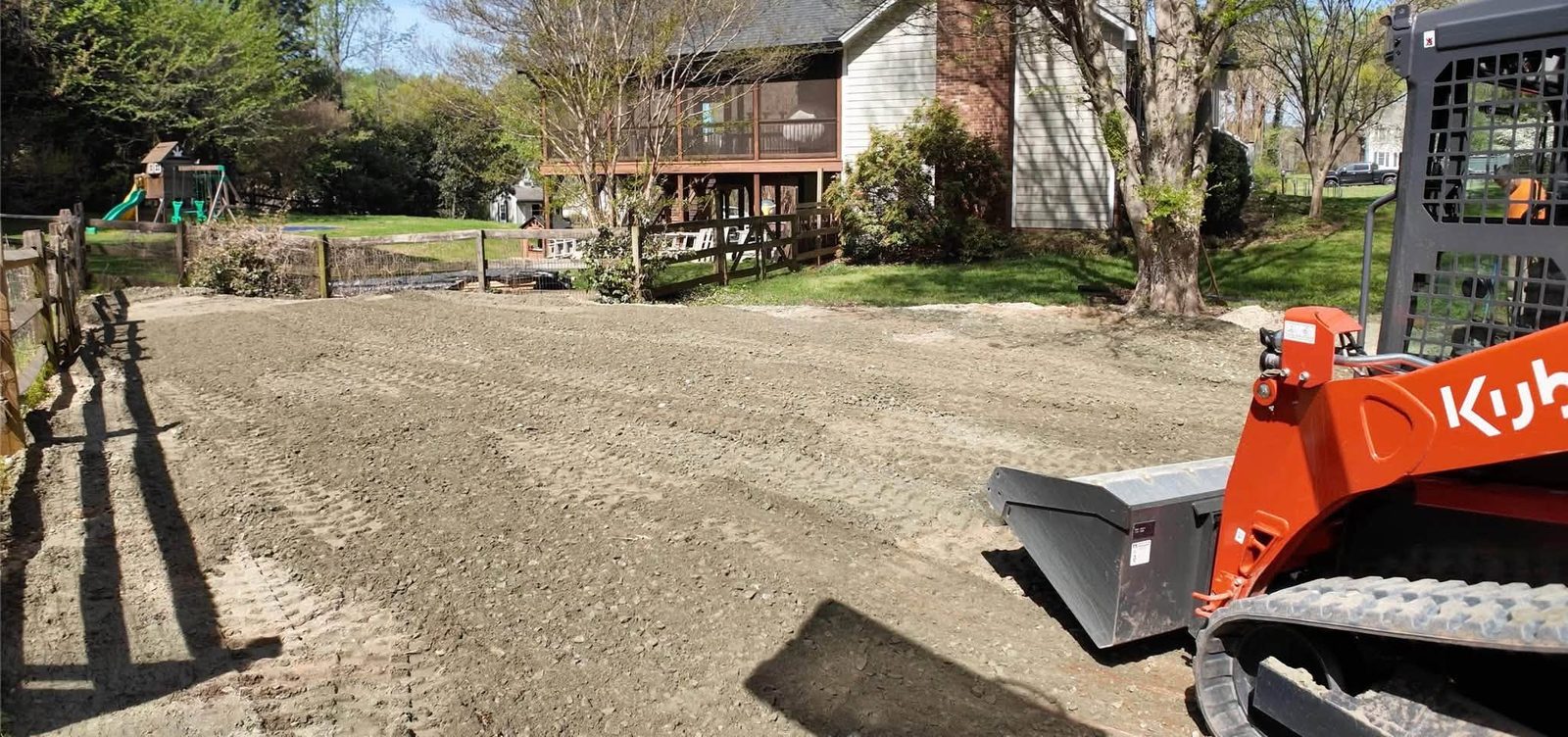
The base and surface layer are two different material decisions, and both matter in clay country. For the base, crusher run — also sold as ABC stone or aggregate base course — is the Forsyth County standard: it compacts tightly, locks into red clay better than clean stone, and gives the surface layer a stable platform. A 4–6 inch compacted base is the minimum on most clay lots; slopes and high-traffic drives run deeper.
For the surface, #57 crushed granite or NCDOT #78M angular stone holds better than round alternatives. Angular edges interlock under vehicle weight; round stone like pea gravel migrates toward the edges of the drive within a season or two. Pea gravel is appropriate for decorative paths, not working driveways on clay soil. If washout is already happening — common on any drive with meaningful slope — the causes and durable fixes are laid out in the gravel driveway washout guide.
Edging slows lateral migration on clay lots: landscape timbers, steel edging, or concrete curbing keep stone in the travel lane. On longer drives, a crowned center profile sheds water to the sides rather than letting it channel down the middle, which is where ruts start. Even a well-built drive benefits from a light top-dress every three to four years as surface stone settles — far less expensive than a full rebuild.
Questions that sort contractors quickly
Three questions do most of the work when evaluating Clemmons crews. Ask what base material they specify and how deep they compact it — the answer should name crusher run or ABC stone and describe compaction passes, not simply 'a layer of gravel.' Ask how they handle the transition from driveway to street apron, which is where runoff becomes a county issue and where inspectors most often flag residential grading work. And ask whether they coordinate with the county on sediment-control requirements for larger jobs that disturb significant area.
The broader framework for evaluating any gravel driveway proposal — what belongs in a written scope, what warning signs look like in a bid, how to compare two numbers that don't seem to be quoting the same job — is covered in the gravel driveways overview. The answers to those three questions will tell you more about a contractor than the total at the bottom of the page.