Why Piedmont clay changes the scope every time
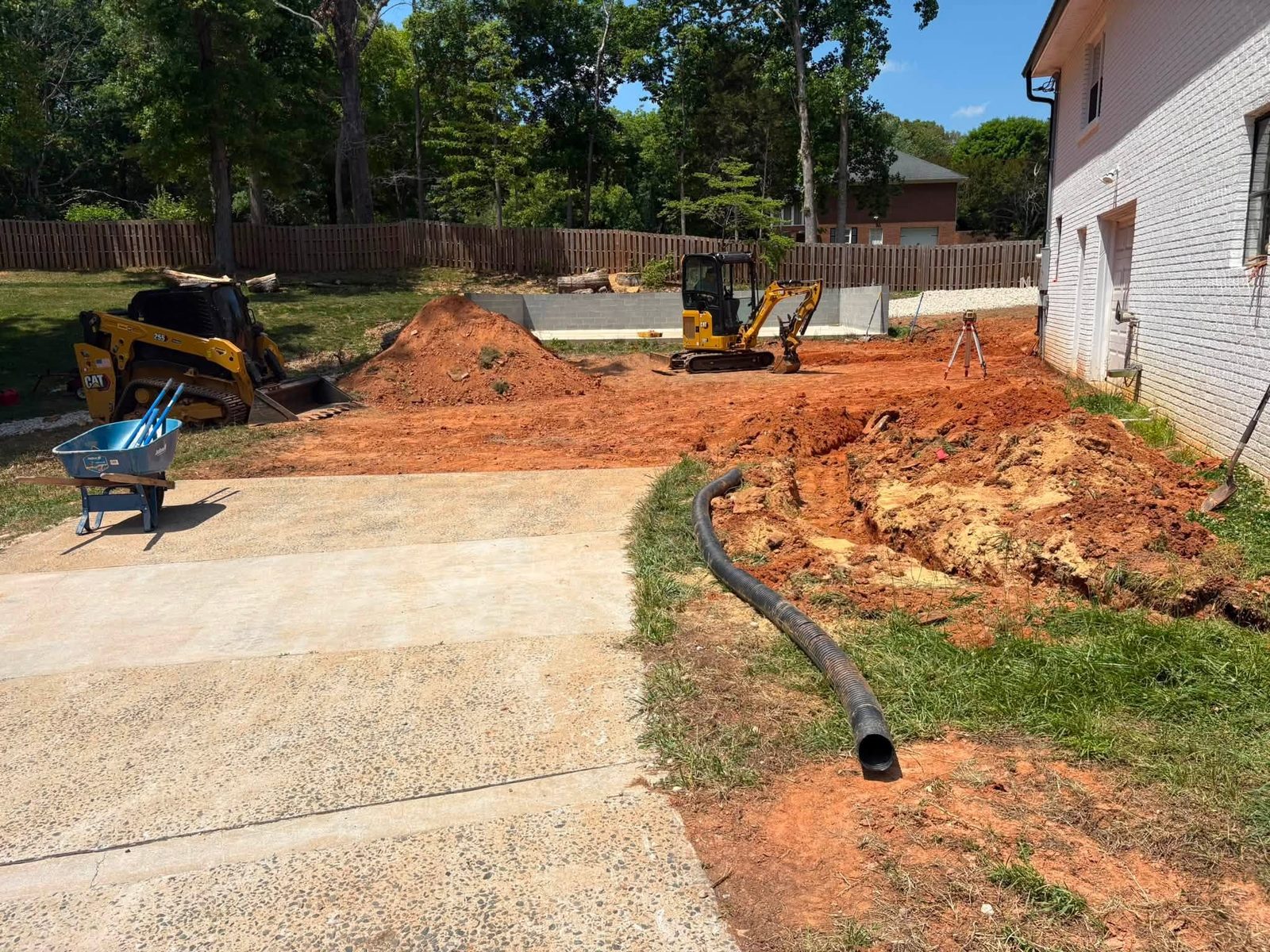
Clemmons is a maturing suburb of Winston-Salem, not farmland or raw acreage. Most clearing calls here start with a residential lot that has been holding mature hardwoods — oaks, poplars, sweetgums — for three or four decades. Those trees have deep root systems working through Forsyth County's Piedmont red clay, canopy that reaches close to structures and property lines, and neighbors on both sides who care what falls where. That combination is a different job than open-field work, and a quote written for sandy ground will be wrong the moment a machine bucket hits a forty-inch root ball here.
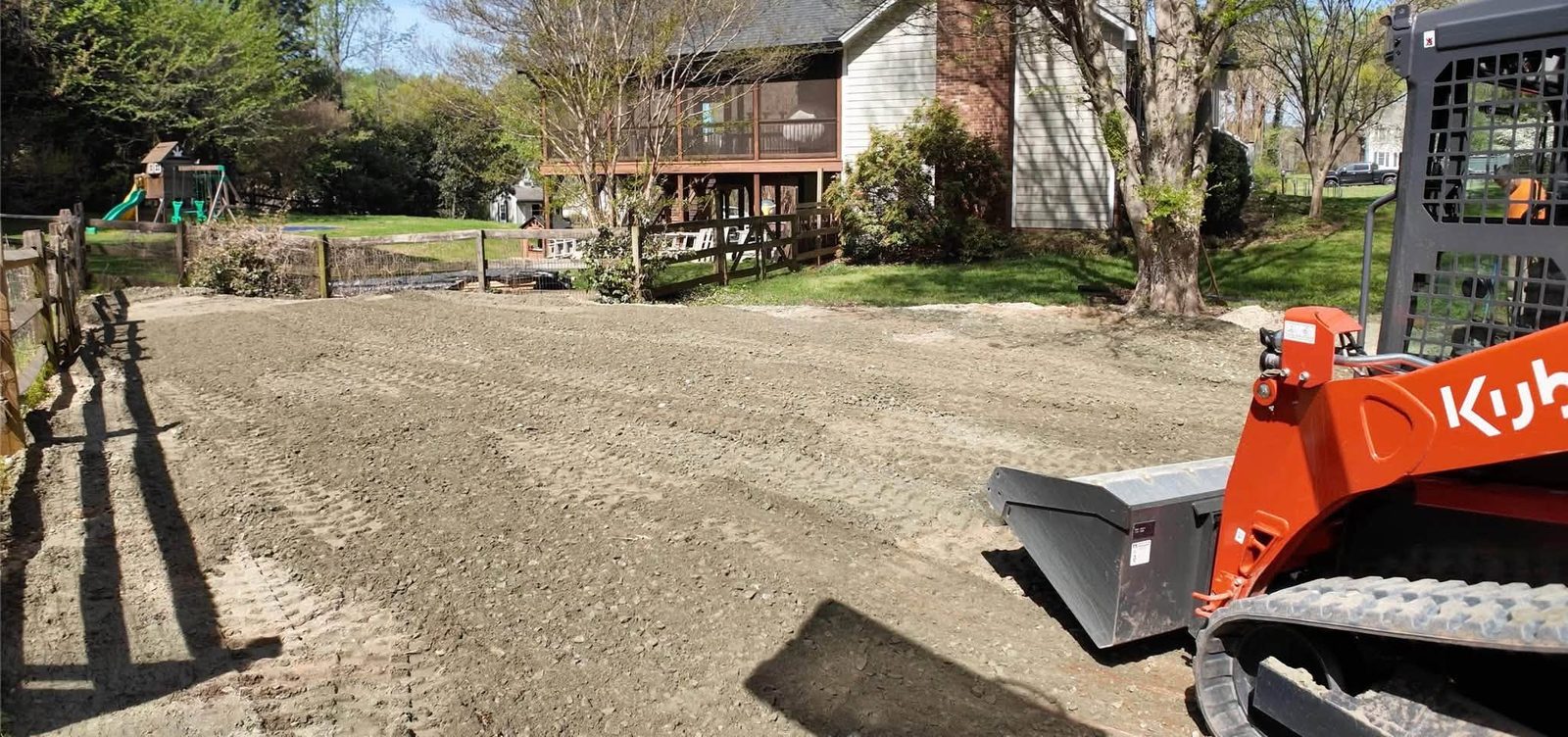
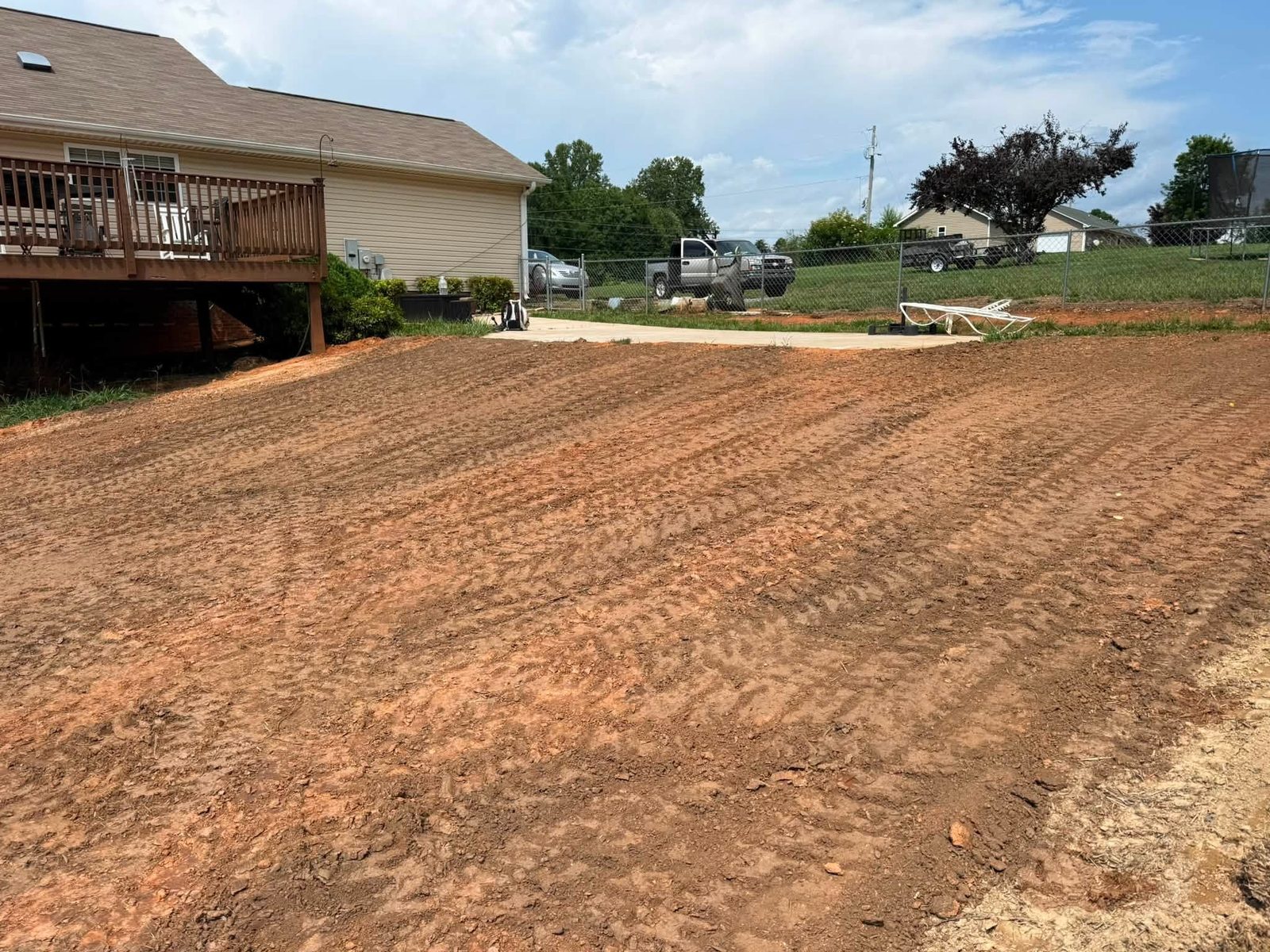
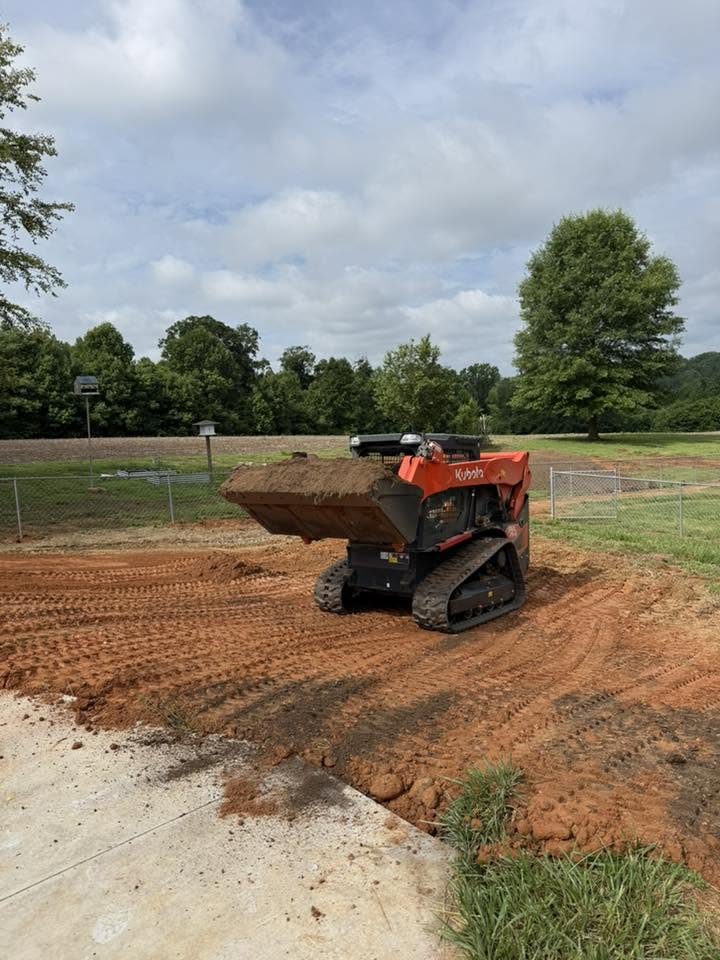
The clay itself is the most important Clemmons-specific fact in any clearing scope. Red clay that looks cooperative the day of clearing can compact into near-concrete after a few equipment passes. Compacted clay sitting in a drainage path is how finished suburban lots collect standing water for years after a job closes. A scope that doesn't address what happens to the soil after the trees come out is an incomplete scope. The site-wide land clearing overview covers equipment types and debris methods; the specifics below apply to Forsyth County residential lots where clay is always in the room.
What clearing actually costs on a Clemmons lot
Three variables move the price on every job: what's on the lot (brush and scrub versus mature canopy versus both), what happens to the stumps (leave in place, grind in place, or full extraction with backfill), and what the finished grade needs to look like for the next trade. Jobs that seem similar at street level can price very differently once slope, access, and clay depth enter the picture. The land clearing cost page has a full line-item breakdown; the table below maps typical Clemmons residential scopes to realistic price ranges.
| Scope | Typical range | What pushes the high end |
|---|---|---|
| Brush and scrub clearing, under half acre | $750 – $1,800 | Dense thicket, tight equipment access |
| Wooded residential lot, stumps ground in place | $2,000 – $4,500 | Large-caliper hardwoods, close to structures |
| Lot clearing with stump removal and rough grading | $3,000 – $6,500 | Clay grading complexity, full debris haul |
| Full lot prep with erosion controls and grading to spec | $4,500 – $8,000 | Silt fence, drainage work, permit inspections |
| Heavily wooded acreage (per project) | $5,000 – $10,000+ | Acreage, timber salvage, site access limits |
Any bid that omits erosion controls on a disturbed Piedmont clay lot deserves a question. Not because controls are always required by permit at the residential scale — they often are — but because the downstream cost of a drainage problem on bare clay almost always exceeds what the controls would have cost.
Erosion rules that apply before the first cut
North Carolina takes land disturbance seriously, and Forsyth County sits squarely within the state's regulatory structure. Under NC DEQ Erosion and Sediment Control rules, any land-disturbing activity of one acre or more requires an approved erosion and sedimentation control plan before work begins. Residential lots below that threshold may not trigger the state filing, but they can still require review at the county level — confirm with Forsyth County before assuming a smaller lot clears without permits. Permit status is the contractor's responsibility to verify, not the homeowner's assumption.
Larger projects, or those near streams or drainage easements, may also fall under federal stormwater rules. The U.S. Environmental Protection Agency NPDES Construction General Permit applies to projects disturbing one acre or more that discharge stormwater, regardless of the state threshold. In practical terms: if the clearing runs to the back of a lot that drains toward a creek or an open channel, what controls are in place is a real question, not a technicality.
Forsyth County has seen 22 federal disaster declarations spanning 1977-2026, with flooding and storm damage accounting for the majority of them. That record is a ground-level reminder of how quickly Piedmont runoff moves when disturbed soil is in the path. Erosion controls on a clearing job aren't regulatory overhead — they protect the finished lot and the neighbors downhill from it.
Matching the method to what the lot actually needs
Not every Clemmons clearing job calls for the same approach. A lot with medium-caliper trees, no structures in the drop zone, and a gentle grade is a solid candidate for forestry mulching, which grinds woody material in place and leaves a mulch layer that stabilizes exposed soil and suppresses regrowth — no debris haul off-site, no bare clay sitting open through the next rain. A lot with large hardwoods close to a fence line, a deck, or an existing foundation needs a different sequence: directional felling, piece-by-piece removal, and a stump grinding pass before any grading equipment moves in. Running heavy equipment over stumps left in place in red clay can create settlement problems that show up years later under a driveway or pad.
Lots near the Yadkin River corridor deserve an extra check before any grading is committed to. Parts of Clemmons carry FEMA flood zone designations, and a finished grade that looks right on a site plan can conflict with the elevation rules that apply in those zones. The FEMA Flood Map Service Center shows the current mapping for any parcel — confirming flood zone status before finalizing a grading scope avoids corrections that cost more than the check would have.
What to confirm before signing a clearing contract
Three questions reveal a lot about any Clemmons clearing contractor. Do they confirm permit status before the first machine moves? Do they include erosion controls as a line item or present them as optional extras? And does the finished scope describe a grade that matches what the next trade — concrete, landscaping, or structure — actually needs to work with?
The erosion question is the one that separates crews with Forsyth County clay experience from crews that learned their trade on different soil. Silt fencing, inlet protection, and temporary seeding aren't add-ons on a Piedmont lot; they're part of a complete job. The NC DEQ Division of Energy, Mineral and Land Resources administers enforcement, and a stop-work order on an unpermitted disturbed lot costs more in delay and remediation than the controls would have cost upfront. A contractor who prices erosion measures as optional is not saving you money — they're moving the risk onto you.