What Forsyth County's second growth does to a clearing budget
Winston-Salem's growth corridor keeps pushing into the Forsyth County landscape one cleared lot at a time, and land that goes unmanaged grows back faster than most owners expect. The Piedmont's warm, wet summers turn a disked field edge into head-high privet, autumn olive, and Bradford pear regrowth in three to four seasons. By the time a landowner or builder is ready to clear, that second-growth canopy often has root systems deep enough that a standard brush hog skips across the top without solving the problem — the job forestry mulching was built for.
Many of the parcels coming up for clearing in Forsyth County today were either formerly farmed and then abandoned (leaving brush fields with established root crowns), subdivided from larger tracts where edges went unmaintained, or logged years ago and left to regenerate in mixed hardwood. Each of those site histories produces a different per-acre cost, even on two lots sitting side by side.
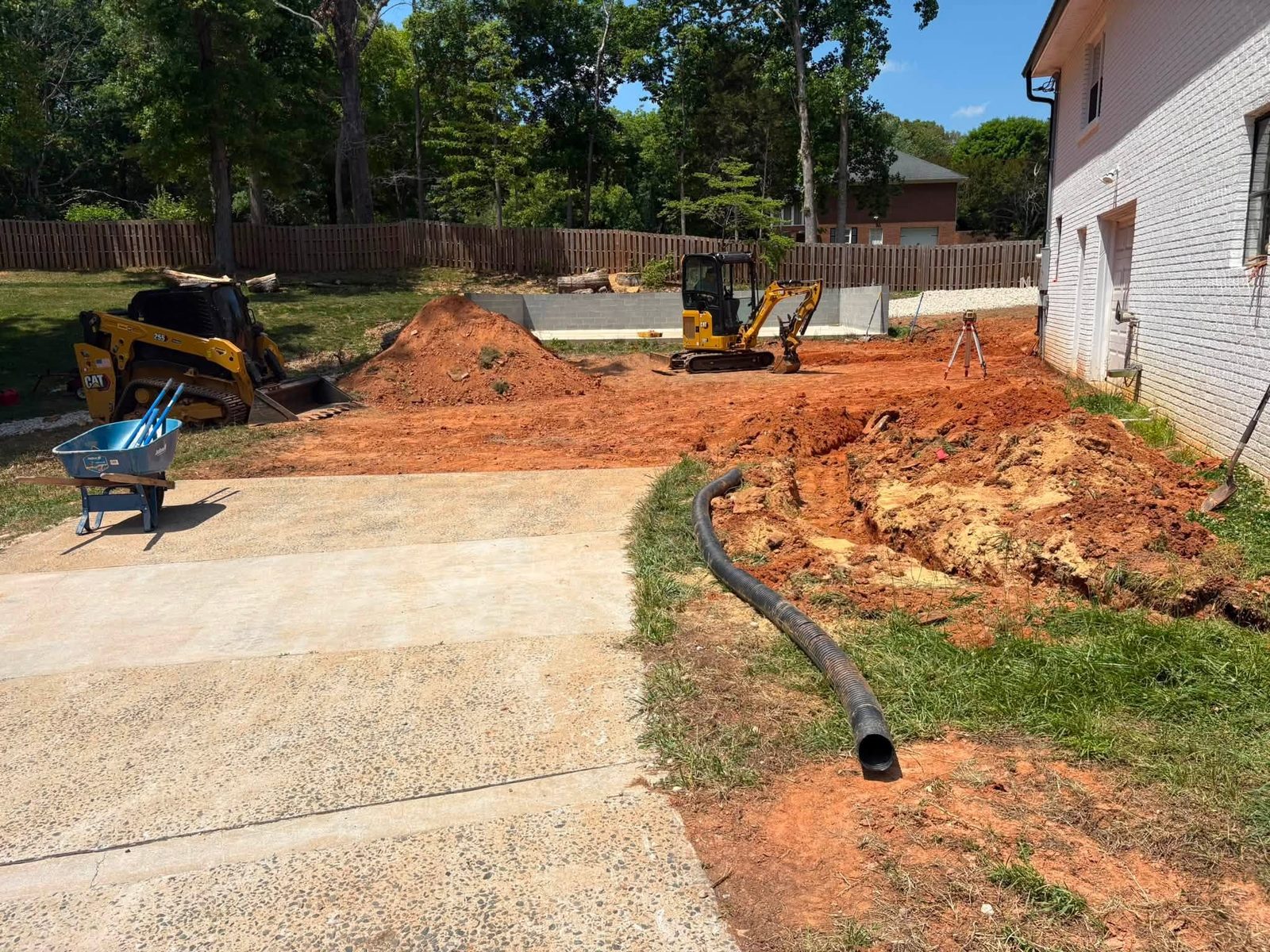
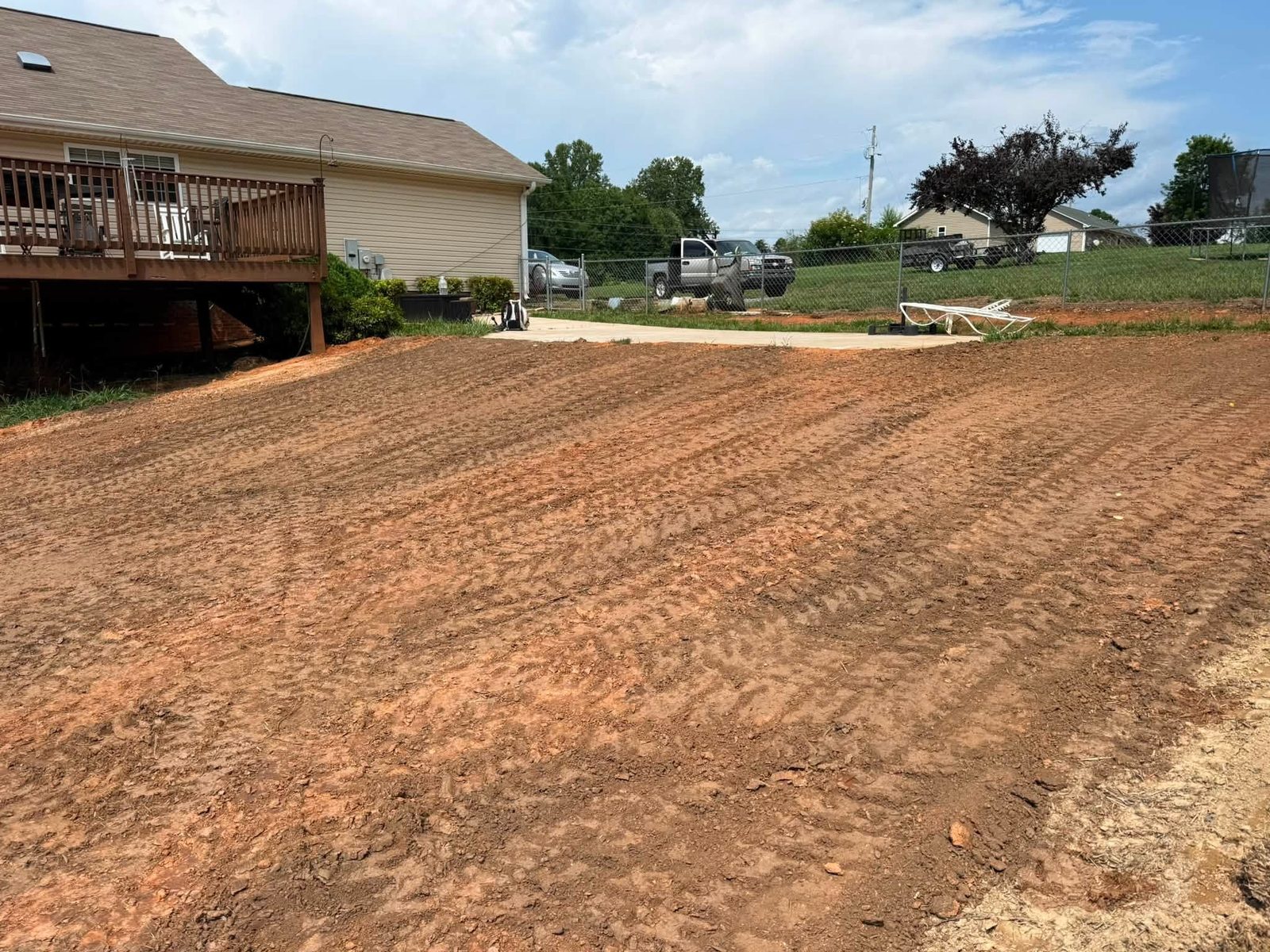
The other Forsyth-specific factor is soil. Piedmont clay compacts under machine traffic and sheds rain once the surface cover is gone. A slope left bare after clearing becomes a runoff problem before the first serious storm. Reputable contractors here price the whole job — cut, mulch, and stabilize — rather than quoting the cut alone and leaving the erosion question for you to solve later. Our forestry mulching overview walks through how a complete job is scoped and what each phase adds to the cost.
Honest per-acre ranges for this county's terrain
The ranges below reflect typical Forsyth County conditions: rolling Piedmont terrain, mixed hardwood and invasive understory, and standard suburban or rural lot access. Sites with steep creek banks, overhead utilities, or extremely dense canopy trend toward the high end of each band.
| Site condition | Typical range per acre | What drives the spread |
|---|---|---|
| Light brush, saplings under 3 inches | $1,500 – $2,200 | Low stem count, good machine access, flat to gently rolling |
| Mixed brush and small trees, 3–6 inch stems | $2,000 – $3,200 | Typical Piedmont density, some root grinding, standard access |
| Heavy understory with hardwoods, 6–10 inch stems | $2,800 – $4,200 | Higher mulch volume, slower machine passes, slope factor |
| Dense mixed stand, limited or narrow access | $3,500 – $5,000 | Multiple equipment moves, possible handwork at edges, erosion setup |
These are working ranges built from Piedmont job conditions, not national averages from lead-gen calculators. Stem density on a Forsyth County lot varies enough that a neglected field corner can look like open pasture from the road and cost twice as much to clear. A contractor who quotes your acre without walking it is working from assumption, and that assumption usually runs short once the machine is on-site. Compare mulching against conventional cut-and-haul methods in our land clearing cost guide.
Five factors that move your per-acre number
The gap between a $1,500 job and a $5,000 job comes down to variables that no phone estimate captures without a site visit.
- Stem size and count. A mulching head moves fast through two-inch saplings and significantly slower through eight-inch hardwoods. An acre of head-high privet costs less than an acre of mixed hardwoods with six-to-eight-inch stems at the same density. Contractors price these differently — sometimes by stem class, sometimes by their own site read — so make sure both of you are describing the same site.
- Slope and footing. Tracked machines handle most Piedmont grades without trouble, but steeper creek banks or fill slopes slow production and increase equipment wear. Any site with more than ten feet of relief per hundred horizontal feet will cost more per acre than flat ground at the same density, and some slopes require the operator to take passes at an angle rather than straight through.
- Lot size relative to mobilization. Mobilization and setup costs are fixed regardless of acreage. A quarter-acre suburban lot in Winston-Salem costs more per acre than a five-acre rural tract at the same site conditions because those fixed costs are spread over less productive ground. Small lots are typically quoted with a flat minimum rather than a pure per-acre rate.
- Access width and obstructions. Most forestry mulching equipment needs a clear entry path. Overhead lines, fences at the margins, or wet ground near the entry point raise setup time and cost, and some configurations require handwork along boundaries where the machine cannot safely operate.
- Post-clearing stabilization scope. On sloped terrain in this county, leaving bare red clay after clearing can trigger NC DEQ erosion and sedimentation requirements. Some contractors include seeding or erosion matting; others quote it separately. That line belongs in the contract, not the change order. For sites that are vine-dominated or briar-heavy rather than woody, our brush clearing guide compares the alternatives.
NC erosion rules that apply the moment clearing starts
North Carolina requires an Erosion and Sedimentation Control Plan for any land-disturbing activity covering one acre or more. The authority is the NC DEQ Erosion and Sediment Control program, and the locally delegated program handles permit applications and inspections for qualifying projects in Forsyth County. Forestry mulching does not exempt a project from this threshold — if the disturbed footprint reaches one acre, the permit requirement applies regardless of clearing method.
At the federal level, sites that disturb one acre or more may also need an NPDES Construction General Permit under U.S. EPA stormwater rules. That requires a Stormwater Pollution Prevention Plan documenting how erosion and sediment will be controlled during clearing and until permanent vegetation is established. The mulch layer forestry mulching leaves on-site is a genuine asset for meeting that requirement, but it needs to be documented as part of a formal plan — not assumed to satisfy the rule on its own.
Forsyth County also maintains local stormwater provisions that interact with state and federal requirements. For clearing projects tied to larger development activity, confirm the full permit stack with your contractor before work begins. The county, state, and federal layers do not always share identical thresholds, and missing one can stop a project mid-job.
Forsyth County's storm history explains why these rules are enforced seriously here. The county has 22 federally declared disaster events on record covering 1977-2026, most of them storm-related. Exposed clay on a Piedmont slope after a heavy rain feeds sediment into the Yadkin River watershed fast, and the regulatory framework reflects that reality on the ground.
Reading a forestry mulching bid the right way
Most cost surprises in forestry mulching come from three gaps between what a contractor quotes and what the site actually requires. Closing those gaps before signing is straightforward once you know what to ask.
Ask for a site walk, not a satellite estimate. Aerial imagery cannot distinguish a dense stand of eight-inch hardwoods from a lighter sapling canopy at the same coverage percentage. On a Forsyth County lot with any variation in terrain or stem density, the price difference between those two conditions is significant. A bid worth trusting comes from someone who has walked the lot and can describe what they found in sections.
Confirm what post-clearing stabilization is included. On any site with slope — and much of the county's residential and rural land has it — the question of who handles erosion control after clearing should be answered in writing before equipment arrives. If the contractor's scope ends at the mulch line, clarify whether you will need additional seeding, matting, or silt fencing to meet DEQ requirements and who carries that responsibility.
Ask for per-section pricing on larger tracts. Stem counts can vary significantly across a single parcel. A contractor who shows per-zone pricing rather than a single flat number for the whole tract is giving you an honest picture of what they found when they walked it, and that transparency protects both parties if conditions turn out heavier in one area than the overall site read suggested.
With a realistic price range established, our forestry mulching service page covers equipment types, typical Forsyth County job timelines, and what to expect from mobilization through final stabilization.