What Forsyth County clearing jobs actually cost
Winston-Salem's suburban growth edges — Lewisville, Clemmons, Kernersville — generate a steady stream of clearing jobs, and the price spread is wider than most online calculators admit. A lightly wooded half-acre lot near a new subdivision runs very differently from a wooded creek-bank parcel in the county's rural western reaches. The table below reflects honest working ranges for Forsyth County conditions, not national averages ported from somewhere flat.
| Scope of work | Typical NC/Forsyth range | What drives it |
|---|---|---|
| Light brush and scrub clearing | $750 – $2,000 | lot size, debris haul, site access |
| Wooded residential lot, no stumps | $1,500 – $3,500 | tree density, species, canopy height |
| Lot clearing with full stump removal | $2,500 – $5,500 | stump count, root depth in clay |
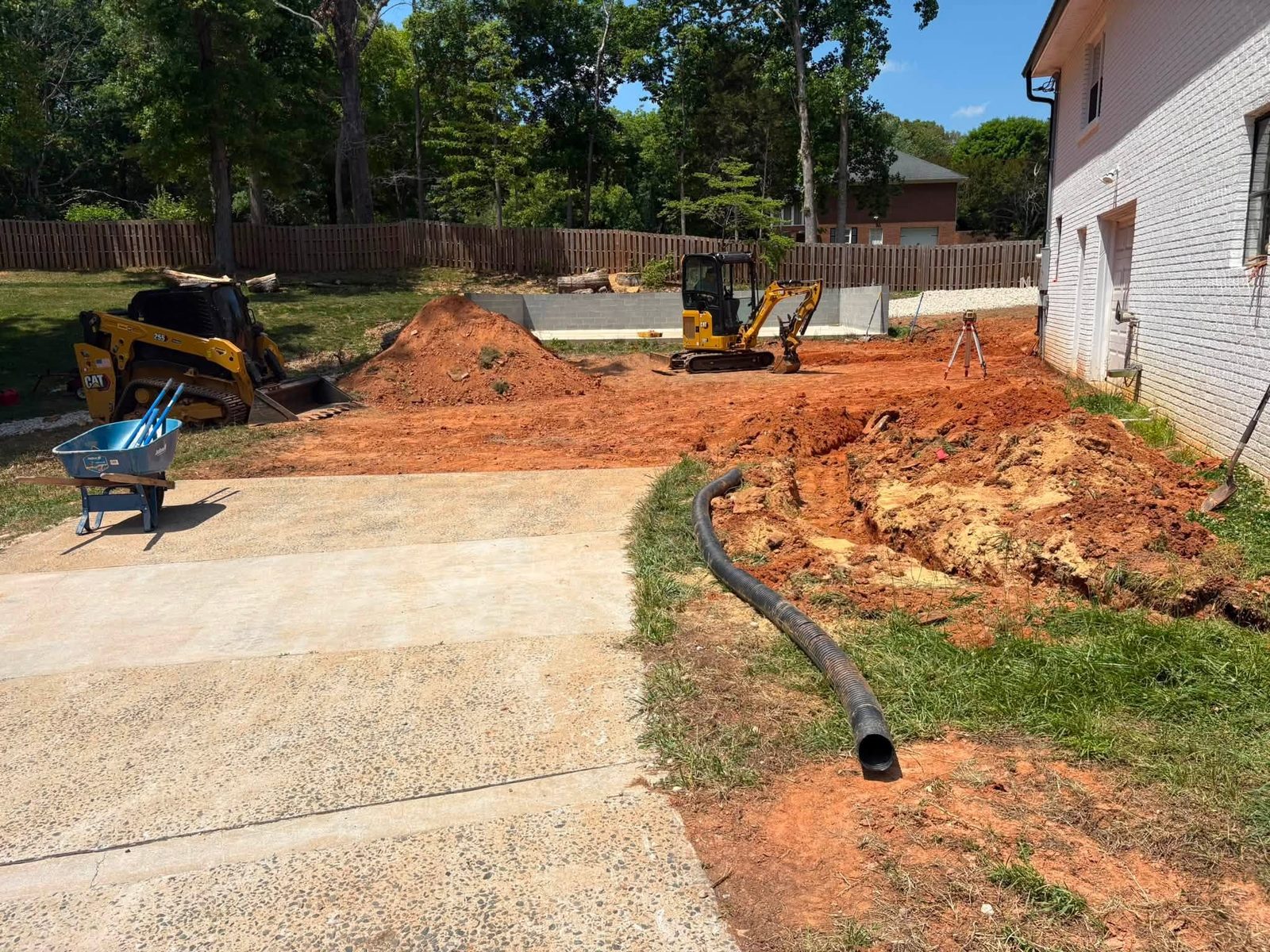
| Clearing + stumps + rough grading | $3,500 – $8,000 | cut/fill volume, site drainage needs |
| Heavily wooded acreage, full prep | $6,000 – $10,000 | hardwood density, E&S plan, haul distance |
Any bid that lands well outside these ranges deserves a walk-through explanation. The oaks, hickories, and sweetgums common on mature Forsyth County lots push stump costs higher than softer species, and a contractor should be able to say exactly why their number lands where it does. See our full land clearing service page for a breakdown of what each phase of the work involves.
Most lots coming to market in these growth corridors run between half an acre and two wooded acres — a range where stump count, not canopy volume, is often the deciding cost variable. Rolling terrain near creek corridors also affects truck access: when a haul vehicle cannot reach cleared material directly, material must be pushed to a staging point first, adding time to what otherwise looks like a straightforward job on paper.
Clay soil and stump depth — the Piedmont variable
Forsyth County sits squarely in the North Carolina Piedmont, and the soils here behave very differently from the sandy loams of the coastal plain or the rocky subgrade common on mountain slopes. Cecil clay loam and related series underlie most of the county's residential and rural land. That clay holds root systems tightly, compresses under equipment, and stays saturated long after a rain — all of which slows the machine time that drives per-stump cost.
Mature oaks and hickories — the dominant hardwoods on older Forsyth County lots — develop deep tap roots that standard stump grinding reaches only with repeated passes. That extra machine time rarely shows up in a per-stump quote until the work is already underway, which is why asking how a contractor prices tap-root hardwood species differently from shallow-rooted volunteer trees is a reasonable question before signing anything.
The practical effect: stump extraction on Forsyth County lots trends toward the upper end of its range more often than in drier, looser-soil counties. A contractor quoting by stump count without noting soil type may be understating what the job actually takes. For lots where full stump grinding is not in the budget, forestry mulching is often a cost-effective alternative — a drum mulcher grinds brush and small trees in place, leaving a stabilized surface without a separate stump-haul line item.
One more clay-specific note: a freshly cleared clay lot during a wet period sheds water fast and can become a mud management problem before finish grading starts. Scheduling clearing in drier months is worth the wait if the lot will sit bare for any length of time.
Erosion control rules that apply before the first tree falls
North Carolina's land-disturbance rules are among the stricter in the Southeast, and they apply from the moment equipment touches your lot. Any project disturbing one acre or more requires an approved Erosion and Sediment Control plan under the NC DEQ Erosion and Sediment Control program — that plan must be filed and inspected before clearing begins, not sorted out afterward.
Projects disturbing five or more acres trigger an additional layer: federal NPDES Construction General Permit requirements administered through the U.S. Environmental Protection Agency's stormwater program. For most residential lots under an acre, these thresholds don't apply directly, but subdivision phases and multi-lot commercial prep routinely hit both. Forsyth County coordinates with state regulators on approvals; the county's development services office is the right first call for local permit questions on any parcel.
Where lots sit near creek corridors or mapped flood zones, the stakes are higher. Forsyth County has been touched by 22 federally declared disaster events (1977-2026), most tied to storm and flood activity across the Yadkin watershed — a record that shows how quickly bare clay lots push runoff into local drainageways when the canopy comes down. A clearing plan that skips erosion stabilization near drainage features is a liability, not a savings.
Lots that border named tributaries of the Yadkin may also fall under riparian buffer rules that restrict how close to the bank any land disturbance can reach. These setbacks are separate from the E&S one-acre threshold and apply even on small residential parcels. Confirming buffer applicability before clearing begins avoids stop-work orders that cost more in delay and fines than a permit review would have.
Traditional clearing versus forestry mulching — what each method runs
Most Forsyth County clearing jobs use one of two approaches. Traditional clearing brings in a dozer or track loader to push trees, followed by a chipper or haul truck for debris and a stump grinder for root removal. Forestry mulching uses a single drum or disc mulcher that grinds trees and brush in place, leaving a mulched surface without a separate debris haul. Each method fits different end uses.
Traditional clearing gives you the cleanest finished lot — bare soil ready for grading, foundation work, or pad construction. The tradeoff is debris disposal: hauling material off-site adds a line item that mulching avoids. On a heavily wooded lot, that haul cost can close most of the price gap between the two methods.
Forestry mulching stays within the same general price range as traditional clearing on smaller wooded lots and avoids the combined stump-grind and haul fees that often inflate traditional bids. The mulched layer also provides immediate ground cover that slows erosion — a real advantage on Piedmont clay waiting for permanent vegetation. On sloped lots, that distinction is practically significant: bare clay on a grade sheds rainfall fast enough that shallow rill erosion can form before permanent seeding establishes, and a mulched surface buys time without requiring an immediate straw blanket application across the whole cleared area.
See the full forestry mulching cost guide for a direct comparison. For lots that have moved past wooded into genuinely overgrown territory — multi-year brush, briars, and volunteer trees throughout — the overgrown lot guide covers what that scope adds to the price.
Getting a quote that reflects your actual lot
Three practices protect you when pricing a clearing job in Forsyth County:
- Walk the lot with every bidder. Tree density, stump count, and site access are visible only on the ground. A price given from aerial imagery or a site plan is a placeholder, not a number to sign on.
- Ask what the E&S plan covers. If the project approaches one acre of disturbance, erosion control is part of the job cost — not an add-on to discover in a change order. Confirm whether plan preparation and post-clearing stabilization are included before signing.
- Separate clearing from grading. Clearing removes material; grading shapes what remains. On any lot with slope, these are distinct scopes with their own cost drivers. Ask bidders to break the two line items apart so you can compare them honestly across bids.
The ranges on this page reflect typical Forsyth County conditions: Piedmont hardwoods, clay subsoil, and a mix of suburban and rural lots. A lot with dense tree coverage, poor truck access, or proximity to a drainage feature will sit near the top of each range. A lightly wooded suburban lot with open access often comes in well below the midpoint.
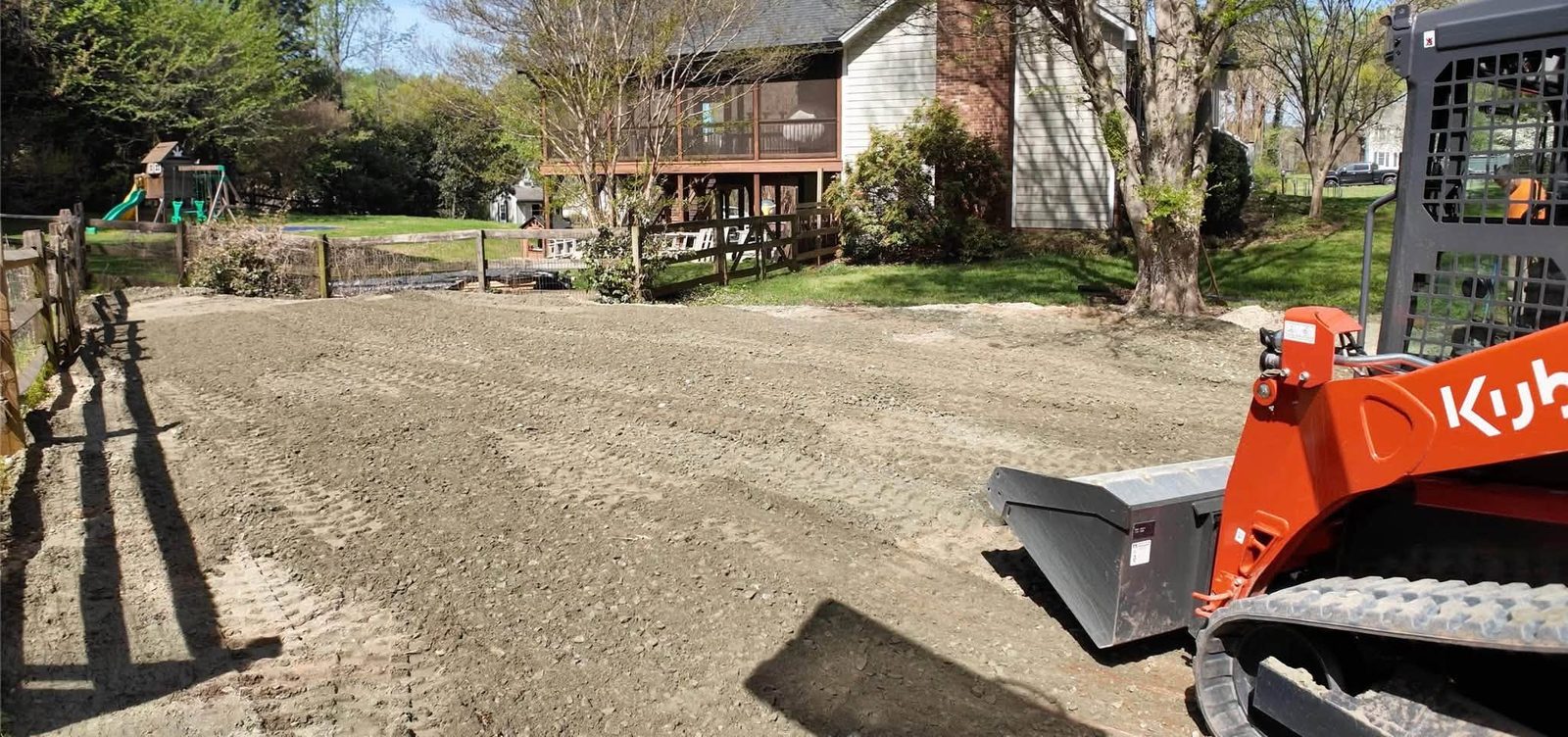
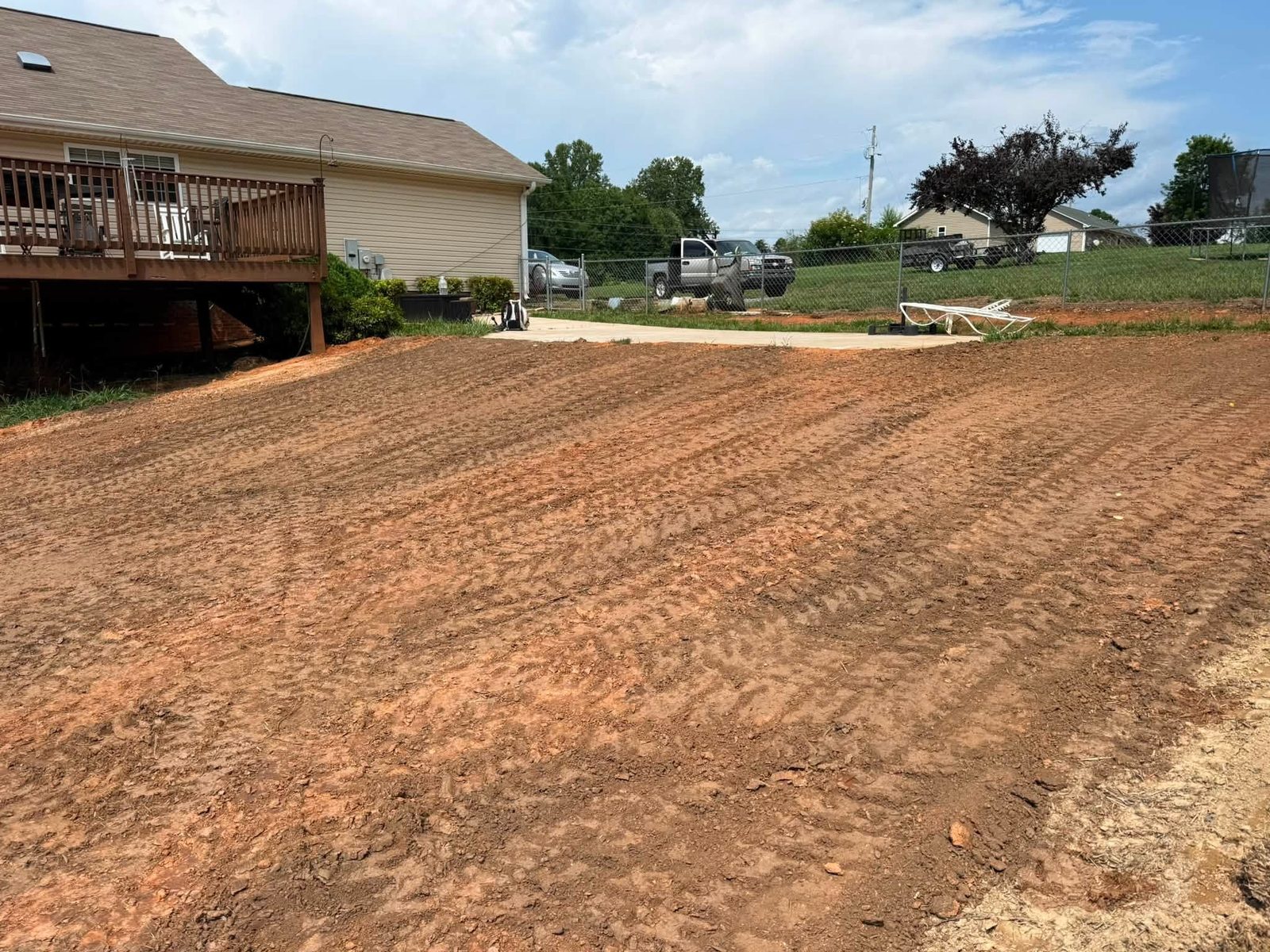
After clearing wraps, the condition a contractor leaves behind matters before grading can begin. A clay lot left bare through a wet stretch develops surface ruts from equipment traffic and runoff channels that add work before finish grading can start. Asking what the quoted price includes for post-clearing stabilization — scraped bare, rough-graded only, or stabilized with seed and cover — gives you a more complete picture of what you are actually buying.