Forty years of private roads, now in the repair queue
Clemmons grew fast as families moved west out of Winston-Salem into Forsyth County's rolling piedmont through the 1970s and 1980s. The subdivisions that platted during that window — neighborhoods near Tanglewood Park, cul-de-sac streets off Lewisville-Clemmons Road — often laid private gravel roads that were never deeded to NCDOT and never meant to be maintained by anyone except the homeowners who bought in. Those roads are now in their fourth and fifth decade. The gravel has migrated, the crowns have flattened, and the drainage ditches that once kept them dry are overgrown or compacted. A maintenance cycle that was never written down has come due all at once.
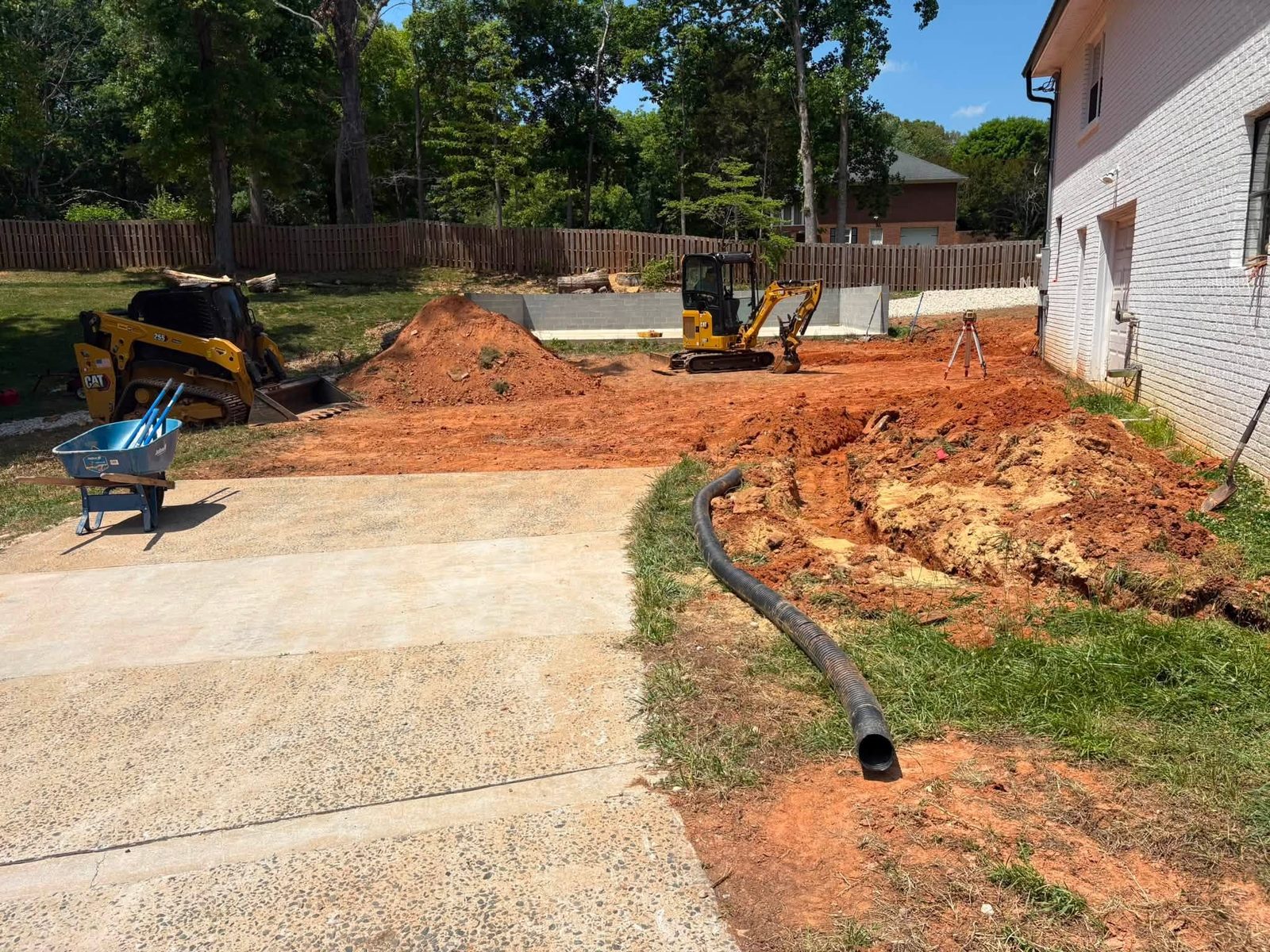
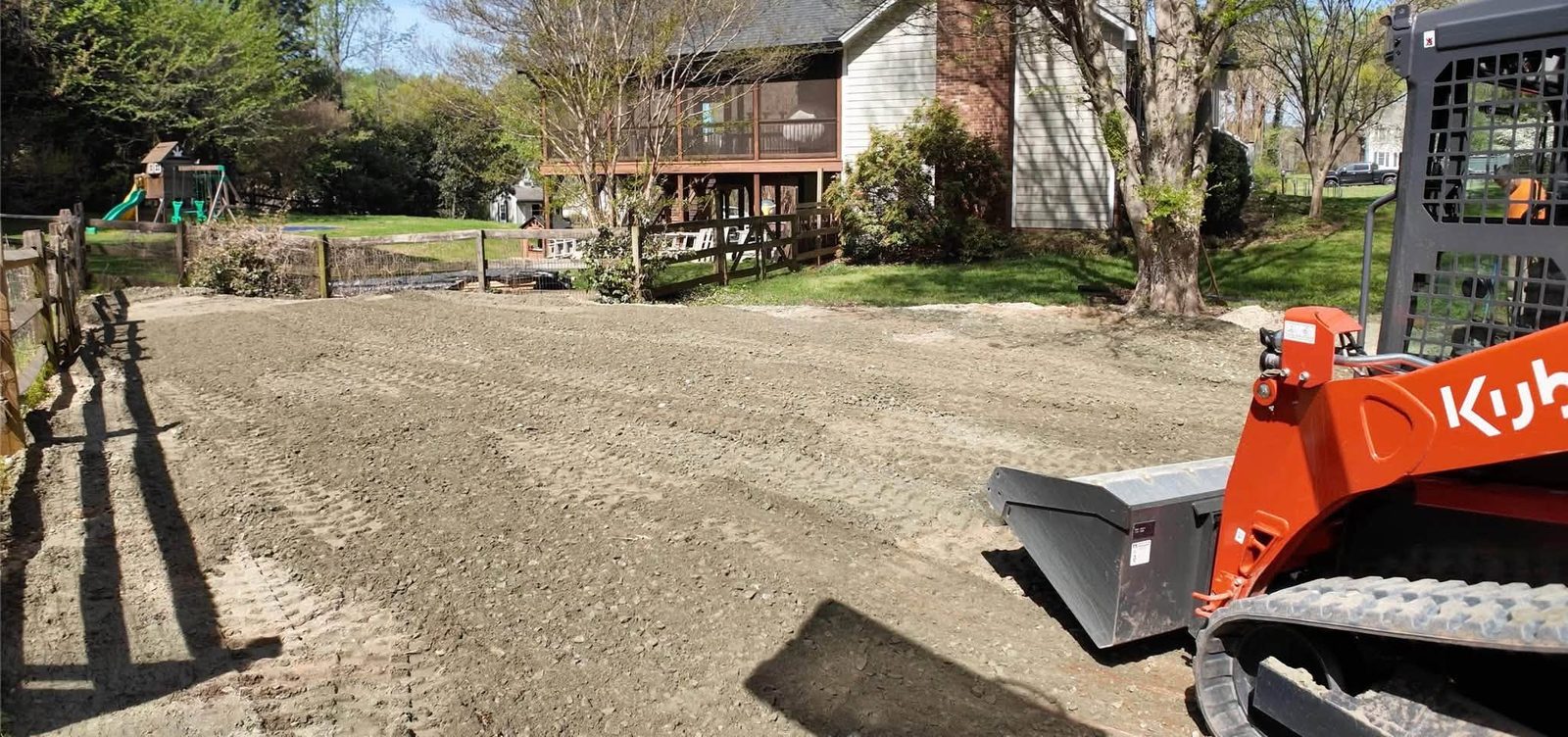
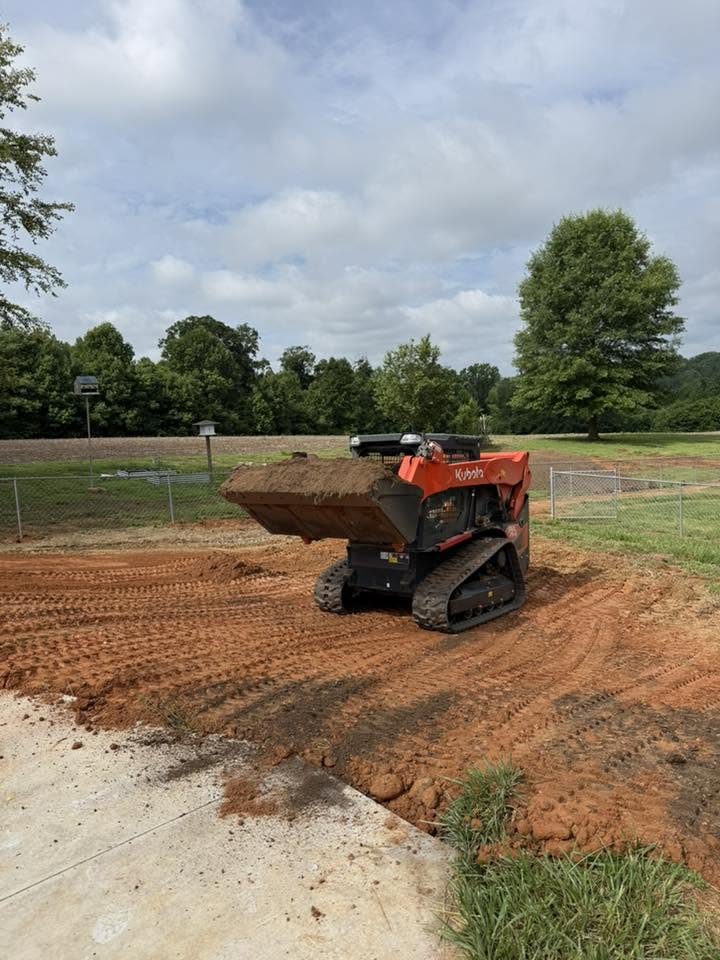
The calls these roads generate are different from a mountain washout or a coastal flood road — they are slower failures, built up over a generation of deferred work, and they need a different repair logic. A good assessment here starts with the drainage picture before it touches the road surface at all. See the full overview at private road repair.
What Forsyth County red clay does to a road bed
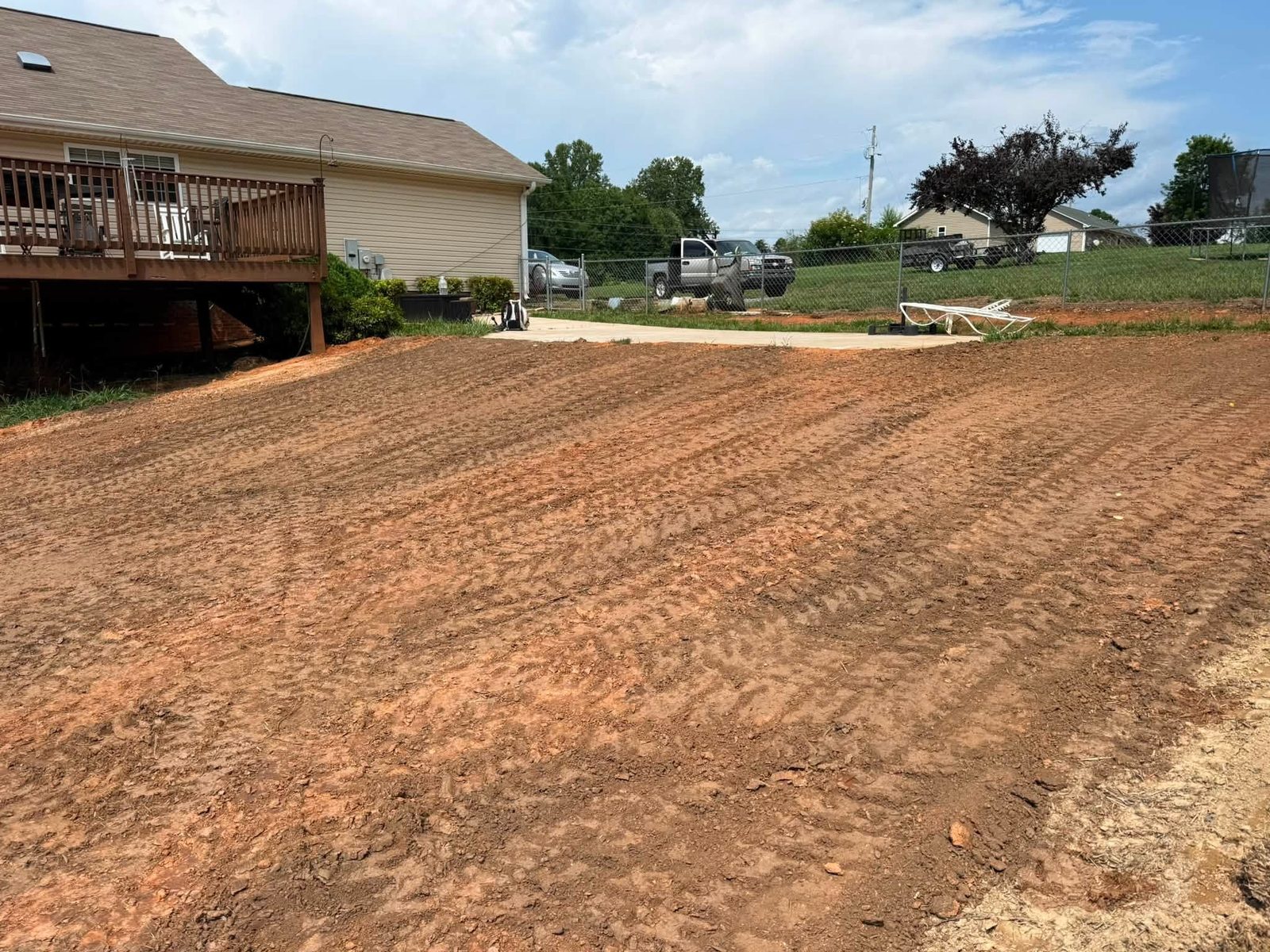
Forsyth County sits on piedmont residuum — the weathered red clay that underlies most of the NC Piedmont between the mountains and the coastal plain. That clay holds compaction well when it is dry, but it does not drain freely, and it loses structural strength quickly when saturated. On a private road carrying even light truck traffic, wet clay under a thin gravel surface creates rutting, then washboarding, then soft spots that appear with almost no warning after a heavy event.
This is the mechanism that makes re-crowning alone a short-term fix. If the subbase clay has softened from repeated saturation, adding stone to the surface only delays the next failure. The NC DEQ Erosion and Sediment Control program exists partly because piedmont clay is so mobile once disturbed — a grading job that does not stabilize exposed cuts will move the erosion problem from the road surface into the drainage ditch, and then onto the neighboring property. Roads regraded without subbase evaluation are the most common repeat-call pattern in Forsyth County private road work.
Signs that a road needs more than a fresh load of gravel
Washboarding that re-forms within a few weeks of grading is a drainage and compaction signal, not a stone quantity problem. Potholes appearing in clusters after rain — not scattered randomly — point to a hidden drainage channel running below the travel surface. Cross-ruts at angles to the road direction show water sheeting off a crown that has flattened or inverted. Standing water in the travel lane rather than in the roadside ditch confirms that inversion. See the full diagnostic at potholes and washboard.
The less obvious warning: a culvert that looks intact from the road surface but has silted in past its functional capacity. Culverts under Clemmons-area private roads from the 1970s and 1980s are often undersized for today's rainfall events, and they are the first thing to fail under volume. 22 federal disaster declarations over the 1977-2026 span of Forsyth County records document the pattern: when storm volume exceeds what a small pipe can pass, water backs up, saturates the road bed, and the surface fails quickly. A culvert probe is part of every scope we write.
What repair work actually costs in this area
The full line-item breakdown is at private road repair cost. The working ranges for Forsyth County jobs:
| Scope | Typical Range | What moves the number |
|---|---|---|
| Re-crown and regrade | $1–$3 per sq ft | Clay subbase condition, road width |
| Gravel resurfacing (add stone layer) | $0.50–$1.50 per sq ft | Haul distance, stone depth required |
| Culvert cleaning | $300–$900 each | Silting depth, equipment access |
| Culvert replacement | $40–$90 per linear foot | Pipe diameter, headwall condition |
| Full section rebuild (washed-out) | $4,000–$10,000 per 100 ft | Subbase correction and drainage included |
Red clay subbase prep and drainage correction are the line items that most often push a Clemmons job toward the top of its range. A bid that does not separate those from the surface work is difficult to compare honestly and usually means the subbase is not being addressed on its own terms.
Permits and erosion rules that apply to private roads
Private road repair is not exempt from state and federal erosion rules simply because the road is not publicly owned. NC DEQ's land disturbance requirements apply to any grading project that disturbs more than one acre — a repair job running several hundred feet at standard road width can reach that threshold quickly. The NC Department of Environmental Quality requires an approved erosion and sediment control plan before work begins on projects above that threshold, regardless of the road's ownership status.
The EPA's stormwater NPDES program adds a parallel requirement when disturbed acreage from a project exceeds one acre and drains toward a stream or waterway. For projects in the gray zone, Forsyth County land development staff can confirm whether your specific scope and location require a permit or fall under routine maintenance. Smaller jobs — cleaning culverts, patching stable surfaces, resurfacing without exposing native soil — typically do not require a permit.
Getting a scope that holds up after the first hard rain
Three questions worth asking any private road contractor before agreeing to a scope: Have they worked on Forsyth County piedmont clay specifically? Clay subbase prep in the NC Piedmont behaves differently from work on rocky or sandy ground, and a crew without that experience will treat the subbase the same as the surface layer. How do they handle drainage before touching the road? The answer to that question separates a repair from a timed reset. And does the written scope separate subbase work from surface work? A single-line bid makes honest comparison impossible.
Larger projects — particularly any job that approaches the one-acre land disturbance threshold — will require an engineer's sign-off on the erosion control plan and drainage design. The NC Department of Insurance oversees engineering and building code administration in North Carolina, which governs how drainage structures on permitted projects must be designed and inspected. Verifying that a contractor holds the right license class for grading and drainage structures matters on any permitted scope.