Clay ground and why it changes every bid in Yadkin County
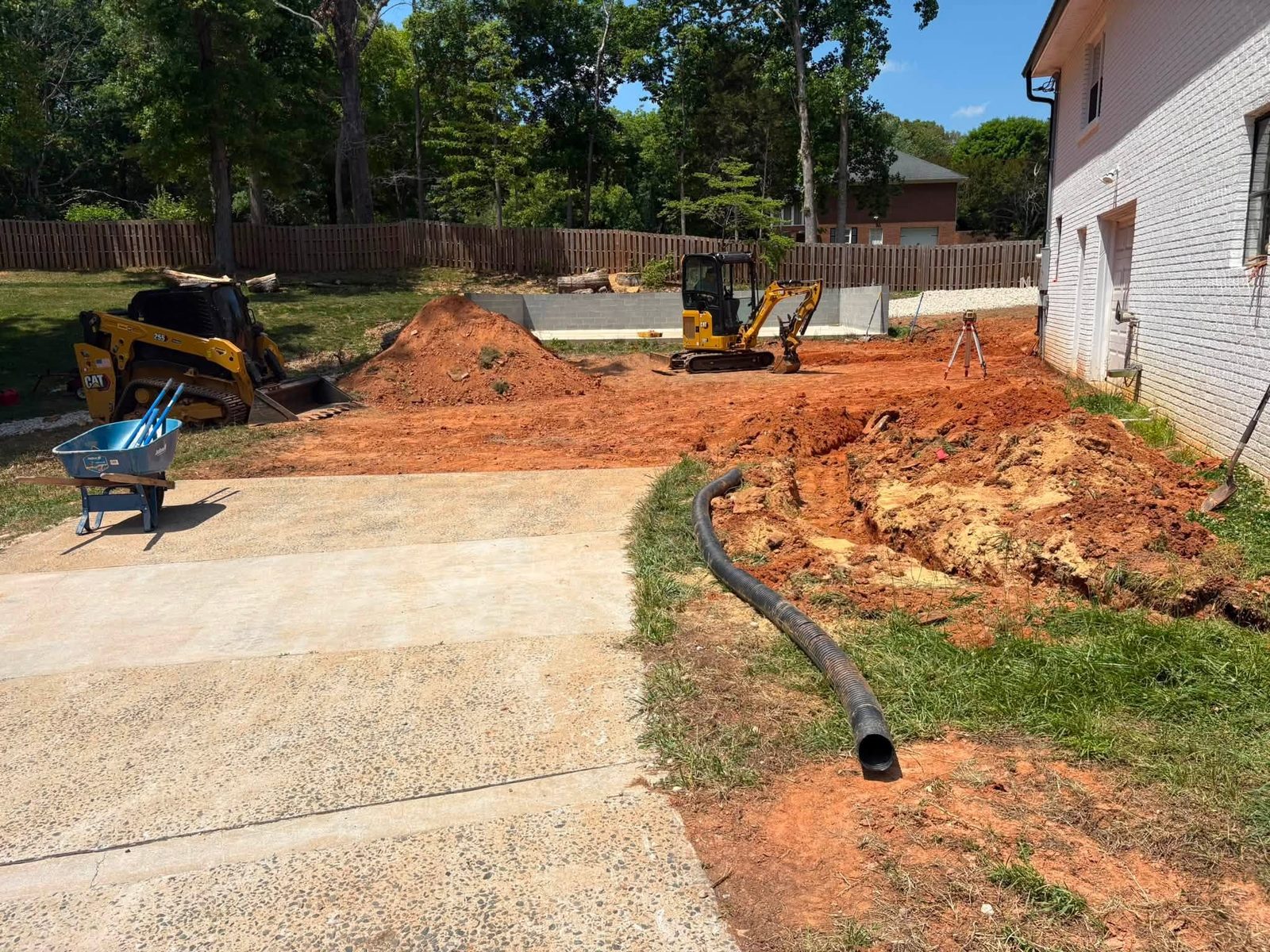
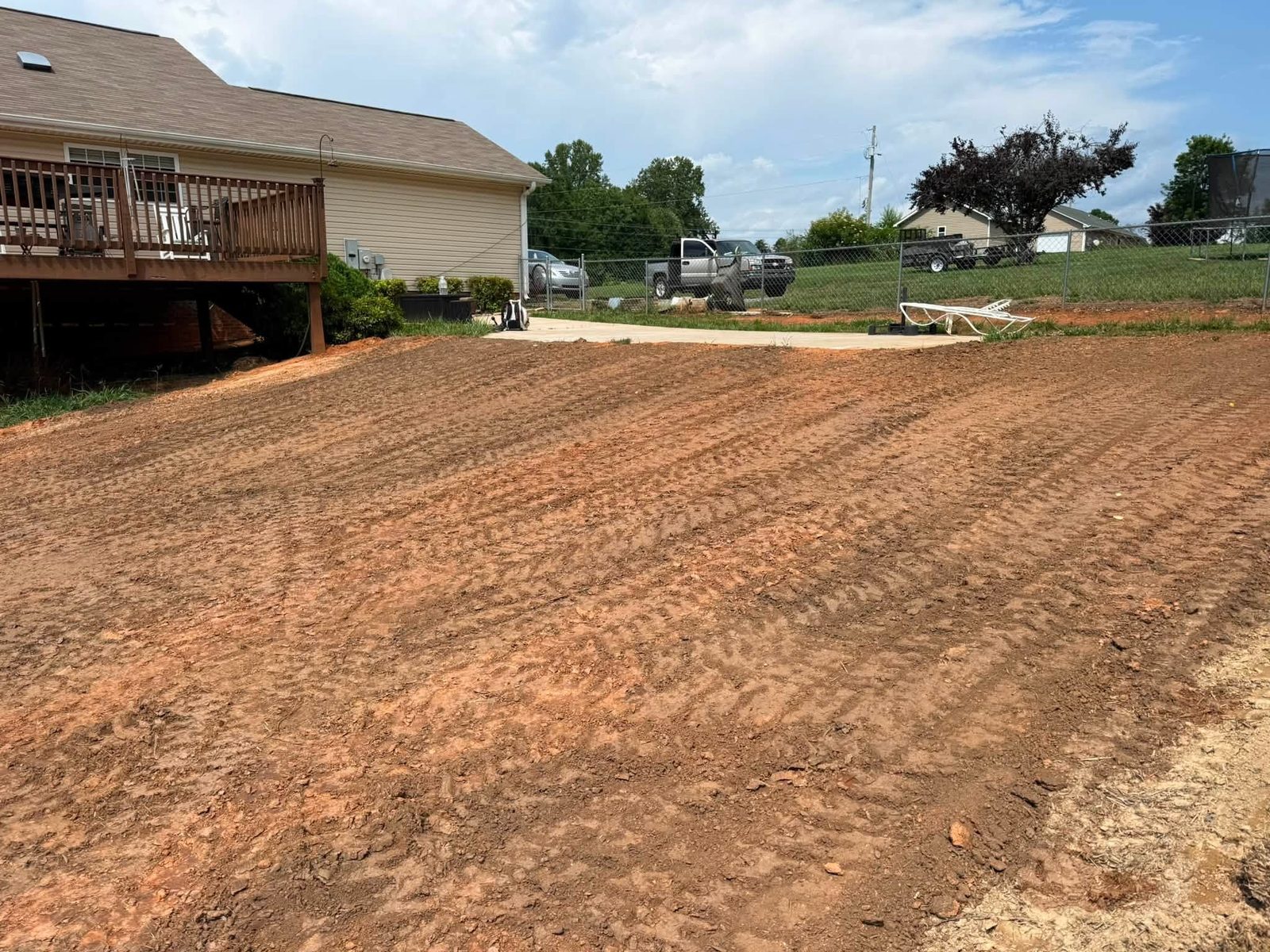
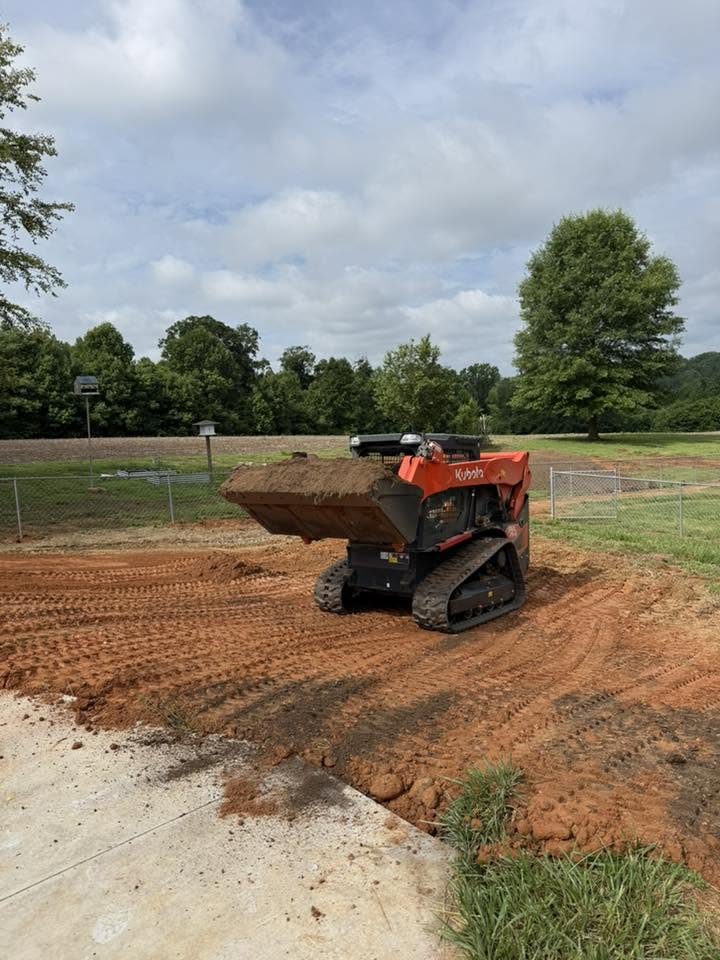
Yadkin County sits in the NC Piedmont on some of the most predictably difficult grading soil in the region: deep red-orange clay that smears and ruts when wet, compacts near-concrete when dry, and rarely gives a contractor a forgiving middle window. A week of rain before a scheduled job doesn't just push the start date — it can turn a straightforward building pad into a site that requires drainage work before earthmoving can begin in earnest.
That soil behavior is the single variable that separates a Yadkinville grading quote from a flatland suburban estimate. Equipment selection, weather timing, compaction sequencing, and the drainage design that has to precede final grade all follow from understanding the clay, not from reading the lot dimensions. A bid that doesn't address drainage explicitly on Yadkin County ground is not a complete scope. For a full picture of what site work involves from clearing through finished grade, the grading and excavation overview covers each phase and what it requires.
Common grading work on Yadkin County lots
Most of Yadkin County is rural — working farms, country homesteads, and newer construction spread along state roads rather than suburban cul-de-sacs. That character shapes what grading calls actually look like here.
Building pad preparation is among the most frequent: new construction on raw land in the county typically starts with significant cut-and-fill to bring native ground to a compacted, properly sloped pad for a slab or crawl-space foundation. The difference between a relatively flat cleared pasture lot and a site with a five-foot grade change is the difference between a half-day job and a two-day one with engineered fill.
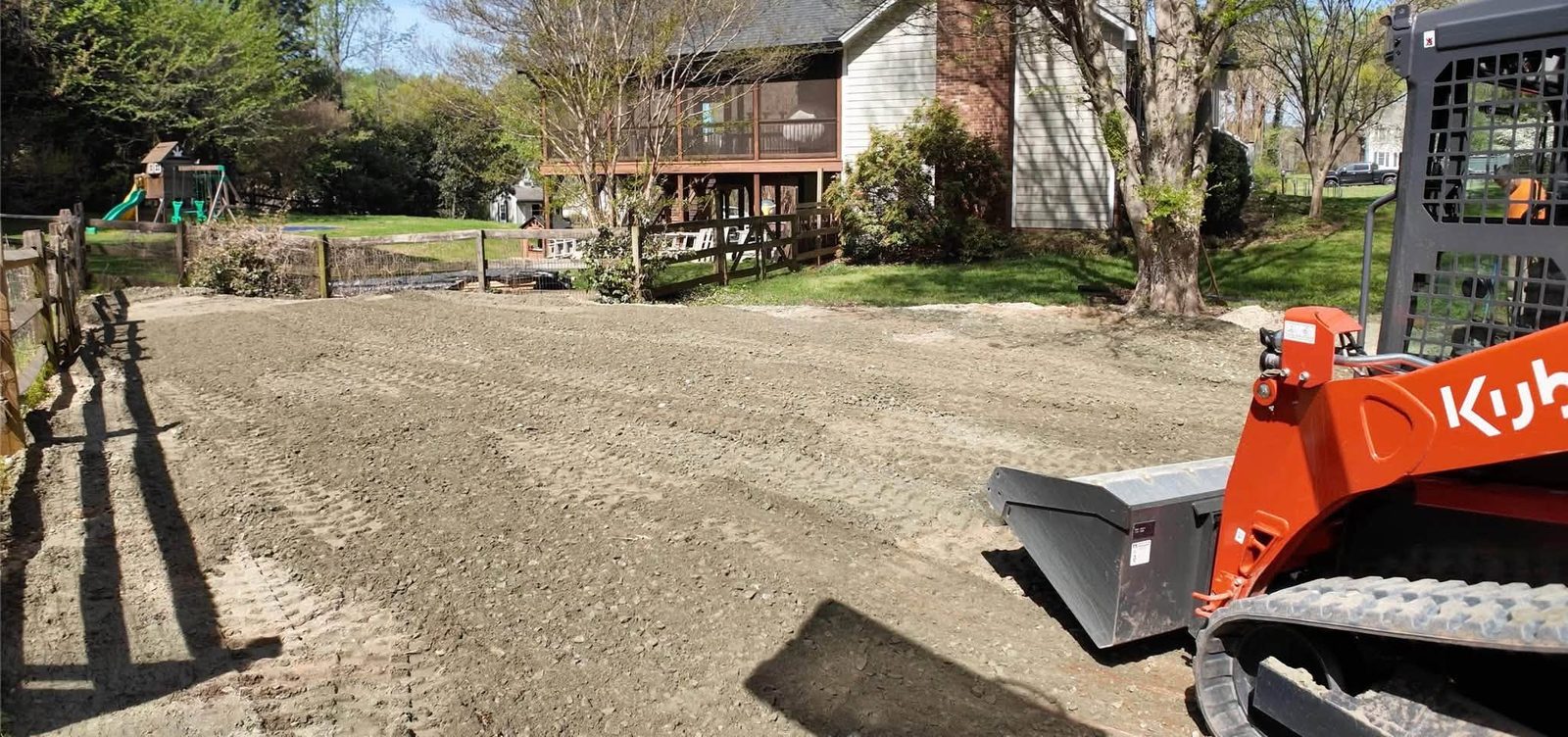
Driveway and access grading on rural properties with long unpaved drives needs periodic reshaping. Piedmont clay develops ruts and low spots after wet seasons, and a compromised driveway that sheds water improperly becomes a drainage problem for the structures it leads to.
Drainage correction — pulling surface water away from a foundation, reshaping a low yard that ponds after rain, or regrading where a builder's rough work was never properly finished — is the least glamorous grading call and frequently the most important one. Sustained water at grade level is the precursor to the foundation and crawl-space repairs it prevents. Site preparation explains what each phase needs to accomplish before construction can start on top of it.
What grading costs around Yadkinville
Residential grading around Yadkinville typically runs $1,200 to $5,500 for a standard lot. Large regrades, significant fill import, or drainage complexity can push past $8,000. The table below shows representative ranges by scope — actual quotes move based on soil condition at the time of work, site access for equipment, fill haul distance, and whether erosion controls are included or billed separately.
| Scope | Typical Range | What moves the number |
|---|---|---|
| Driveway reshaping (gravel drive, under 200 ft) | $1,200 – $2,200 | Length, rut depth, material hauled in |
| Residential building pad prep (modest slope) | $2,000 – $4,500 | Cut depth, fill volume, compaction testing required |
| Yard drainage correction (spot regrade) | $1,500 – $3,500 | Number of problem areas, pipe installation |
| Full lot regrade with drainage (standard residential) | $3,000 – $5,500 | Slope change, clay condition, erosion control scope |
| Large parcel regrade or heavy fill work | $5,500 – $8,000+ | Fill volume, haul distance, permit requirements |
Any quote that doesn't separate drainage line items from earthmoving is worth questioning — those are distinct scopes on jobs where both apply. The grading cost page breaks down how each variable moves a final number.
Erosion rules and the Yadkin River corridor
Any project disturbing one acre or more in North Carolina triggers state Erosion and Sediment Control requirements administered by the NC DEQ Division of Energy, Mineral and Land Resources. Residential jobs under that threshold still carry local county requirements, and lots anywhere near the Yadkin River or its tributary streams face stricter scrutiny: sediment reaching waterways is an active enforcement issue, and the downstream consequences of a poorly managed grading site are not abstract on river-corridor lots.
Yadkin County shares its name with the river that bisects it. The county has accumulated 18 federal disaster declarations across 1977-2026, the majority tied to storm and flooding events. That record reflects the reality that water moves aggressively through this landscape, and any lot in or near a mapped flood zone needs to be cross-checked against the FEMA Flood Map Service Center before any significant grade change. Moving dirt in a flood zone without accounting for base flood elevation can affect insurance ratings and lender requirements.
For larger projects or any site adjacent to drainage infrastructure, U.S. EPA NPDES stormwater rules set the federal floor that state permits must meet or exceed. A contractor who cannot describe their erosion control plan for your specific site is one worth passing on.
Finding a contractor who knows this ground
Yadkinville's proximity to the Forsyth County line means some contractors quoting work here do most of their jobs on Winston-Salem-area suburban lots — compacted-fill subdivisions on surveyed half-acres with uniform drainage patterns. That work looks similar to rural Yadkin County grading until the clay behaves differently than expected. Ask any contractor quoting your job whether they have graded on comparable soils in the county, not just in the broader Triad region.
On licensing: North Carolina's general contracting thresholds are set and enforced through the NC Department of Insurance. Contractors working above the cost threshold are required to hold a general contractor's license, and anyone performing work near utilities must coordinate through state locate requirements. Verify both before work starts, not after.
The questions worth asking before accepting any bid: How do they handle clay drainage specifically, and does it appear as a line item? What is their compaction verification method? Is erosion control scoped and priced in the bid, or added later? Clear answers to those three questions separate contractors who have worked Yadkin County ground before from those who are pricing it like somewhere else.