Covenant-first, gravel second
Bermuda Run is a planned community anchored by Bermuda Run Country Club in Davie County, and that context changes a gravel driveway project in ways a standard rural Davie County install never faces. Most lots here carry architectural covenant language governing aggregate color, edge treatment, and how the drive meets the public right-of-way. Getting written approval from the architectural review board before breaking ground is not a formality — it is what keeps a finished installation from triggering a remediation order after the crew has left.
The practical sequence: pull deed restrictions and HOA documents before requesting contractor quotes, then bring them to every pricing conversation. A crew with planned-community experience writes a spec that clears ARB on first submission. One without that experience prices the labor correctly and specifies the wrong stone, sending the project back through a review cycle that commonly adds four to six weeks to the start date.
Beyond the HOA layer, Bermuda Run's geography shapes the technical requirements. The community sits in the Yadkin River valley near the Davie-Forsyth county line, with Mocksville as the Davie County seat roughly fifteen miles south and Winston-Salem a short drive north. The underlying soil is Cecil clay-loam piedmont — moisture-retentive, seasonally expansive, and familiar to site crews working this part of North Carolina.
What Bermuda Run driveway work typically costs
Most residential installs here fall into identifiable scopes. The full line-item breakdown is at the gravel driveway cost guide; the table below shows typical ranges for Davie County lots.
| Scope | Typical Range | Primary Cost Driver |
|---|---|---|
| Short drive, 50–80 ft, flat lot | $1,800 – $2,800 | Base depth, stone grade |
| Standard drive, 100–150 ft | $2,800 – $4,500 | Base volume, fabric layer |
| Long drive or turnaround, 200+ ft | $4,500 – $5,500 | Stone tonnage, compaction passes |
| Heavy base, drainage work, or slope | $8,000 – $12,000 | Culverts, swales, regrading |
| HOA-spec edging or decorative border | $400 – $900 added | Material type, linear footage |
Every range above assumes a proper compacted sub-base. Surface-only stone on unprepped piedmont clay is a two-season driveway on a ten-year budget.
Drainage carries real weight this close to the Yadkin
Davie County's position in the Yadkin River valley means storm and flood events appear regularly in the federal disaster record — 19 declared events spanning 1977-2026. That history has practical relevance for gravel driveways: any base grading that alters the natural drainage path on a lot needs a plan for where the redirected runoff goes. A culvert undersized for peak flow or a drive crown that pushes water toward an adjacent parcel puts the job in the scope of the NC DEQ Erosion and Sediment Control program, which governs land-disturbing activity statewide.
Most residential driveway installations fall below the one-acre threshold that triggers formal NPDES permitting under the EPA stormwater program. Below-threshold, though, does not mean drainage-optional. The failure pattern for valley-lot driveways is almost always a drainage decision made at install time — a swale never cut, a culvert skipped to trim $400 from the bid, a slope left uncrowned. The gravel washing-out guide covers those failure modes and the remedies in detail.
When reviewing contractor proposals, ask specifically how they manage the stormwater path from your lot — not just the driveway surface. On Yadkin valley piedmont lots, that answer predicts long-term performance more reliably than stone type or base depth alone.
Base depth and stone grade on piedmont clay
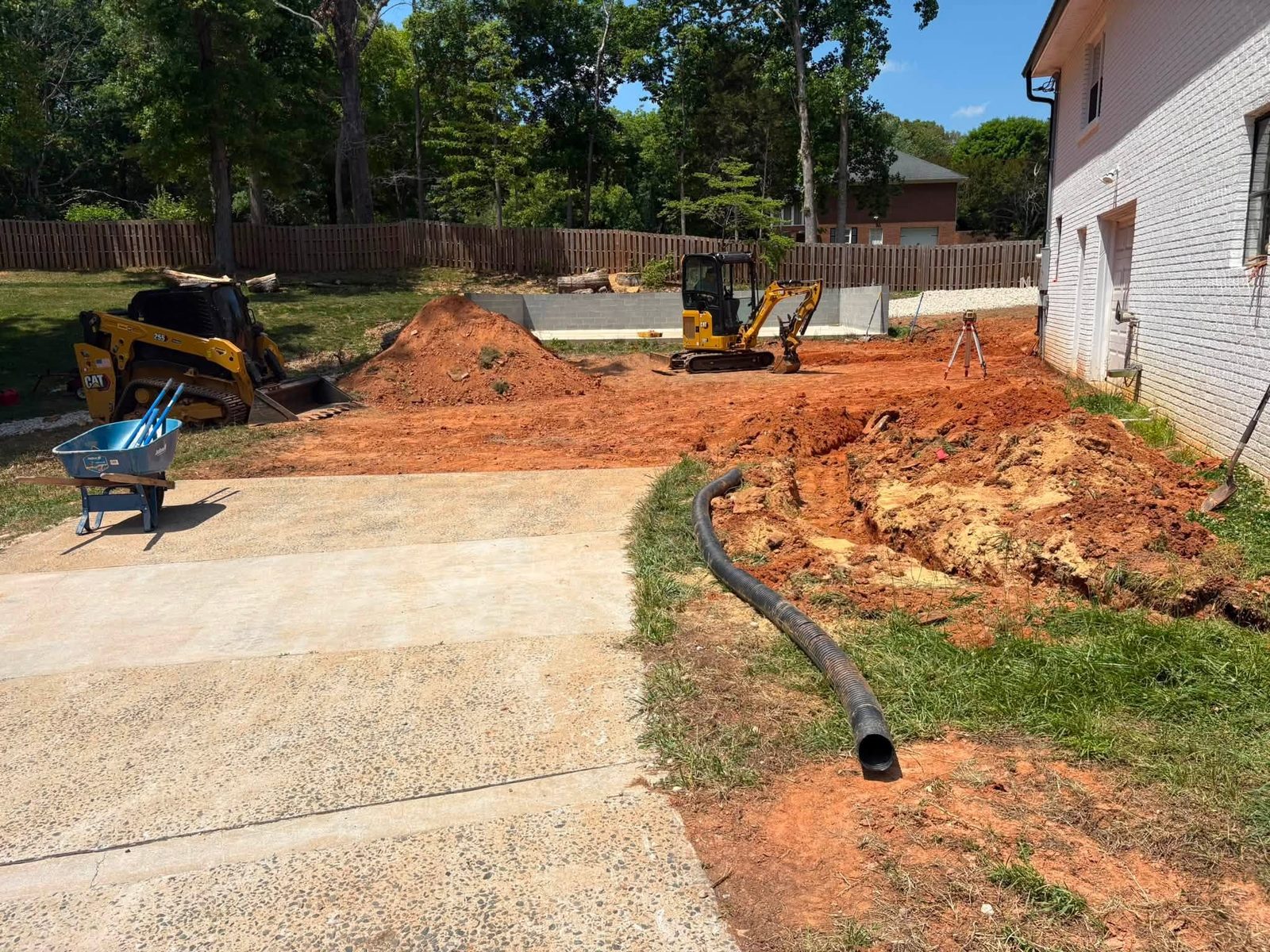
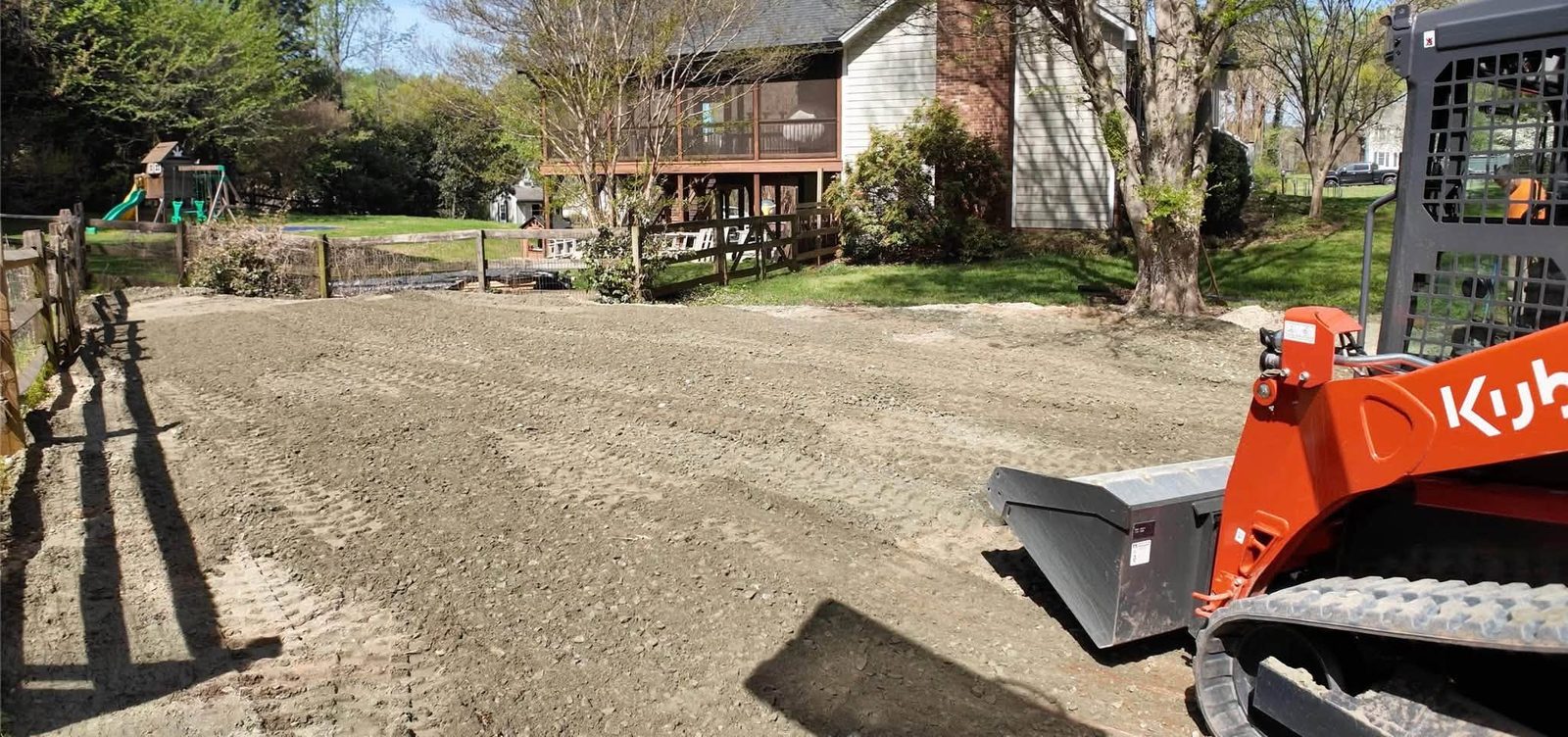
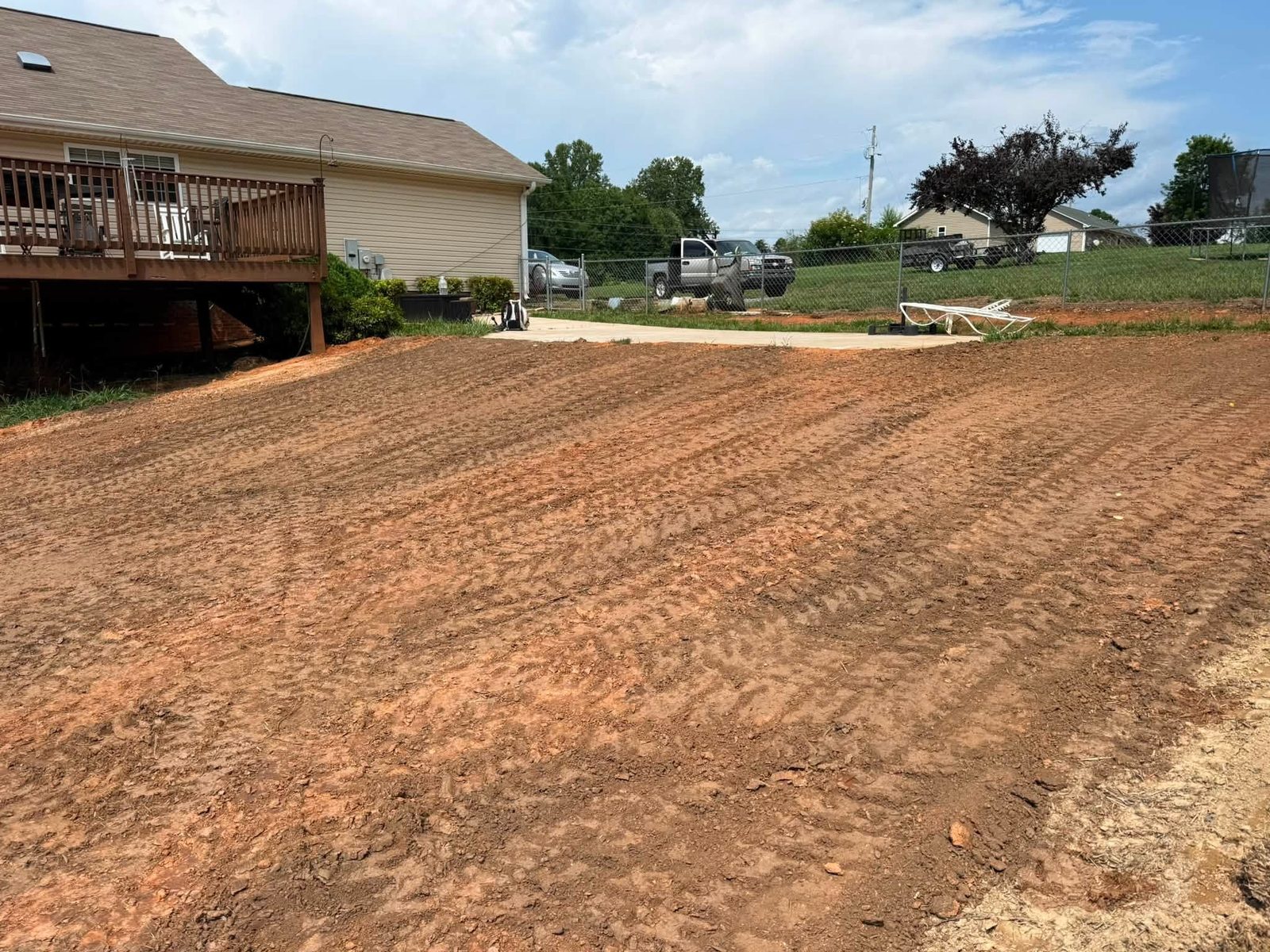
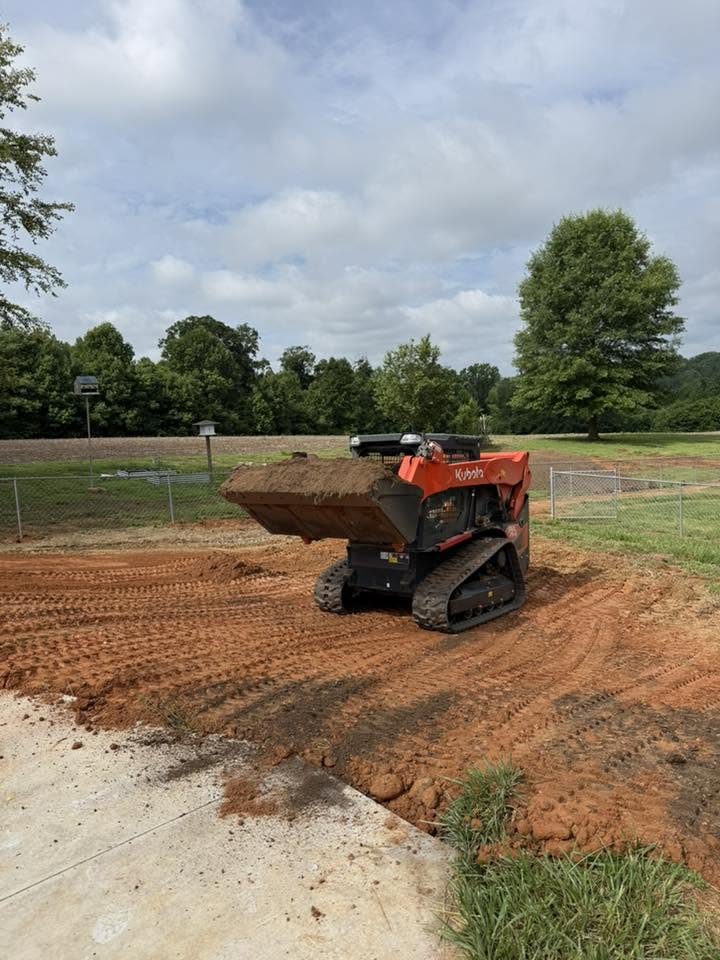
The soil under Bermuda Run-area lots is predominantly Cecil clay-loam, which holds moisture and expands seasonally. A gravel driveway on unprepared piedmont clay develops ruts within two to three freeze-thaw cycles regardless of how much surface stone is applied. The standard for durable work on this soil is a minimum six-inch compacted crush-and-run sub-base, with a geotextile fabric layer separating native ground from the base course on any run exceeding 100 feet or on sections with a grade above four percent. Fabric is the line item most often cut in a low bid and most often blamed when a maintenance call comes in year two.
Stone selection affects both performance and HOA compliance. Angular #57 crushed limestone drains well, handles standard residential traffic, and is the most common spec for Bermuda Run-area residential driveways. Pea gravel migrates on any meaningful grade and frequently fails covenant retention standards. Coarser #4 or #5 angular stone is appropriate for rear-access and utility drives. For a full comparison by use case and approximate cost per ton, the gravel types and installation guide has the side-by-side breakdown.
What to confirm before the first load is delivered
Three checks worth making before signing any contract in Bermuda Run: confirm the crew has worked inside planned communities in Davie County and understands HOA submission requirements; ask for a written drainage plan showing where the lot's runoff goes once the base is graded; and ask whether the grading scope triggers any state-level review. The NC Department of Insurance building codes division oversees grading compliance at the state level, and significant grade change on a residential lot can prompt a review even when the finished surface is gravel rather than concrete or asphalt.
Timing matters here specifically. ARB meeting cycles in planned communities typically run monthly, and a missed submission window adds a full cycle before work can begin. Run the HOA approval process in parallel with contractor quoting — not after a contract is signed. Once drainage plan and ARB sign-off are confirmed, the cost conversation narrows quickly. The full line-item picture is at the gravel driveway cost guide.