Brick construction changes the demolition math here
Winston-Salem's mid-century neighborhoods — Ardmore, Washington Park, West End, Buena Vista — were built on tobacco-company capital with solid brick on concrete footings. That same durability is exactly what makes them more expensive to take down. Brick demolition generates debris that weighs significantly more per truckload than wood-frame teardown, requires more machine time per square foot, and demands more sorting at the end. Projects in these neighborhoods routinely land in the upper half of the $4–$10 per square foot range, and the honest reason is tonnage, not markup.
The offsetting factor is salvage value. Good Piedmont brick has a market — for landscaping, restoration work, and infill construction — and a contractor who understands that equation can sometimes recover value that partially offsets disposal costs. Ask specifically whether salvage is on the table before signing. For a full breakdown of what moves your number in this county, see the demolition cost page.
What a full teardown actually involves
A residential demolition in Forsyth County follows a sequence most bids do not bother to explain:
- Permit and utility coordination. A demolition permit is required from Forsyth County before work begins. Utility disconnects — gas, electric, water, and sewer — each involve separate agencies with their own lead times. Gas and electric disconnects can take days to weeks; a contractor who starts the job clock without confirmed disconnects is starting late.
- Pre-demolition survey. Any structure built before 1980 is subject to federal regulations requiring an asbestos survey before demolition. Asbestos-containing material must be abated by a licensed contractor before the structure comes down. Skipping this step is an EPA violation, not a permit shortcut.
- Structure down and sorted. Concrete, masonry, and clean wood are separated from mixed or contaminated material — sorted debris costs less to dispose of than mixed loads, and a good crew prices that in from the start.
- Foundation decision. Removing a foundation adds cost but is typically required for a new build; leaving it in place is sometimes acceptable for a lot being held. This decision shapes everything that follows in site preparation.
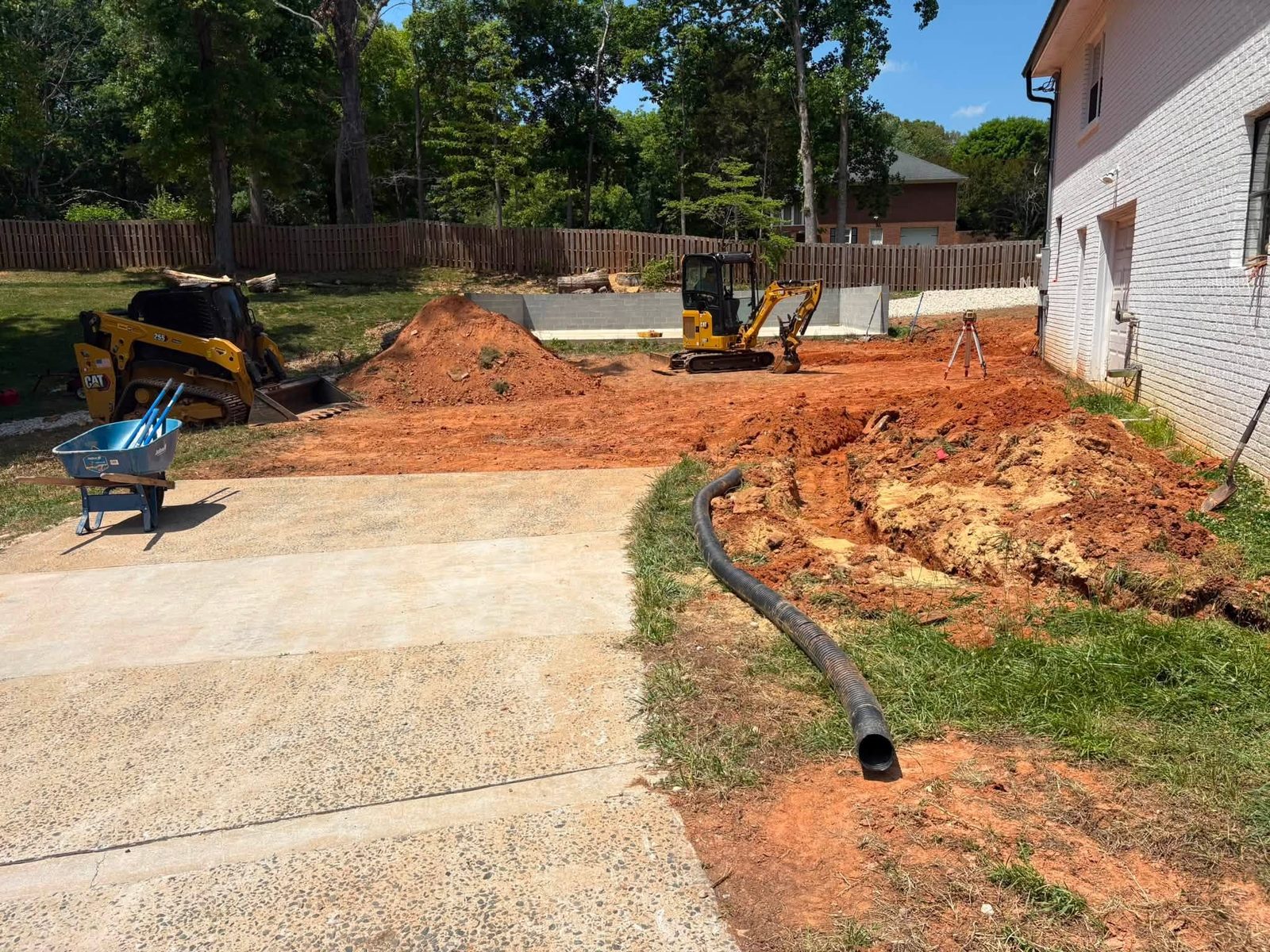
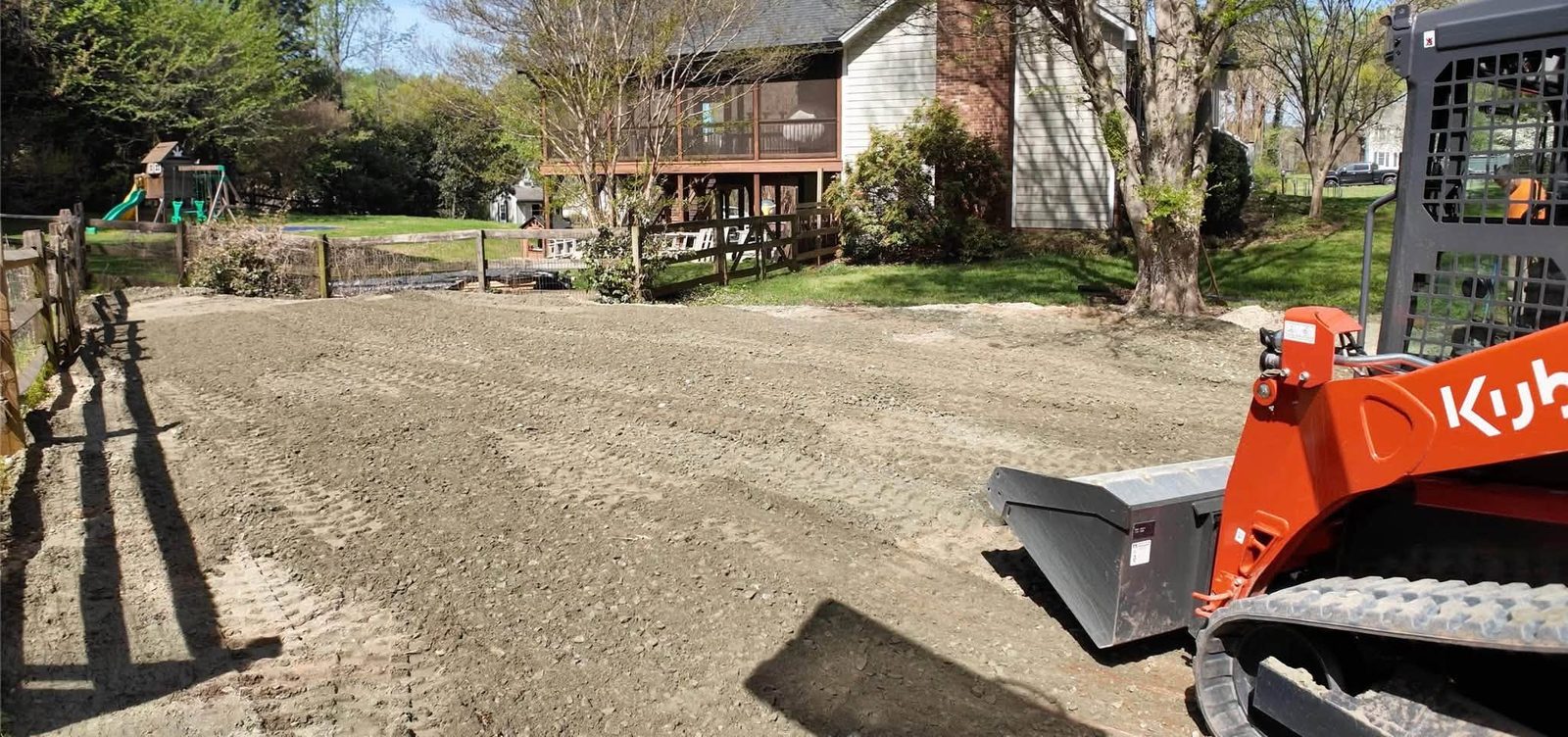
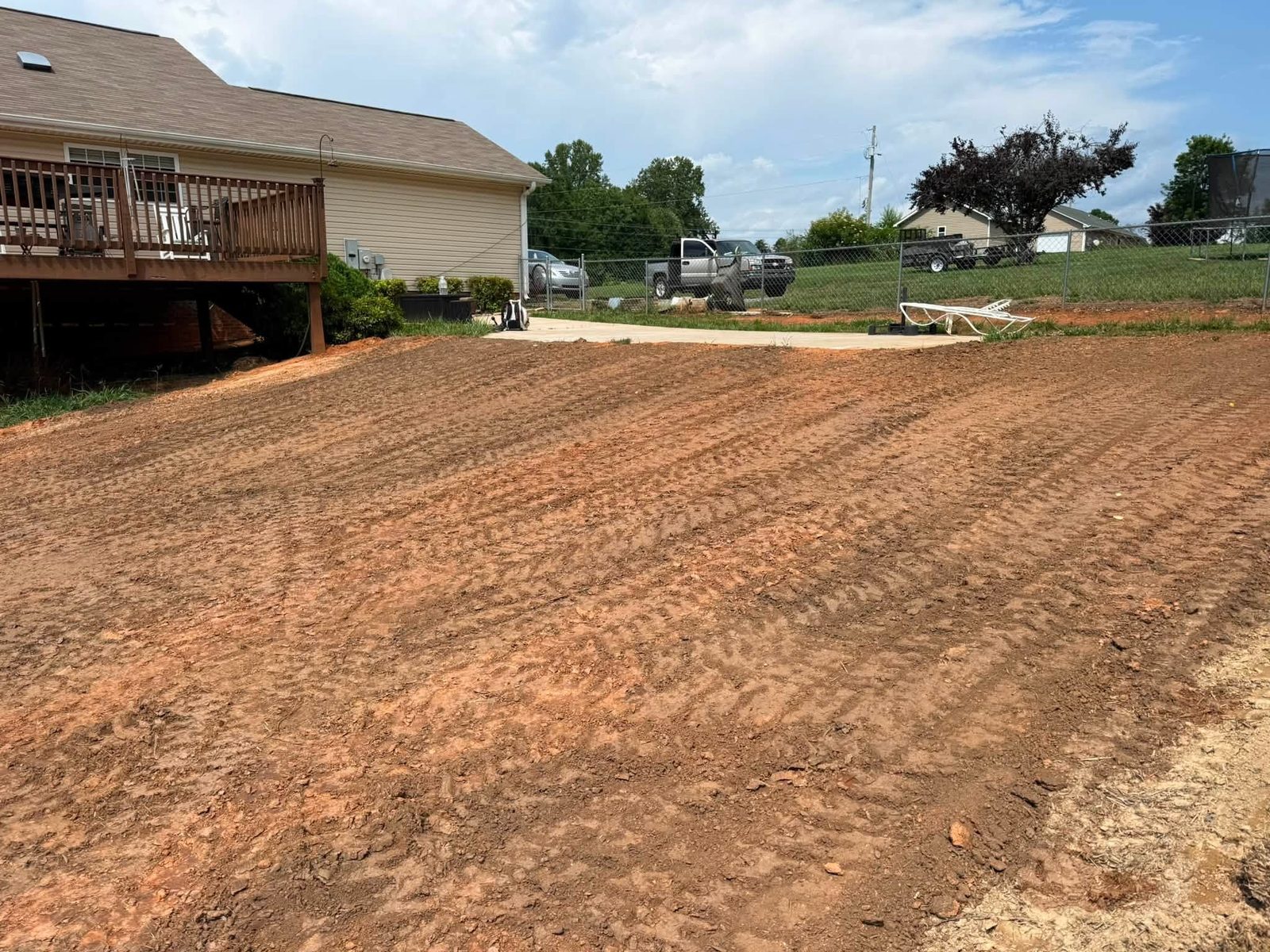
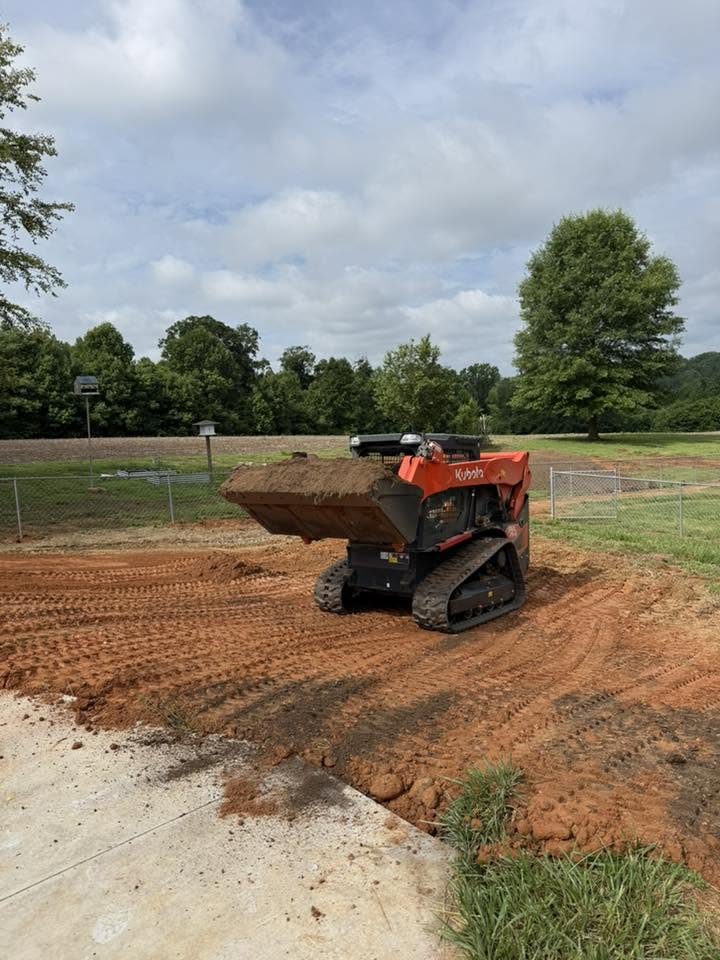
- Grade and drainage restore. The disturbed area needs to drain correctly when the job is done. A flat pad that ponds water resets the drainage problem the demo was supposed to clear. When fill is needed to restore proper grade, see fill dirt and hauling for what that scope involves.
Scope vs. typical cost range
These ranges apply to Forsyth County work. Brick construction, a deep foundation, or a long haul to a permitted disposal site pushes toward the top of each band.
| Scope | Typical range | What moves it |
|---|---|---|
| House teardown — wood frame | $4–$7 per sq ft | Foundation removal, asbestos abatement |
| House teardown — brick construction | $6–$10 per sq ft | Tonnage, sorting, salvage decisions |
| Detached garage or shed | $1,000–$5,000 | Size, construction type, concrete slab |
| Driveway removal (concrete or asphalt) | $3–$8 per sq ft | Thickness, reinforcement, haul distance |
| Partial or interior demo (room-level) | $500–$2,500 per area | Hazmat, structural involvement, access |
| Foundation removal | Quoted separately | Depth, wall type, proximity to utilities |
The demolition cost page covers what permitting adds to timeline and budget in this county.
What the permit and safety rules actually require
Demolition in Forsyth County involves regulatory layers that are not optional and not left to the homeowner's discretion:
Asbestos. The EPA's National Emission Standards for Hazardous Air Pollutants (NESHAP) require that owners and operators survey for asbestos before demolition proceeds. Pre-1980 construction — a large share of Winston-Salem's existing housing stock — is presumed to contain asbestos until tested. Licensed abatement is the only legal path when it is found; the survey cost belongs in any honest bid.
Worker safety. The NC Department of Labor's Occupational Safety and Health Division enforces demolition safety standards covering shoring, dust suppression, and fall protection. A contractor who cuts corners here creates liability that eventually reaches the property owner in a dispute or claim.
Erosion and sediment control. Once a structure comes down, the exposed soil is subject to NC DEQ's erosion and sediment control rules. Forsyth County sits in the Yadkin River watershed, and sediment leaving a demo site can trigger violations that outlast the building permit. Silt fencing and stabilization are standard requirements, not upsells — and in a county with 22 federal disaster declarations on record over 1977-2026, drainage restored correctly after demolition matters as much as the teardown itself.
Building code record. The NC Department of Insurance administers the State Building Code under which local departments issue permits. A demolition permit closes out the building record on the parcel, which matters at resale and for any future construction.
The questions that keep a demolition bid honest
"Is the asbestos survey complete, or is it part of the bid?" Some bids assume a clean structure and add abatement as a change order after the survey returns. That conversation is far easier before you sign than after the crew mobilizes. "Who handles the utility disconnects, and what are the confirmed lead times?" Gas and electric disconnects involve separate utilities with independent schedules; a contractor who starts the job clock without confirmed disconnects is building in delay at your expense. "What does the lot look like when you're done?" A graded, compacted pad that drains away from adjacent structures is a finished job. A pit with a broken footer and standing water is a liability. The specificity of the answer tells you whether the contractor is thinking past the teardown.