How Forsyth County's clay soil changes the job
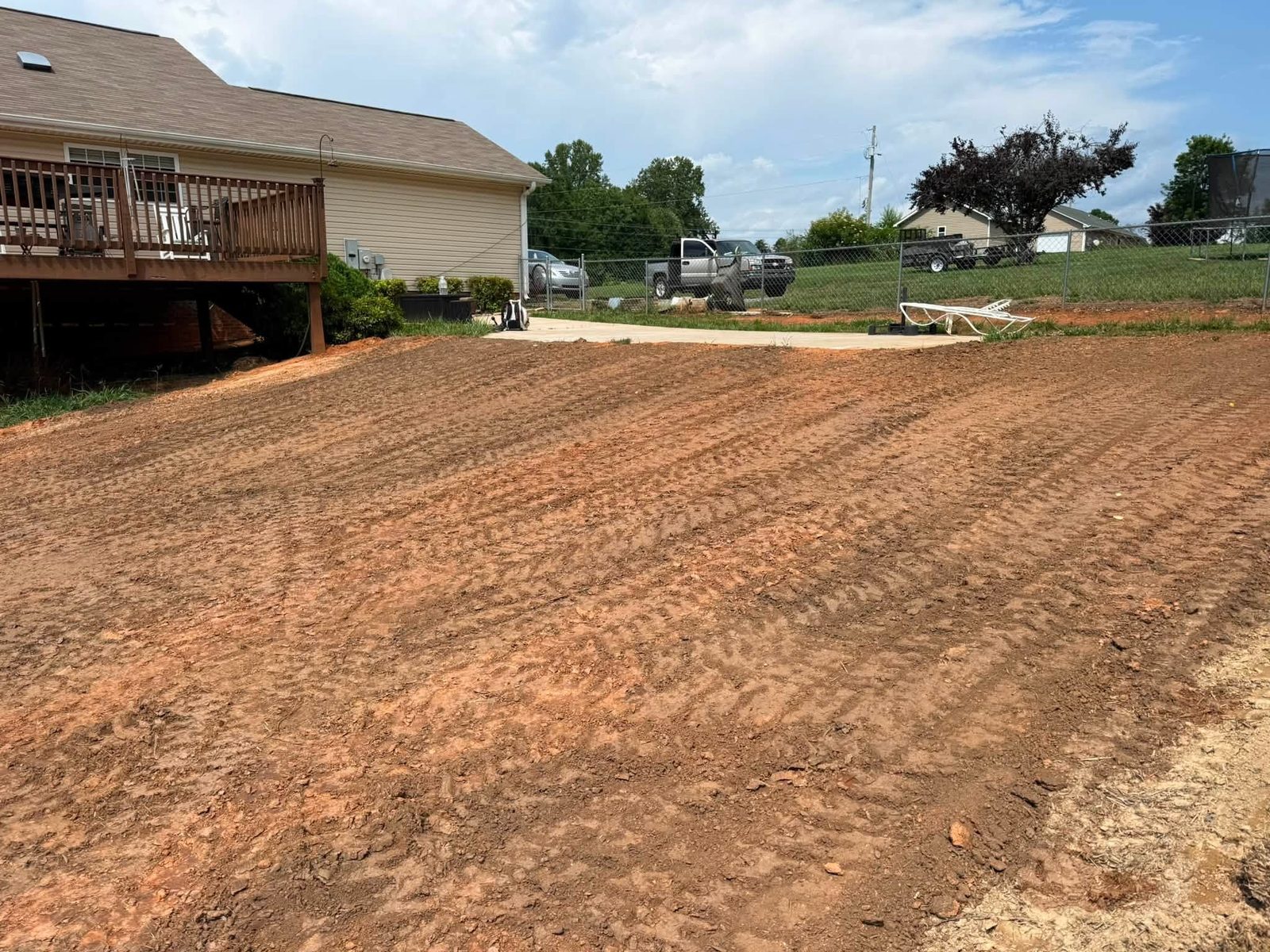
The red-orange clay running through Winston-Salem's older city neighborhoods and out through the newer subdivisions near Kernersville and Clemmons is Cecil and Appling series soil — classic Piedmont clay. Strip it bare and it behaves in two frustrating ways: it sheets off quickly under the rainfall the Triad receives, and it crusts into a near-impermeable cap between storms that forces water to run sideways across the surface instead of infiltrating. That combination is why a bare graded lot or a failed slope in Forsyth County that looks stable in dry weather can drop significant sediment into a drainage swale by the following wet season.
The honest implication is that seeding bare clay and waiting is not a stabilization plan. Effective erosion control here means correcting the grade, routing water where it belongs, and giving vegetative cover an engineered surface to establish against — usually a matting or blanket layer that protects seed until roots can hold the slope on their own. Forsyth County sits within a watershed with documented flood and storm history (22 federal disaster declarations on record, 1977-2026), and saturated Piedmont clay is exactly what announces itself when a marginal drainage situation meets a hard event.
What a slope repair or erosion control job actually involves
Work varies by problem, but most residential and light commercial jobs in this county follow a recognizable sequence:
- Drainage assessment before equipment moves. Erosion follows water, and water follows grade, hardscape, and rooflines. A yard gully that keeps reopening after filling is telling you the flow above it has not been addressed. The assessment answers where the water originates, not just where the damage shows up.
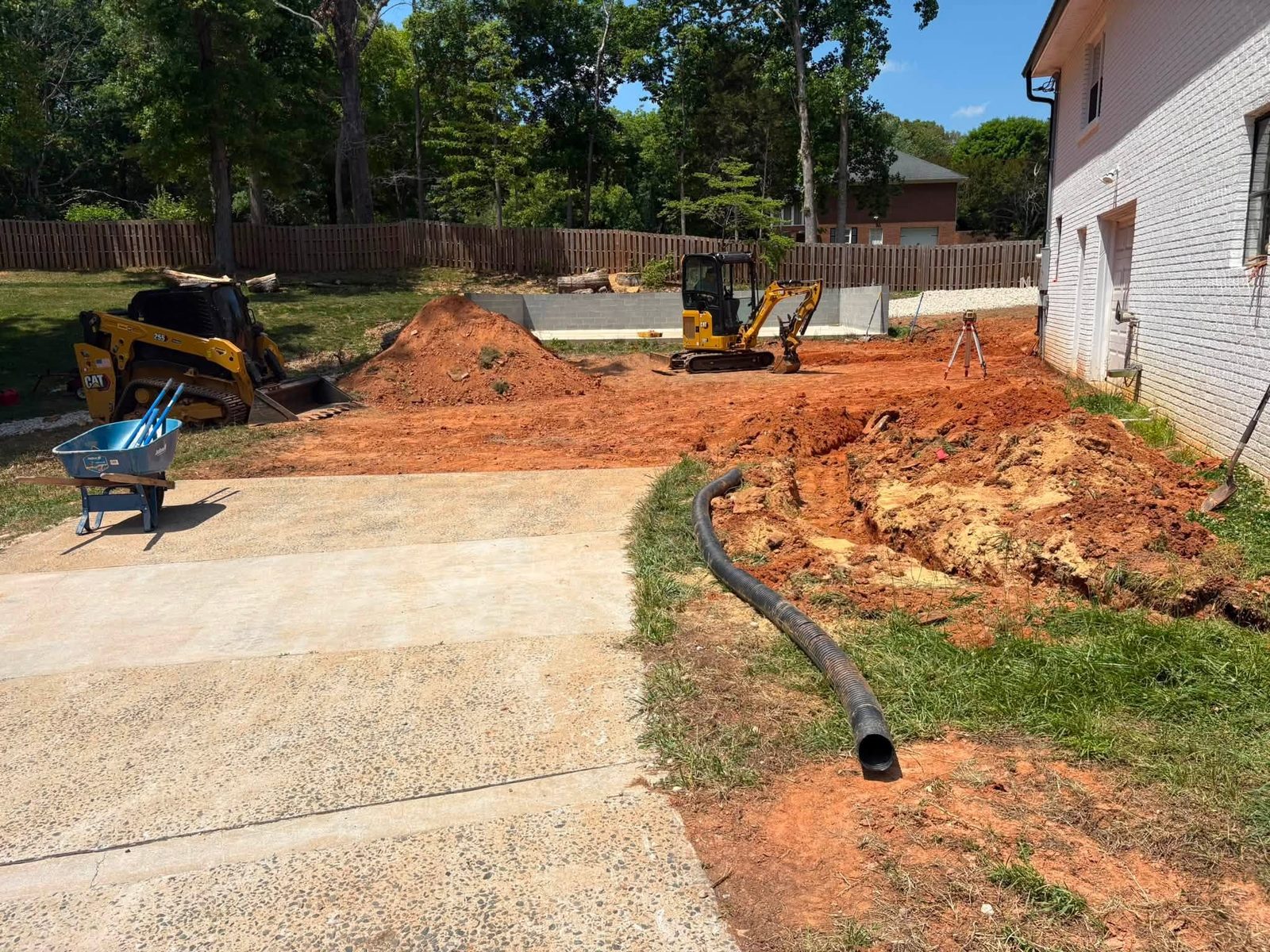
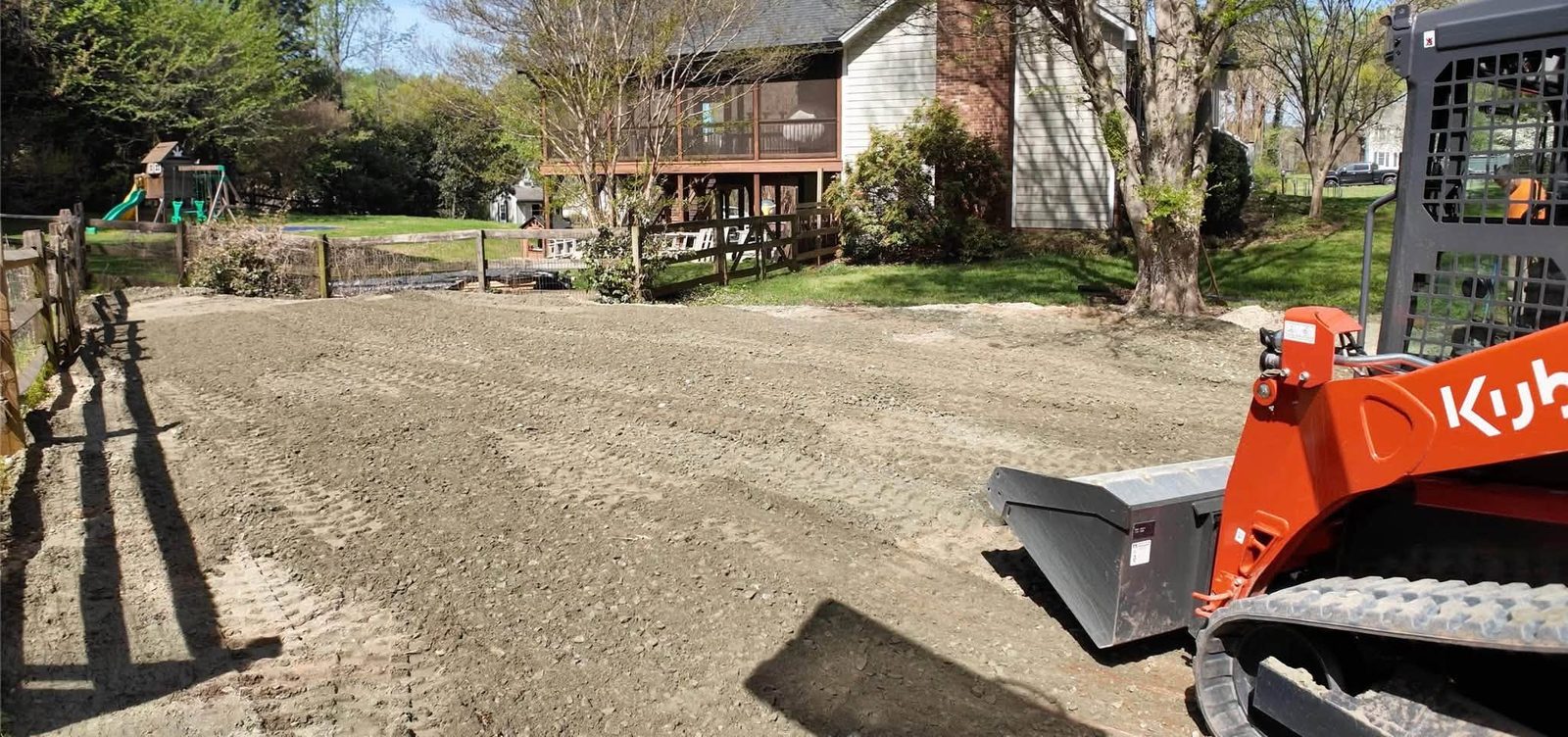
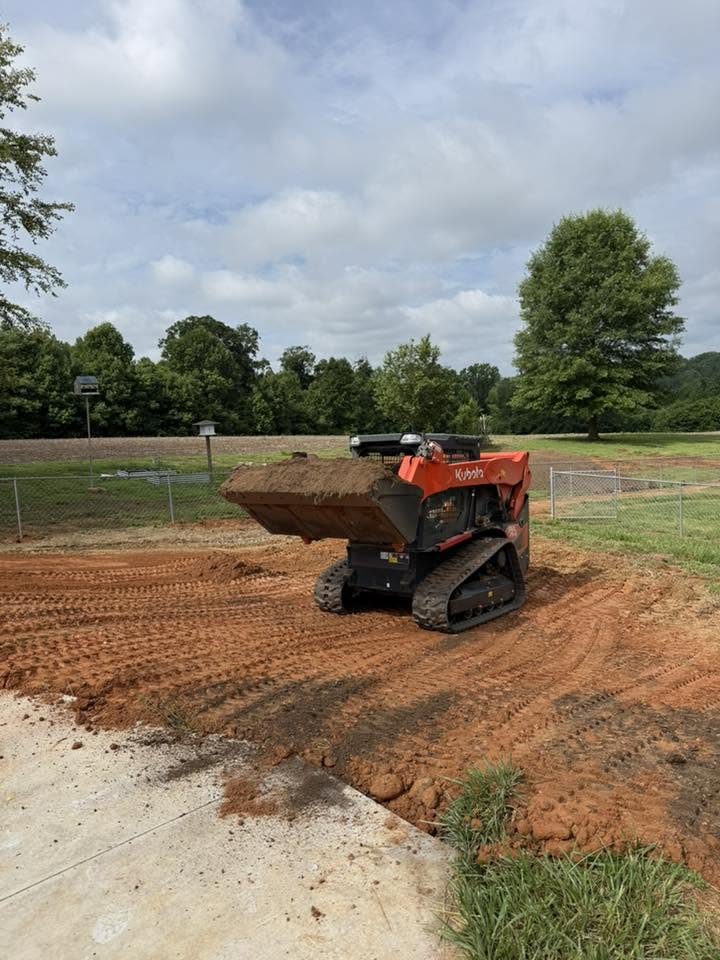
- Regrading to a stable slope. A backhoe or skid steer reshapes the disturbed area — typically no steeper than 3:1 for exposed Piedmont clay without reinforcement. Grades steeper than that in this soil require a structural answer: either retaining walls, terracing, or both.
- Outlet and channel work. Water running off a stabilized slope has to discharge somewhere without gaining velocity. Ditch lining, riprap installation, and outlet protection complete the system — stopping at the slope edge and ignoring the discharge point creates the next failure. The ditch and riprap page covers what that phase of work involves.
- Surface protection during establishment. Erosion control blankets or temporary matting protect bare soil while permanent vegetation roots in. In Forsyth County's climate, tall fescue blends and warm-season grasses both perform, but the seeding window matters — a slope seeded late in the season may need overseeding the following spring before it holds reliably.
- Sediment control during active construction. Any project disturbing soil above defined thresholds must install silt fencing, sediment basins, or other best-management practices before ground is broken. This is a legal requirement under NC DEQ's Erosion and Sediment Control program, not a courtesy measure.
What it costs and what moves the number
Erosion control and slope repair in Forsyth County span a real range depending on scope, site access, and how far the drainage system needs to extend to function correctly:
| Scope | Typical Range |
|---|---|
| Small yard gully or bare-slope repair (homeowner lot) | $1,500 – $3,000 |
| Regraded slope with seeding, erosion blanket, and drainage outlet | $2,500 – $5,500 |
| Drainage ditch stabilization with riprap lining | $3,000 – $6,500 |
| Large residential lot or commercial pad — full stabilization package | $5,000 – $8,000 |
| Equipment rate (backhoe, skid steer, track machine) | $125 – $200/hr |
The number that moves most is site access and depth of the drainage problem. Winston-Salem has a mix of tight older city lots, steep-sided fills from postwar suburban development, and newer subdivisions where grading was done quickly and drainage was an afterthought. Difficult machine access adds equipment hours; steep fills may require retaining solutions that change the project category entirely. A bid quoted flat without a site visit is a guess, and in this terrain the guess is usually wrong in the direction that surprises the property owner.
When permits apply and what the rules require
North Carolina's Sedimentation Pollution Control Act requires an approved erosion and sediment control plan for any land-disturbing activity affecting one acre or more. Below that threshold, local requirements can still apply — Forsyth County administers its own stormwater management program, and Winston-Salem's development standards address grading and drainage in ways that can catch property owners off guard even on modest lots.
Larger disturbed areas may also require a federal NPDES Construction General Permit alongside the state plan. NC DEQ's Erosion and Sediment Control division publishes thresholds and plan requirements; the Piedmont Regional Office handles Forsyth County submittals. Fines for unpermitted land disturbance are real and can exceed project cost — the permit process is not a bureaucratic formality.
The grading provisions in the International Building Code, adopted across North Carolina, also govern finished grades near structures: positive drainage away from foundations is required. A site regraded without meeting those standards can create moisture problems that surface years later, long after the contractor is gone. A crew that builds code compliance into the plan rather than the paperwork after the fact is worth the difference in price.
Three things an honest erosion control proposal accounts for
Where the water originates. Erosion is a symptom; the cause is almost always a water routing problem. A proposal that describes work on the damaged slope without a clear answer about the upstream source is a partial fix with a real chance of failing within a few years. Ask the contractor to walk you through where rain goes from the moment it hits the highest point on the lot.
What happens at the outlet. Stabilizing a slope and discharging water at the bottom onto bare soil or into an undersized channel moves the problem rather than solving it. The full system — slope, conveyance channel, and outlet protection — needs to work together. The ditch and riprap work is how that loop closes, and leaving it out of the contract is how it reopens.
Whether a retaining wall is the real answer. On slopes steeper than 3:1, regrading alone is often not stable in Piedmont clay, and the honest conversation is whether a structural solution — retaining walls, terracing, or a combination — belongs in the plan from the beginning. A contractor who pushes grading-only on a slope that warrants a wall is setting up a return visit. Get that conversation on the table before the bid is finalized.