Old farm fields and what they cost a grader
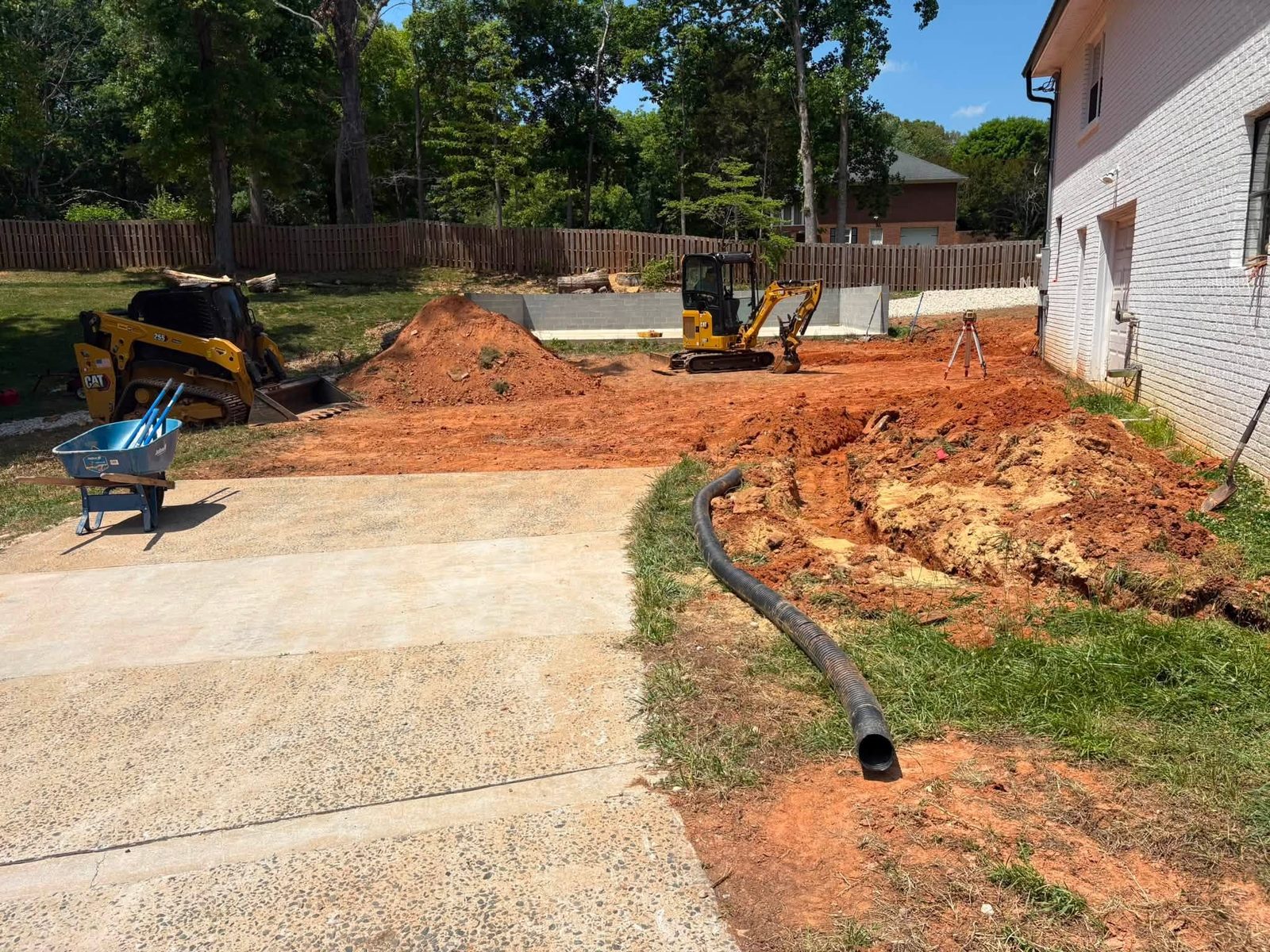
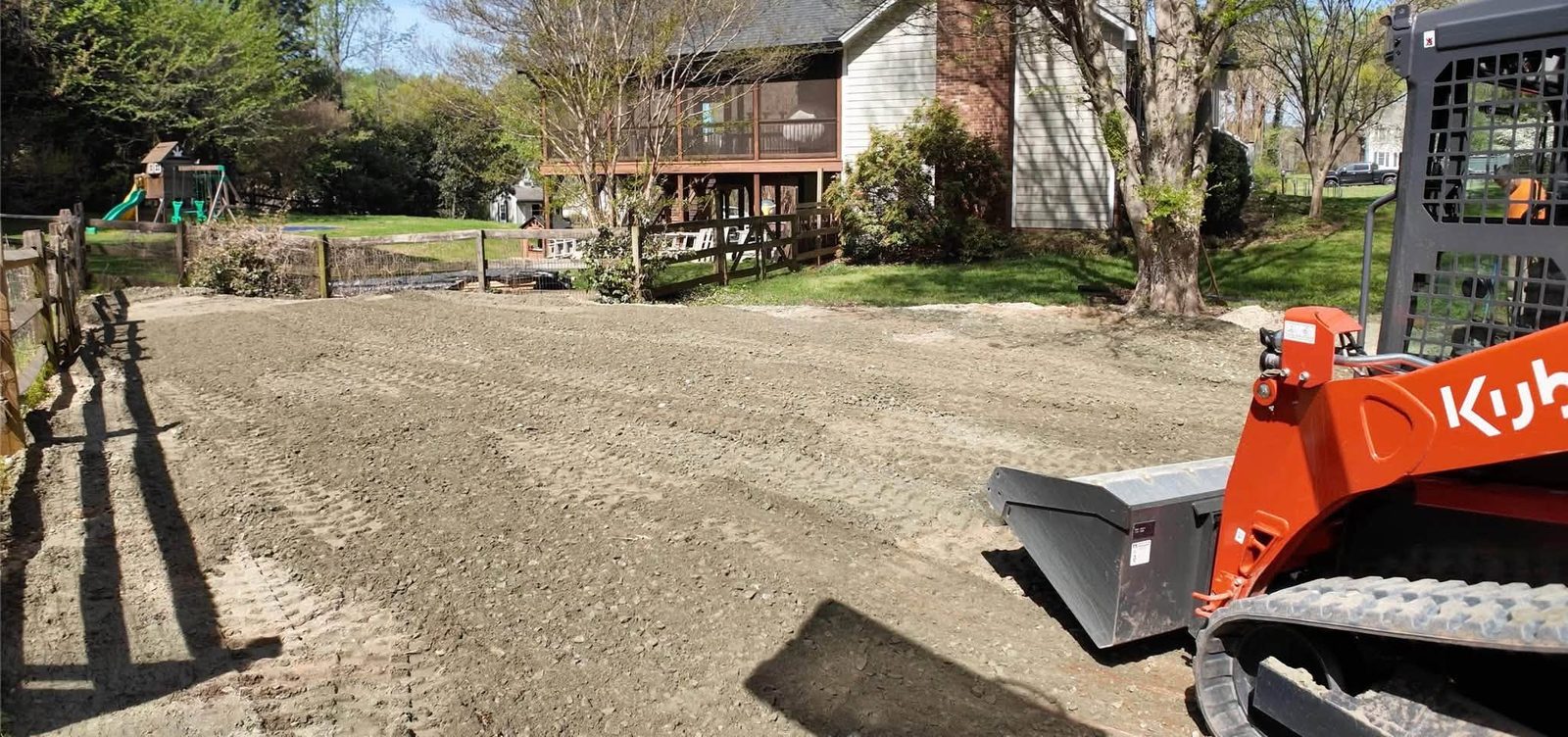
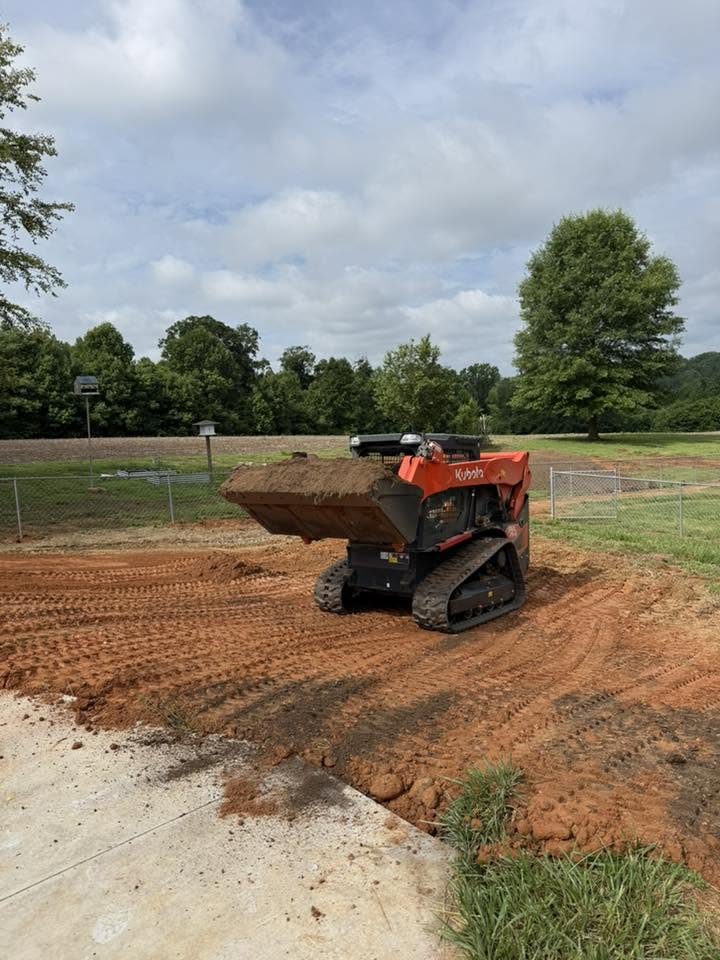
King has been one of the faster-growing towns in Stokes County for two decades, and most of that growth has landed on ground that spent the previous century in tobacco rows, corn, and hay. Those fields behave differently from the clay-heavy suburban lots closer to Winston-Salem. Decades of working the same depth creates a dense compaction layer — plow hardpan — sitting six to twelve inches below a surface that looks completely workable from the road. Old fence lines, drainage ditches cut for row crops, and low corners where equipment turned all add fill inconsistencies and drainage patterns designed for agriculture, not house foundations.
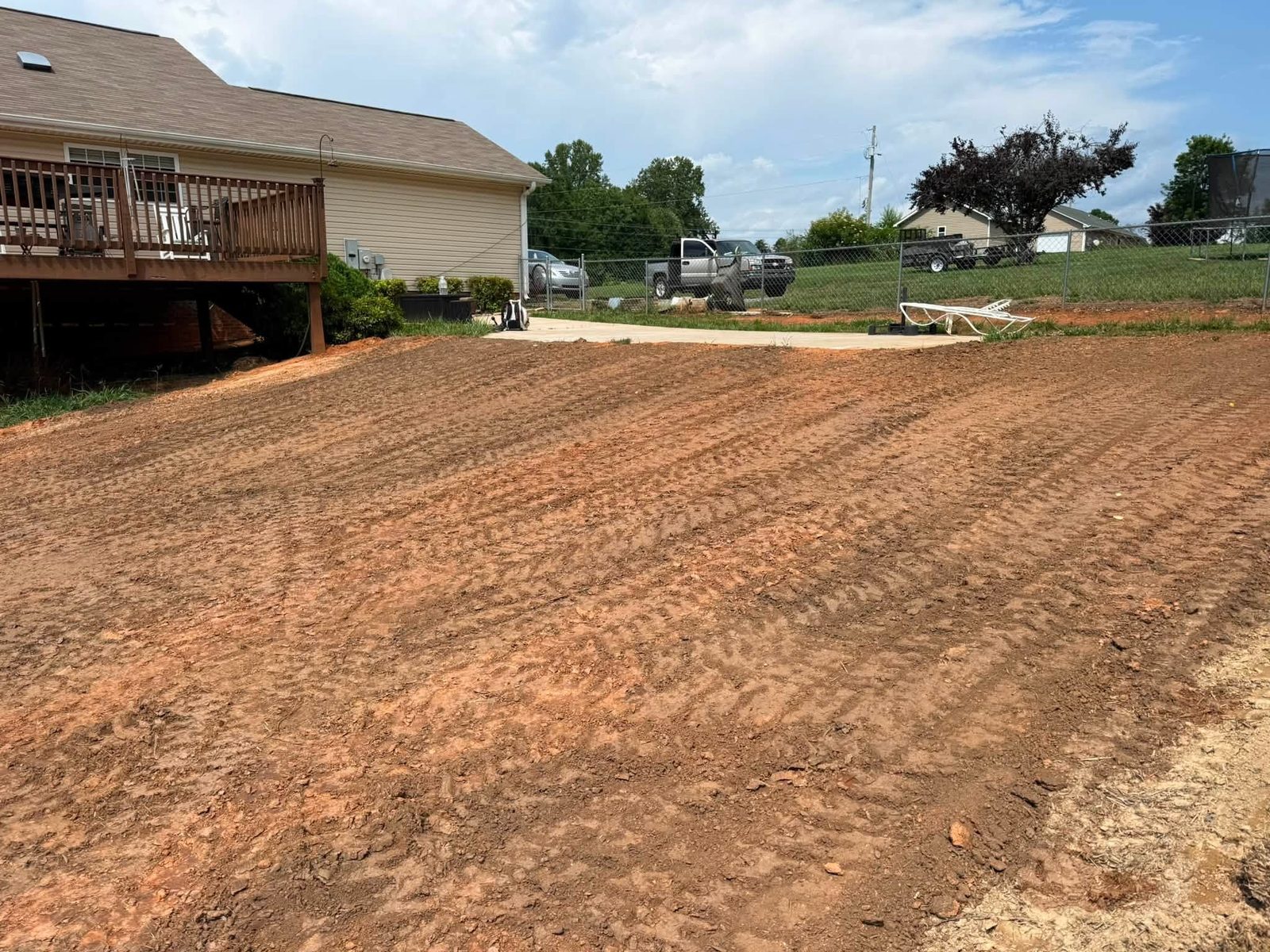
The terrain around King is rolling piedmont — not dramatic, but not flat. Lots that look gently sloped on a survey often carry enough fall to push water toward the nearest structure if grading doesn't account for it. Stokes County's red clay subsoil holds water longer than sandy loam, which turns a minor low spot into a persistent wet area inside a season. The combination of agricultural compaction history and that clay drainage profile means two adjacent King-area lots can grade out very differently even when they look identical on a plat map. Proper site preparation in this market means reading what the soil profile tells you before the first cut, not just following a grade stake.
What grading costs around King
Residential grading in King typically runs $1,200 to $5,500 for a standard lot; jobs with significant fill needs, hardpan breaking, or full drainage systems push toward or past the top of that range. Slope is the first price mover — a lot that falls more than six feet across its buildable area needs cut-and-fill balancing, which adds machine time and often haul costs if material leaves the site. Soil type is the second — Stokes County's clay subsoil packs well once compacted but requires more passes to achieve grade spec than sandier ground. The full breakdown of what drives each line item is in the grading cost guide. The table below covers the scopes that come up most often on Stokes County residential work.
| Scope | Typical Range | Main Cost Driver |
|---|---|---|
| Finish grade, flat lot under quarter-acre | $1,200 – $2,200 | Machine hours, seed prep |
| Regrade sloped residential lot | $2,500 – $5,500 | Cut depth, fill haul |
| Farm-field conversion with hardpan break | $3,000 – $6,000 | Subsoil passes, material disposal |
| Driveway cut and building pad prep | $1,800 – $4,000 | Slope, base material depth |
| Full site prep with drainage install | $4,500 – $8,000 | French drains, outlet work |
Material and labor should appear as separate line items in any quote you evaluate. A flat number with no breakdown is usually a sign that one of those two is being estimated loosely, and any quote submitted without a site walk is missing the information that sets the price accurately.
Erosion control and sediment rules in Stokes County
Any land-disturbing activity over one acre in North Carolina triggers a permit requirement under the state's erosion and sediment control program. The NC DEQ Erosion and Sediment Control program administers these rules statewide, and Stokes County enforces them locally. Most single-family lots in King fall under an acre and don't hit that threshold — but best-practice silt fencing, inlet protection, and rapid stabilization still apply even when a formal permit isn't required. Sediment that leaves a site and reaches a neighboring property or a public road can generate complaints and liability regardless of permit status.
Projects disturbing larger areas, or those with drainage lines running toward a stream or natural drainage swale, may also trigger federal stormwater notification requirements under the EPA's NPDES Construction General Permit. Contractors who work Stokes County regularly know which project sizes approach those thresholds and should be able to tell you up front whether your job requires a plan and who files it. That answer tells you something useful about how a crew operates before the first machine shows up on your lot.
Water, the Dan River watershed, and your grade
Stokes County drains almost entirely into the Dan River watershed, and the rolling terrain around King moves water quickly after a heavy rain — toward low spots on your lot, toward the neighbor's fence line, and eventually toward the nearest creek. Federal disaster declarations for storm and flood events in this county number 22 over 1977-2026, and much of the structural damage those events caused started with water moving unchecked across poorly graded ground.
Grading is the first tool in water management, not a cosmetic finish to a building project. A proper grading and excavation scope addresses positive drainage away from the structure, swale routing to a defined outlet, and accounts for where runoff from uphill neighbors goes — so a heavy rain event stays a minor inconvenience instead of a crawl space problem or slab crack. For lots where the grade puts you near a mapped flood zone, the FEMA Flood Map Service Center shows where the risk boundaries run — worth checking before you finalize a build pad location or sign a grading contract.
Getting the right crew for a Stokes County lot
The contractor pool in Stokes County is smaller than in Forsyth, and the crews here don't market themselves as aggressively as Winston-Salem operations. That often means the best local graders are found through referrals — a neighbor whose driveway and yard held up through two wet seasons, a builder who puts the same grader on every project in the area. When you interview contractors, ask specifically whether they have worked former farm ground in the King area and how they approach hardpan. A crew that has dealt with it knows the answer before you finish the question; a crew that hasn't may not know what it's about to hit two feet down.
For scope questions before you call anyone, the site preparation guide explains what a proper first assessment covers and what you should see in a written proposal. The grading cost guide walks through how to read a bid line by line and what separates a complete scope from an incomplete one. Getting two or three written quotes on any job over $3,000 is worth the extra scheduling time.