What Forsyth County clay does to gravel over time
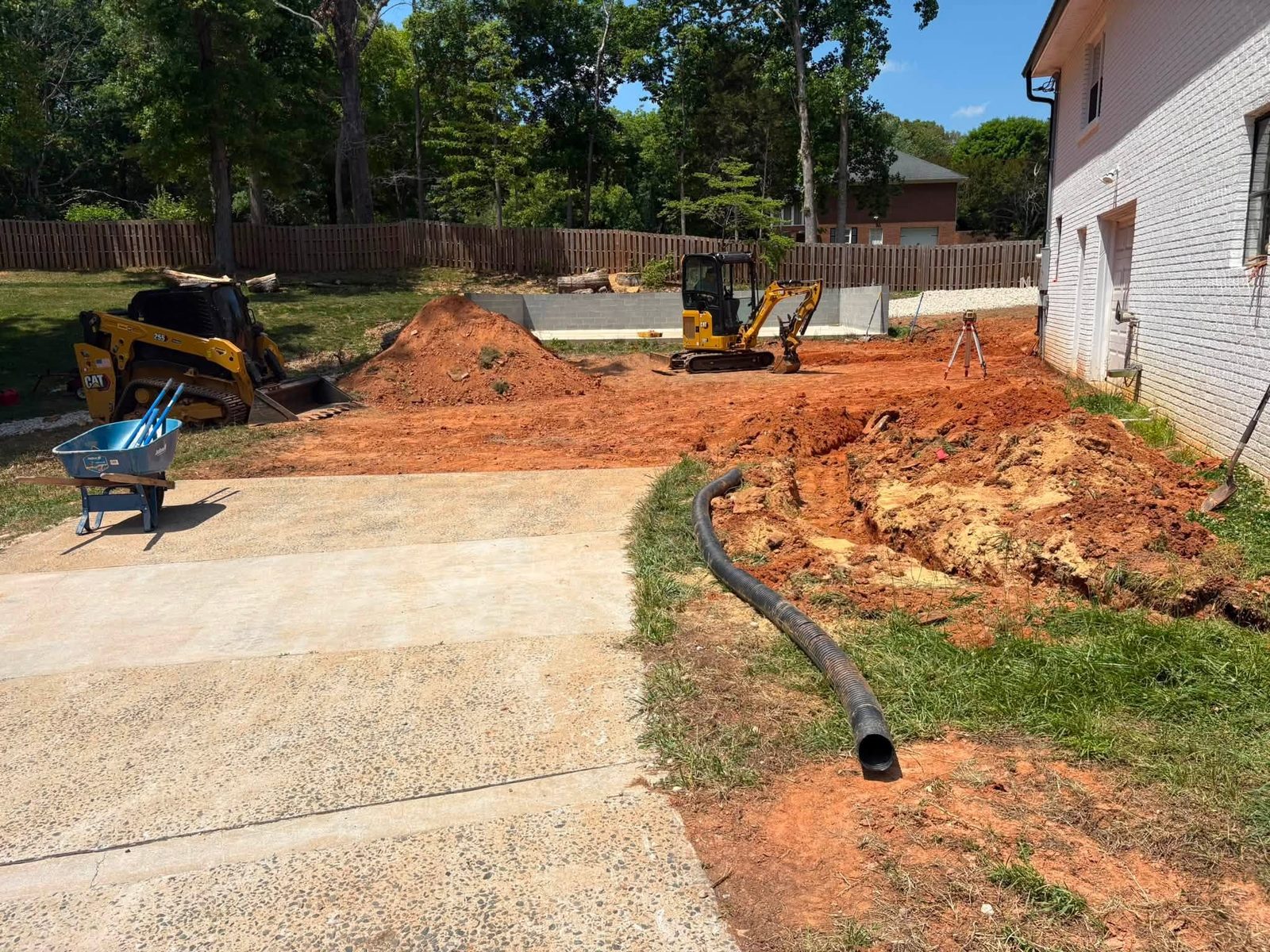
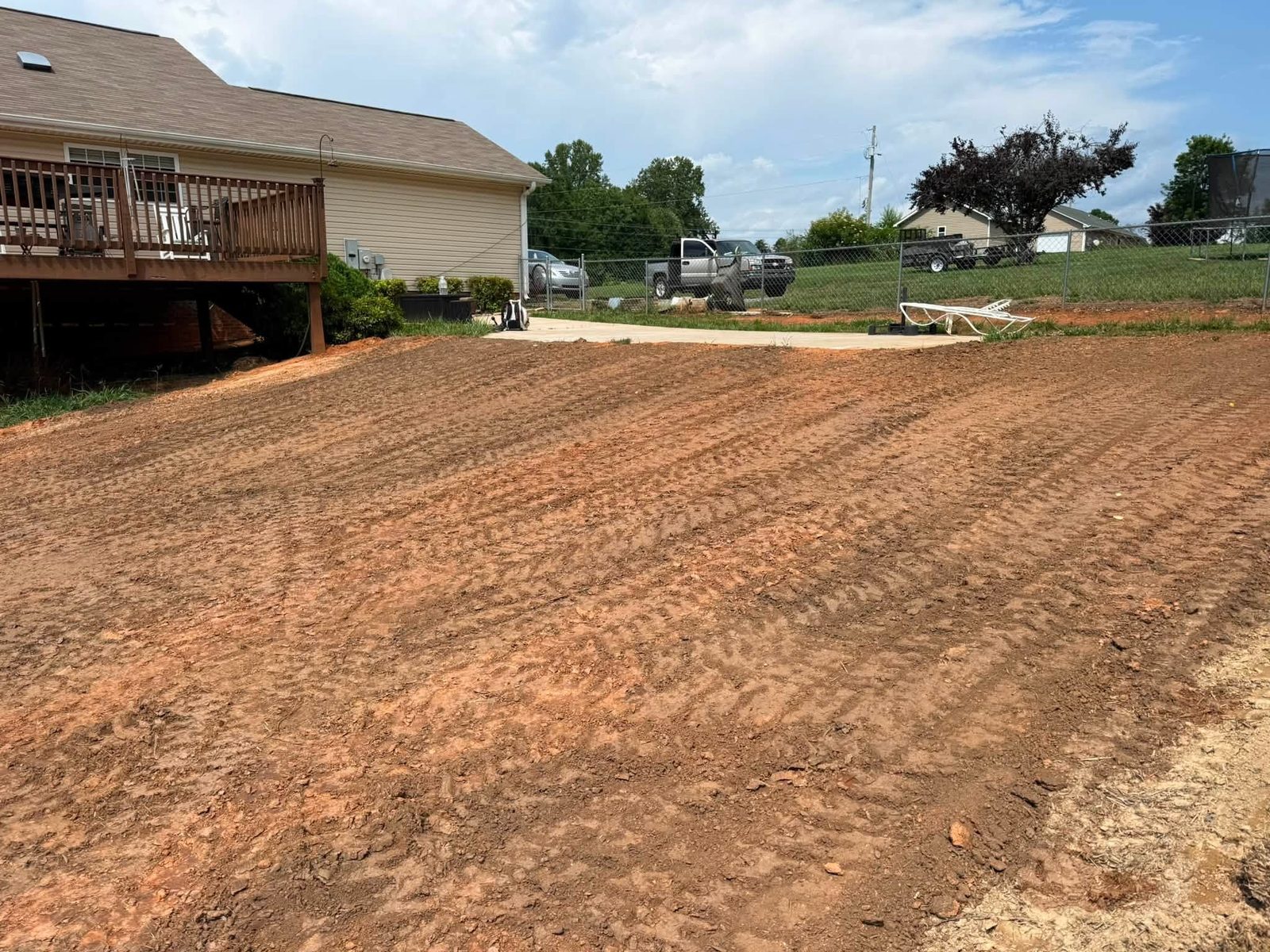
Forsyth County driveways sit on Piedmont red clay, one of the densest and least permeable soils in North Carolina. That fact matters more than gravel size, stone depth, or anything else when a driveway keeps losing material. Clay does not absorb rainwater — it sheds it. A gravel surface laid on clay without a proper crown, finished edges, and a working low-point culvert is not a driveway so much as a temporary arrangement between storms.
The question is not whether Forsyth County clay will shed water. It will, every time. The question is whether that water is directed off the surface by the design, or whether it channels down the travel path and carries the gravel with it. Most gravel driveway washing out calls in this county trace back to one of three design failures: a flat or reverse-crowned surface, a plugged or missing culvert at the road tie-in, or gravel placed directly on undisturbed clay with no compacted base layer. Fixing the material without fixing the grade repeats the problem on the same schedule.
Matching the damage to its cause
Ruts running down the centerline of a straight driveway section almost always mean the crown is gone or was never built. A gravel surface should be slightly higher in the middle so rainfall breaks to both edges and runs off before it can concentrate. When the crown disappears through settling or repeated grading at the wrong blade angle, water finds the low path and moves stone with it every storm. This pattern shows up across Forsyth County, from short residential pads in older Winston-Salem neighborhoods to longer rural runs in the western county off corridors like NC-421.
Washouts concentrated at the road connection usually mean a culvert has failed or was never installed. Silt accumulates in culvert pipes over years, and a pipe that handled flow fine for a decade can be half-blocked without showing it above grade. The water backs up, overtops, and cuts. A culvert installation or replacement resolves this class of problem; adding gravel to the tie-in without clearing or replacing the pipe just delays the next washout.
Gravel piling on one shoulder of a sloped section usually means the cross-grade has failed. The surface should shed cleanly to both sides or at least to the downhill side with a working ditch. When it does not, material migrates until the driveway loses enough depth to expose the clay underneath.
Repair scope and what it costs in this region
Price in this trade follows scope, not square footage. A single crown repair on a short residential driveway is an afternoon of machine time. A long farm or private road access with multiple failing culverts, washed shoulders, and no remaining base is a multi-day job with different specifications. The ranges below reflect realistic current pricing for Forsyth County work; steep slopes and deep erosion on older sites add to any line item.
| Repair Scope | Typical Range | Notes |
|---|---|---|
| Regrade and re-crown, single problem section | $400–$900 | Surface work only, no drainage |
| Full driveway regrade and edge cleanup | $800–$1,800 | Up to 200 linear feet |
| Culvert installation or replacement | $1,200–$2,800 | Varies by pipe size and access |
| Base reclaim, recompact, and re-gravel | $1,500–$3,500 | 50–150 linear feet, includes stone |
| Long private access road, multiple issues | $3,500–$8,000+ | See private road repair |
A bid that quotes only material — stone by the ton with delivery and spread — is not a complete repair scope. Crown grade and drainage sequence have to be specified in writing, or the quote describes a temporary fix rather than a permanent one.
Stormwater rules and when permits enter the picture
Forsyth County sits inside one of the more active storm corridors in the Piedmont, with 22 federally declared disaster events on record going back to 1977-2026. The pattern in those events is consistent: heavy rainfall on saturated clay soils, runoff volumes that exceed what unmanaged driveway grades can shed, and erosion that compounds each storm cycle. Properties near creeks or lower-lying areas can check their flood zone classification through the FEMA Flood Map Service Center, which affects drainage expectations and sometimes lender requirements for maintenance work.
For most residential driveway repairs, no permit is required. The point where formal rules apply is grading that disturbs more than one acre of land, which triggers North Carolina's erosion and sediment control requirements under the NC DEQ Erosion and Sediment Control program. Most single-driveway repairs fall well under that threshold. Longer private road projects, work near stream buffers, or any project where the disturbed area is uncertain should be verified with the Forsyth County inspections office before grading begins.
Projects that add a new culvert outlet discharging to a named stream or drainage feature may also touch federal stormwater requirements. The EPA NPDES stormwater program sets that framework, and a contractor experienced in this county will know where those thresholds apply.
Building a surface that stays put
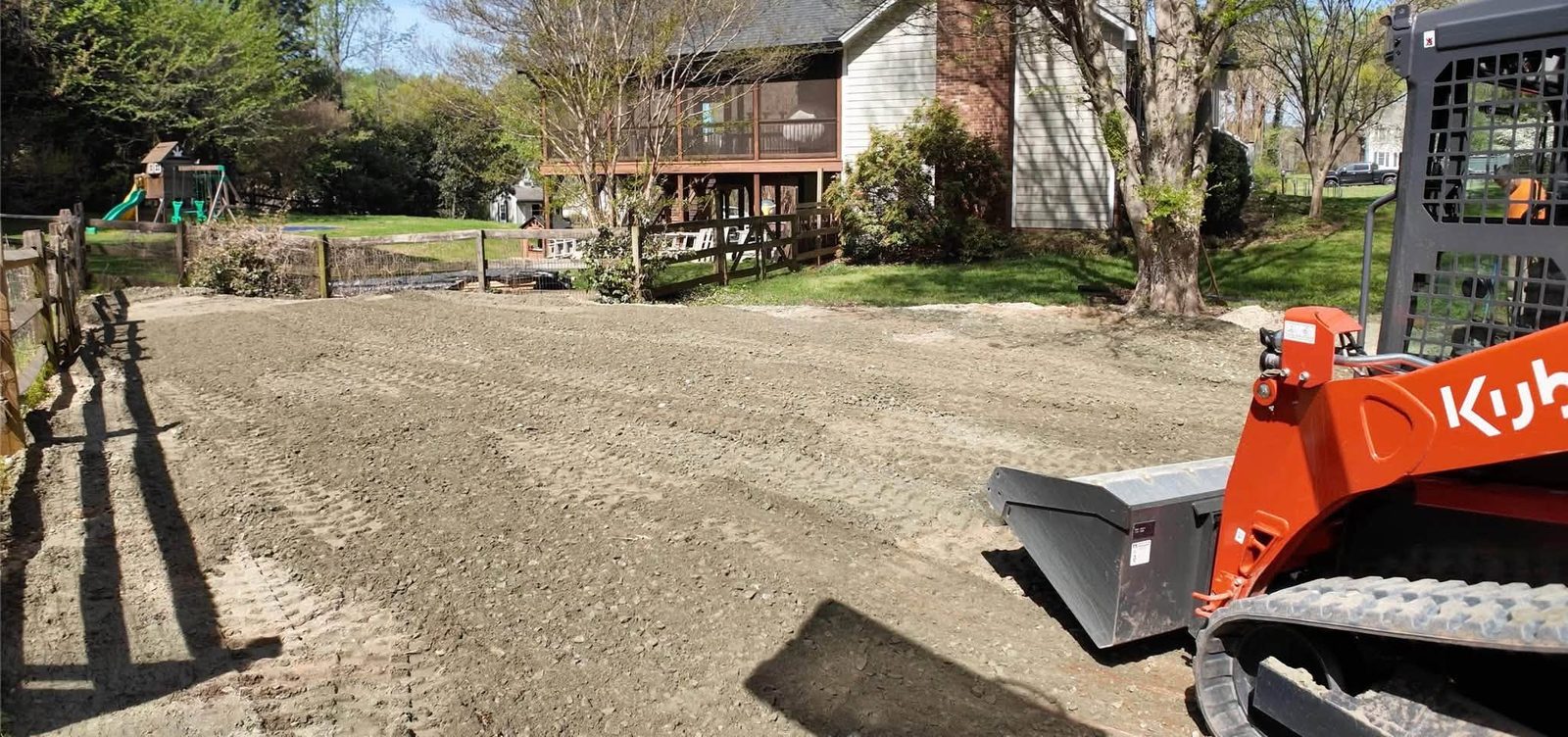
A properly constructed gravel driveway is a drainage system that you also drive on. The grade establishes the crown, the edges are finished to carry material to the ditch, the low point has a culvert sized and set to finished grade, and the stone is compacted onto a prepared base rather than spread over undisturbed clay. When all four of those are in place, a Forsyth County driveway holds gravel through seasons of heavy Piedmont rain. When any one is missing, it will not.
The sequence matters as much as the individual steps. Drainage grade has to be established before stone goes down. A culvert has to be set at the correct invert elevation for the surface it serves, not retrofitted after grading. Edge ditches have to outlet lower than anything they protect. Getting these right once is the difference between a repair that holds and one that gets repeated every two or three seasons.
For properties with long access roads, multiple drainage structures, or roads serving more than one household, the work falls under the private road repair process, which covers base standards, culvert sizing, and the additional considerations that apply when a road carries heavier loads or serves multiple users.