The one thing about Forsyth County soil that changes every fill job
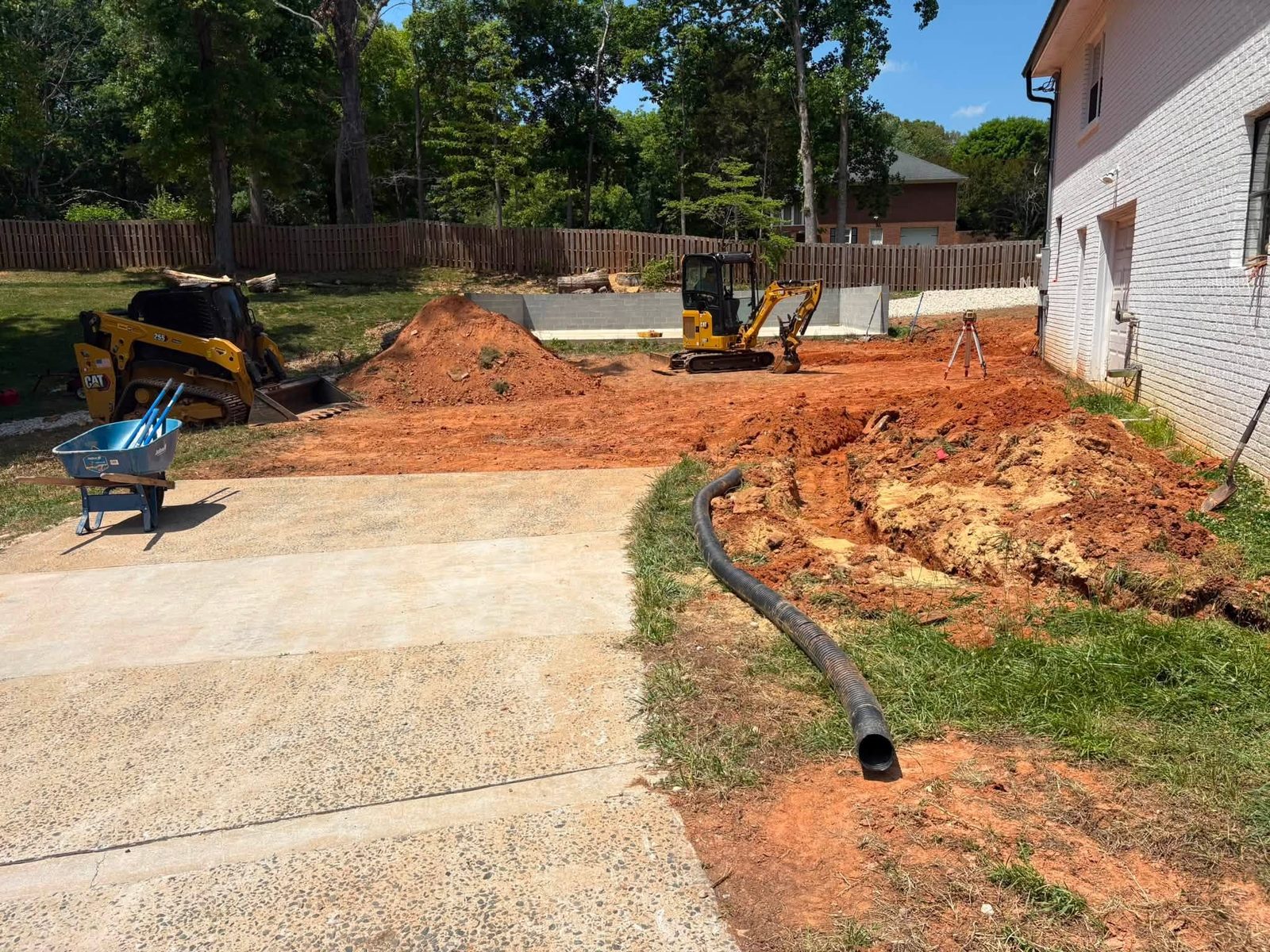
Winston-Salem sits on the Piedmont red clay belt — rolling ground that runs from the Virginia line through the Triad and south toward Charlotte. The terrain is neither the flat, sandy coastal plain nor the rocky mountain lots to the west; it is gently undulating land underlain by a clay-heavy soil that compacts well but sheds water sideways instead of draining through it vertically. Bring in open-graded structural fill that moves water faster than the native clay can accept it, and you create a perched water table at exactly the boundary where your slab, footing, or finish grade sits. That interface is where cracked slabs, wet crawl spaces, and settling driveways start.
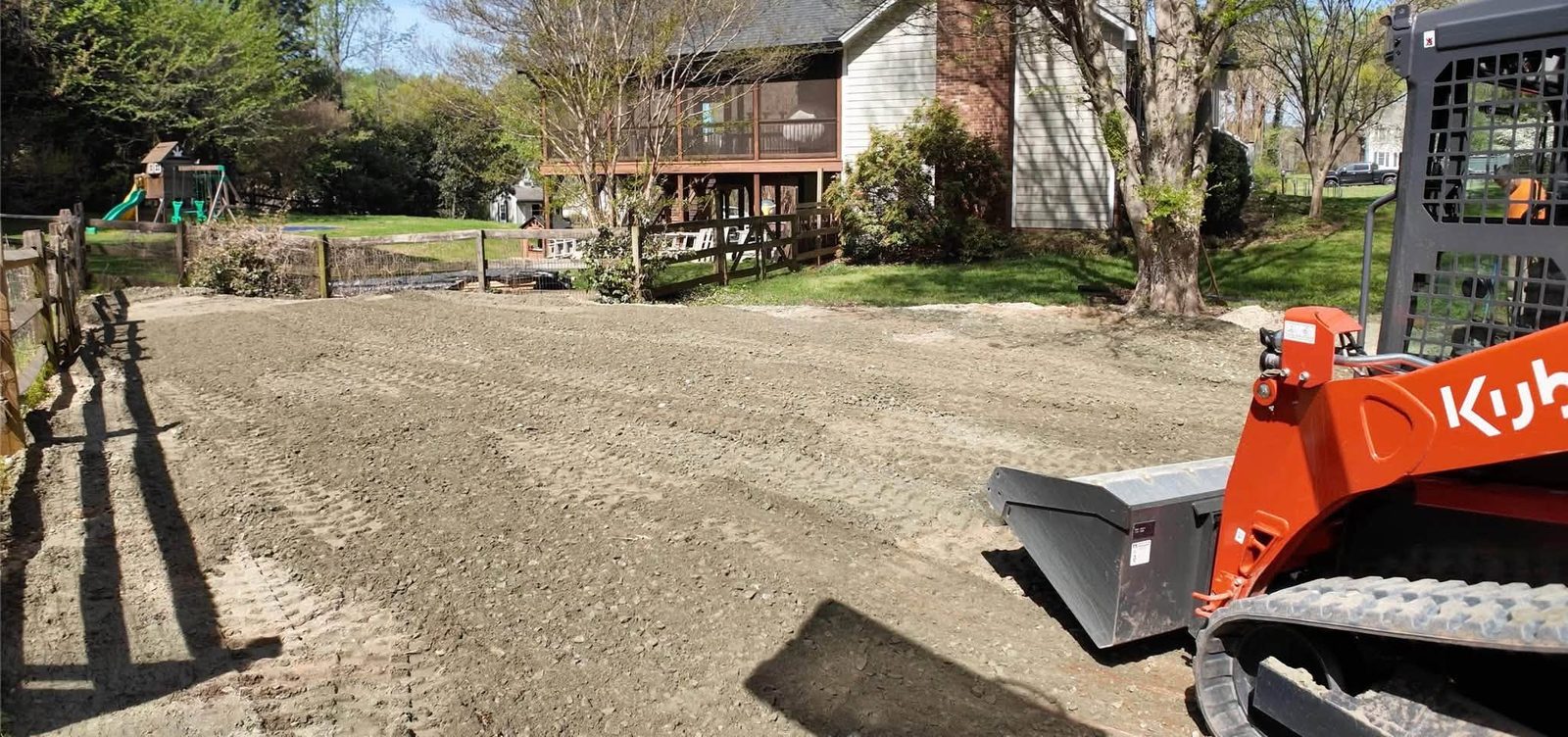
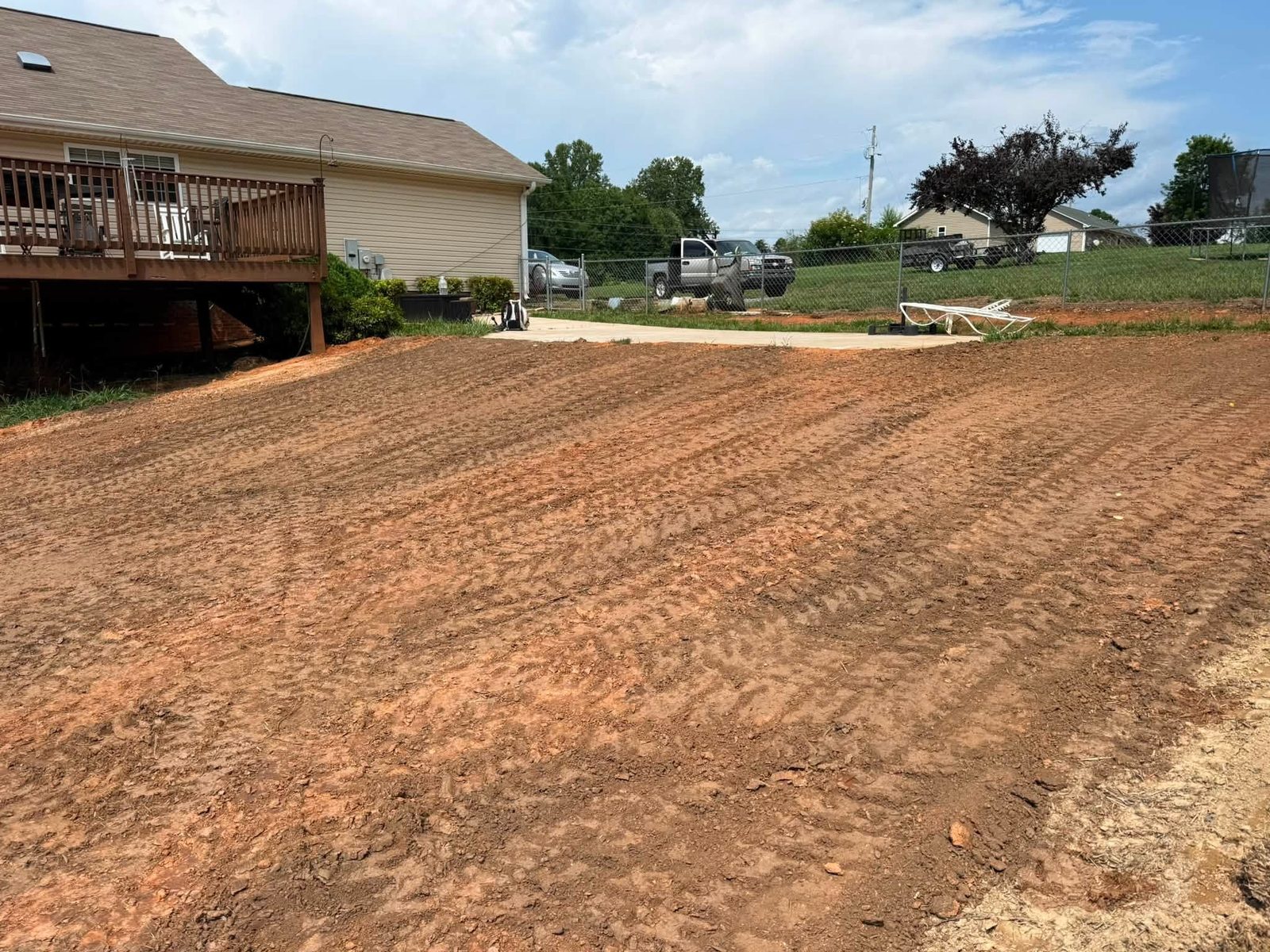
The practical upshot: fill dirt delivery in Forsyth County is not a commodity order. The material gradation has to be matched to the native soil profile, the drainage outlet has to be established before the first load is placed, and compaction has to happen in lifts thin enough to consolidate without bridging over voids. How material type affects per-load pricing is covered on the fill dirt cost page; what a finished grade looks like before any structure goes on it is at site preparation; the full cut-fill-fine-grade sequence is at grading and excavation.
What a fill dirt hauling job actually involves
A straightforward Forsyth County fill job moves through four steps, and the ones buyers skip are almost always the ones that produce callbacks later:
- Grade stake and quantity estimate. A stake at the target elevation establishes how much fill is actually needed and where the drainage break will exit the site. Ordering short means a second mobilization; ordering long means a spoil pile that has to go somewhere — and in Forsyth County, uncontrolled spoil on a site disturbing over an acre triggers erosion permit obligations.
- Material selection. Structural fill (low-plasticity, compactable, organic-free) is not interchangeable with common fill scraped off a clearing job. Under any load-bearing application — slab, driveway, footing pad — the material gradation matters and should match the engineer's spec or the project's compaction target. For yard fill and low spots, clean common fill is usually sufficient.
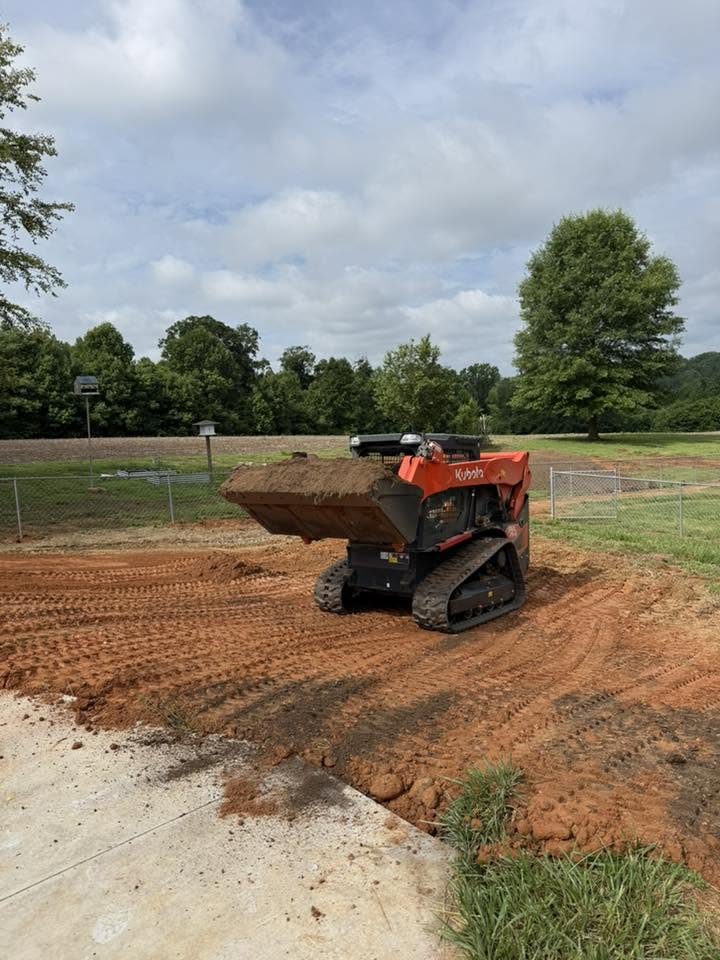
- Delivery and placement. Standard tandem-axle trucks carry 12–14 tons per load. Site access matters here more than most buyers anticipate: gate width, overhead utility clearance, and pavement that can handle repeated heavy loads determine whether full-size equipment can reach the work area. Tight lots in older Winston-Salem neighborhoods sometimes require smaller loads and more trips, which moves the per-job cost upward within the range.
- Spreading and compaction. A dumped load is not a finished grade. Spreading in 6–8 inch lifts and compacting each lift before adding the next is the standard for anything structural. On Piedmont clay lots, drainage slope must be built into the spread grade — the native soil does not correct a flat or back-pitched surface on its own.
When the project disturbs more than one acre of ground, erosion and sediment controls become a permit requirement before the first truck arrives — see the section below.
What fill dirt delivery costs in Forsyth County
Delivered fill dirt in this area runs $150–$450 per truckload, with that spread driven by three factors: material class, haul distance from the source pit, and site conditions that affect how long each truck takes to unload and maneuver. Spreading and compaction are separate line items — always confirm what is and is not included before accepting a quote. The fill dirt cost page breaks down pricing by material class.
| Scope | Typical load count | Typical delivered cost |
|---|---|---|
| Single low spot or garden area | 1–3 loads | $150–$900 |
| Residential lot leveling | 5–15 loads | $750–$4,500 |
| Foundation or slab pad prep | 10–30 loads | $1,500–$9,000 |
| Commercial site pre-grade | 25–60+ loads | $3,750–$18,000+ |
Forsyth County sits in the Yadkin River basin, and the Muddy Creek drainage corridor runs through the county's developed core. Across the 22 federal disaster declarations on record for this county spanning 1977-2026, wet-weather seasons are exactly when marginal drainage reveals itself — and when fill placed without proper compaction and drainage design settles or admits water. Sites in low-lying areas near these drainages sometimes require a fill survey or grading plan before work can begin, which adds to schedule but not to the per-load price.
Permits, erosion control, and what the rules require before a truck rolls
North Carolina's Erosion and Sediment Control program requires an approved plan for any land-disturbing activity that disturbs one or more acres. Forsyth County administers its own erosion control program under state delegation, so the plan is submitted locally — but the standards are the same statewide: silt fence installation, inlet protection, timely stabilization after grading, and a responsible party named on the permit. Starting grading before the plan is approved is the fastest way to a stop-work order and a fine that compounds daily.
Projects under one acre may still need a local grading permit depending on proximity to streams, wetlands, or floodplain boundaries. Sites that drain to a waterway regulated under a municipal NPDES stormwater permit carry additional requirements under EPA stormwater rules regardless of disturbed acreage. Fill placed in a mapped floodplain or near a regulated stream adds a separate layer of state and federal approvals that can take weeks to process.
The practical implication is simple: a fill dirt delivery job that looks like a single day of work can idle for weeks while permits are resolved if the contractor did not account for this step in the schedule. Build permitting time into the project plan — not into the contingency column.
Three questions that keep a fill dirt bid honest
"What material am I getting, and where does it come from?" Fill dirt is not a regulated product the way concrete or structural steel is. Common fill, structural fill, select fill, and clean fill are industry terms with different meanings depending on who is selling. For any load-bearing application under a slab or near a footing, ask for the gradation test. The difference between properly engineered fill and a blend scraped off an uncontrolled clearing shows up in a cracked slab or a settling driveway — not on delivery day.
"Is spreading and compaction included in that price?" Per-load delivery quotes almost never include spreading or compaction. Asking before signing prevents the surprise when the load count grows because dumped material has to be repositioned, and prevents the larger surprise when a slab is poured over uncompacted fill.
"What is the drainage plan for this site?" Any contractor quoting fill in Forsyth County who does not ask about the drainage outlet first has not thought through the job. On Piedmont clay, drainage is not a finishing detail — it is the design constraint the entire grade is built around. A finished elevation that holds water back toward a structure costs more to fix than the original fill job. The grading and excavation page covers how drainage design integrates with cut and fill scope from the start.