The ground condition that changes every Forsyth County outdoor project
Most landscaping and hardscapes projects in Lewisville and Clemmons share a ground condition no proposal accounts for by default: Forsyth County's red Piedmont clay runs deep, drains slowly, and swells and contracts with the seasons in ways that coastal sand or mountain rock counties never encounter. It is the one thing that changes the job here — and it is the thing most bids underspec.
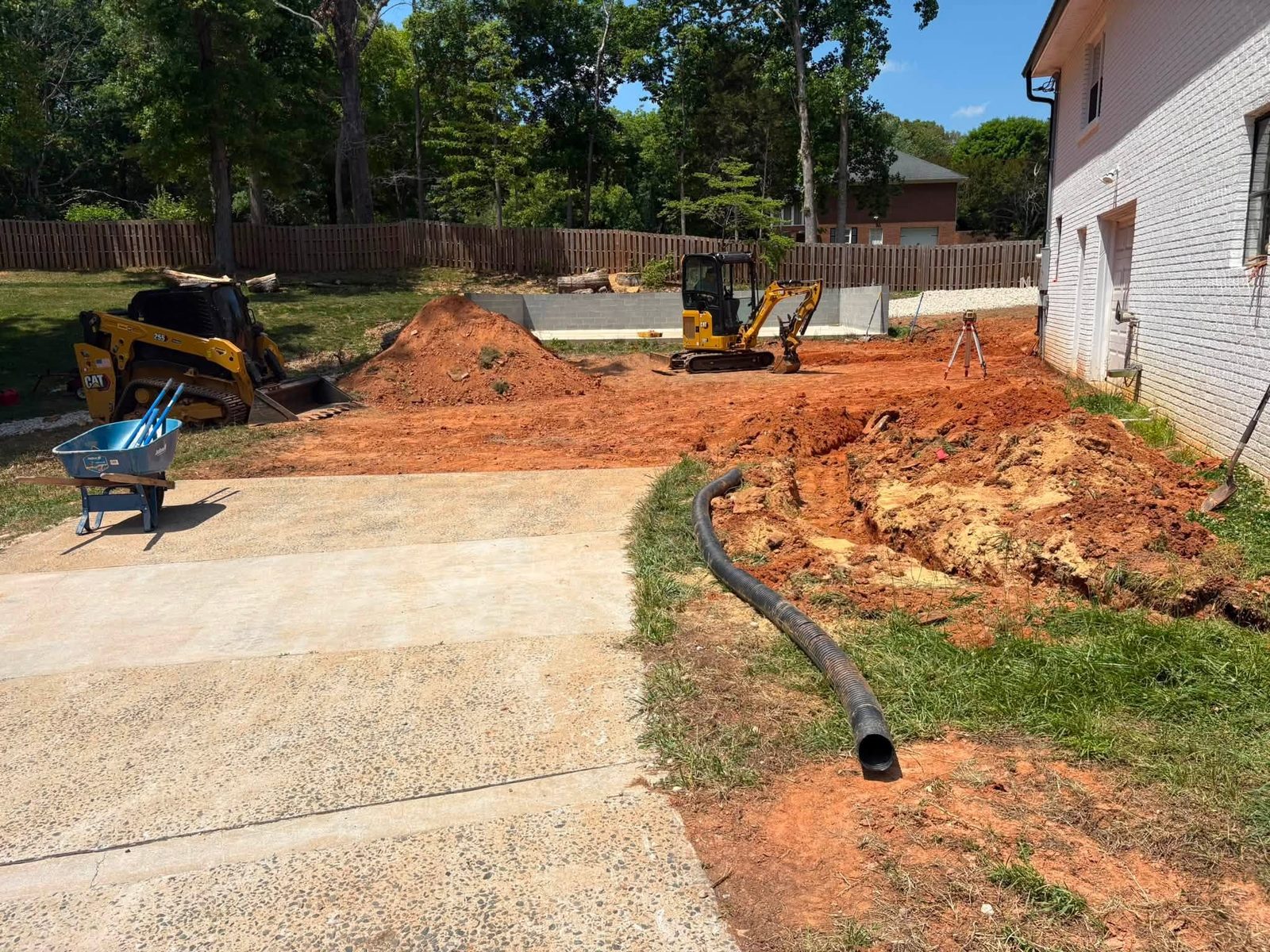
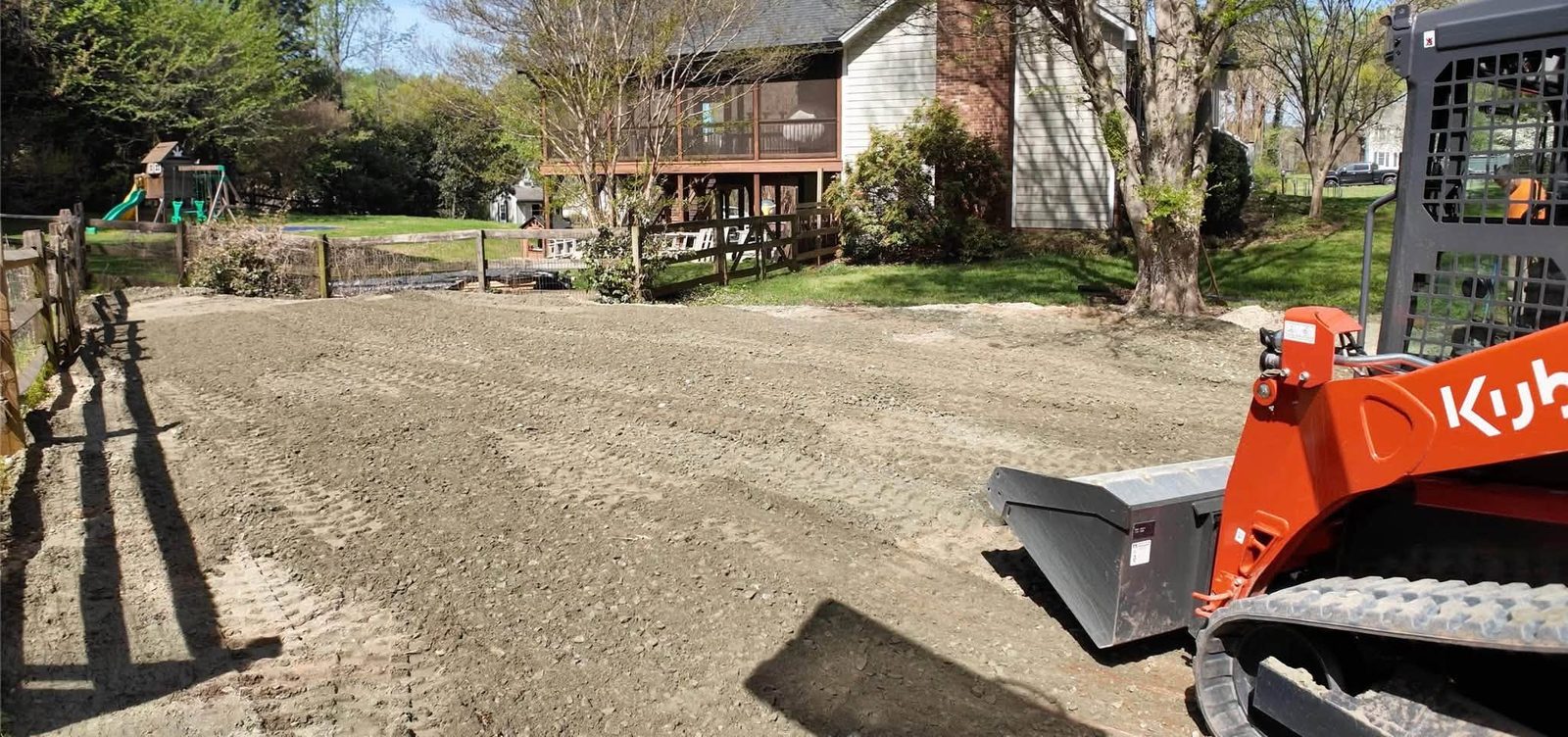
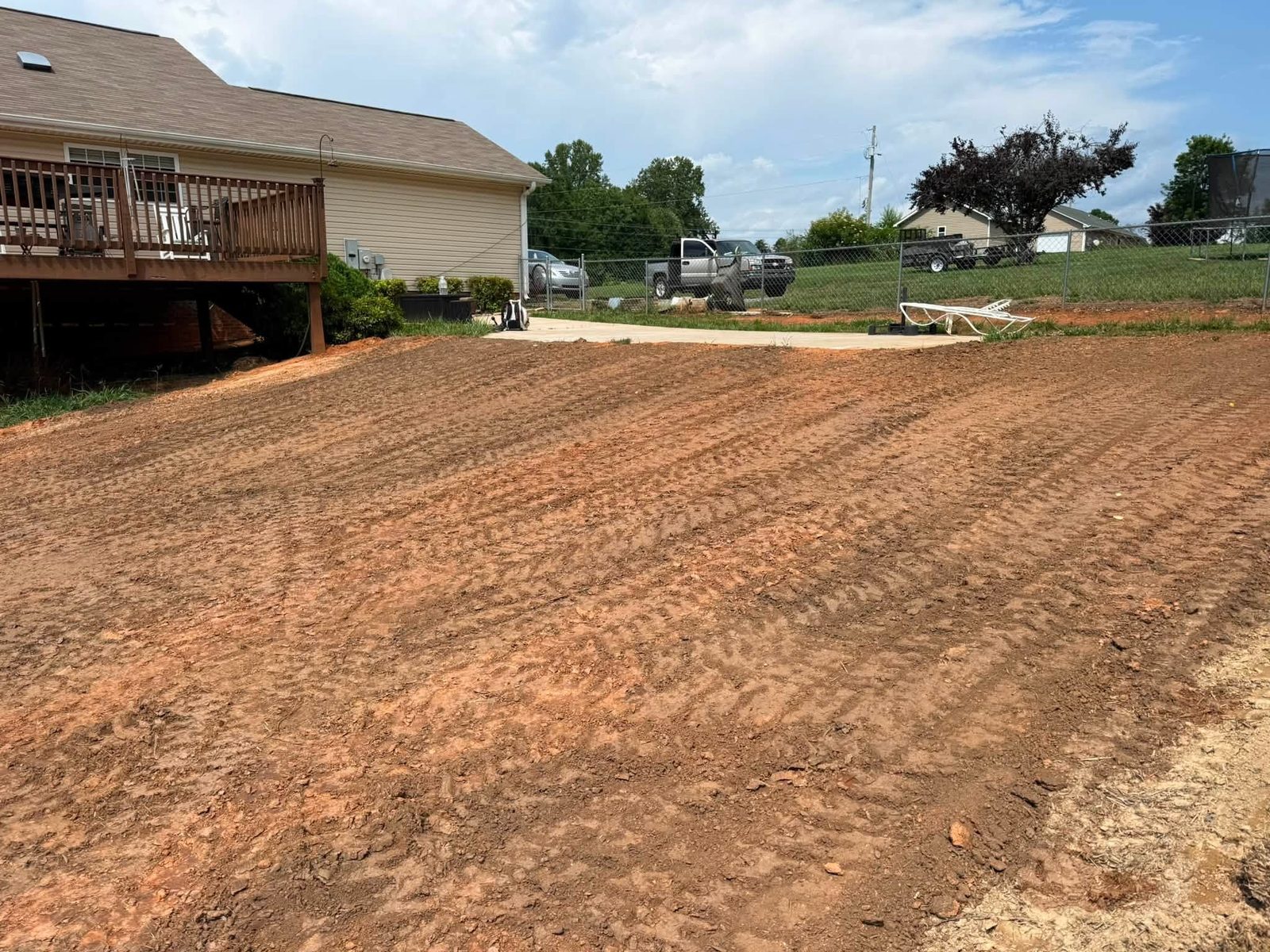
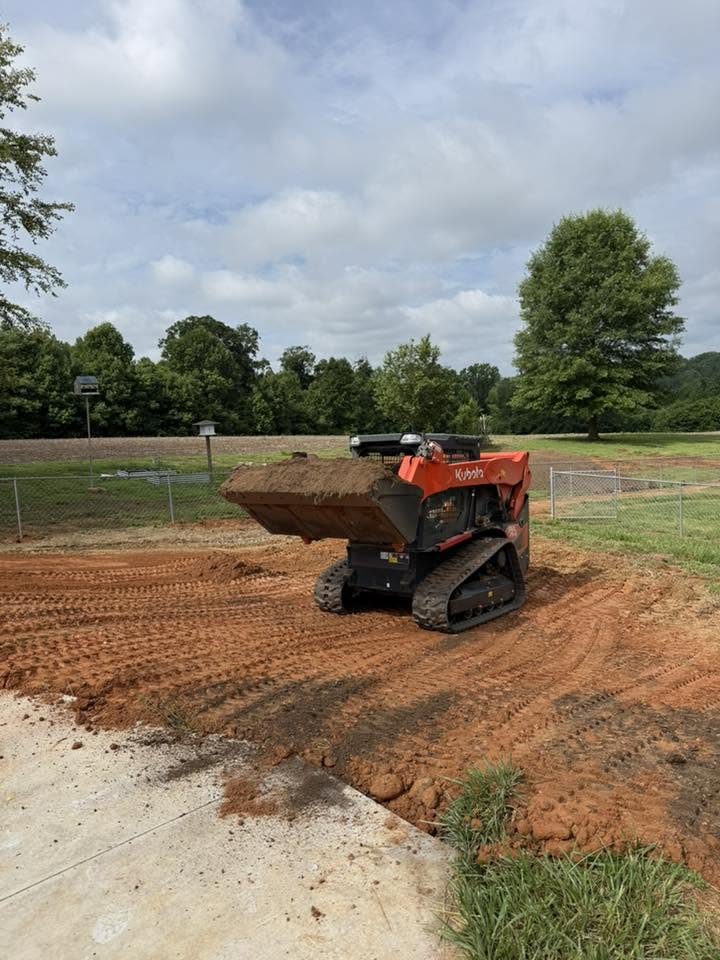
A paver patio installed on a clay subgrade without proper base excavation will heave at the edges within a few wet-dry cycles. A plant bed graded flat against a house foundation holds water through a wet spring and creates the moisture load that rots sills and band joists. Neither failure is sudden or dramatic, which is why they get blamed on the materials instead of the base prep that was skipped. Site grading is not a preliminary to the real work here — it is the real work, and everything installed above it follows from it.
Forsyth County has recorded 22 federal disaster declarations over 1977-2026. That storm history confirms what any wet crawl space already knows: water management in the Piedmont is not optional, and a complete outdoor project starts by understanding where the water goes before a single stone is set or plant goes in the ground.
Scope: what a full outdoor project covers on a western Forsyth lot
The two categories overlap in practice far more than they divide on a proposal. Landscaping covers plant selection and bed preparation, lawn grading and establishment (seed or sod), slope stabilization, mulch and edging, and landscape drainage — the swales, berms, and low spots that move surface water off the property. Hardscapes covers built surfaces: concrete or paver patios, walkways and steps, fire pit pads, and driveways.
On most Lewisville and Clemmons lots, a backyard patio project drives a retaining wall on the uphill side to hold the regraded slope, and that wall almost always needs drainage behind it. A French drain installed before the patio base is compacted is a planned line item; the same drain excavated after the patio is set costs two to three times as much, plus the repair and reset of the hardscape above it. The sequence is structural, not procedural, and bids that treat drainage as an optional upgrade are not cheaper — they are deferred.
Newer subdivisions in Lewisville and Clemmons sit on cut-and-fill lots where the original soil profile was disturbed and compacted by heavy equipment during construction. That compacted subgrade drains even worse than undisturbed Piedmont clay, and base excavation needs to go deeper to reach stable bearing. A contractor pricing the same base depth for a 30-year-old lot and a 5-year-old subdivision lot has not looked at both jobs. HOA covenants in many of these neighborhoods also govern hardscape materials and plant screening — checking approval requirements before design is final avoids the most expensive kind of revision.
What projects cost in this market
Piedmont NC pricing sits between Charlotte metro and rural western NC — a competitive labor market with regional material supply chains and modest travel costs. The ranges below reflect current Forsyth County scope. Base excavation depth — driven by clay depth, drainage need, and lot history — is the single largest cost variable, which is why a flat per-square-foot number from a bid that has not assessed the grade should be read carefully.
| Scope | Typical range |
|---|---|
| Paver or concrete patio, 200–350 sq ft | $5,000–$12,000 |
| Walkway and front entry steps | $2,000–$5,500 |
| Retaining wall, block or natural stone, up to 4 ft | $4,000–$10,000 per run |
| Full outdoor room (patio + wall + steps + drainage) | $20,000–$55,000 |
| Plant beds, mulch, edging — established yard | $2,500–$7,000 |
| French drain added to hardscape scope | $1,500–$4,000 |
| Full yard grading, seed or sod, landscape install | $8,000–$28,000 |
Scope creep is common on cut-and-fill subdivision lots because drainage problems that were marginal at the original grading often surface only when excavation starts. A 10–15 percent contingency is accurate budgeting on this terrain. Projects near the Yadkin River corridor or in lower-lying portions of the county should also account for any flood map constraints on final grade elevations.
Permits, erosion rules, and what applies before a shovel enters the ground
Most residential landscaping and hardscape work in Forsyth County does not require a building permit, but two regulatory frameworks apply regardless of permit status and are regularly misunderstood.
Erosion and sediment control. North Carolina requires an erosion and sedimentation control plan for any land-disturbing activity over one acre under the NC DEQ Erosion and Sediment Control program. Most residential projects stay under that threshold, but large regrading projects combined with contractor activity on adjacent lots, or work near drainage conveyances, can approach it. Any project disturbing more than one acre that discharges to waters of the United States also triggers a stormwater permit under the EPA's NPDES Construction General Permit. Forsyth County administers its own land-disturbance inspection process — the county's planning and development office is the right first call when scope is large or grade changes are significant.
Retaining walls over 4 feet. A wall taller than 4 feet from the base of the footing is a structural element governed by the International Residential Code as adopted in North Carolina, and requires a permit and engineer-stamped drawings in most jurisdictions. An unpermitted wall over 4 feet creates a material disclosure obligation at resale and a liability exposure if it fails. The contractor should be pulling this permit as a matter of course — the question of whether it applies should be answered in writing before work begins, not explained after.
Three questions that keep a Lewisville hardscape bid honest
"What is the base specification?" A paver patio or walkway that holds up in Forsyth County clay needs a minimum of 6–8 inches of compacted aggregate base — more on wet lots and cut-and-fill sites. A bid that does not state a base depth has not priced the job; it has estimated it. "Where does the water go when it rains?" Ask the contractor to show you how the graded project drains — where runoff exits the property and whether the changed grade pushes water onto a neighbor's lot. Grade changes that redirect runoff create liability whether the work is permitted or not, and the grading work that underlies every project should be documented to show positive drainage away from structures. "Does this wall need a permit?" For any retaining wall over 4 feet, or work near a property line where grade changes are involved, the answer should come with a plan number and a county stamp — not a verbal assurance. A contractor who treats the engineered-drawing requirement as optional on structural walls is a contractor to replace before work starts, not after.