Long lots, red clay, and what actually drives the quote
King sits about fifteen miles north of Winston-Salem on the Stokes County edge, where the suburban fringe gives way to open Piedmont countryside. Most residential lots here aren't the 50-foot approaches common in a Forsyth County subdivision — they're 150-, 250-, even 400-foot drives crossing former tobacco fields and gently rolling hardwood lots. That length is the first number in any honest quote, because it determines cubic yards of material, whether a motor grader can work the site efficiently, and how many drainage structures the run needs.
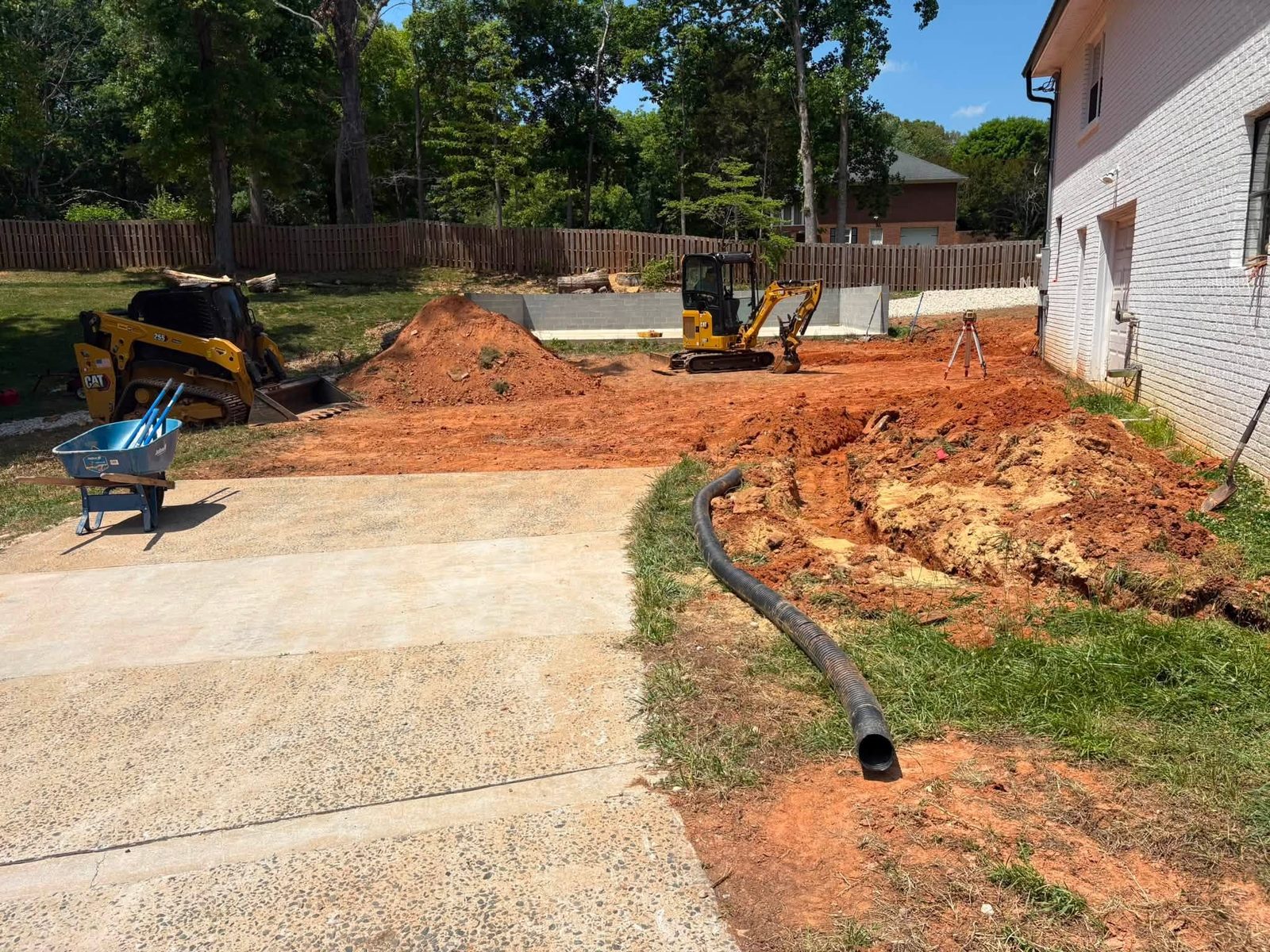
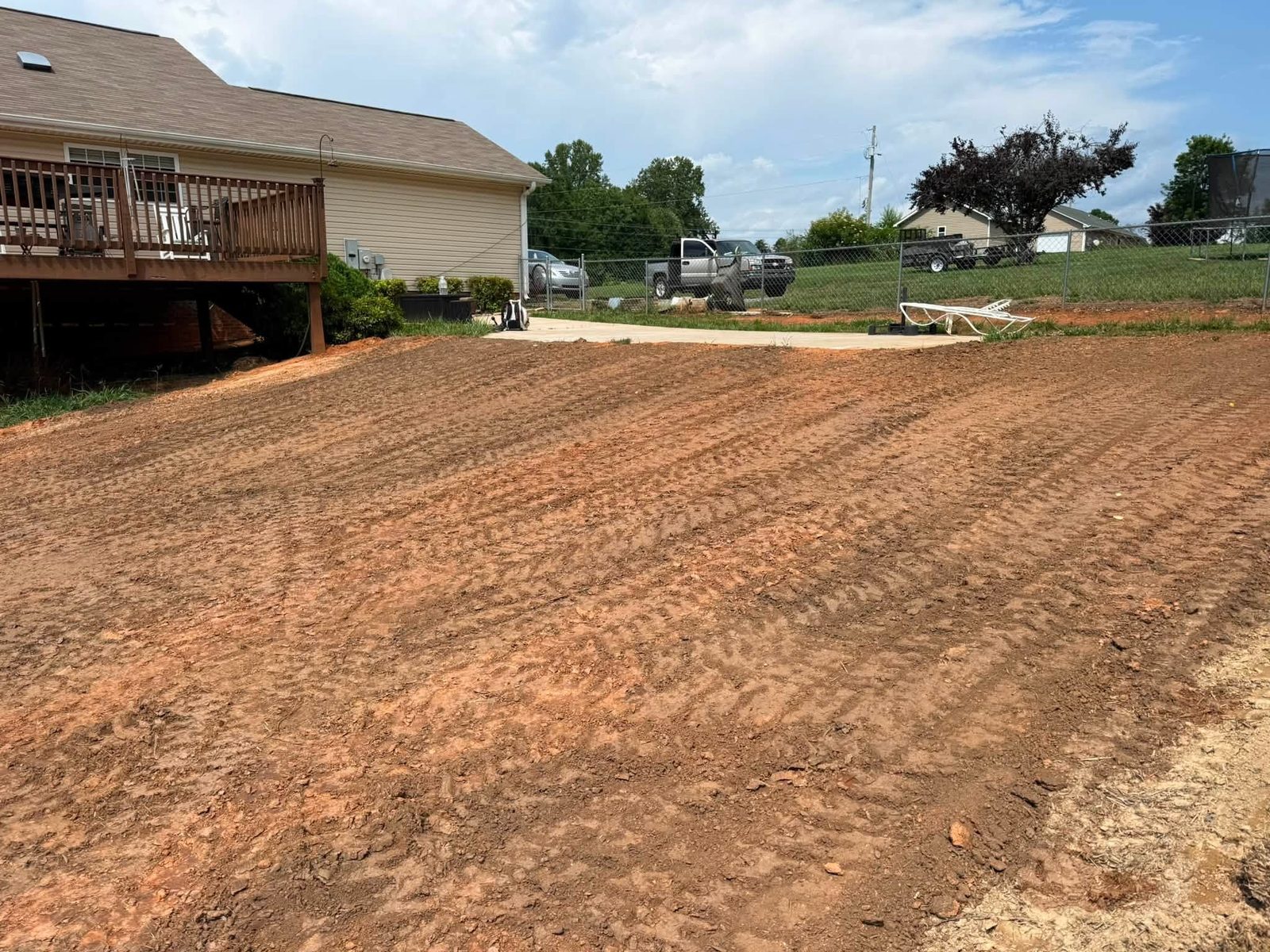
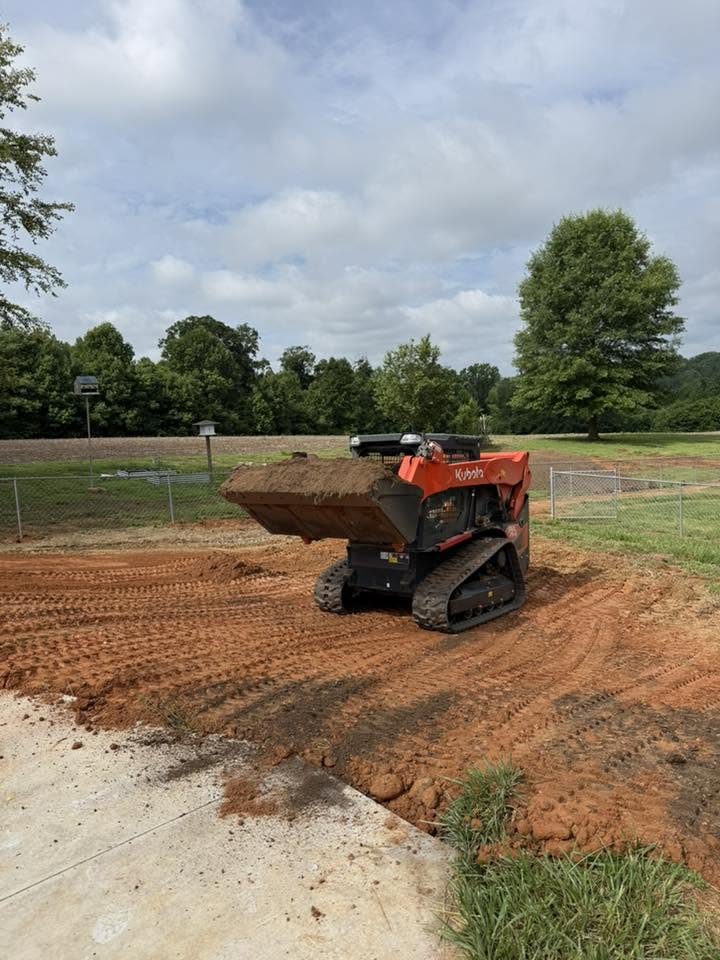
The second variable is the clay. Stokes County's Piedmont soil is dense, high-plasticity red clay that drains slowly and swells when wet. Gravel laid directly over it without base prep tends to migrate into the soil profile through two or three wet winters, leaving a thin, rutted surface that needs more stone every spring. The contractors who understand this ground start with a proof roll and a subgrade look before they quote material — the ones who skip that step are often the low bids that cost more over time.
For context on how a properly built gravel driveway differs from a simple topdress, our gravel driveway guide covers components, material choices, and when each layer earns its cost.
What a proper install looks like on Stokes County ground
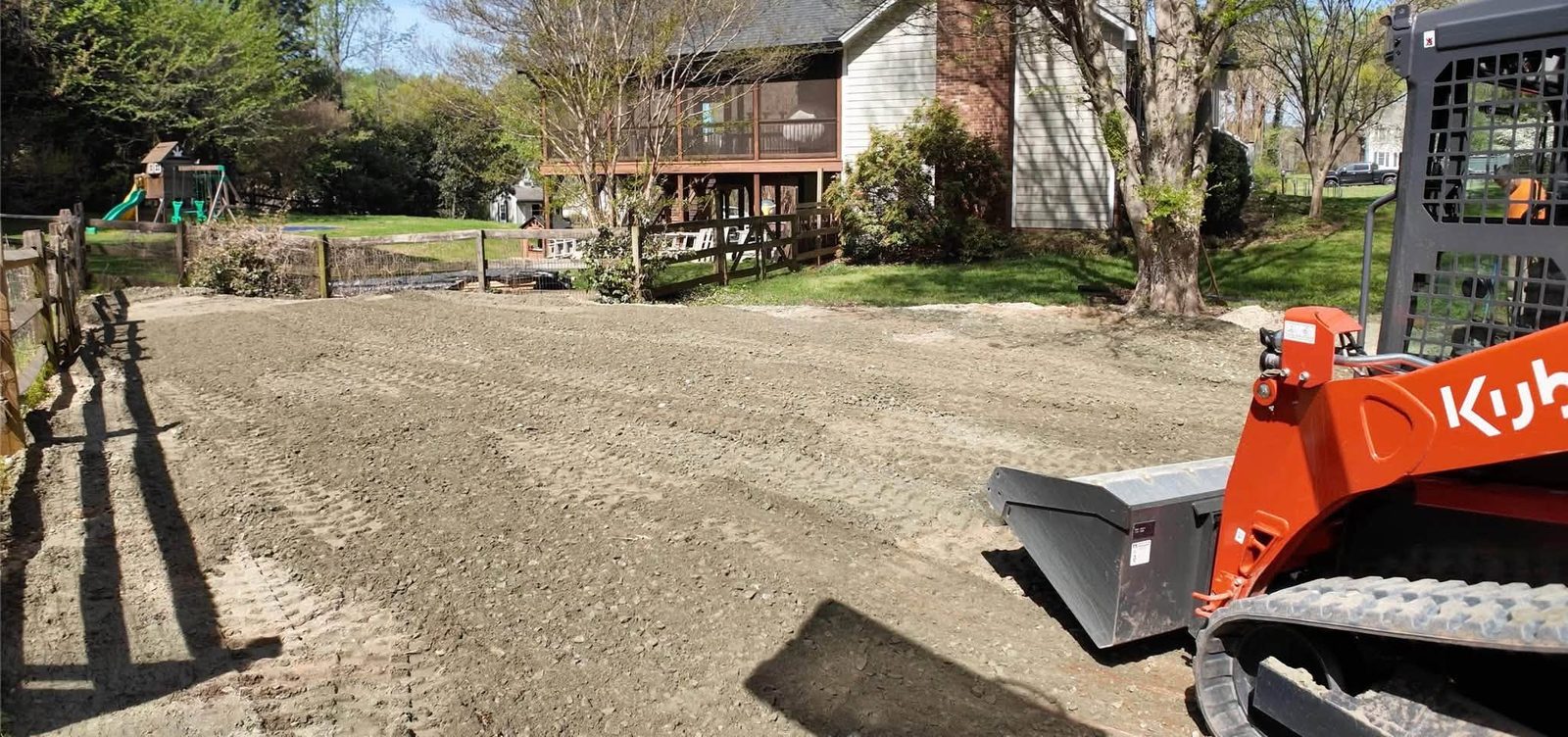
A durable King-area gravel driveway involves more steps than surface stone. Strip and proof-roll the subgrade first — this finds soft clay spots before material goes down. Geotextile separation fabric laid over the compacted subgrade keeps base aggregate and native soil from mixing; on heavy Piedmont clay it prevents the migration that makes topdress-only jobs fail fast.
Base aggregate — typically NC DOT-spec 21A or compacted ABC stone — goes in next at 4 to 6 inches compacted depth, forming the structural layer that carries vehicles through wet soil conditions. Surface material, most often #57 washed stone or fine ABC, goes on top crowned slightly toward the shoulders so rain runs off rather than pools in the wheel tracks.
The drainage step most homeowners underbudget is the road entrance: NCDOT driveway-permit requirements commonly specify culvert sizing when a new apron crosses a roadside swale. Your contractor should know the county standard before pricing that line. Skipping drainage design on a clay-base, long-lot run is the setup for the washout pattern our gravel driveway washing out guide describes in detail.
What King-area gravel driveway jobs typically cost
Prices below reflect typical installed ranges for Stokes County residential jobs. Material costs, haul distance, and site conditions move every number; treat these as planning figures until a contractor walks your lot.
| Scope | Installed Range | What moves the number |
|---|---|---|
| Topdress existing drive, intact base | $1,800–$2,800 | Surface stone only; haul distance and access |
| New install, short run (under 150 ft), flat lot | $2,800–$5,500 | Base stone, fabric, subgrade grading, entrance |
| New install, medium run (150–300 ft) | $5,500–$8,000 | Volume, edge ditching, culvert, clay prep |
| Long rural drive (300+ ft) or heavy base work | $8,000–$12,000 | Deep clay correction, multiple drainage structures |
Full line-item ranges are in the gravel driveway cost breakdown. The most consistent surprises on King jobs are the road-entrance culvert — required by NCDOT when a new apron crosses a roadside ditch, and priced separately from the driveway run — and subgrade soft-spot correction when clay pockets run deeper than the initial proof roll shows.
Drainage, runoff, and the rules for disturbed ground
Stokes County's storm and flood history is part of this story. The county has seen 22 federal disaster declarations spanning 1977-2026, most of them storm and flood events that recharge the water table and push runoff at road shoulders and driveway grades. If your existing run held for years and now washes, the drainage assumption baked into the original grade is probably what failed — not the gravel choice.
For jobs that disturb more than one acre of land, North Carolina requires a formal erosion and sediment control plan under the NC DEQ Erosion and Sediment Control program. Most residential driveway jobs fall under that threshold, but long rural runs with shoulder clearing on a sloped lot — particularly when combined with other grading on the same parcel — can cross it. The EPA's stormwater NPDES program sets the federal floor for larger disturbed sites, and the state program runs in parallel. A contractor who asks about total disturbance area before pricing is doing it right.
Standard mitigation on King-area jobs includes temporary silt fence along exposed edges, check dams in any active ditch line, and a compacted stone construction entrance to keep tracked clay off the road. These are baseline practice, not line-item extras on a conscientious bid.
Finding the right scope — and the right crew
Two questions separate the contractors who understand King-area driveway work from the ones who don't: what does the subgrade look like, and how are you handling the road entrance? The first answers whether they plan to proof-roll or just drop stone; the second answers whether the culvert question has been thought through before the bid arrives.
North Carolina doesn't license grading contractors the same way it licenses specialty trades, but work crossing the one-acre disturbance threshold carries DEQ compliance obligations, and any job touching an NCDOT right-of-way requires a driveway permit. When comparing bids, a quote that includes site-visit findings, a subgrade recommendation, and a drainage plan line item is reflecting the actual job. One that lists only cubic yards of stone and a haul charge probably isn't.
Get at least two quotes that both come after a property visit. Scope alignment matters more than price alignment on long clay-lot drives — a low number built on the wrong assumptions is a number that grows.