Pfafftown's long driveways run on clay
The western reach of Forsyth County holds a kind of residential lot that Winston-Salem's street-grid neighborhoods don't: wooded half-acre to three-acre parcels where the driveway winds 150 to 400 feet through pine and hardwood before it reaches the house. Pfafftown is the center of that character, and it changes gravel driveway work in ways that shorter, paved-neighborhood quotes rarely reflect.
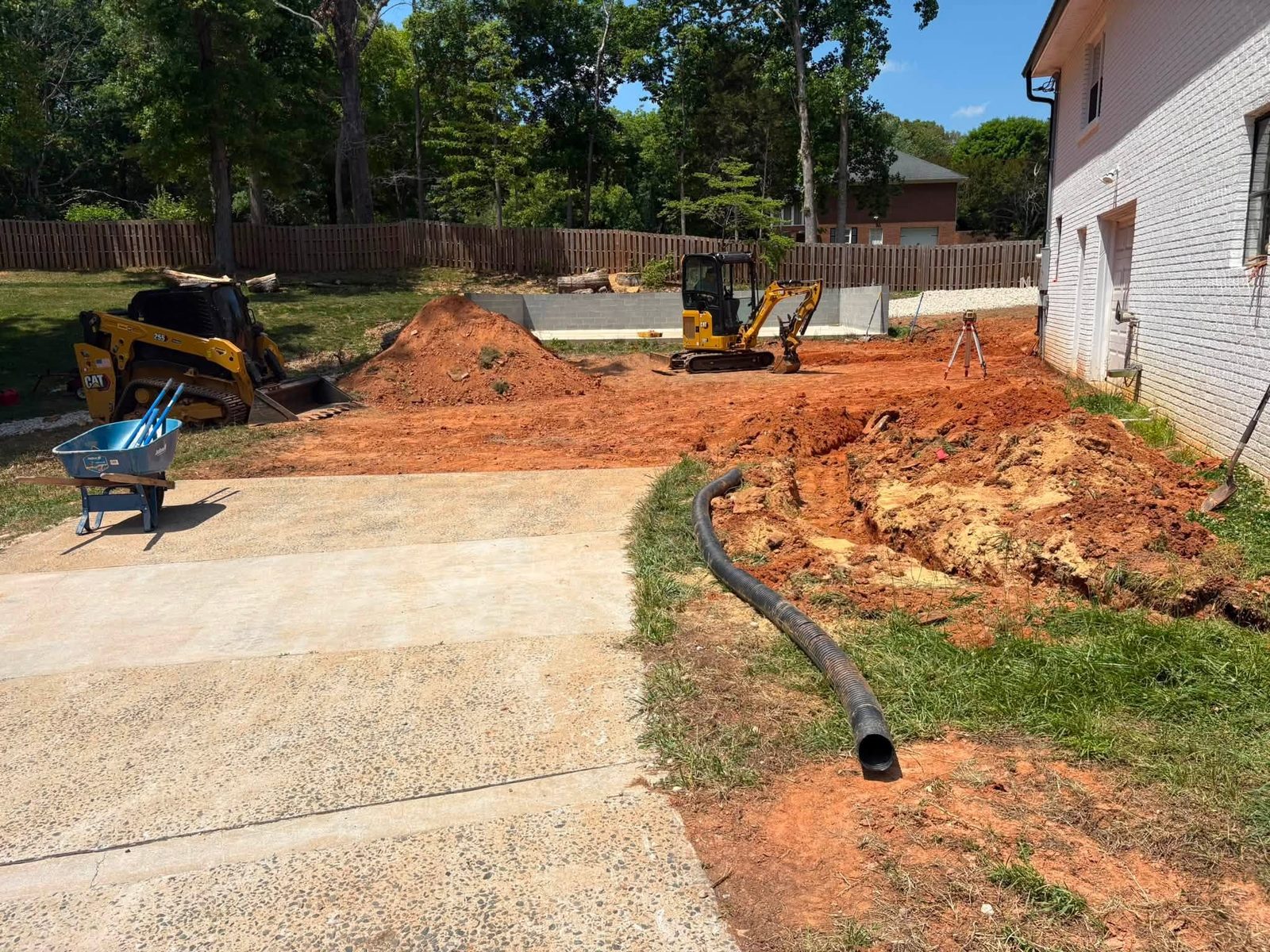
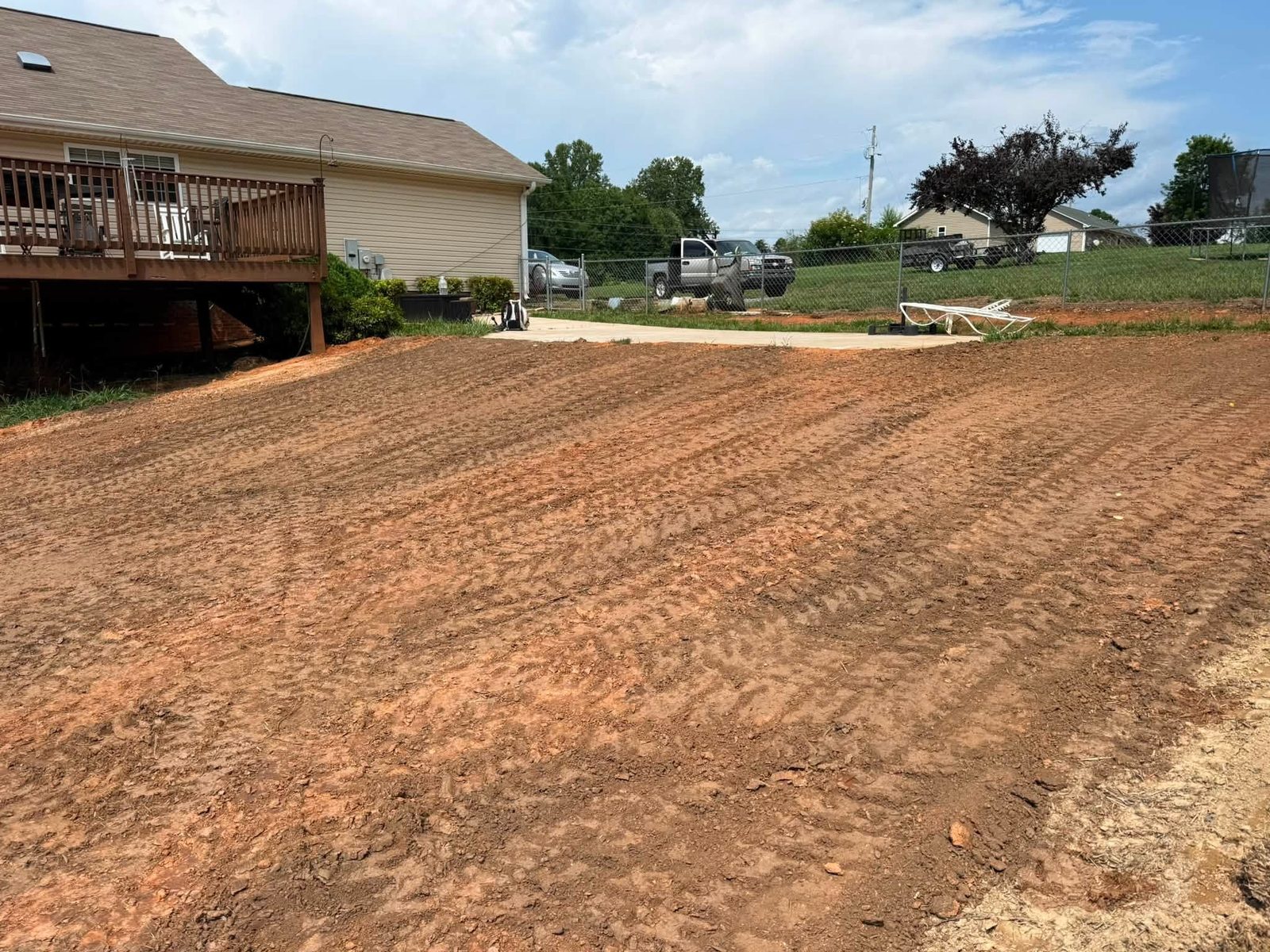
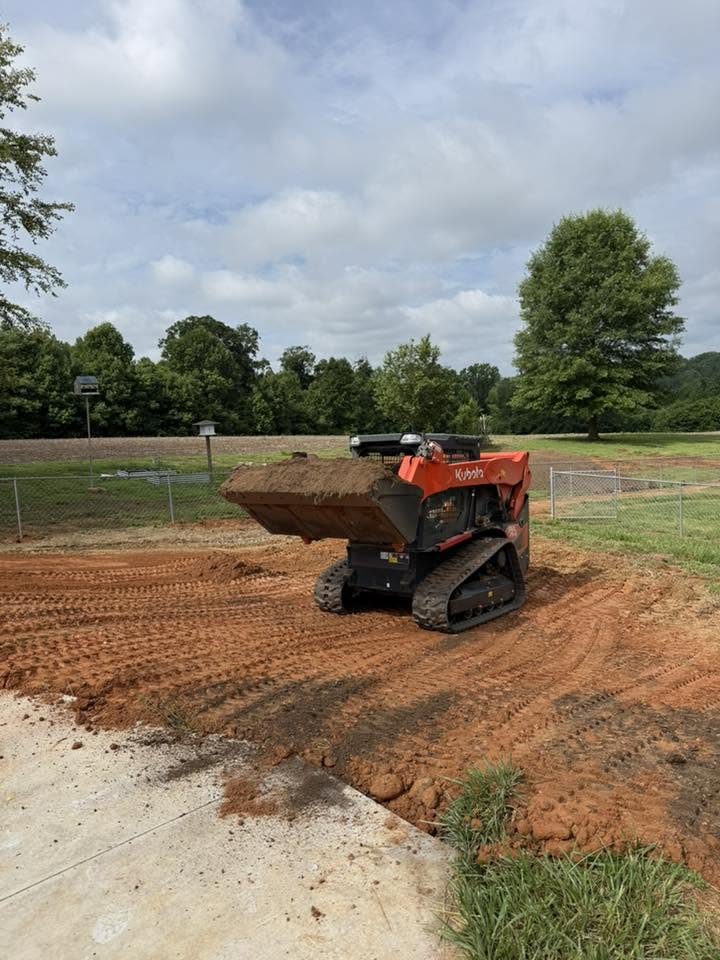
The variable most crews underestimate is the red Piedmont clay sitting two inches below the surface. It doesn't compact the way crushed stone does. It holds water after rain, softens when wet, and sheds surface gravel downslope once the crown is lost. A contractor treating a 300-foot Pfafftown driveway like a 50-foot suburban pad is solving the wrong problem. The two questions that shape a real quote before a measurement is even taken: how far does the drive run, and where does rainwater go after it crosses the crown?
What a gravel driveway costs around Pfafftown
The full line-item breakdown is at gravel driveway cost — the table below gives the Forsyth County version scoped to Pfafftown lot sizes. Base preparation is almost always the swing item: a short, near-flat approach on stable soil can be done in a morning; a long, sloped Pfafftown drive on clay may need geotextile fabric, four to six inches of compacted crush-and-run, and careful crown shaping before a single load of surface gravel arrives.
| Scope | Typical Range | Pfafftown Variable |
|---|---|---|
| Short driveway, minimal base work (under 75 ft) | $1,800 – $2,800 | Stable, near-flat lot with good drainage |
| Mid-length driveway with base prep (75–200 ft) | $2,800 – $5,500 | Clay subgrade, light slope, standard crown |
| Long driveway, full base work (200–400 ft) | $5,500 – $9,000 | Red clay, slope changes, crown shaping throughout |
| Long driveway, heavy excavation or drainage structures | $9,000 – $12,000 | Geotextile, deep base, culvert or side-ditch work |
Material type shifts costs less than base depth does. Surface stone matters for appearance and traffic performance, but a contractor who specifies base material by name and depth by the inch is giving you a more honest number than one who leads with stone color.
Managing water on a Piedmont lot
Forsyth County carries 22 federal disaster declarations on record spanning 1977-2026, most tied to storm and flood events moving through the Piedmont. That history shows up in unprotected gravel driveways after a sustained rain: water crossing the surface carries gravel to the low shoulder; water infiltrating the base softens clay until sections rut and sink.
Good drainage practice on a Pfafftown lot means shaping 1 to 2 inches of crown across the drive so water breaks to both shoulders, grading side ditches deep enough to carry water away from the clay subgrade, and verifying where it exits at the downhill end. If it pools against the house foundation or crosses a property line, the drainage work is incomplete. NC DEQ's erosion and sediment control program sets standards for land disturbance that longer driveway projects frequently reach — the right contractor knows when those thresholds apply and how to sequence work to stay compliant. When a drive has already started moving, gravel driveway washout repairs covers fixes ranked by severity.
Gravel choice and base depth for clay soil
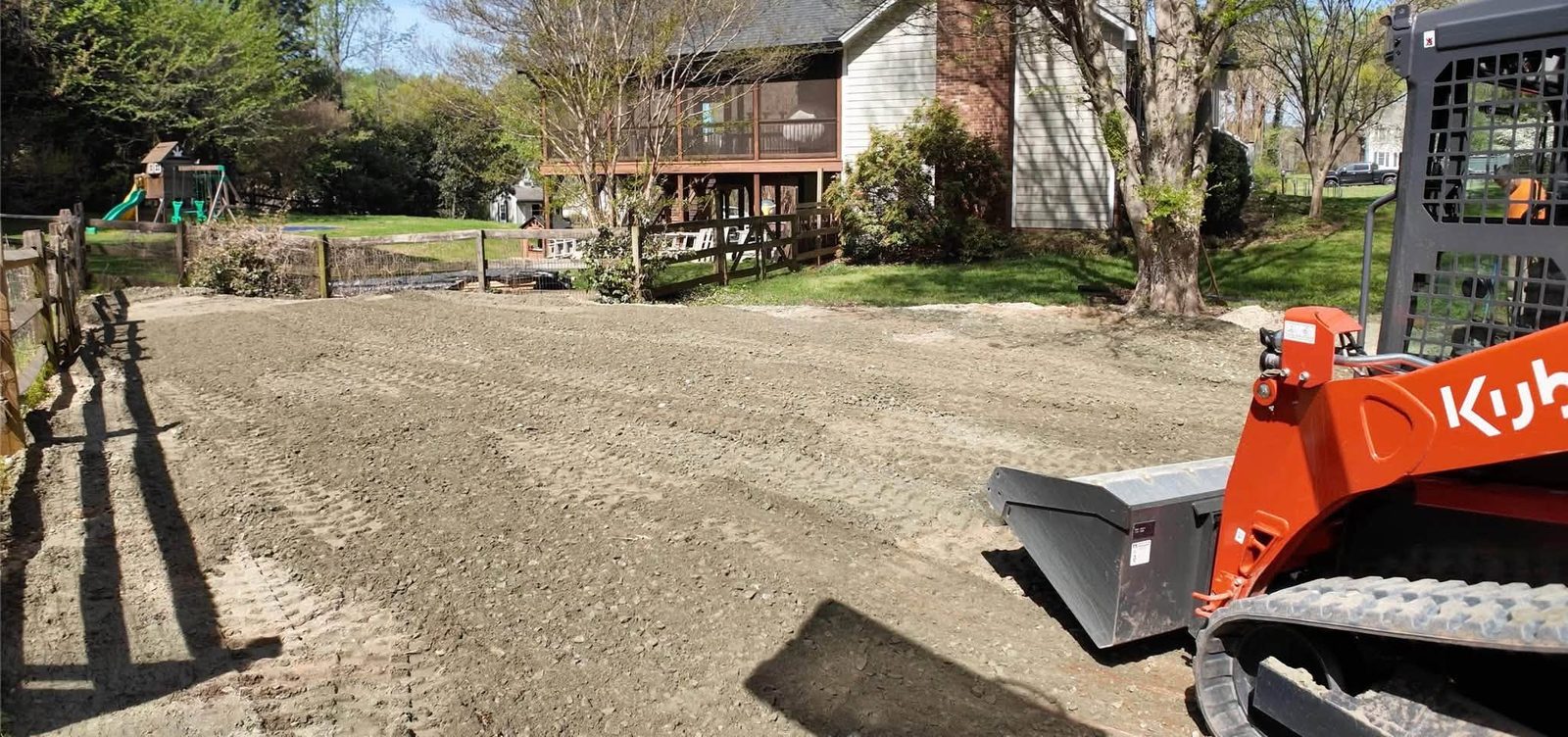
On Piedmont clay, the base layer matters more than the surface stone. Crusher-run — a mix of crushed stone and stone dust — compacts well and bonds to the clay interface without the sharp settlement that clean aggregate produces. Four inches is a minimum; six inches is standard on long drives or anywhere the slope changes direction. Geotextile fabric between the clay and base layer significantly extends drive life by preventing clay migration up through the stone over time.
For the surface, #57 or #78 crushed stone handles residential traffic without disappearing into a soft base. Pea gravel and river rock look appealing but don't interlock under tire load — they migrate to the edges and require constant redistribution. For Pfafftown's longer runs, a crusher-run base plus a clean angular topping is the sequence that holds up through wet winters without ongoing maintenance calls.
Forsyth County permits and site thresholds
A new driveway connection to a public road in Forsyth County requires a driveway access permit before work begins. Current submittal requirements are at forsyth.cc. Grading that disturbs soil beyond a threshold acreage also triggers NC's land-disturbance permitting process through DEQ. For larger Pfafftown parcels where the driveway run is long and the grading footprint is wide, confirming those thresholds before mobilizing equipment is the contractor's responsibility — and the right question to ask when comparing bids.
EPA stormwater rules under the NPDES program can apply when grading work drains toward a waterway or wetland feature. Pfafftown's wooded lots sit near enough to drainage features that this question is worth raising on any project that disturbs more than light surface area. A stop-work order on a half-graded drive costs more than the permit conversation before the first load of stone arrives.
Getting a quote that holds
The full guide to what to ask and how to compare bids is at gravel driveways. The Pfafftown-specific version: ask every contractor to name the base material and specify its depth in inches, not just "we prepare the base." Ask how they shape the crown and where water exits at both ends of the run. Ask whether side ditches are included in the scope or a separate line item.
Long Pfafftown driveways can have three or four distinct micro-grades over their full length. A contractor who walked the whole run before quoting is working from different facts than one who measured from the road. A bid that answers the drainage questions is a bid you can hold someone to. A bid that skips them is a negotiation about what was included once the equipment is already on site.