Piedmont clay is the first cost variable on every Forsyth County job
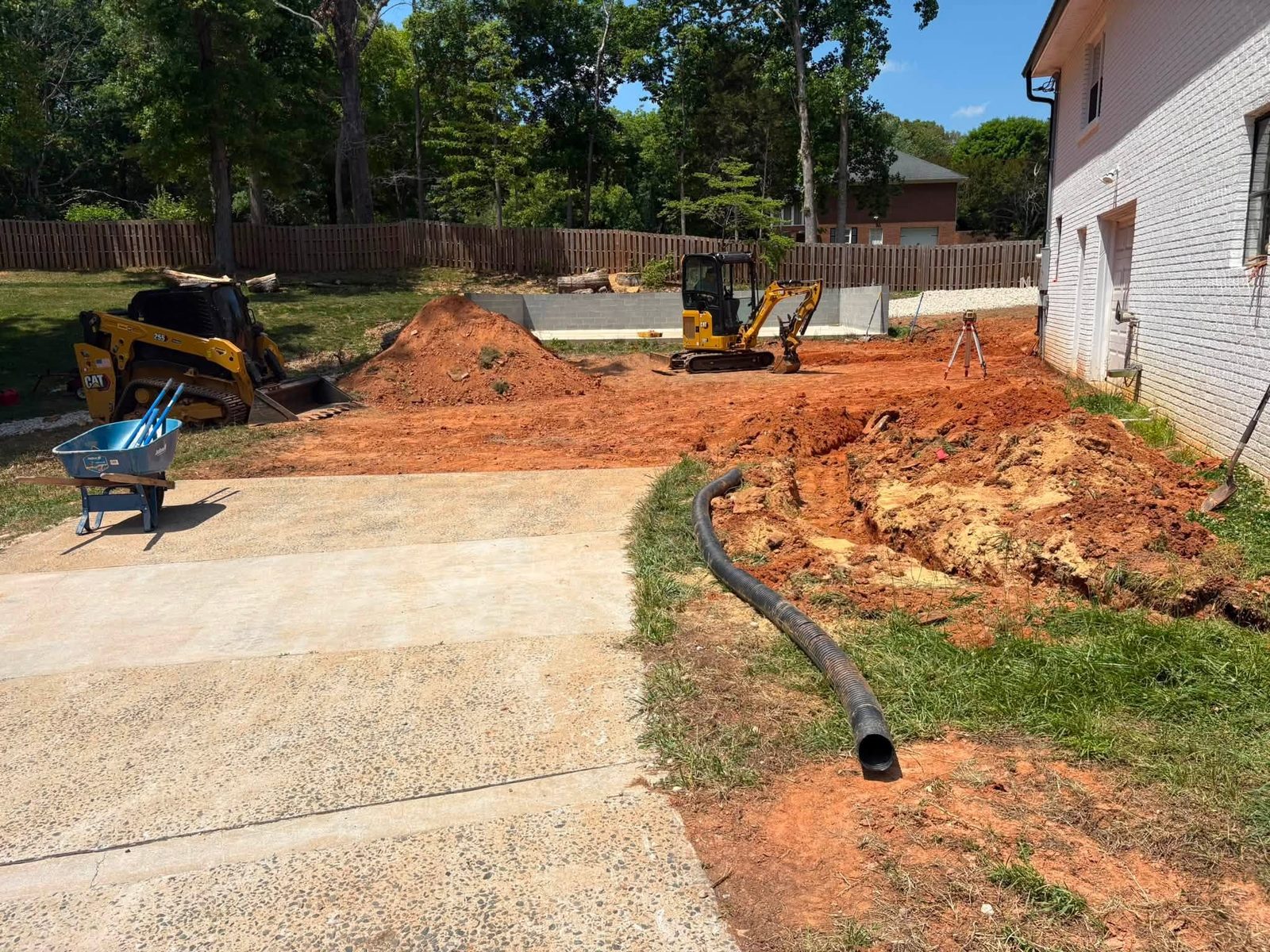
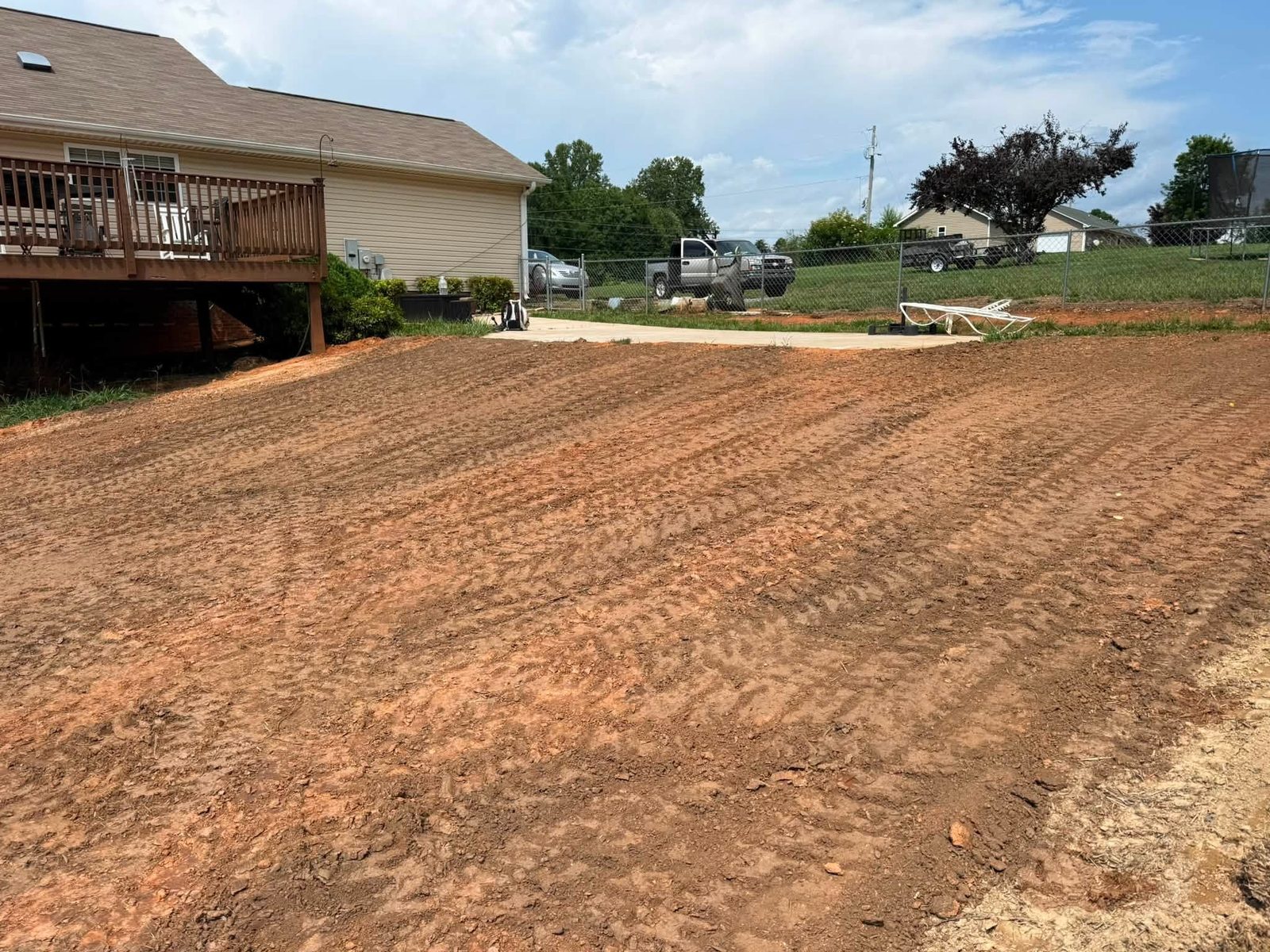
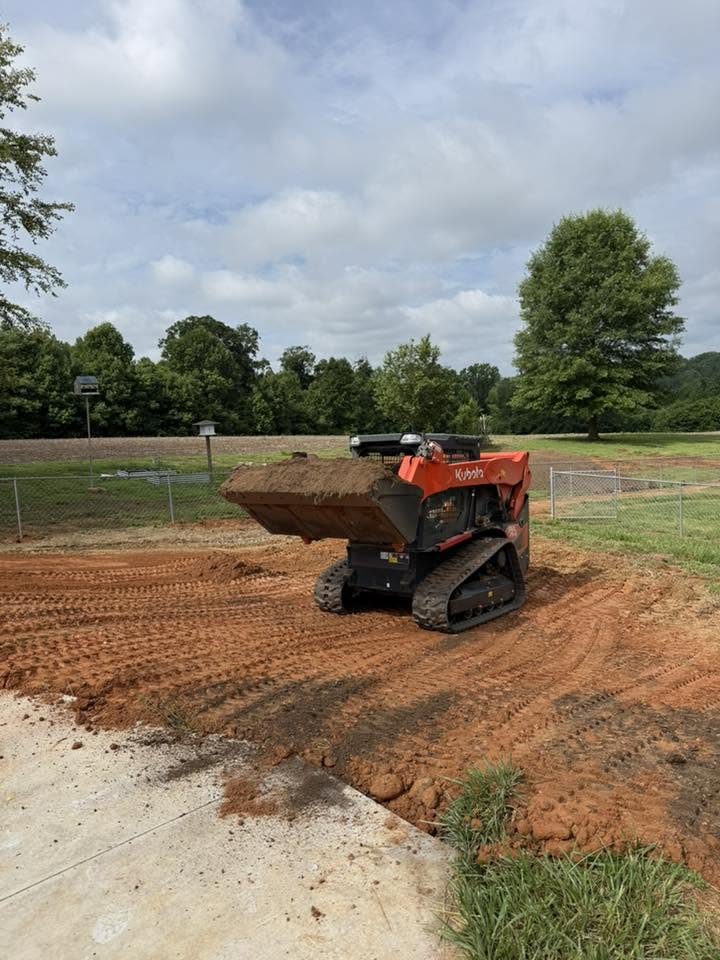
Winston-Salem sits at the heart of the Piedmont Triad — rolling terrain, hardwood canopy, and the red clay that characterizes much of central North Carolina. That clay is not a footnote on a site prep bid. Piedmont red clay swells against foundation walls when it absorbs winter moisture and pulls away from them during a dry summer; a building pad built on fill that was not properly sequenced and compaction-tested will register that instability in the slab or crawl space within a few seasons. A contractor who prices a Forsyth County pad the same way they would price one on a sandy coastal lot is skipping the step that separates a stable pad from a future repair call.
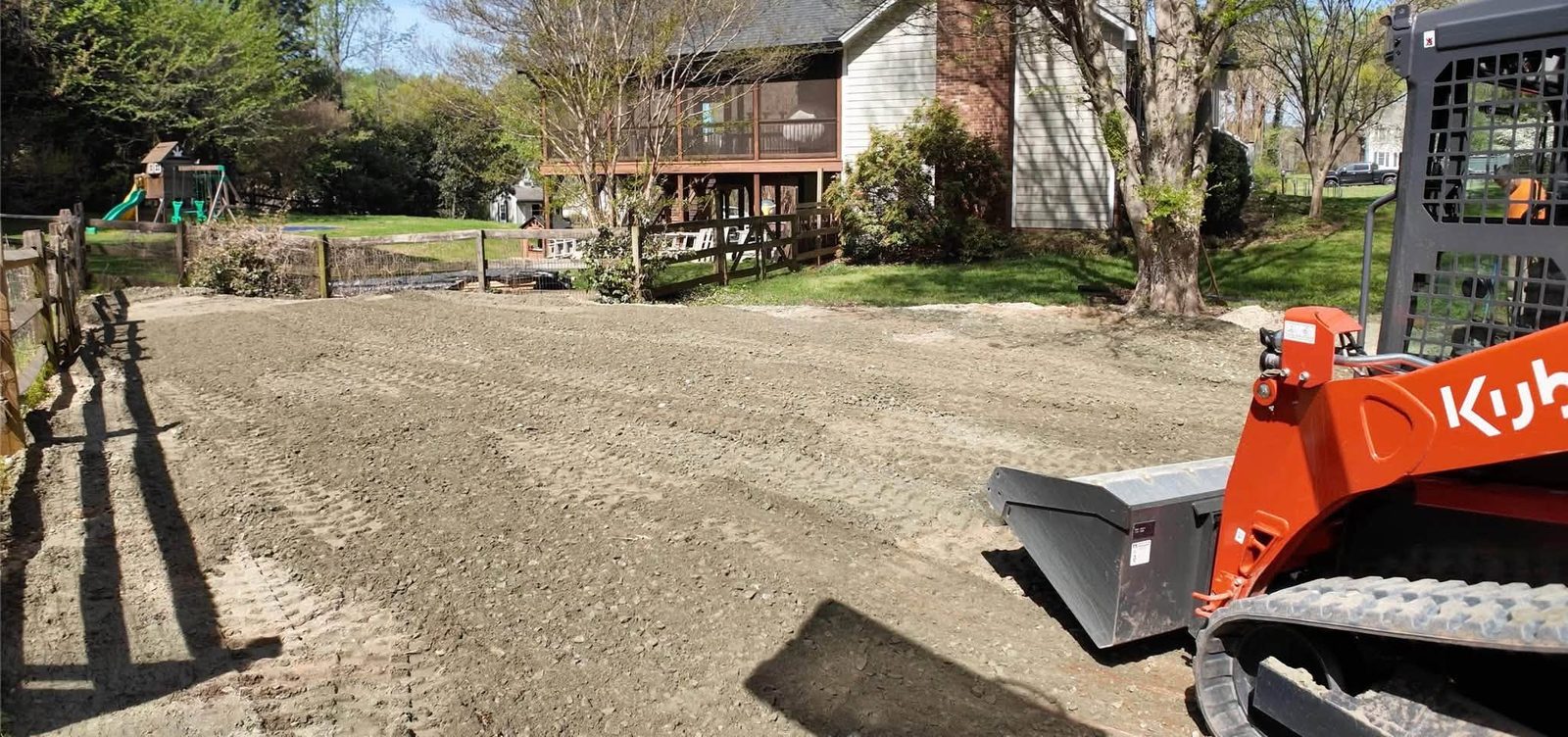
The terrain across Forsyth County is rolling rather than steep — gentler than the mountain counties to the west, but with enough variation that in-fill lots in established Winston-Salem neighborhoods can carry meaningful cut-and-fill requirements. At the county's suburban edges — Clemmons to the southwest, Lewisville to the northwest, Kernersville to the east — mixed hardwood stands add a clearing layer to the budget before the grading question even surfaces. Rural parcels near Walkertown and Rural Hall combine mature canopy with more topographic variation, stacking costs further. Understanding what scope your specific lot demands before soliciting bids keeps surprises off the change order — the complete site preparation overview covers what each phase involves.
The red clay layer in much of Forsyth County runs deep enough that excavation for footings and utility trenches routinely encounters it whether or not the surface has been stripped. That is different from many coastal Carolina counties where sandy upper soils give way to clay much later in the dig. Here, clay management is not a contingency; it is the baseline condition. Compaction testing, fill sequencing, and moisture conditioning are standard practice for any contractor doing honest work in this soil. A bid that does not address clay handling in writing has left the most consequential variable off the page.
What Forsyth County homeowners actually pay for site work
Most Forsyth County jobs price in layers that stack: clearing first, rough grading next, pad compaction and drainage rough-in after that. Each layer has its own range and its own variables. A lightly wooded suburban in-fill lot in Clemmons prices very differently than a raw timbered parcel with grade change and established hardwoods south of Rural Hall.
| Scope of work | Typical Forsyth range | What drives it |
|---|---|---|
| Light clearing, brush and small trees | $1,200 – $3,500 | lot size, debris haul-off distance |
| Wooded lot clearing with stumps | $3,000 – $8,000 | tree count, stump grinding, haul volume |
| Cut-and-fill rough grading | $2,500 – $8,000 | grade change, clay cut volume, fill import cost |
| Compacted building pad (full) | $3,500 – $15,000 | pad area, fill depth, compaction testing cycles |
| Drainage rough-in | $1,500 – $4,500 | lot drainage pattern, outlet availability |
| Full prep, wooded sloped lot | $15,000 – $30,000 | all scopes combined, engineered plan, haul |
Those are working ranges for the kinds of jobs that show up across Forsyth County — the low end reflects cleared or lightly brushed suburban lots, the high end reflects wooded acreage with grade change, clay fill requirements, and drainage work. Compaction testing is not optional on Piedmont clay; a bid that omits it is borrowing against a future foundation correction. The grading cost guide separates out the cut-and-fill line for Forsyth County lots if that is the number you need to isolate.
One cost factor specific to the Winston-Salem market is haul distance. Forsyth County sits well inland, and select fill or engineered fill brought from outside the immediate area carries a delivery premium that does not appear on coastal or mountain quotes. When a sloped lot requires more fill import than the cut provides — a common situation on higher-elevation parcels near the Stokes County line — that haul cost can add meaningfully to an otherwise moderate grading budget. Ask any bidder where their imported fill comes from and what the haul rate is; that answer tells you something about how carefully they have priced the job.
Permits and erosion rules before the first truck rolls
Any land-disturbing activity covering an acre or more in North Carolina requires an erosion and sediment control permit under the rules administered by NC DEQ's Erosion and Sediment Control program. Forsyth County operates its own locally delegated program, which can apply to smaller disturbances below the state acre threshold. Most residential site prep jobs in the Winston-Salem area — combining clearing, rough grading, and pad compaction on a standard lot — fall under at least county-level review. The permit specifies the silt fencing, inlet protection, and stabilization your contractor must maintain on-site, and those requirements are enforced through inspections. A contractor who treats the erosion permit as someone else's problem has told you how they approach every other compliance question on the job.
Structural grading tied to a building permit falls under the residential building code framework administered by the NC Department of Insurance Engineering and Building Codes Division, with Forsyth County's local inspections office enforcing those provisions on permitted construction. Any site prep scope that feeds a structural building permit — which most residential pad work does — needs to be coordinated with the building permit timeline before the first equipment is mobilized. A contractor who cannot identify which permits govern their scope before signing a contract is a contractor whose bid deserves extra scrutiny.
Forsyth County's position as one of the larger urban counties in the Triad means its permit review processes are relatively well-staffed, but permit timelines for residential site work still vary with season and workload. Submitting for erosion control review and building permit concurrently rather than sequentially typically compresses the overall pre-construction timeline. Your contractor should be familiar with Forsyth County's permit submission process and should be able to identify the expected review window before you commit to a construction schedule.
Stormwater drainage shapes every Forsyth County building site
Forsyth County drains toward the Yadkin River basin — a watershed that has accumulated 22 federally declared disaster events (1977-2026), most tied to storm and flooding. That history matters on the ground because Piedmont red clay does not drain quickly. A finished grade that routes runoff toward a neighbor's property or into an undersized swale creates the next complaint and the next standing-water problem long after the site prep crew has moved on. The drainage rough-in is not a standalone line item; it is the piece that determines whether the grading work actually performs over time and through wet seasons.
Under U.S. EPA NPDES stormwater rules, construction sites disturbing an acre or more must maintain a stormwater pollution prevention plan. Even below that threshold, finished-grade drainage is a code issue, a neighbor issue, and a long-term asset-value issue for the lot. Ask every bidder where the water goes when the job is done — the answer distinguishes a site prep contractor from an equipment operator. The relationship between drainage planning and excavation scope is covered in detail in the excavation cost guide.
The rolling Piedmont terrain means that many Forsyth County lots have multiple drainage outlets: a swale along one property line, a ditch at the road, a low point toward a rear neighbor. Getting all of those outlets working in the same direction requires a finished-grade plan, not just equipment time. Sites where drainage was an afterthought tend to show it after the first hard rain, with rills across fresh topsoil, standing water against a foundation, and silt-laden runoff crossing onto adjacent property. The cost to plan drainage correctly during site prep is a fraction of the cost to regrade a pad that was done without one. Flood zone status for a specific parcel is searchable through the FEMA Flood Map Service Center before you commit to a lot purchase or a pad location.
Three ways to keep a Forsyth County site prep bid honest
The Forsyth County market has no shortage of grading equipment, which means bids on the same lot can vary more than the work itself actually varies. Three moves protect you:
- Get soil treatment in writing. Any bid on a Forsyth clay lot should specify compaction testing frequency and what happens if a fill lift fails the test. If the spec is not in the contract, it is not included in the price.
- Price clearing separately from grading. A bundled lump sum hides where the cost originates — clearing costs shift if a mature tree needs to stay, and keeping the scopes separated keeps change-order math honest.
- Confirm which pad standard you are buying. A rough-graded pad for a slab-on-grade home prices differently than a finished-graded pad for a crawl-space home with drainage tie-in requirements. Verify what your contractor is quoting before comparing numbers across bids.
For more on how clearing, grading, and pad prep interact on a Piedmont clay lot, see the site preparation overview. If grading alone is the scope you are trying to price, the grading cost guide isolates that line.
Beyond those three contract moves, ask about wet-weather provisions before signing. Piedmont clay compacts well when moisture content is near optimal and fails compaction tests badly when it is too wet or too dry. A contractor with no plan for wet-weather delays — no schedule buffer, no soil moisture management approach — is a contractor whose timeline will stretch on the first rainy week. Winston-Salem's rainfall patterns are not extreme, but summer thunderstorm seasons produce enough saturated-soil events to make moisture management a real scheduling variable. A firm that builds that into its project timeline is one that has actually done clay work in Forsyth County before.