Clay, horse trailers, and why Advance roads fail
Advance sits at the western edge of Davie County, where Piedmont red clay runs deep beneath every horse farm lane, large-lot subdivision drive, and farm-access road in the township. That clay — not slope, not traffic count — is the controlling variable in most private road repair advance nc jobs here. It swells when saturated through a wet winter and contracts sharply in a dry July, slowly working aggregate loose from the base layer whether the road surface looks sound or not. A road that passes visual inspection in August may already be failing at the subgrade level; the washboard and ruts that appear after the first hard November rain are evidence of a process that started months earlier.
Davie County roads also carry loads that standard residential gravel specs never anticipated. Horse trailers, tractor-pulled hay equipment, and service trucks for livestock operations make repeated passes that compress and displace an undersized base. The combination of expansive clay and intermittent heavy-axle traffic is what makes a surface-only repair a short-term answer. The private road repair guide covers when a surface fix is enough and when the base has to come out — that distinction starts with understanding the clay underneath, not the gravel on top.
Matching the repair to the road's actual condition
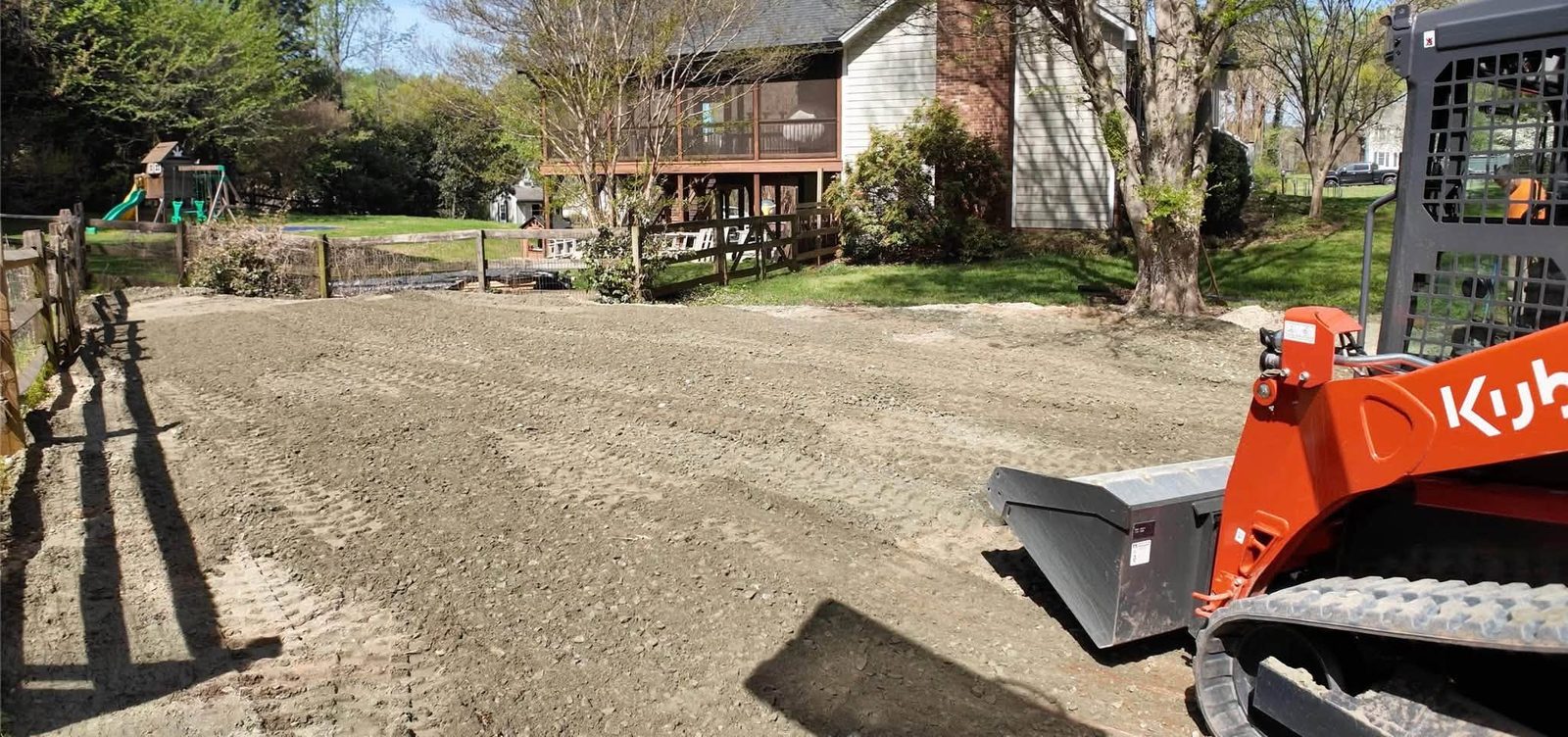
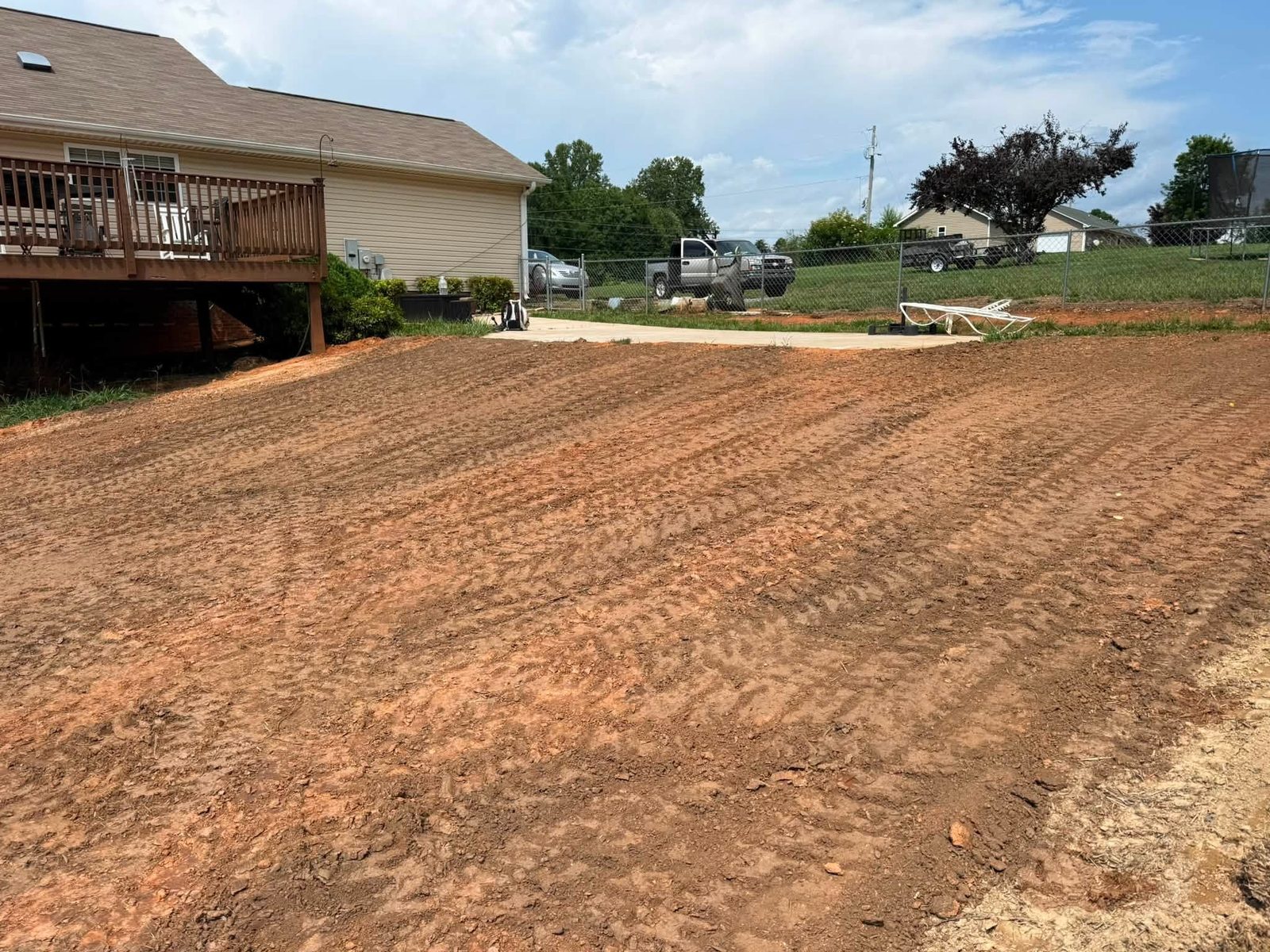
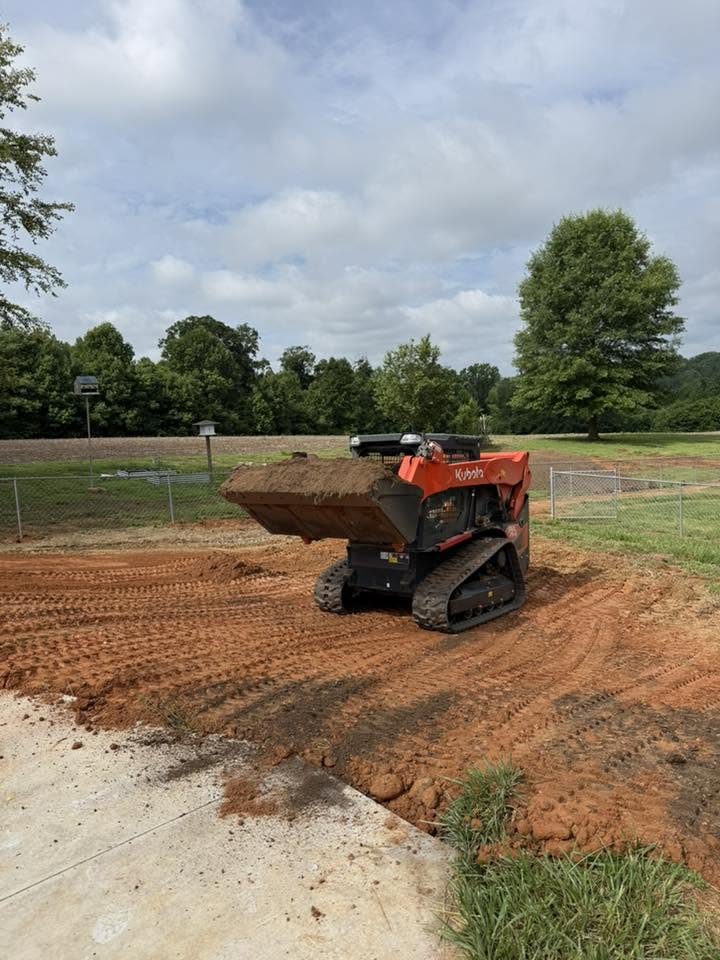
Private roads in this part of Davie County fail in recognizable patterns, and identifying the right one before any work begins keeps the scope honest. Washboard that reforms quickly on a road that otherwise crowns correctly and carries water off the surface points to surface aggregate loss — fine material has migrated into the subgrade, leaving the road vulnerable to traffic deformation. A regrade and fresh topping generally restores it. Potholes that return within a season or two after surface grading, or ruts that reach the base material, indicate the subgrade itself is moving. At that point, adding more stone to the surface is maintenance, not repair.
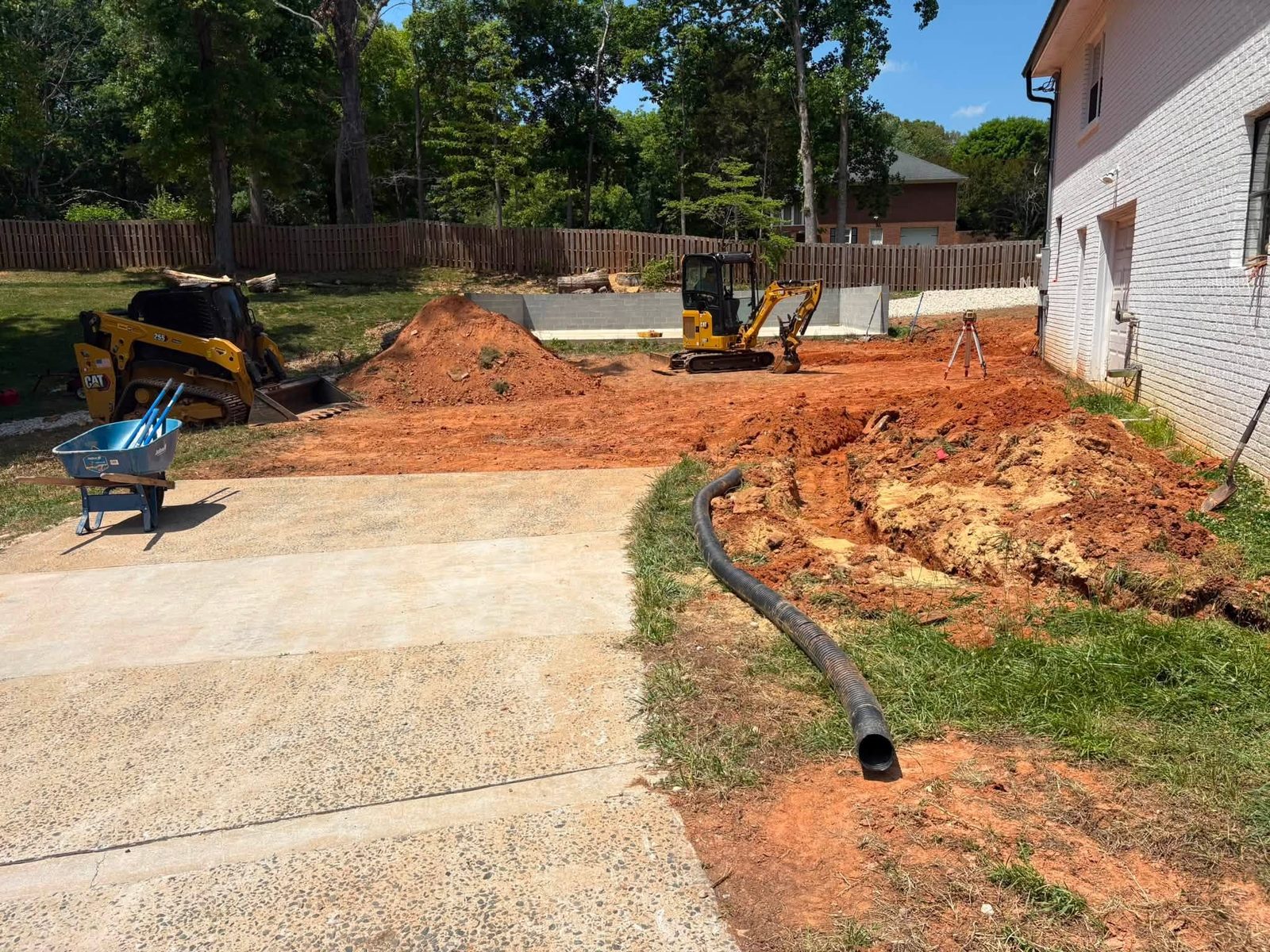
The most expensive pattern — and the most common emergency call after a multi-inch rain event in the Yadkin River watershed — is active washout: a section where flowing water found a path across or under the road and removed base material in a channel or blowout. That scope requires excavation back to stable ground before any surface work can begin. The potholes and washboard guide walks through how to identify which pattern you are looking at before a crew arrives, which shortens scoping conversations and avoids invoice surprises.
Private road repair cost ranges for Advance
Repair cost in Advance depends on how much of the road is involved, the condition of the subgrade, and how much drainage work accompanies the surface repair. The table below reflects honest ranges for this market. The full private road repair cost guide covers line-item breakdowns and how to read a contractor quote before signing.
| Scope | Typical Range | When it applies |
|---|---|---|
| Re-crown and regrade, existing gravel surface | $1–$3 per sq ft | Surface aggregate loss; subbase still intact |
| Regrade with fresh aggregate topping added | $1.50–$3 per sq ft | Moderate surface wear; drainage is adequate |
| Ditch reshaping and water bar installation | Add-on to any regrade scope | Water pooling in wheel tracks; crown too flat |
| Washed-out section — base and surface rebuild | $4,000–$10,000 per 100 ft | Active washout; base material removed by water |
| Full reconstruction with engineered subbase | Top of rebuild range; varies by spec | Failed subgrade; heavy-axle use; repeated failure history |
Roads serving horse operations or farm equipment in Davie County typically land toward the top of the rebuild range because of the sustained axle loads the finished surface must carry. Culvert installation, geotextile fabric, and engineered fill are separate line items that do not appear in a basic per-square-foot surface figure.
Erosion permits and stormwater rules that apply here
Any grading project in North Carolina that disturbs one acre or more of land requires an erosion and sediment control plan filed with the state. The NC DEQ Erosion and Sediment Control program sets those thresholds and the documentation requirements. A single washed-out road section typically stays well under the threshold; a full-length reconstruction of a longer private lane — particularly one with natural drainage channels nearby — can cross it. Confirm the total disturbance footprint before mobilizing on anything above a few hundred linear feet.
Stormwater regulations add a second consideration. Projects that create new impervious surface or redirect drainage toward a stream, wetland, or other water of the state may fall under EPA NPDES stormwater permit requirements. Davie County sits in the Yadkin River watershed, and work near any drainage feature that connects to that river system warrants a check before grading begins. Contractors who know the county will identify these triggers during scoping; those who skip this step are a project risk.
Davie County has experienced 19 federally declared disaster events over 1977-2026, the large majority storm and flood related. Roads that were patched after prior washout events rather than rebuilt to correct the underlying drainage problem are likely to fail again at the same locations when the next event arrives.
What a complete bid should cover
A complete scope for private road repair in Advance goes beyond a material quote. Before accepting a bid, verify that it addresses the condition of existing ditches and whether ditch work is included or priced separately; how the subgrade was assessed (was base material probed, or is this a visual-only quote?); aggregate specification, since NCDOT ABC stone for base and appropriate surface material for the expected load are not interchangeable; and load requirements, because a road serving a horse trailer or fuel truck needs a different specification than one carrying only passenger vehicles.
The most useful question to ask any crew is straightforward: what is currently happening to the water that crosses this road, and how does the repair change that path? A vague answer means the scope is incomplete. Managing water is not a secondary consideration for Davie County clay roads — it is the repair.