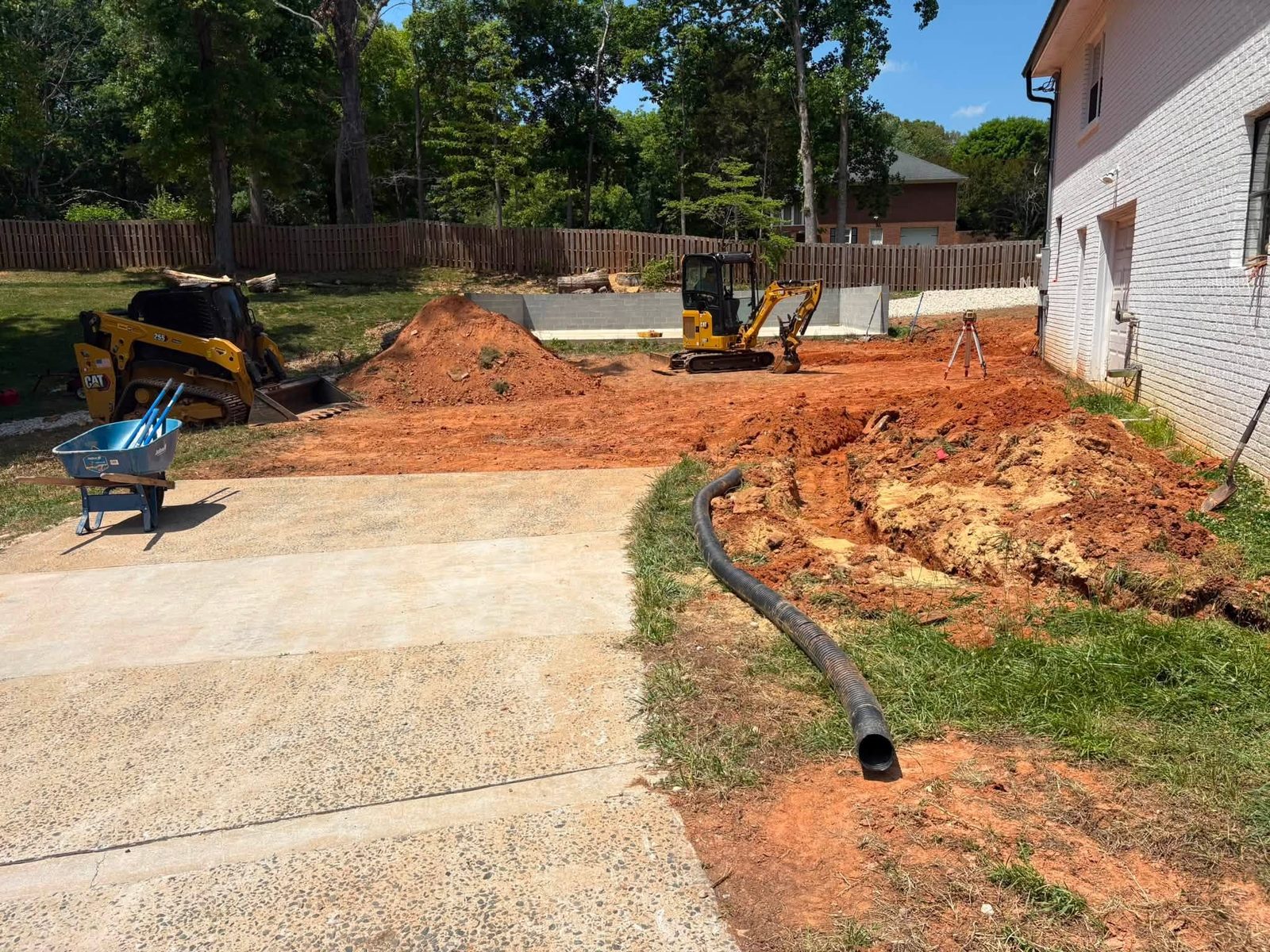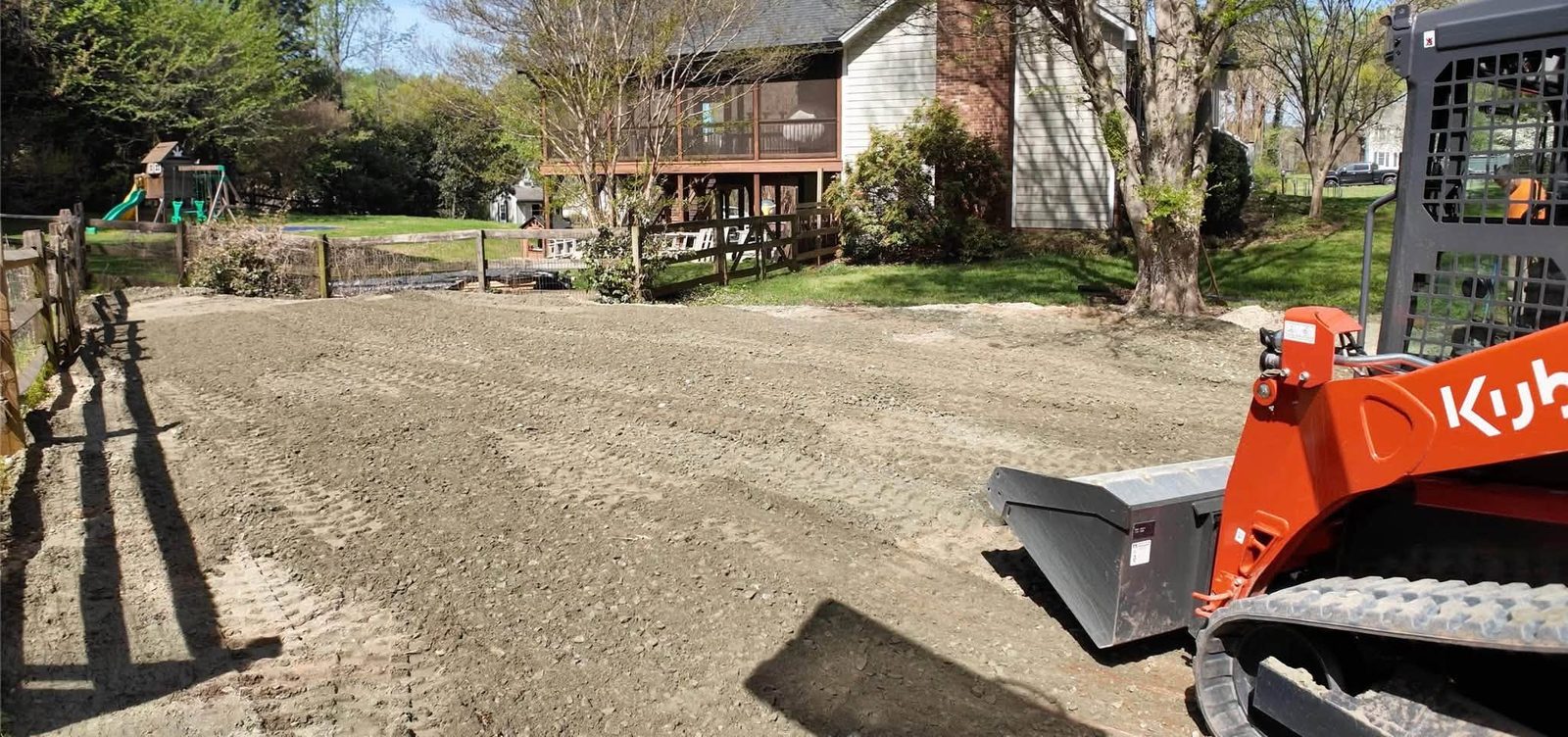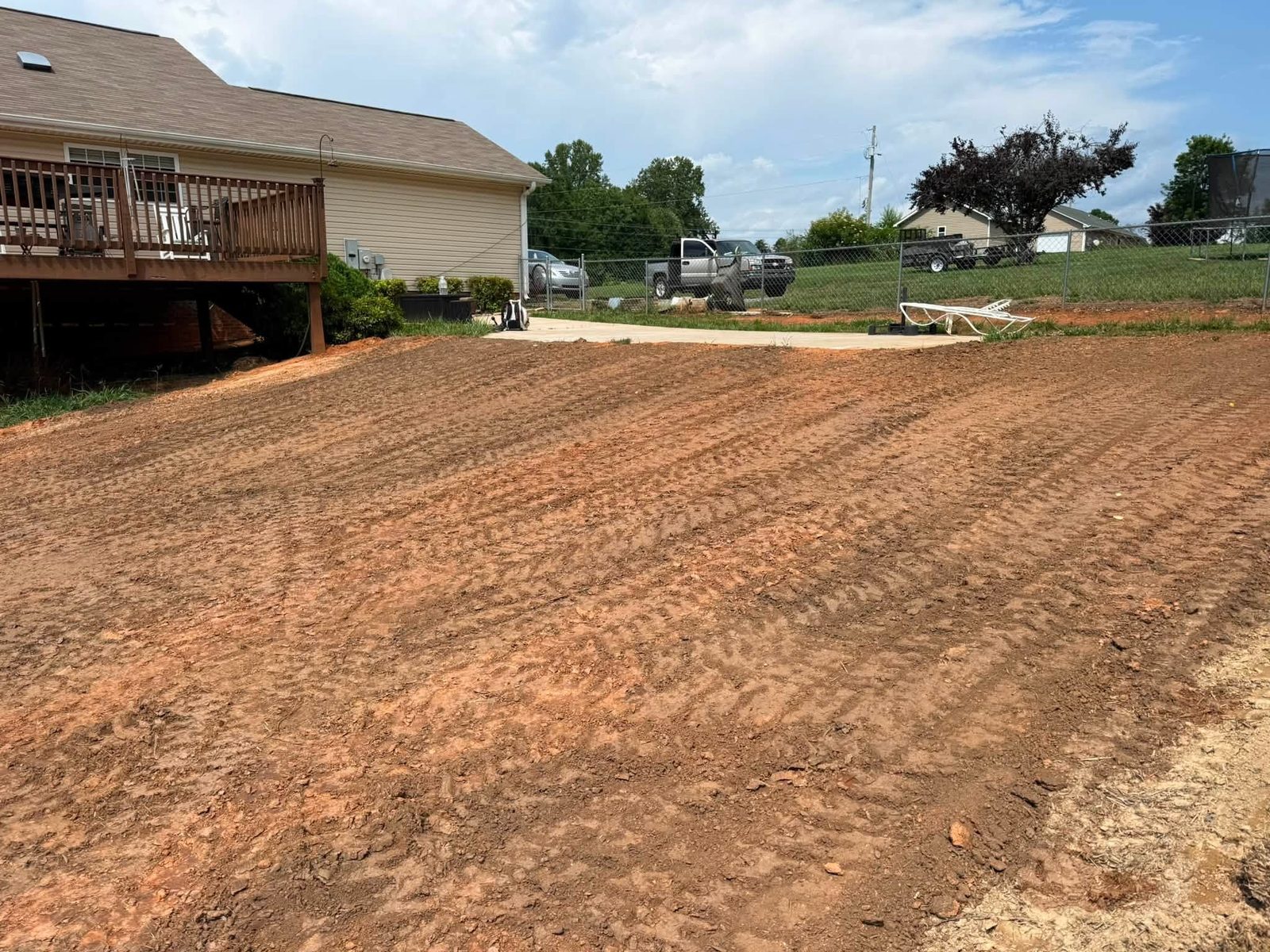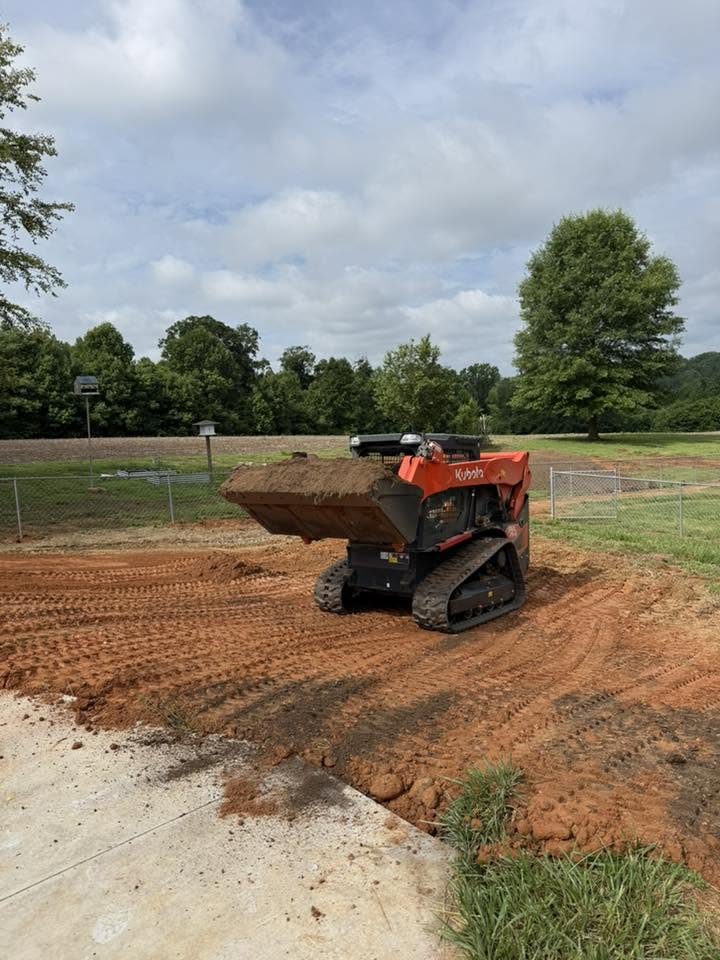
Red clay is what makes drainage ditch work different here
Forsyth County sits in the NC Piedmont, and the red clay underlying most of its subdivisions and residential lots is soil that erodes quickly once it carries concentrated flow. A drainage ditch cut into bare clay doesn't hold its shape — banks slump, the bottom silts, and sediment moves downstream toward Salem Creek, Peters Creek, and their tributaries. Drainage ditch riprap installation here is less often an upgrade than a baseline: unlined clay channels in higher-flow areas simply don't survive a wet season intact.
That erosion path ends somewhere regulated. The NC Department of Environmental Quality monitors discharge to state waterbodies, and sediment from a failing channel isn't only a maintenance problem — it can become a compliance one. Lining the channel properly protects the property and keeps the outlet clean. Where the issue is more diffuse than a single channel, erosion control measures belong in the same conversation.
What a riprap-lined ditch actually includes
Stone in a channel is the visible part. Each component underneath it carries a specific load:
- Channel shaping. Bottom width, side slopes, and longitudinal grade govern how fast water moves. A slope that accelerates flow past scour velocity for Class I rock requires Class II armor or regrading before stone goes down. Getting the geometry right first prevents the most common failure: riprap that settles unevenly because the channel wasn't cut to a consistent cross-section.
- Geotextile filter fabric. Underliner separates angular stone from the native clay beneath it. Without fabric, fines migrate up through the voids over time and the channel bottom slowly drops — invisibly, until a section collapses.
- Stone placement. Angular riprap interlocks; rounded river gravel rolls. NC DEQ design guidance links rock class to flow velocity, and a bid that doesn't name the gradation hasn't sized the job.
- Outlet protection. Where the lined channel discharges — into a storm drain, a culvert, or an open receiving buffer — concentrated energy needs to dissipate before it starts new erosion at the toe.
Installation from first grade to final stone
A residential drainage ditch and riprap job in Forsyth County typically runs two to four days on site:
- Survey and layout. Channel alignment is staked, existing vegetation stripped, and tie-ins to culverts or storm drains confirmed. Piedmont terrain is rolling enough that water sometimes enters a channel mid-run from an adjacent property — missing that inflow point is how channel capacity gets undersized.
- Excavation and shaping. Equipment cuts the channel to the designed cross-section. Clay banks require consistent side slopes; too steep and rain undercuts them before stone is placed.
- Fabric and stone. Geotextile is pinned into the channel; angular riprap is spread and hand-dressed at grade transitions and outlets. Rock class follows channel hydraulics, not what is convenient to haul.
- Outlet tie-in. Discharge is connected to existing infrastructure — culvert, storm drain, or vegetated buffer — and an outlet apron is placed to dissipate energy.
- Disturbed area stabilization. Bare soil outside the channel footprint receives temporary seeding or erosion blanket before the job closes out. Erosion control on the disturbed margins is part of the scope, not a later add-on.
What it costs and what moves the number
Riprap ditch lining in this region runs $4–$10 per square foot installed, with stone material at $20–$85 per ton. A short, accessible channel with Class I rock and a clean outlet lands near the bottom of that range; a rear-yard channel requiring hand labor, heavy Class II armor, and a new outlet apron lands near the top.
| Scope | Typical Installed Range |
|---|---|
| Light residential ditch, Class I rock, open equipment access | $4–$6 / sq ft |
| Standard channel, Class II armor stone | $6–$8 / sq ft |
| Steep-cut or rear-yard channel, limited equipment access | $7–$10 / sq ft |
| Outlet protection apron at culvert or storm drain | $5–$9 / sq ft |
| Rock material only, no installation | $20–$85 / ton |
Forsyth County has recorded 22 federal disaster declarations over 1977-2026. Sustained wet seasons following storm events saturate Piedmont clay, accelerate bank erosion, and push deferred channel work from optional to urgent — and urgency moves jobs toward the top of any cost range. Budget at the midpoint and note which site conditions would push the job higher before signing a contract.
Connecting a newly lined ditch to an undersized culvert creates a new bottleneck immediately. Scoping culvert work at the same time avoids a second mobilization after the first storm event reveals the problem.
Permits and the agencies that apply to ditch work here
Land disturbance for drainage work in North Carolina moves through several regulatory layers depending on project scale:
- NC DEQ Erosion and Sediment Control. Projects disturbing one acre or more require an approved E&S plan under NC DEQ's erosion and sediment control program. Smaller residential disturbances fall under local jurisdiction — Forsyth County administers grading permits for projects below the state threshold, and requirements are set locally.
- Federal NPDES stormwater. Projects over one acre that discharge to a waterbody also trigger permitting under the EPA's NPDES stormwater program. Forsyth County holds a municipal separate storm sewer system (MS4) permit, meaning sediment from a construction site carries consequences at the county's regulated outfalls.
- Grading code provisions. The International Building Code's grading and drainage standards — adopted statewide and enforced locally — prohibit altering lot drainage in a way that redirects sheet flow onto adjacent properties. An ICC-compliant grading plan documents that the design meets this standard before work begins.
A French drain that ties into a riprap-lined channel counts toward total disturbed area under the same thresholds — the acreage is cumulative across all features on a single project, not calculated per feature.
Three questions that keep a riprap bid honest
"What rock class are you specifying, and how did you size it?" Class I and Class II riprap are not interchangeable — undersizing to save material cost works until the first high-velocity event moves the stone downstream. NC DEQ's design manual links gradation to channel flow velocity, and a bid that doesn't name the class hasn't done the hydraulics.
"What is your erosion control plan for disturbed areas outside the channel?" A crew that stones a ditch and leaves bare clay banks adjacent to it has solved one erosion problem and started another. Temporary seeding, erosion blanket, and silt fence belong in the written scope — ask whether they are included or whether they show up as a change order after excavation is complete. The erosion control scope should be itemized on the proposal.
"How are you handling the outlet?" Lined channels move water efficiently to their discharge point; that energy has to land somewhere. Outlet protection is where ditches that are well-designed everywhere else create new scour holes in the receiving area or a neighbor's yard. A bid that doesn't address the outlet is a bid that hasn't followed the water all the way through.