Clay soil and aging road stock — the Tobaccoville variable
Tobaccoville sits at the northern edge of Forsyth County, where Piedmont terrain rolls through farm fields, wooded acreage, and rural subdivisions platted several decades ago. Those older subdivisions came with private gravel roads built to serve a handful of households and the occasional farm vehicle. They were adequate for the era. They were not built to absorb the daily rotation of delivery vans, landscaping rigs, and utility trucks that now reach every residential address in this part of the county.
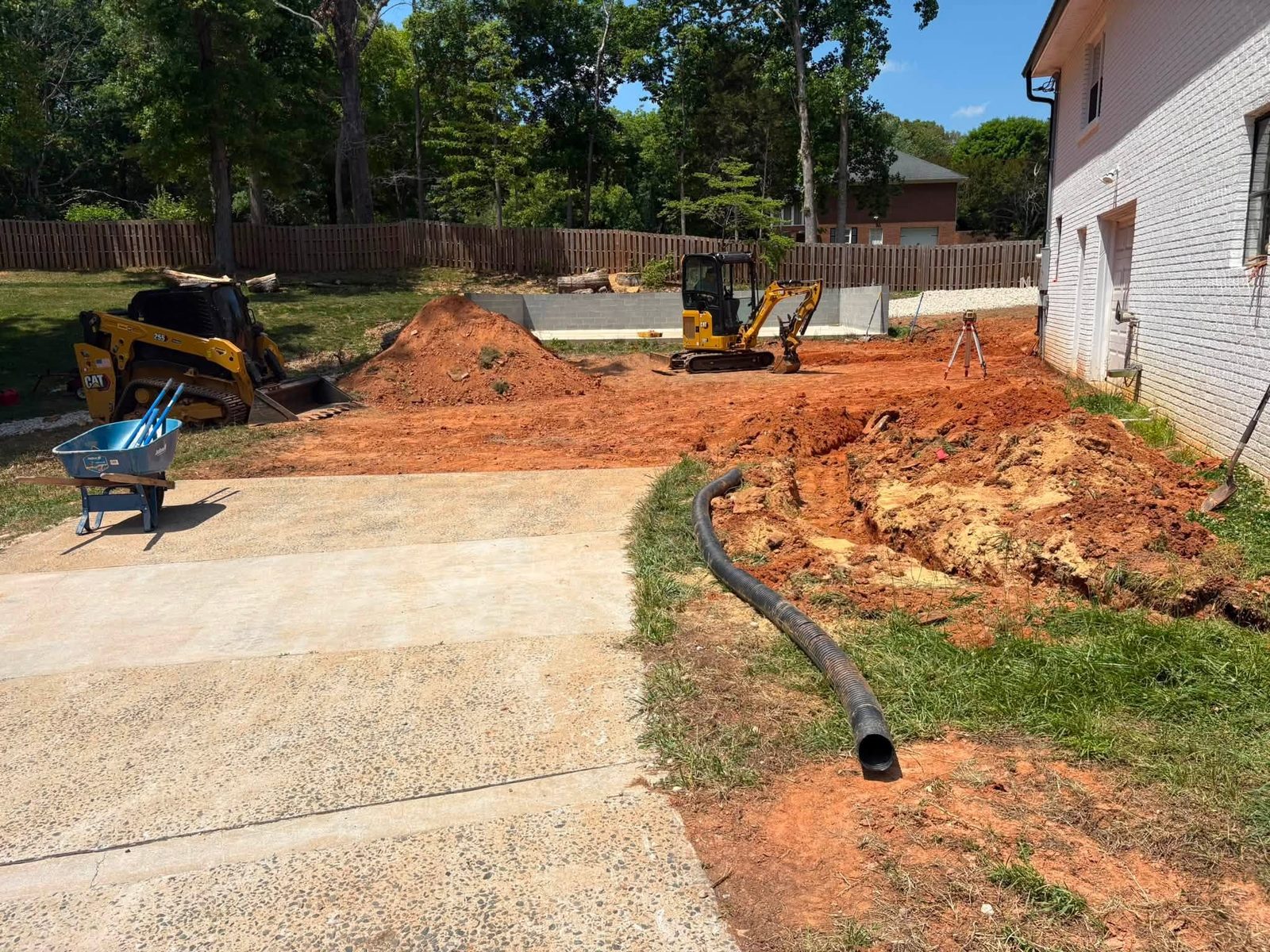
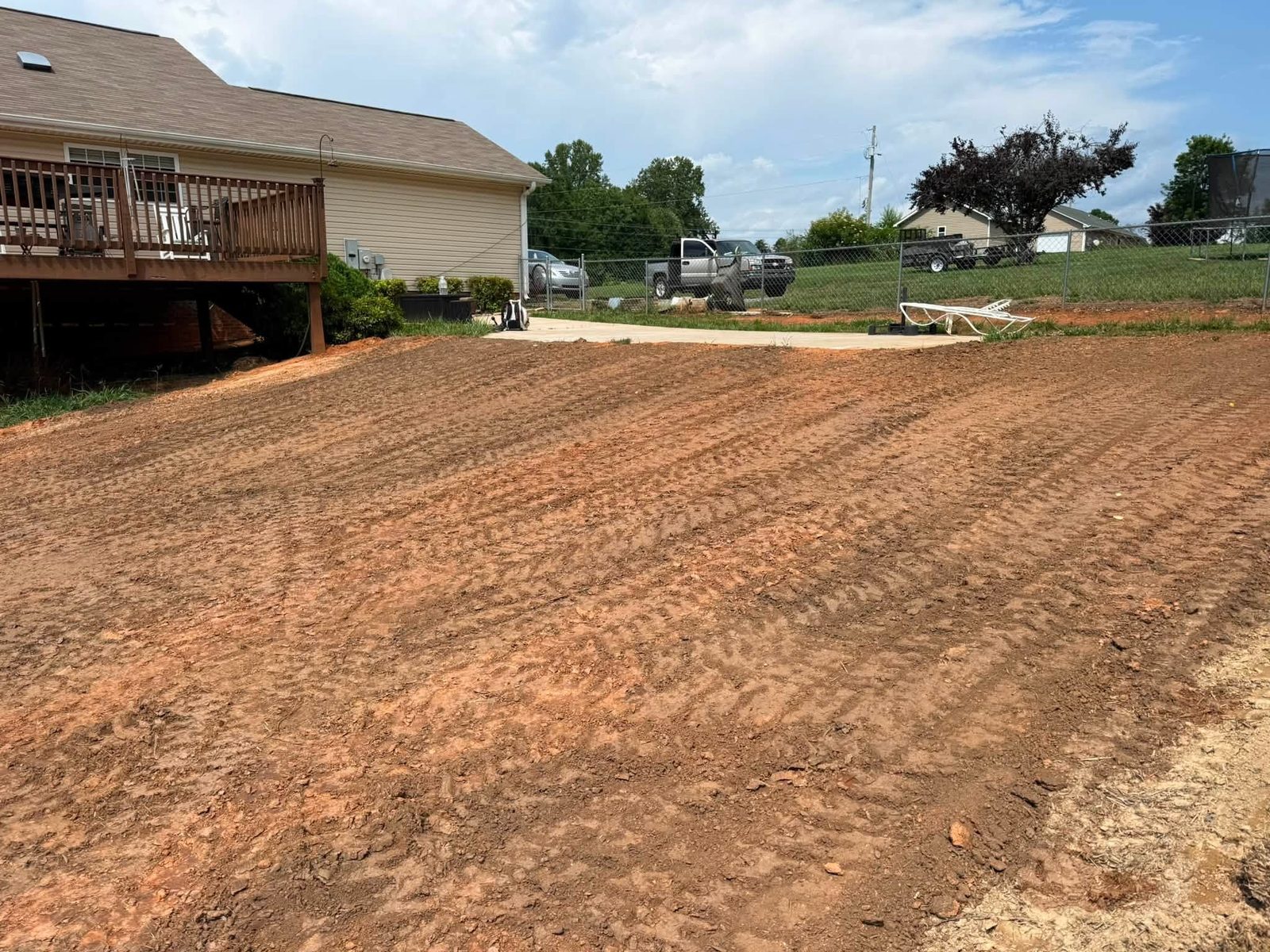
Below those roads — across most of northern Forsyth County — sits the red clay that defines the Piedmont soil profile. Piedmont clay absorbs water slowly, swells in wet months, and contracts in summer heat. A gravel road built over native clay without adequate base depth or drainage will pump aggregate upward during heavy rains and shed it off the edges during dry spells. Re-crown the surface and you get a flat road again. You do not fix the process happening six to eight inches below it. Whether a private road repair job here is a grading pass or a full section reconstruction depends almost entirely on what is underneath the visible surface.
There is a simple field test that reveals whether clay instability is the root issue: walk the problem stretch after a rain, before it dries. If the road surface is soft enough to show tire impressions that were not there before the rain, the base is retaining water. A road with adequate aggregate depth and drainage does not behave that way. That distinction changes the correct scope of the repair before a contractor ever arrives. The private road repair overview covers how to read a contractor's proposed scope against what your road's failure pattern actually requires.
What road failure looks like in Forsyth County
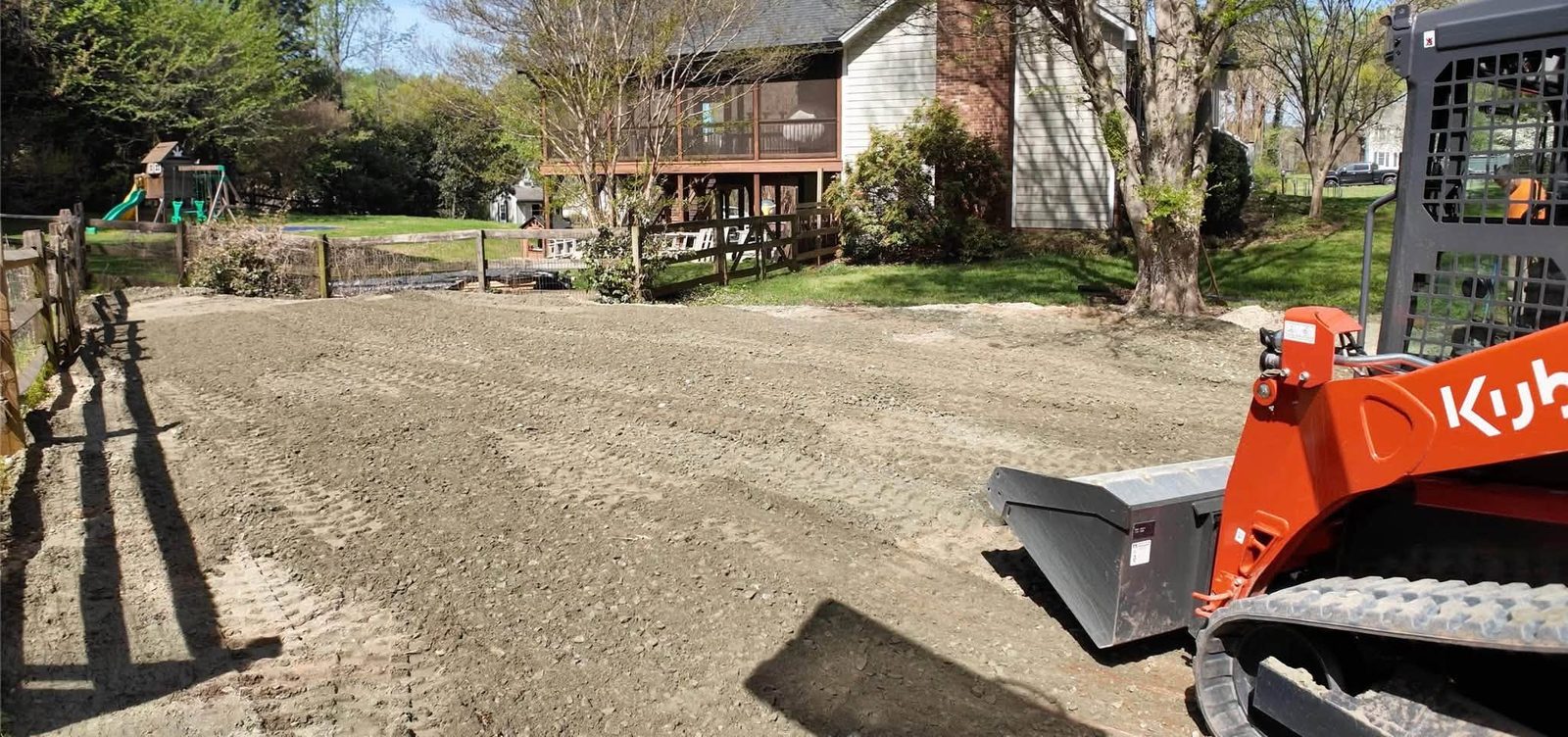
Road damage has a vocabulary worth learning before anyone gives you a quote. Washboard pattern — the rhythmic corrugation that develops in dry periods — is a maintenance problem. It means aggregate is loose enough that traffic has organized it into peaks and valleys. A grader pass and a fresh layer of compacted crush-and-run addresses washboard. Crown loss is similar: when the center-to-edge slope flattens out, water sheets across the travel lane instead of draining off it, and potholes follow. Both problems respond to regular grading before they compound into structural repairs.
The problems that signal something below the surface look different. A section that scours out with every significant rain event means a culvert is undersized, misaligned, or absent — the water has nowhere to go but across and through the road base. Potholes that return to the same location within weeks of patching mean soft subgrade, not surface wear; the problem is below the gravel, not in it. Deep rutting that reforms each winter means the base is saturated and has lost bearing capacity, and regrading it will produce the same result as the last time it was regraded. See the pothole and washboard guide for a complete breakdown of which failure pattern corresponds to which fix, and why spending on aggregate without addressing what sits under it is unlikely to hold in northern Forsyth County's clay terrain.
Cost ranges for private road repair near Tobaccoville
The full line-item breakdown lives on the private road cost breakdown page. For this area, the working ranges by scope:
| Scope | Typical range | Primary cost driver |
|---|---|---|
| Re-crown and regrade (12-ft road, per 100 ft) | $1,200–$3,600 | Crown condition, road width, mobilization distance |
| Pothole patching (per location) | $150–$500 | Depth; whether subgrade stabilization is needed |
| Culvert replacement or installation | $800–$2,500 | Pipe diameter, inlet/outlet grading, outlet protection |
| Geotextile fabric and base stabilization (add-on, per sq ft) | $0.50–$1.50 | Clay depth, expected vehicle weight |
| Full washed-out section rebuild (per 100 ft) | $4,000–$10,000 | Subgrade depth, aggregate required, drainage structure |
Jobs over northern Forsyth County's clay subgrade often push toward the upper end of the rebuild range. When the original base was never deep enough for the soil conditions, a repair that holds requires excavating past unstable material, installing geotextile fabric, and building up aggregate depth from scratch. A quote that prices only surface gravel and a grader pass is not a complete scope for that situation — it is a budget for this year's version of a recurring problem.
Drainage compliance and erosion control in Forsyth County
Grading work that disturbs significant soil area triggers North Carolina's land-disturbing activity rules. The NC DEQ Erosion and Sediment Control program requires a permit for projects that disturb one acre or more. Most private road repair projects stay under that threshold, but a full reconstruction of a long access road serving multiple parcels on rolling northern Forsyth County terrain can close in on it quickly. Know where your project lands before a blade hits the ground.
Stormwater discharge from road construction near waterways brings additional requirements. The EPA's NPDES stormwater program covers construction activities that discharge to surface waters — including drainage ditch outlets that terminate near creeks or wetlands. Northern Forsyth County has numerous small drainages through the wooded corridors north of Winston-Salem, and where a private road ditch empties near one of them, the outlet design is a compliance item, not an afterthought. Build it correctly the first time or plan to revisit it under regulatory pressure.
Forsyth County's federal disaster record spans 22 declared events across 1977-2026, the majority storm and flood related. Every one of those events tested the culverts and drainage structures that private roads here depend on. A culvert sized for earlier storm patterns may now be a choke point. Building to adequate drainage capacity in the current repair is less expensive than rebuilding scoured road sections after the next significant event.
Hiring for private road work in northern Forsyth County
Private road repair sits between residential grading and light civil work — it requires real grading equipment, drainage experience specific to piedmont terrain, and a working understanding of what clay subgrade demands from a base design. The crews that do this work well are not always the ones most visible from a quick local search, and the distinction shows up in whether a repair holds for two seasons or ten.
State licensing thresholds apply once grading and drainage projects reach certain scales. For work involving significant cut-and-fill or engineered drainage structures, verify current licensing requirements through the NC Department of Insurance's building and engineering resources before signing any contract. The threshold is not always obvious from the scope description alone.
On roads shared by multiple property owners, written scope agreement before the first contractor call prevents the disputes that come after. Neighbors who agree in principle to fix the road do not always agree on how far to rebuild, who approves changes, or how costs divide when one lot owner is absent. Ask each bidder to specify how deep any base work goes, whether drainage structures are included in the quoted price, and what the expected maintenance cycle looks like after the repair is done. A scope that addresses the cause of failure rather than the surface symptom will answer all three questions directly.