The clay factor that changes every Forsyth County road job
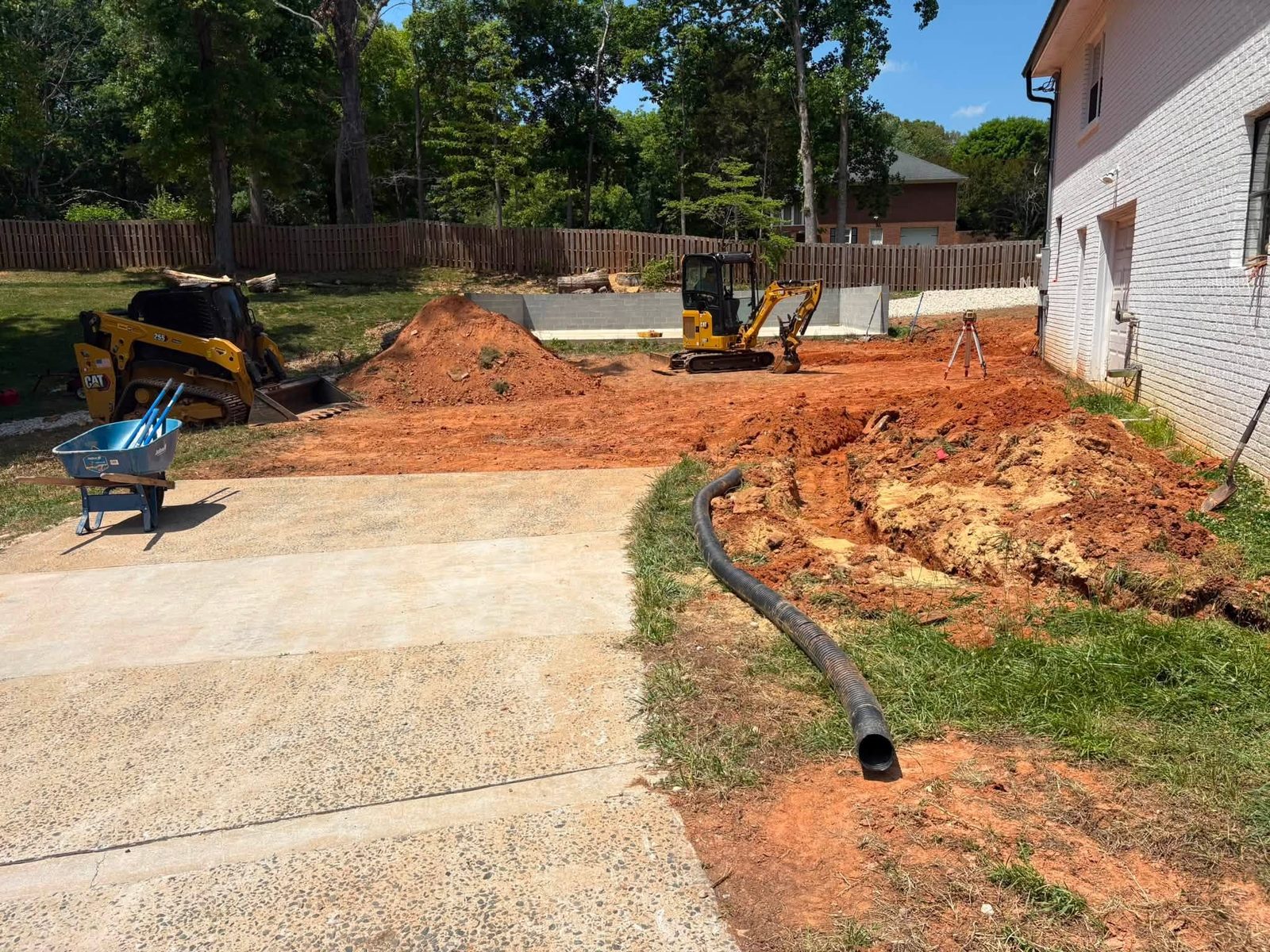
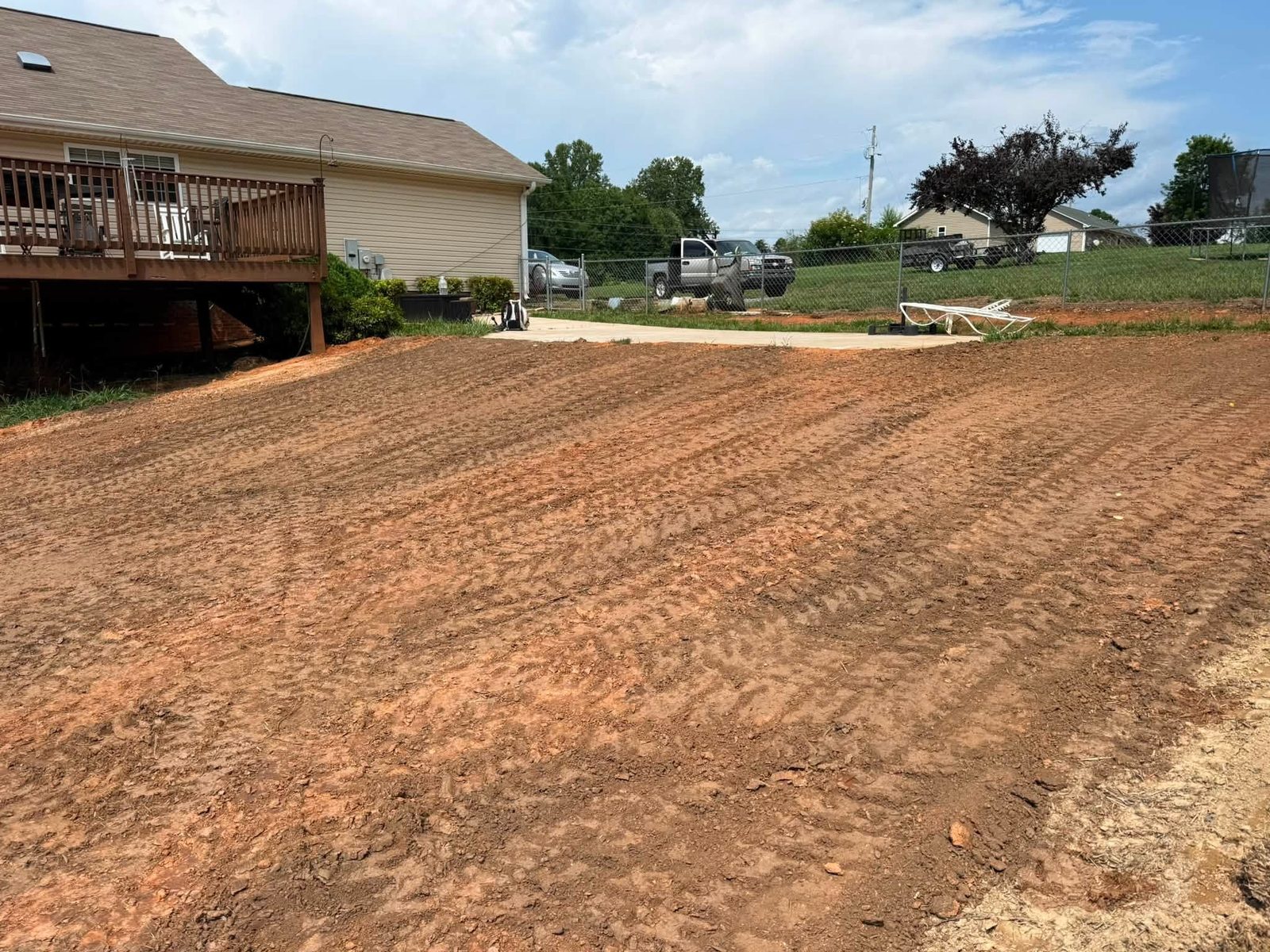
Kernersville sits in the Piedmont Triad, positioned between Winston-Salem and Greensboro, where the subsoil is heavy red-orange clay — a material that absorbs water, swells, and then contracts hard in summer heat. Mountain private roads fail mostly from slope erosion and high-velocity runoff. Piedmont private roads have a different failure mode: the clay subbase pumps aggregate upward through repeated wet-dry cycles, leaving a surface that still looks like gravel but carries almost no bearing strength beneath it. A re-crown that lands on a contaminated clay base will mirror the original problem within two or three seasons, regardless of how much fresh stone went on top.
That distinction matters whether you are dealing with a rural subdivision access lane, a farm drive in the northern part of the county, or a shared entrance road off one of the newer Kernersville developments that pushed into rolling acreage. If the surface is rough but the roadbed is still firm, a regrade and fresh aggregate layer can last a decade with proper drainage maintenance. If the clay has migrated into the road section, the repair starts with base reclamation — not top dressing — and a quote that skips that question is not a complete quote. The statewide overview at private road repair explains what a scope that addresses base condition actually looks like.
Surface problems versus base problems — reading the signs
The quickest field diagnostic on a Forsyth County gravel road: walk the worst stretch and study the rutting. Ruts that run parallel to the tire track and partially recover between rain events are usually a surface compaction issue — the kind that regrading and re-crowning correct. Ruts that stay depressed after the surrounding road has dried, that hold standing water, or that produce a soft give underfoot are pointing at base failure. Surface-only work on a failed base is money spent twice.
Potholes and washboard look like the same problem but are not. Washboard — the regular corrugation that develops at speed — forms when fine material segregates from the aggregate and builds up under repeated traffic. Potholes are typically drainage failures: water infiltrates under the surface, erodes the base from below, and the void collapses under load. The right repair for each is different, and a crew that patches potholes without addressing the drainage cause will return to your road after the next significant rain. The potholes and washboard guide breaks down each failure mechanism and what actually corrects it at the source.
What private road work costs around Kernersville
Line-item detail on how road width, access difficulty, and existing base condition shift the numbers is in the private road repair cost guide. For Kernersville and Forsyth County jobs, these are the working ranges:
| Scope | Typical Range | Key Variable |
|---|---|---|
| Re-crown and regrade (surface only) | $1–$3 per sq ft | Road width, existing crown condition |
| Fresh aggregate top-dress | $800–$2,000 per 100 ft | Depth required, haul distance to site |
| Washed-out section — full rebuild | $4,000–$10,000 per 100 ft | Base failure depth, drainage work included |
| Culvert installation or replacement | $500–$2,500 per culvert | Pipe diameter, headwall type, site access |
| Erosion repair with seeding and matting | $1–$2.50 per sq ft | Slope severity, stabilization material used |
Jobs that require base reclamation — pulling up the existing road section, treating the clay subgrade, and rebuilding with compacted aggregate over a geotextile separation fabric — sit at the upper end of those ranges, because machine time and material volume are substantially greater. On Piedmont clay soils, any washed-out rebuild longer than a few hundred feet should include that fabric layer in the written scope. It is the difference between a repair that holds ten years and one that softens again in three.
When storm history writes the repair bill
Forsyth County's federal disaster record is part of every serious private road conversation here. The county carries 22 federal disaster declarations across 1977-2026, the majority tied to heavy rainfall and flash flooding events. Each significant storm resets the baseline for roads that drain poorly — a culvert that handled normal rain for two decades can fail in a single high-water event and pull a hundred feet of roadbed with it when it goes. Roads that survived are often one undersized culvert away from the same outcome.
The practical rule for Kernersville properties: if a private road drains toward a stream, a wetland, or any low point shared with neighboring land, erosion and sediment control becomes a regulatory question in addition to a repair question. North Carolina's Erosion and Sediment Control program sets land-disturbance thresholds that apply to road work above a certain disturbed area. Many farm lane rebuilds and longer private drive reconstructions qualify. Work that exceeds those thresholds without a sedimentation plan can draw a stop-work order — a delay that costs more time than the permit ever would have.
Getting drainage right — culverts properly sized for the watershed above them, road crowned to shed water laterally, ditch lines clear at the low points — is not an optional upgrade. On Piedmont clay terrain it is what separates a repair from a replacement cycle.
Easements, permits, and what to ask before hiring
Private roads carry an ownership question that public street repairs never face: who is responsible, and under what recorded agreement. A road serving a single parcel is straightforward. A shared access easement serving multiple landowners, or a road inside a small rural Forsyth County subdivision, may have a maintenance agreement on record — and whoever is initiating the repair should confirm that document is current before any crew mobilizes. The Forsyth County Register of Deeds holds recorded plats and easement agreements that clarify these relationships for any parcel in the county.
On permitting: a regrading project that stays within an existing disturbed footprint generally does not require a grading permit. Work that adds drainage infrastructure, extends into undisturbed ground, or disturbs land at or above the regulated threshold requires a sedimentation and erosion control plan before ground breaks. The NC Department of Insurance provides the state framework for grading and drainage requirements at ncdoi.gov, and county planning staff can confirm what applies to a specific project.
When evaluating contractors, ask specifically whether the crew has worked on clay-based Piedmont subgrades — general gravel road experience from a different region does not translate directly. Ask for a written scope that addresses drainage as a line item, not as an assumption, and ask whether base work is included or quoted separately. Those two questions will sort most proposals quickly.