Why Stokes County roads fail from the bottom up
King is the largest town in Stokes County, a county that sits in the Piedmont foothills just north of the Winston-Salem metro. The land rolls here — not the sharp pitches of the mountain counties to the west, but enough grade that water moves quickly through road corridors and finds somewhere to go when drainage is right, and somewhere to pool and hide when it is not. The dominant soil under most private roads in this area belongs to the red Piedmont clay family, the same series that built the county's farming economy and makes its back roads a persistent maintenance question.
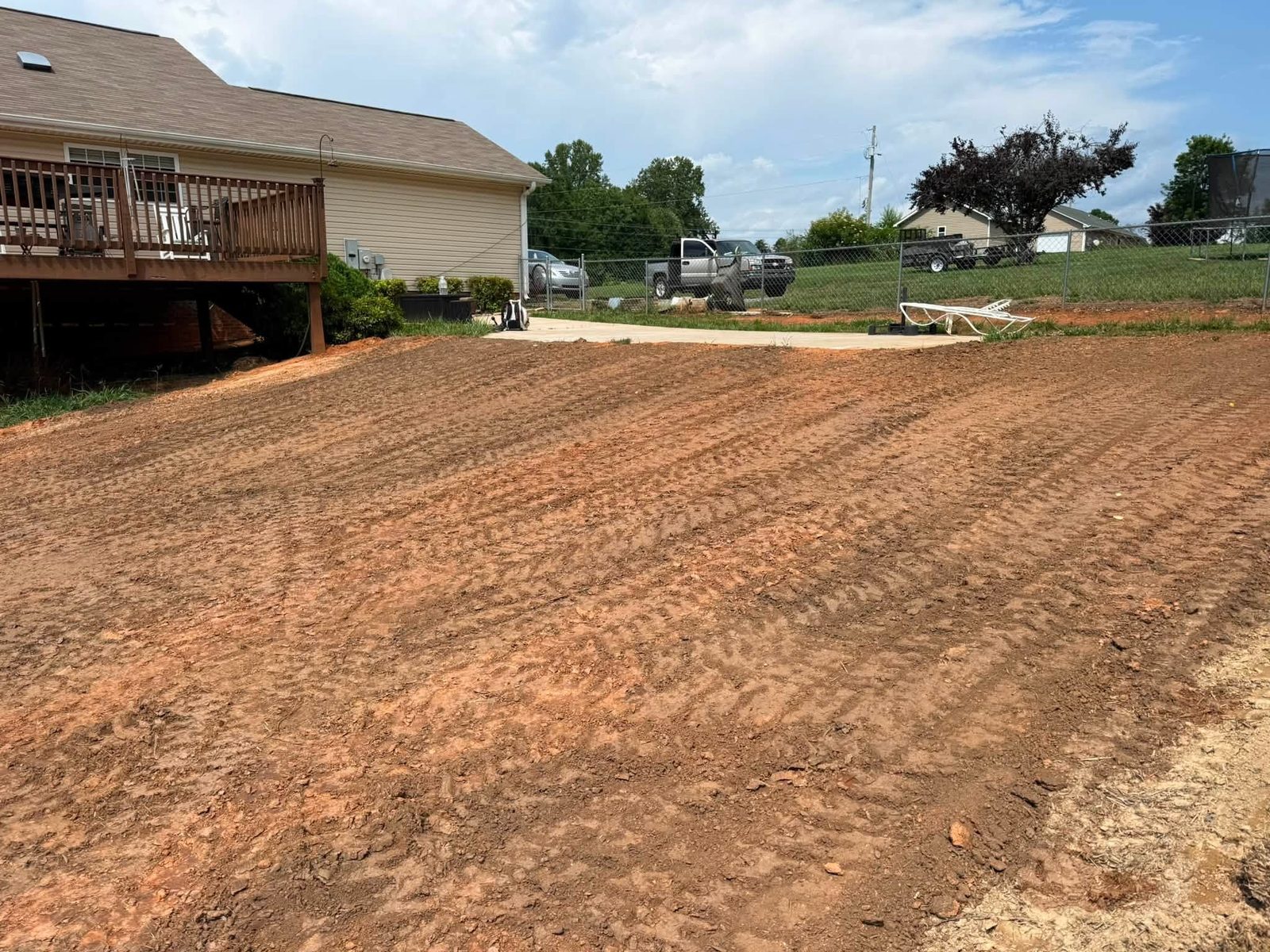
Red clay holds water. It swells when wet, contracts when dry, and shifts enough through a full year of seasons to work gravel loose from below. When a private road built on clay base begins to fail, the failure sequence is usually invisible at first: the base saturates during a heavy fall or spring rain, loses bearing capacity, and displaces laterally under wheel load. Gravel migrates toward the edges. The surface that felt firm in August goes soft in November. By the time you see deep ruts, a washout near a culvert, or a section that never firms back up after rain, the failure has been building beneath the surface for a season or two.
Grading that surface and adding fresh aggregate without addressing what is happening to the base is the most common reason private road repairs around King get repeated every two or three years instead of holding for a decade.
What the work costs around King
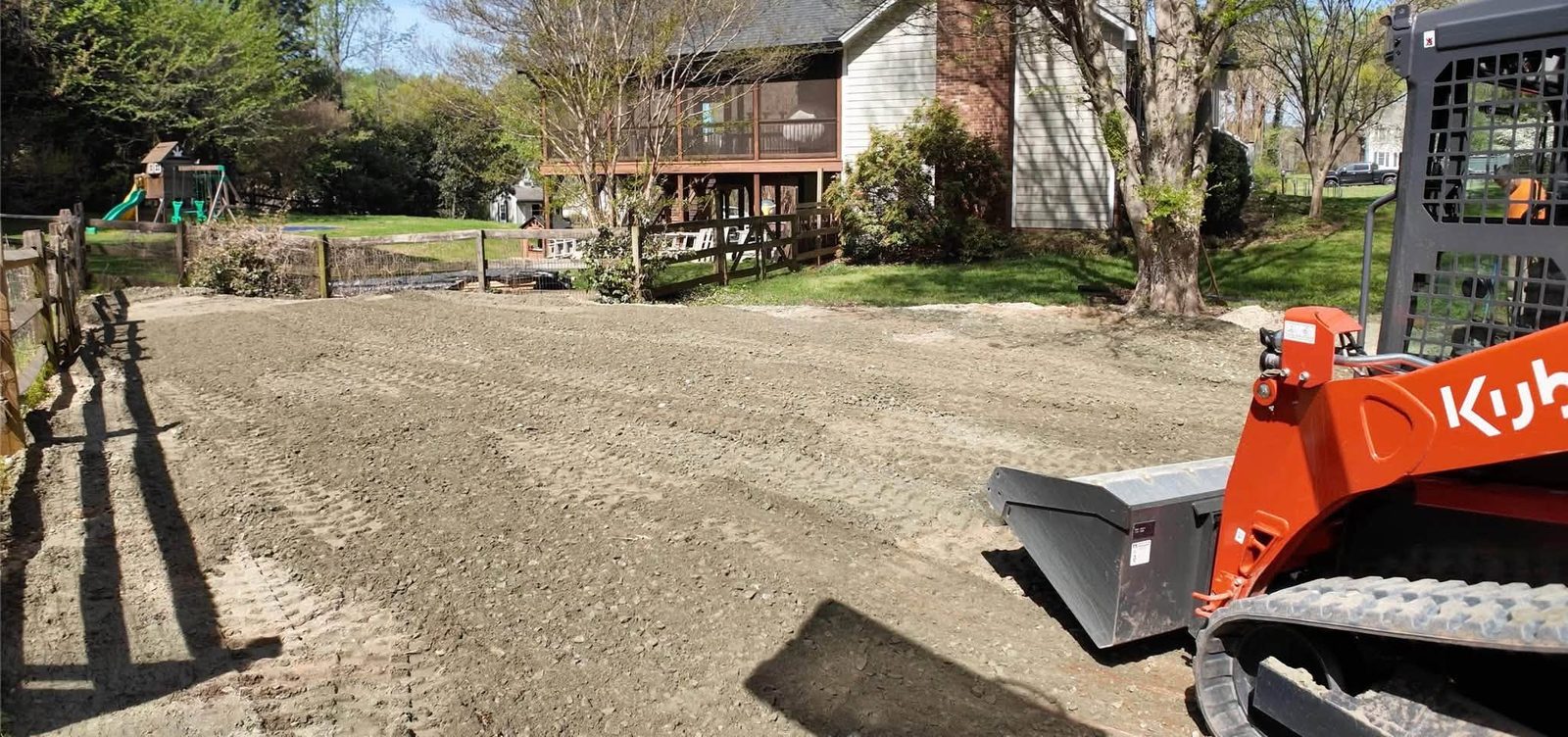
Cost tracks how far the failure has progressed. A road with a healthy base and intact drainage that needs a crown restored and surface material redistributed is a regrading job. A road where the base has gone soft, or where a culvert failure has washed out a section and allowed subgrade movement, is a structural rebuild — different equipment, different materials, a different number. The table below covers the common scopes for roads in this area. A full breakdown by line item is at the private road repair cost page.
| Scope | Typical Range | What moves the number |
|---|---|---|
| Spot pothole fill and surface redress | $1.00–$1.75/sq ft | Access, aggregate volume, depth of loss |
| Full regrade and crown restoration | $1.50–$3.00/sq ft | Road length, drainage condition, material haul |
| Washed-out section rebuild (per 100 ft) | $4,000–$10,000 | Base depth, culvert work, fill, access |
| Base reclamation with geotextile and repack | $2.00–$3.00/sq ft | Subgrade moisture, clay content, excavation depth |
| Culvert replacement or new installation | Quoted per structure | Pipe diameter, headwall, excavation depth |
Any quote that skips a site visit and does not address subgrade condition before pricing a washed-out section is pricing the symptom. The base line item almost always appears once a failed section is opened up.
Erosion rules that apply before work starts
Grading work near streams and drainageways in North Carolina is not entirely a private matter. The NC DEQ Erosion and Sediment Control program requires an approved plan for any land-disturbing activity covering an acre or more — a threshold that a full road rebuild across several hundred feet can approach quickly. Private road work well under that threshold still has to meet baseline sediment control standards near water features, and Stokes County drains largely into the Dan River basin, where those standards get enforced.
For larger projects — a road rebuild serving multiple parcels, or an extension opening additional acreage — the NC Department of Environmental Quality review process applies before work begins, not after. Stop-work orders during wet months compound the damage they are meant to pause. Contractors who handle compliance correctly file before they mobilize and know which threshold applies to your specific job length and location.
Stormwater management after the repair matters just as much. A re-crowned road that sheds water cleanly into vegetated swales is a different compliance picture than one that concentrates runoff toward a neighboring property or a mapped drainage feature.
Getting the repair sequence right
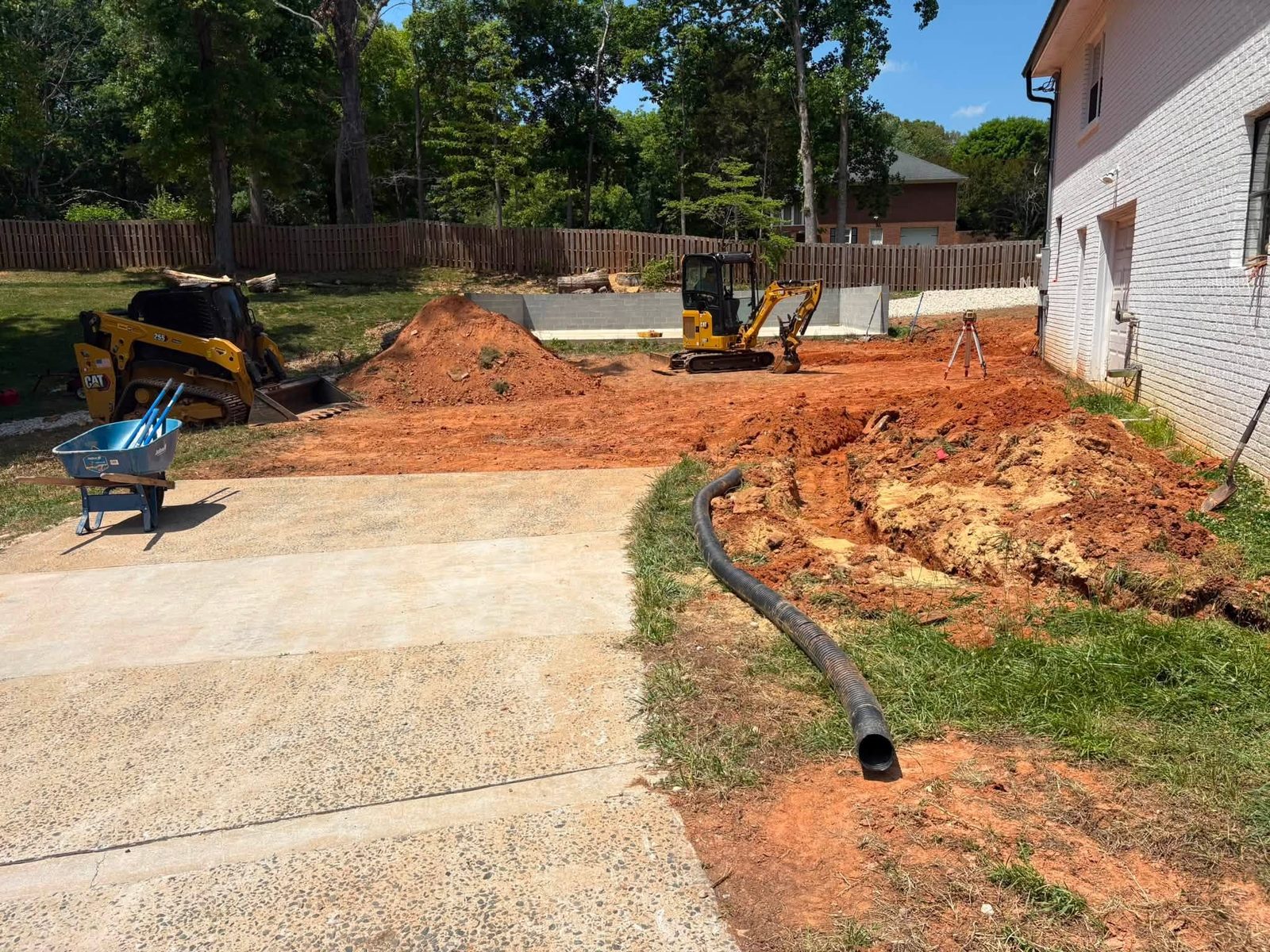
The order of operations on a failing private road matters as much as the materials selected. Grading before drainage is resolved sends new aggregate into the same low spots within one wet season. The right sequence: clear and right-size culverts first, establish positive grade away from the road surface on both shoulders, confirm that uphill water has somewhere to go other than the road corridor, then grade and repack. For roads with recurring washboard or potholes that return year after year regardless of how much material gets added, the pattern itself is diagnostic. See what causes washboard and how to stop it for a closer look at that failure mode.
Roads serving multiple landowners add one more variable before work starts: maintenance responsibility. Who pays for culvert work, who triggers a shared assessment, and what schedule applies to a road carrying equipment from several properties are questions worth settling before the invoice arrives. The private road repair overview covers how shared-maintenance agreements typically work and what crews need to know before arriving on a multi-owner road.
Storm history and what it means for your road base
Stokes County's federal disaster record counts 22 declarations across 1977-2026, most of them storm and flood events tied to the Dan River watershed and its tributaries. Each one pushed water at culverts and road bases that were sized for normal seasonal flow. A private road that sat near a drainage channel during any significant event in that record likely absorbed water into its base that it was not built to handle — which explains why some roads in this county have never fully recovered from a specific wet year the owner can still name from memory.
The FEMA Flood Map Service Center shows whether any portion of your road corridor falls in a mapped floodplain. That designation changes what a repair needs to include: roads inside a floodplain require culvert sizing and base specifications designed for periodic inundation, not just normal seasonal drainage. Knowing this before pricing a rebuild avoids engineering for the wrong event and repeating the repair after the next one.