Piedmont clay sets the terms for every clearing job here
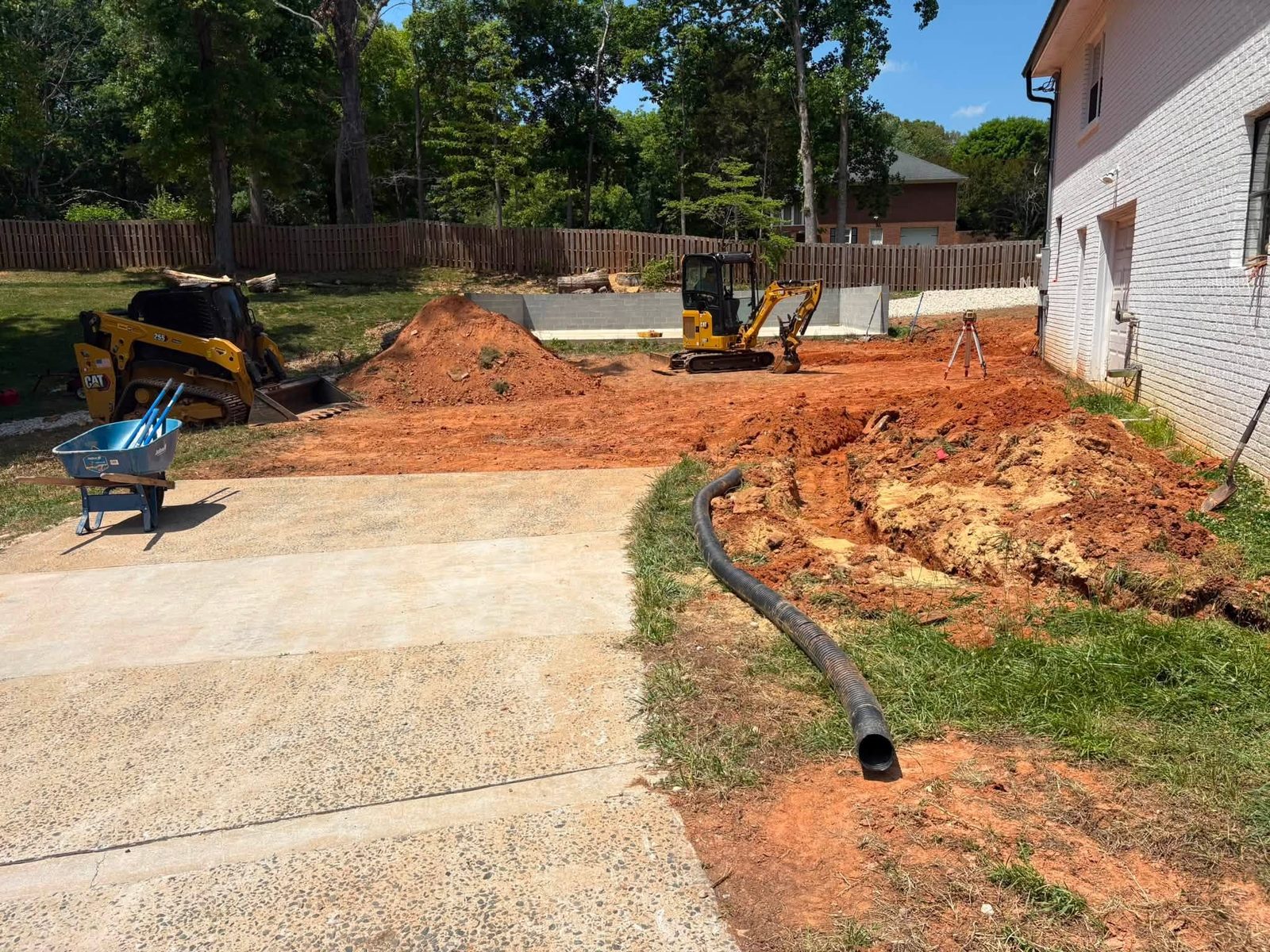
Lewisville sits at the western edge of Forsyth County's suburban expansion, where wooded residential parcels and former farmland tracts are converting to new development faster than most of the county. The soil beneath them is classic NC Piedmont: red clay over weathered granite, dense when wet and cement-hard when dry. That profile is what separates a Lewisville clearing estimate from one in the sandhills or the mountains — once the tree canopy and root mass come out, bare clay sheds rainfall fast and carries it downslope. Every job here starts with that reality.
The practical consequence is that erosion and sediment control is not an afterthought or a permit formality. It is a first-line cost that responsible contractors build into their scopes from the start. Properties that drain toward Forsyth County roadways, streams, or adjacent lots require silt fencing, sediment basins, or seeding as part of the work — not as optional add-ons after the bill is written. When comparing quotes, the bid that omits this line is not cheaper; it is incomplete.
The clearing jobs running in this part of Forsyth County
The jobs running in and around Lewisville fall into a few recognizable types. New home lots on what used to be wooded tracts need full clearing: canopy removal, stump pulling, and enough grading to establish a building pad. Older lots with overgrown back sections — common on larger parcels that sold in the 1980s and 1990s — need selective clearing that keeps established trees while opening usable yard. Estate parcels coming to market after years of deferred maintenance often carry a mix of invasive species and storm-damaged wood that require hand-sorting alongside machine work. Rural edge properties still see fence-line and access-road clearing as routine maintenance.
Each type prices differently. A full land clearing scope on a half-acre wooded lot is a different job than brushwork on an already-open parcel. Getting the scope right before the first machine arrives is the single biggest factor in whether the job finishes on budget.
What clearing work costs across different scopes
Prices follow scope more than square footage alone — slope, tree density, stump count, and debris travel distance all move the number. The full cost breakdown covers line items in detail; the table below gives working ranges for the jobs that come up most often in this area.
| Scope | Typical Range | Main Cost Driver |
|---|---|---|
| Light brush and saplings, ¼ acre or less | $750–$1,800 | Debris disposal distance |
| Wooded residential lot, stumps pulled | $1,500–$5,000 | Tree count and stump diameter |
| Wooded lot with stumps and rough grading | $2,500–$8,000 | Grade change and clay compaction |
| Heavily wooded acreage (half-acre or more) | $5,000–$10,000+ | Volume and erosion control requirements |
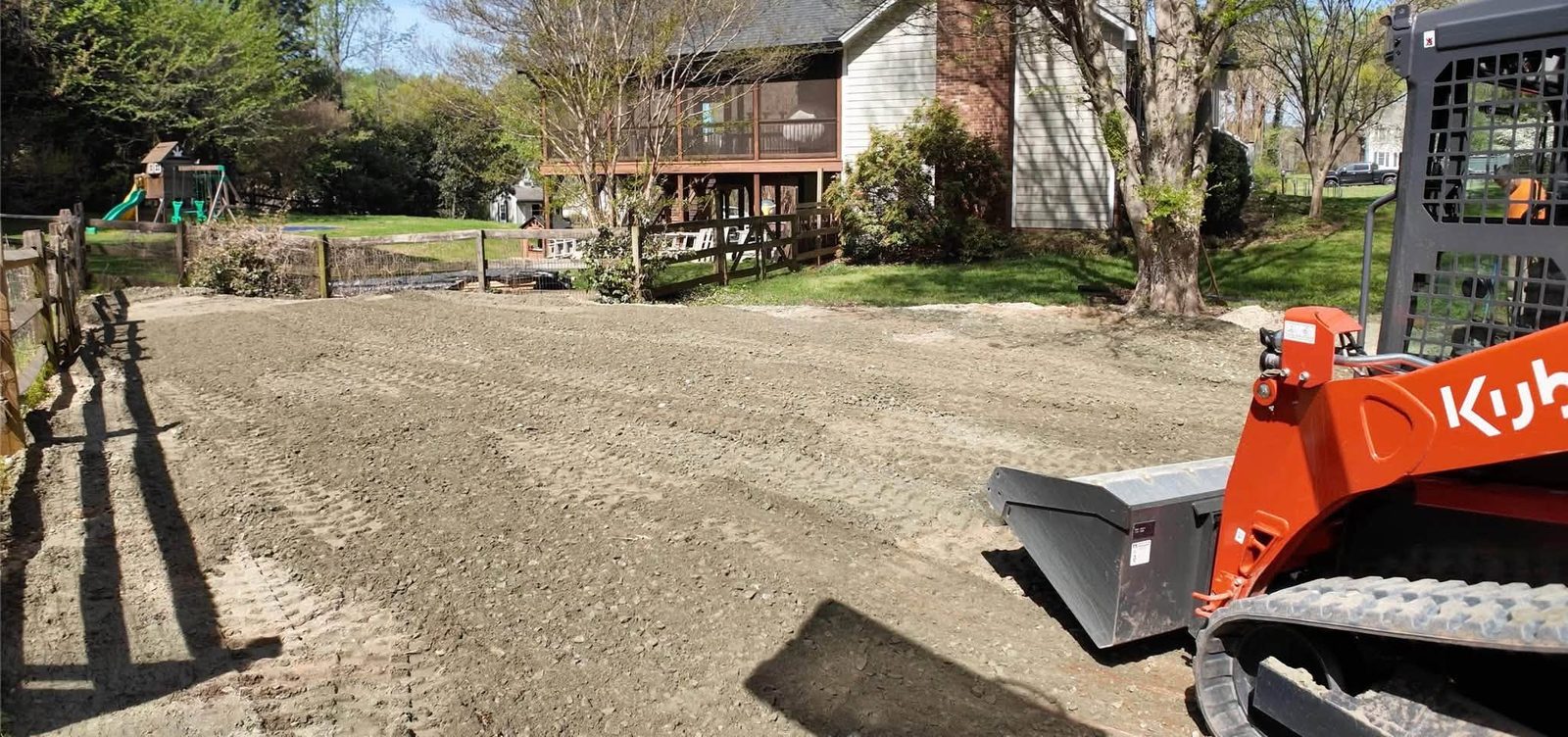
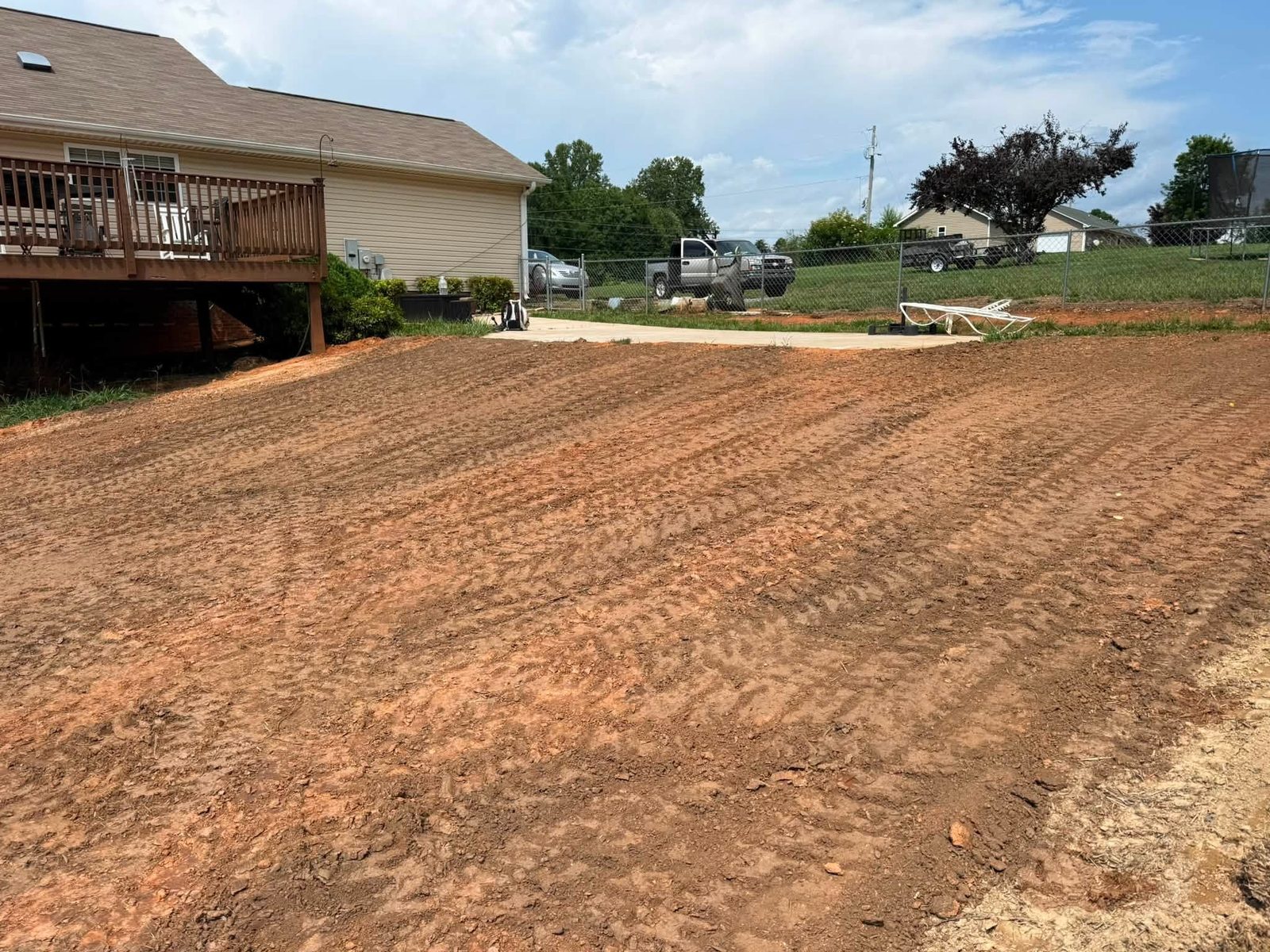
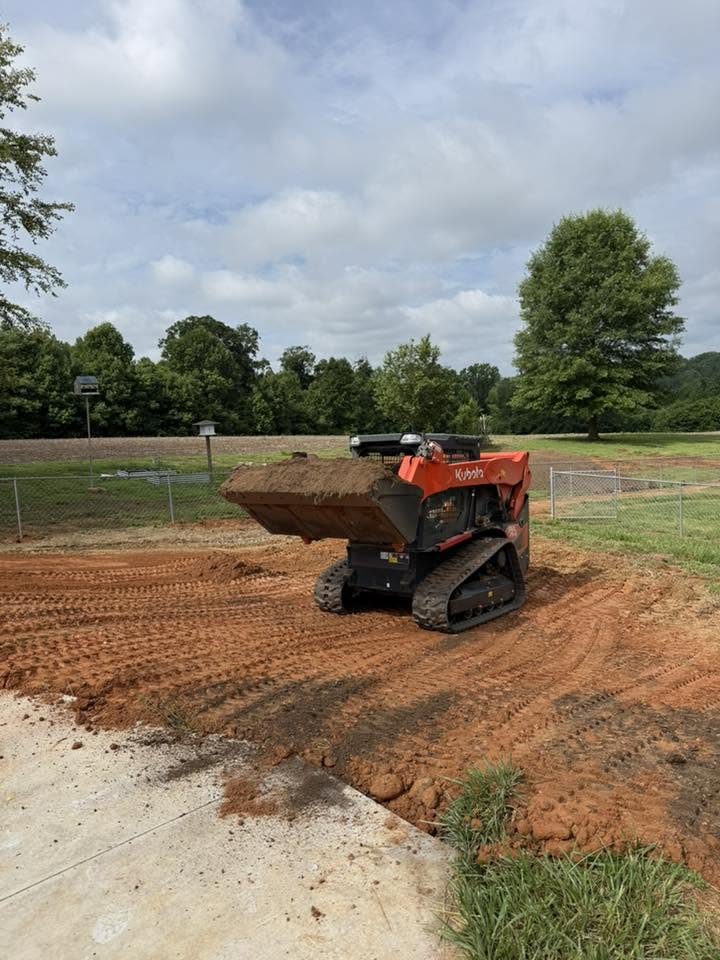
Forsyth County's clay adds to the grading line specifically — compacted red clay often requires extra equipment passes or amended fill to reach a workable finish grade. That cost shows up in bids from contractors who have worked this soil before. Treat any quote that reads the same as one from a coastal or sandhill market as a flag that local conditions were not priced in.
Erosion permits and the rules that apply here
North Carolina requires an approved erosion and sediment control plan for any land-disturbing activity covering one acre or more, administered through NC DEQ's Erosion and Sediment Control program. Jobs below that threshold still carry county-level obligations when disturbed area drains to a stream, storm drain, or public road. The U.S. Environmental Protection Agency's NPDES stormwater rules layer on top for larger projects and specific construction phases; stop-work orders for non-compliance cost more to resolve than the permit would have.
Forsyth County's history with storm events — 22 federal disaster declarations spanning 1977-2026 — reflects how seriously this region takes surface water management. Flood-prone areas near the Yadkin River and its tributaries carry FEMA Special Flood Hazard Area designations; clearing near those zones requires checking the flood map before any work starts. The authoritative source is the FEMA Flood Map Service Center.
Method matters: mulching versus conventional clearing
Lewisville's mix of established neighborhoods and developing edge parcels means the clearing method shapes the outcome as much as the scope does. Conventional clearing — felling, stacking, and hauling — suits complete site prep where the finished lot needs to be open, graded, and ready for construction. The equipment is heavier and leaves bare soil behind, which in Piedmont clay means erosion control measures go in the same day work stops.
Forestry mulching is the better call for selective clearing, wooded backyard reclamation, and parcels where keeping the ground layer intact matters. A single tracked mulcher fells and chips in one pass, leaving ground-contact mulch that slows runoff and stabilizes the clay surface without additional erosion measures in most cases. It typically costs more per acre on straight vegetation volume but often costs less total when debris hauling and post-clearing stabilization are priced in. Ask any contractor which method they are quoting and why — the answer tells you how well they understand this specific site.
What to confirm before work starts
Three checks specific to this market: first, ask whether the contractor has worked under Forsyth County's erosion control requirements before — local rules layer on top of state minimums and the documentation differs. Second, ask how they handle stumps; some crews pull and haul, others grind in place, and on clay soil the choice affects how the finished grade performs under a lawn or light structure. Third, ask for a written scope that breaks out tree removal, stump work, debris disposal, and rough grading as separate line items — a bundled lump sum makes it impossible to compare quotes or understand what a change order would mean.
Grading and site work contractor licensing in North Carolina follows provisions enforced through the NC Department of Insurance; ask for the relevant classification before signing. It tells you whether the crew is licensed for the full scope of work or only for the cutting portion of it.