Sitting in the Triad's growth lane
Kernersville occupies a specific position in Forsyth County: midway between Winston-Salem and Greensboro, squarely in the corridor that has absorbed a decade of Triad residential and light-industrial expansion. Most land clearing in Kernersville falls into one of three profiles: infill lots inside older town neighborhoods where cleared trees sit ten feet from a neighboring fence; new subdivision parcels being punched from rolling Piedmont hardwood stands along the US-421 and I-40 approaches; and older rural tracts at the county edge being divided and developed for the first time. The clearing scope ranges from a quarter-acre lot with a dozen pines to multi-acre tracts with mixed canopy, creek setbacks, and county storm drain tie-ins waiting at the property line.
That growth volume also means Kernersville lots clear under real scrutiny from Forsyth County inspectors who have seen every shortcut in an active construction cycle. For a grounded look at what the service covers before a first conversation, the land clearing overview describes scope, equipment, and what a proper site walkthrough includes.
What is on the ground: Piedmont clay and mixed hardwoods
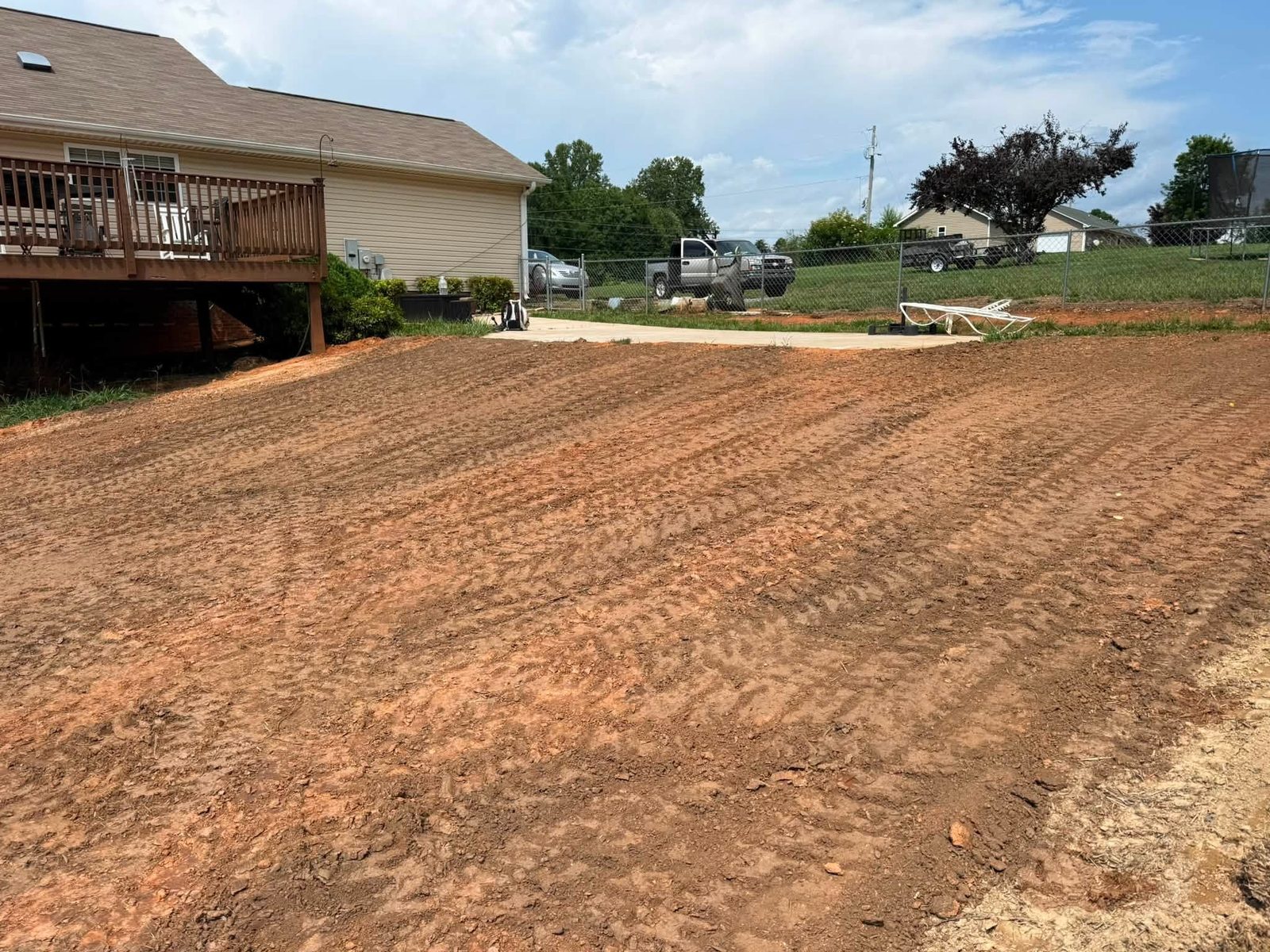
The dominant soils across Forsyth County residential lots are Cecil and Appling clay loams, classic NC Piedmont profiles that compact firm when dry and turn slick and mobile when wet. A freshly cleared lot in this county can lose topsoil in a single moderate rain event if stabilization is not in place the same day grading stops. That is precisely why North Carolina treats erosion control as a condition of clearing, not a cleanup step.
The tree composition shapes the budget. Kernersville's established lots run mostly white oak, sweetgum, tulip poplar, and stands of older loblolly pine, species that leave significant stump mass. Dense mixed hardwood canopy means more grinding hours per cleared acre than a coastal plain or sandhills job in the same state. For lots where leaving root mass in place makes structural sense, holding a slope stable or preserving soil integrity before a build, forestry mulching is worth comparing against a full-removal clear. Mulching is faster on slopes and produces no haul-off volume, but the mulched material needs time to break down before the ground is build-ready.
What clearing costs in Kernersville
The land clearing cost page carries the full Forsyth County breakdown with line-item ranges. The table below summarizes typical residential scope; local factors including stump density, lot slope, required erosion controls, and equipment access push most Kernersville jobs toward the middle or upper end of a range, not the floor.
| Scope | Typical Range |
|---|---|
| Light brush and small trees, no stumps | $750 – $2,000 |
| Standard residential lot, stumps included | $1,500 – $5,000 |
| Lot clearing with rough grading and erosion setup | $1,500 – $8,000 |
| Multi-acre wooded tract, full clearing | $4,500 – $10,000+ |
| Grading and pad prep after clearing | Scoped per site |
Grading and pad prep, when needed after initial clearing, are scoped and priced separately because cut-and-fill volume, drainage design, and subgrade conditions do not fold cleanly into an acreage rate. A quote that bundles grading with clearing at a single flat number, without a site walk, is missing variables that typically appear as change orders.
The erosion rules that govern cleared ground in Forsyth County
North Carolina's Erosion and Sediment Control program, administered through NC DEQ, requires an approved erosion control plan and a land-disturbing permit for any project disturbing one acre or more. Forsyth County may apply local thresholds below that state trigger, meaning smaller residential lots can still require county review before the first tree comes down. Any contractor who frames permitting as the owner's responsibility is describing a job they intend to set up incorrectly from the start.
For larger commercial or subdivision-scale clearing, federal stormwater requirements apply under the EPA's NPDES Construction General Permit, which mandates a Stormwater Pollution Prevention Plan and on-site inspection records throughout the active disturbance period. Forsyth County sits in the Yadkin River basin, and sediment that leaves a clearing job does not stay on the lot.
The regional storm record provides important context. Forsyth County carries 22 federally declared disaster events on record spanning 1977-2026, most tied to severe storm and flooding events. That is the documented history of how much water moves across this landscape in a serious weather event. A cleared Piedmont lot left without proper sediment fencing and stabilization in that rain environment is not just a permit problem; it becomes a drainage issue that lands on neighboring properties and the county storm system.
Sequencing the job before the equipment arrives
Three checks worth making before any crew starts: confirm whether they pull the Forsyth County permits directly or expect you to manage that; ask how they sequence erosion controls relative to grading (the correct answer is concurrent, not afterward); and ask specifically what happens to the stumps. In-ground grinding, surface grinding with haul-off, and leaving buried material each carry different consequences for a build that follows. Wood buried under fill rots, compresses, and creates void problems years later that are expensive and disruptive to correct.
Contractor licensing in North Carolina is governed at the state level. The NC Department of Insurance maintains the license verification tool; a properly licensed grading and clearing contractor carries the liability coverage and bonding that protect you if drainage from the job affects an adjacent property. On a growth-corridor lot in a dense Kernersville neighborhood, that protection is a practical matter, not a paperwork formality.
After clearing: grading, drainage, and what the build requires
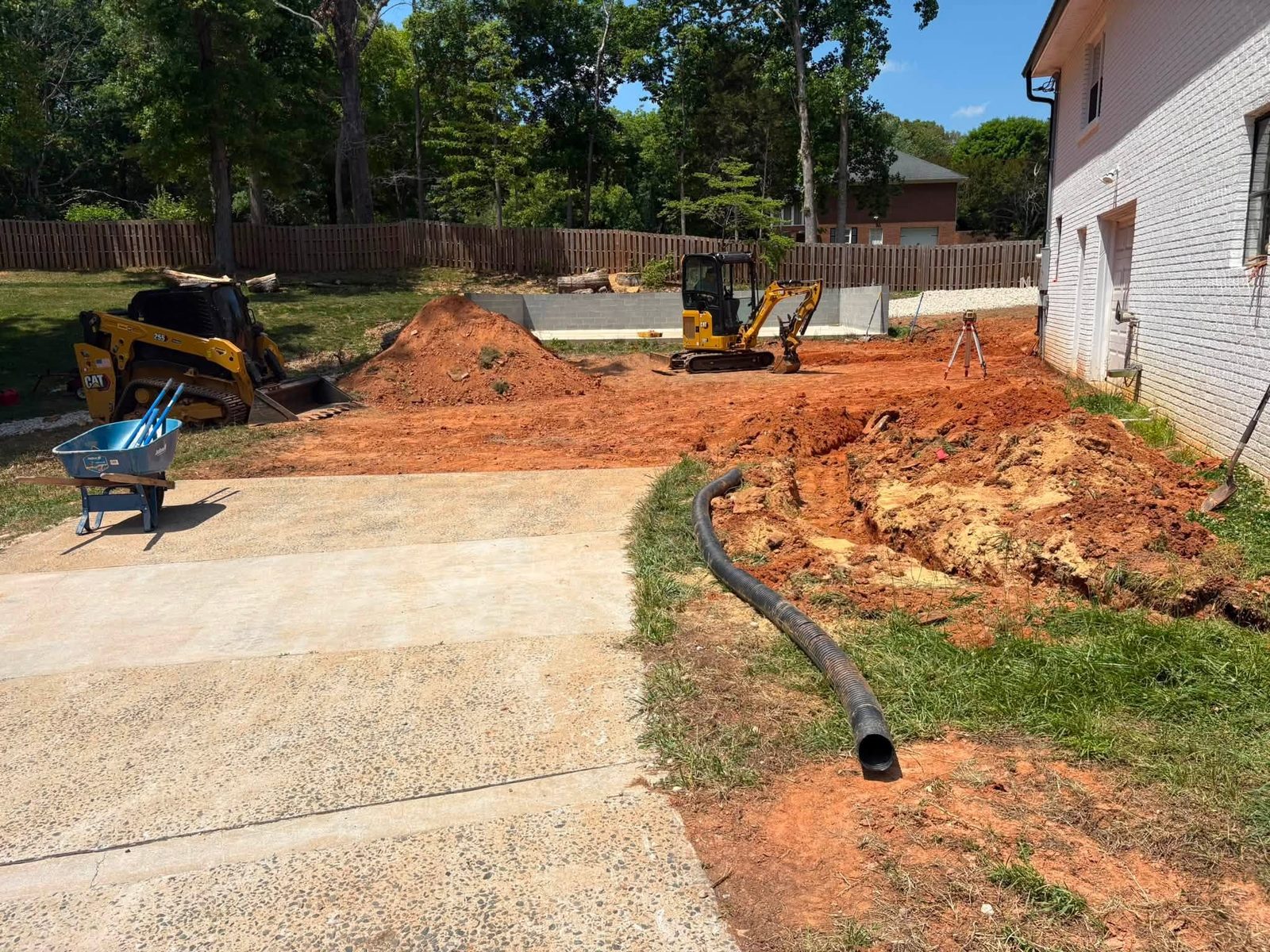
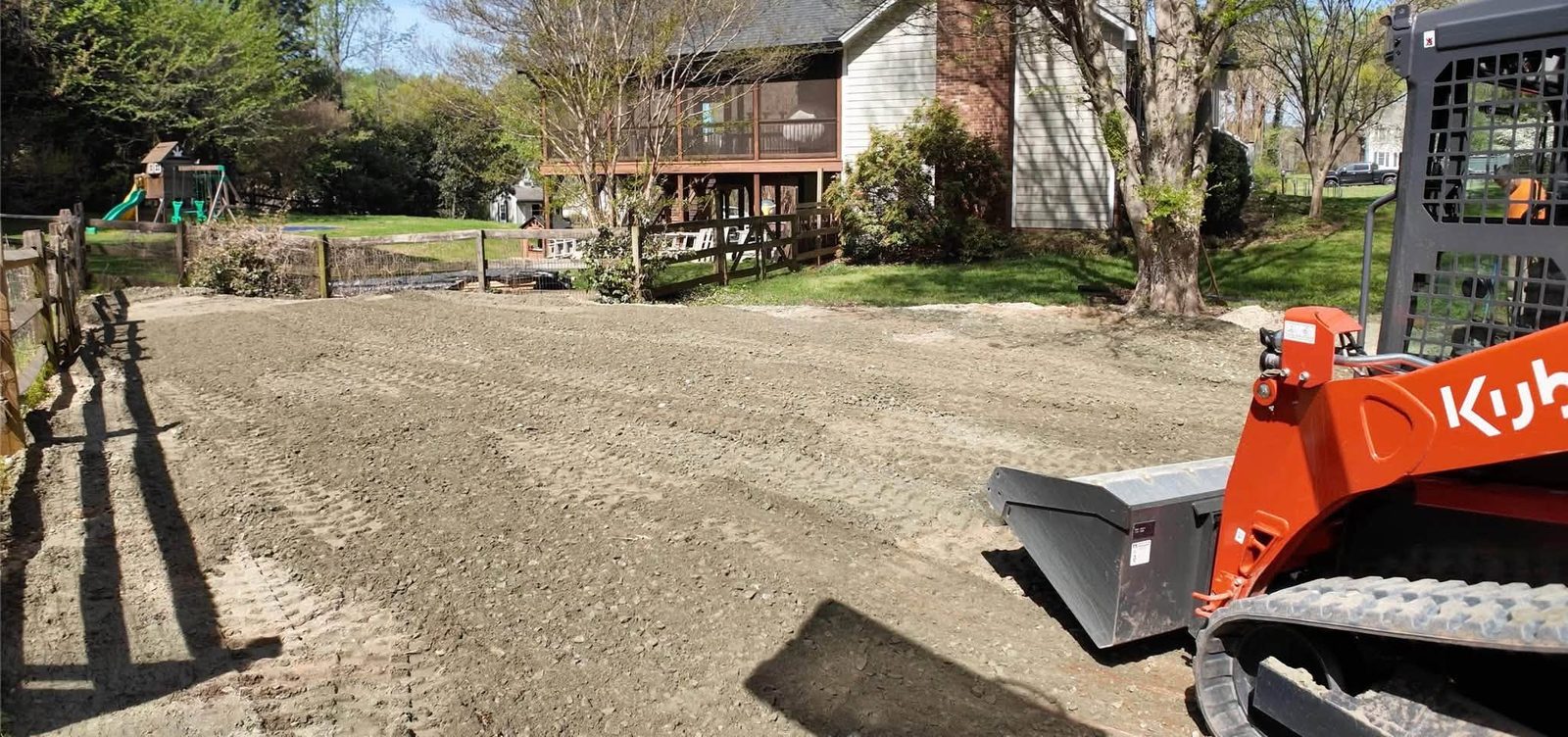
A cleared lot is the starting condition, not the finished product. In Kernersville, where lot slopes range from nearly flat creek-bottom parcels to rolling ground with five to eight feet of grade change across a standard residential footprint, the distance between trees down and build-ready pad can be measured in weeks and several thousand dollars of additional work. Rough grading to establish positive drainage, fine grading for a foundation pad, and connecting to existing storm infrastructure each require a separate scope, and the order those steps happen in matters considerably.
Water has to go somewhere before framing starts. Establishing drainage slope away from the future foundation is a sequencing decision made during grading, not corrected afterward. If you are clearing as the first step toward a build, bringing the site contractor and the builder into the same conversation before the clearing crew arrives avoids grade decisions that get redone at cost once a structural or civil engineer weighs in on the plan.