What red clay does to a clearing job in Davie County
Davie County sits squarely in the NC Piedmont, where rolling terrain and red clay soil define the landscape from one property line to the next. Mocksville — the county seat — anchors a mix of land types that reflects the county's recent history: old tobacco farms split into residential lots, established neighborhoods spreading outward along the US 64 corridor, timber tracts at the western edges being opened for development, and rural parcels carrying decades of fence lines, drainage ditches, and the occasional buried structure left over from agricultural use. When any of those properties gets cleared, it meets the same ground underneath.
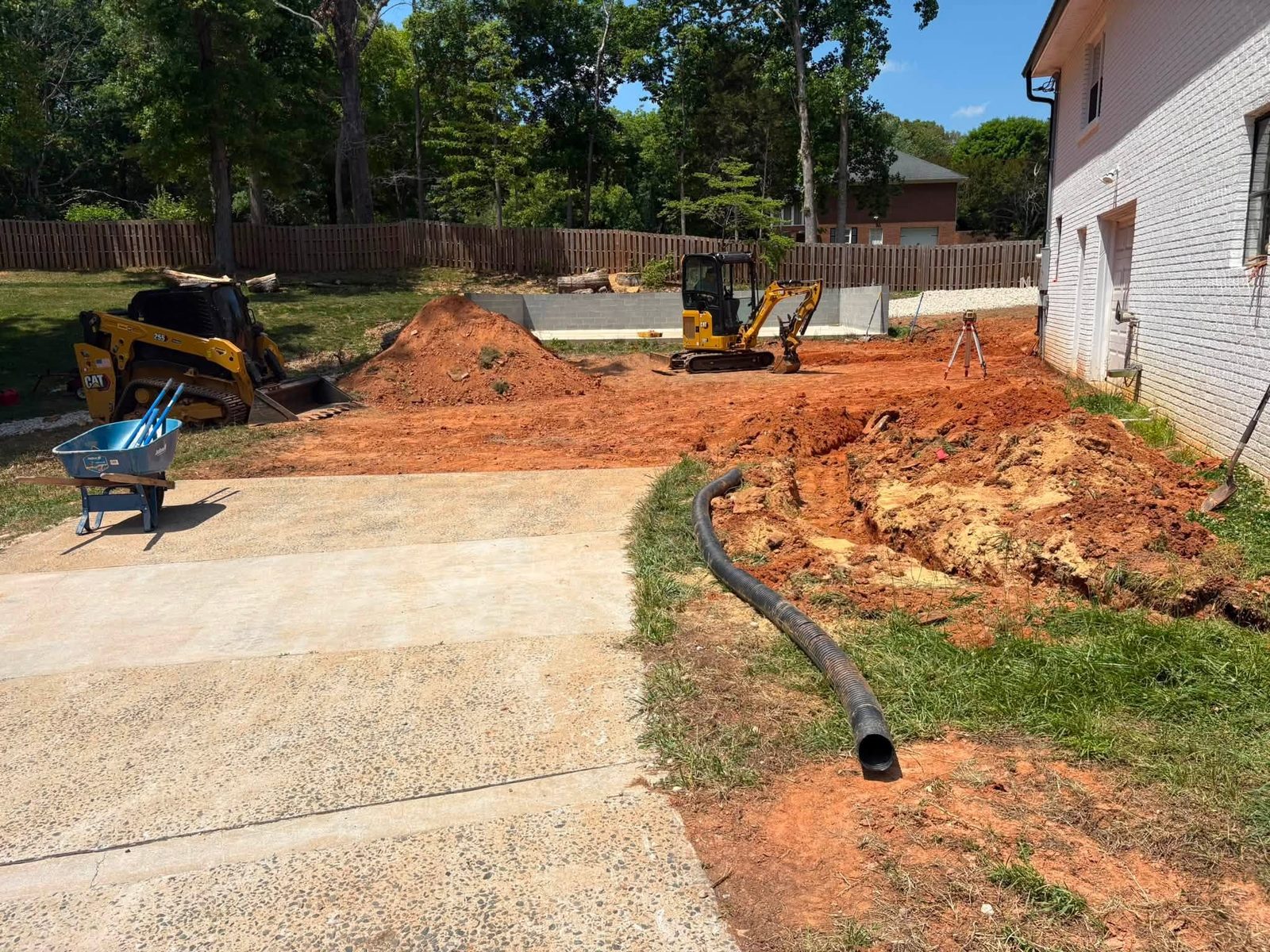
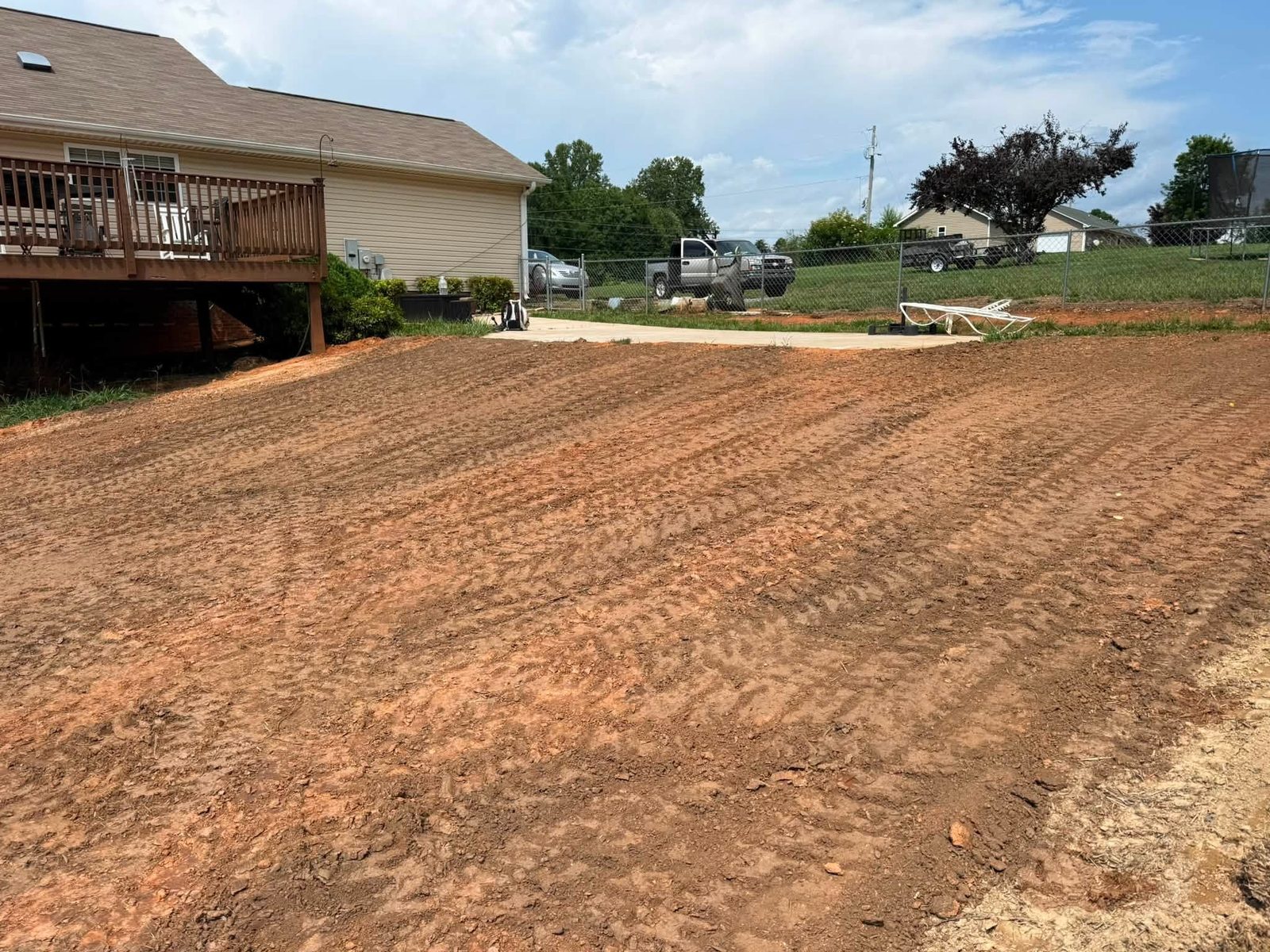
That red clay is the one thing about land clearing in Mocksville that separates a careful bid from a flat-rate one. Piedmont clay holds moisture differently than coastal sand and sheds water differently than mountain rock — when it's exposed, it becomes unstable fast. A hard rain on a freshly cleared Davie County slope doesn't wait for the crew to finish; it starts moving bare soil toward the nearest low point immediately. Contractors who have worked this ground know to install silt fencing, set drainage breaks, and apply temporary seed concurrent with the clearing itself, not as an afterthought. Crews who skip those steps are effectively transferring erosion liability to the property owner.
That sequencing matters enough in this county that it shapes what a proper quote looks like. A clearing bid without an erosion control line item is an incomplete bid — not a bargain. The land clearing service overview explains how a full-scope job is structured from initial site walk to finished ground.
Scope and cost on a Davie County residential lot
Most residential clearing in the Mocksville area follows a familiar arc: remove trees and brush, process or haul debris, and leave the lot ready for the next trade. What moves the price is tree density, stump count, how much rough drainage work the site needs, and — on old farm parcels especially — what aerial photos didn't show. Buried fence posts, remnant drain tile, old concrete pads, and unmarked debris from prior agricultural use add scope that only a site walk reveals. See the full cost breakdown for line-item detail on what drives each tier.
| Scope | Typical Range |
|---|---|
| Brush and light trees, under ½ acre | $750 – $1,500 |
| Light-to-moderate trees, 1 acre | $1,500 – $3,000 |
| Moderate clearing with stump grinding, 1 acre | $2,500 – $5,000 |
| Full clearing, stumps, and rough grading, 1 acre | $4,000 – $8,000 |
| Heavily wooded acreage, multiple acres | $8,000 – $10,000+ |
Debris disposal is the variable most people don't anticipate. Hauling adds cost; chip-and-spread saves it but isn't right for every lot. On a lot going to lawn, leaving ground material in place can cause nitrogen depletion as it decomposes — for those, haul-away or composting is the better call. Ask the contractor which approach suits your intended use before signing the scope.
Permits, sediment rules, and what triggers them
North Carolina's erosion and sediment control rules apply to any land disturbance of one acre or more — and in the Yadkin River watershed, which covers much of Davie County, proximity to drainage features can bring smaller jobs under review as well. The NC DEQ Erosion and Sediment Control program requires an approved E&SC plan before ground breaks on qualifying jobs, and in North Carolina that compliance obligation attaches to the contractor — which means owners who hire crews without confirming plan status can find themselves holding the violation notice.
At the scale of larger clearing projects — multiple acres with significant stormwater discharge — federal NPDES permitting through the U.S. Environmental Protection Agency adds a second layer. Contractors working at that scale should produce documentation for both state and federal requirements before equipment rolls on site.
Davie County's federal disaster record frames the stakes: 19 declared events spanning 1977-2026, predominantly storm and flooding family. Each of those events moved water across the landscape in ways that cleared and unprotected lots amplified. The sediment rules exist because bare Piedmont clay in a rain event creates downstream consequences that are slow and expensive to reverse. A contractor who asks about your property's drainage proximity before pricing the job is reading those rules correctly — and keeping you out of the part of the story that's hard to fix.
What a complete clearing bid looks like here
A realistic bid for Mocksville-area work should itemize: tree and brush removal, the debris disposal method (haul vs. chip-and-spread), stump grinding if applicable, erosion control installation (silt fence at minimum, temporary seed if the lot will sit exposed more than a few weeks), and rough drainage — meaning where water will move once the lot is open and how the contractor plans to manage it. Any of those items missing from a written scope is a conversation to have before signing, not after grading begins.
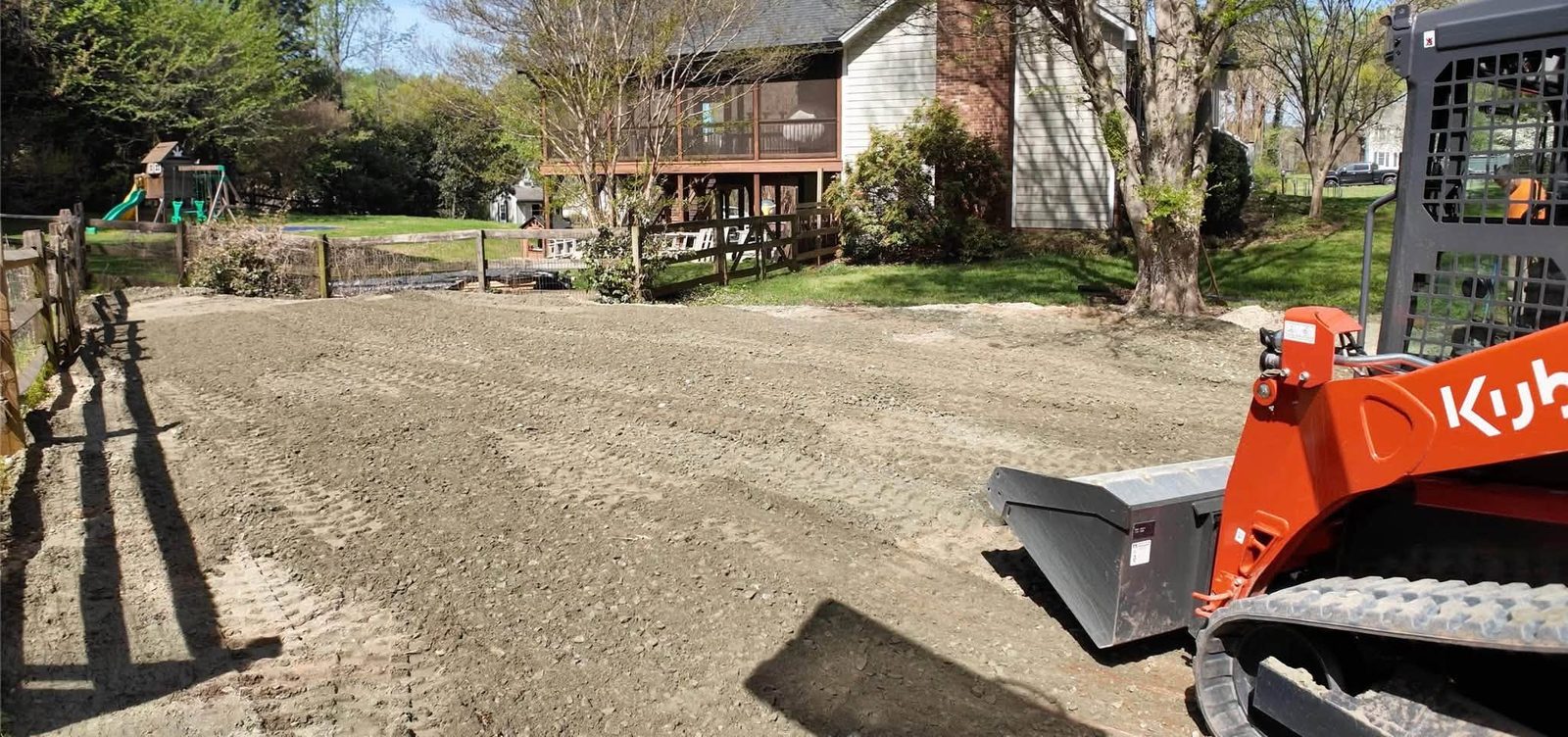
For lots that don't require significant re-grading, forestry mulching is worth discussing as an alternative. A mulching head grinds trees and woody brush in place and leaves a protective wood-chip layer directly on the soil — closing the erosion window that a traditional cut-and-haul job leaves open. It works well on Davie County lots going to lawn, pasture, or natural buffer where the terrain doesn't need engineered cut-and-fill work afterward. On lots with significant grade change or planned infrastructure, traditional clearing followed by grading typically gives the site prep team more to work with.
The old-farm factor bears repeating for this county: a meaningful share of Davie County residential lots were agricultural land within living memory, and agricultural land has a way of leaving things behind. A thorough pre-clearing site walk — and a contractor who flags what they find before they hit it — is worth every hour it takes. That conversation up front is what keeps a straightforward clearing job from turning into something else entirely.