Forsyth County gravel roads fail from the bottom up
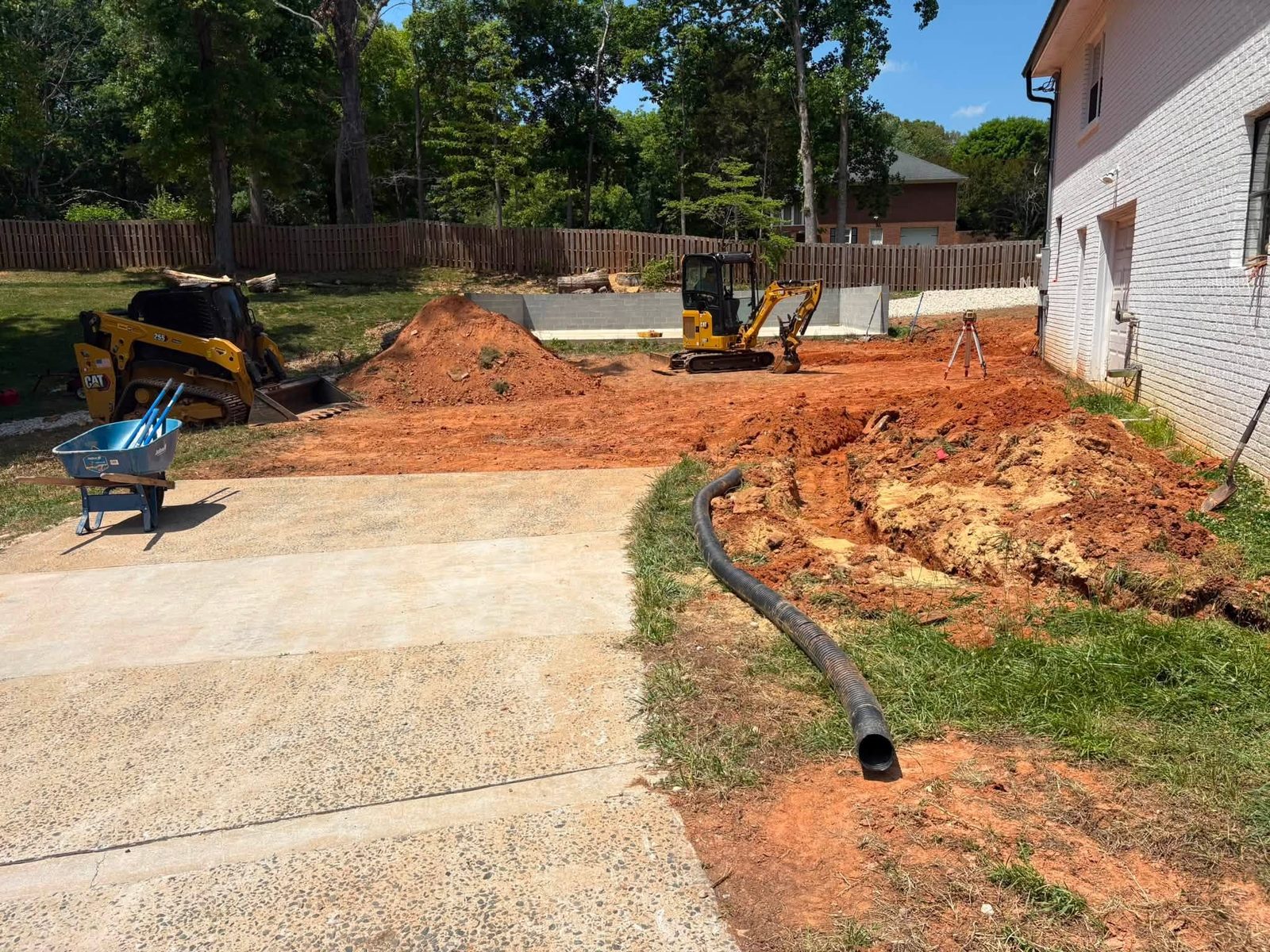
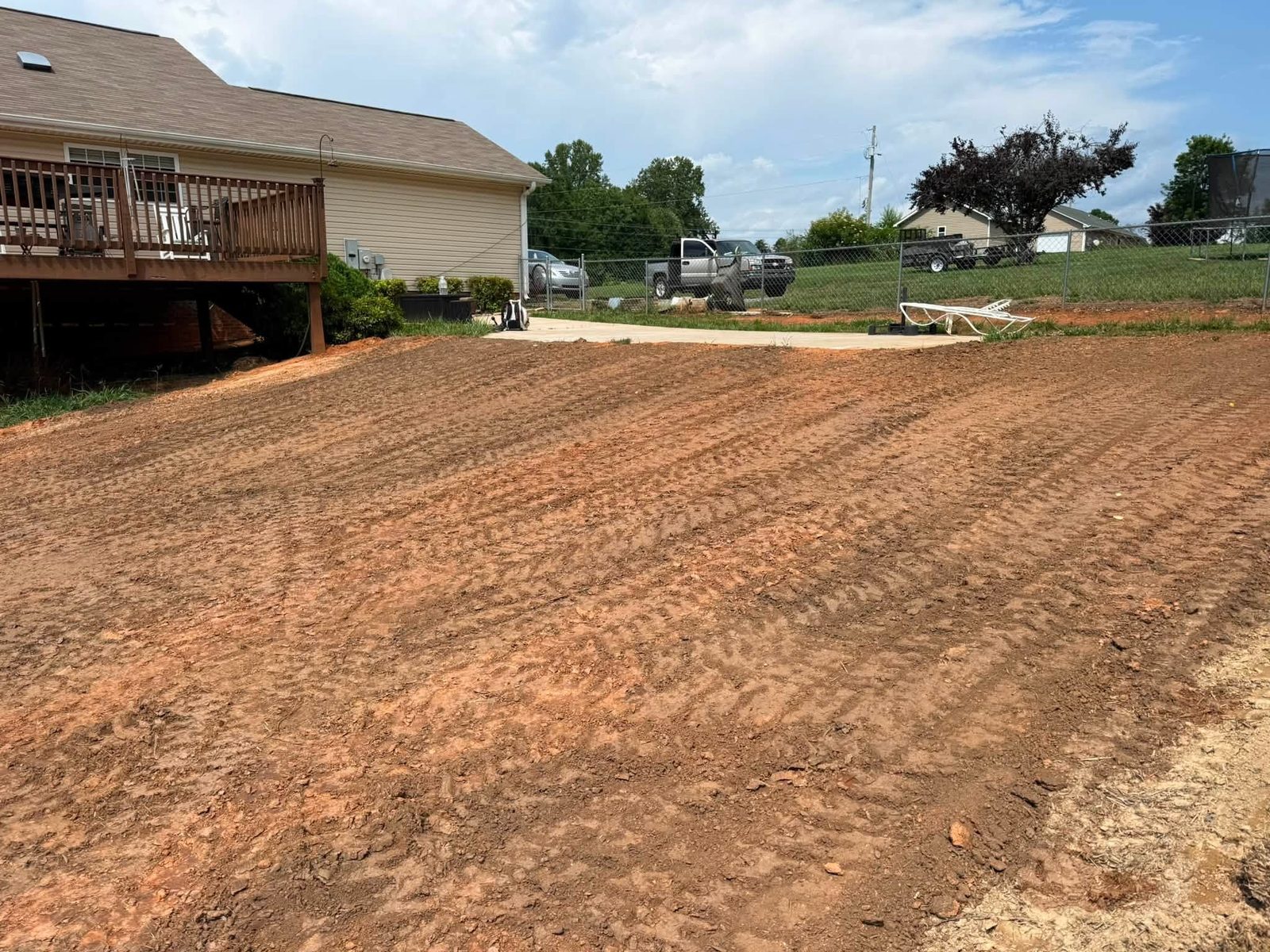
Winston-Salem sits squarely in the NC Piedmont, where the reddish-brown clay subsoil behaves unlike anything on the coast or in the mountains. That clay swells when saturated and contracts when it dries, and every gravel private road in Forsyth County is resting on top of it. The result: a road that looks like a grading problem on the surface is usually a drainage and subbase problem underneath. Patching the crown without addressing what the clay is doing below it produces a repair that fails inside a single wet season.
The roads that need the most attention in this area share a common profile: built with minimal aggregate depth over native clay, lacking a crowned profile that sheds water to both sides, and running alongside ditches that have silted in over years of use. Once those three conditions align, routine rainfall events start moving material fast — first shallow ruts along tire tracks, then edge sloughing, then sections where the gravel base is gone entirely and traffic is running on exposed subgrade. Forsyth County's mix of older rural residential parcels, horse properties along the county's western reaches, church campuses with long access drives, and newer long-driveway subdivisions off US-421 and US-158 all produce the same failure chain. The visible damage is typically the last thing that happened, not the first.
What the work costs around Winston-Salem
The full line-item breakdown lives in the private road repair cost guide, but here is how Forsyth County jobs typically break down by scope:
| Scope | Unit | Typical Range |
|---|---|---|
| Re-crown and regrade | per sq ft | $1 – $3 |
| Pothole and washboard repair | per sq ft | $1 – $2 |
| Ditch clearing and reshaping | per linear ft | $5 – $12 |
| Culvert replacement | per installation | $600 – $2,200 |
| Full section rebuild — washed-out base | per 100 linear ft | $4,000 – $10,000 |
| Gravel surface replenishment only | per ton, applied | $20 – $45 |
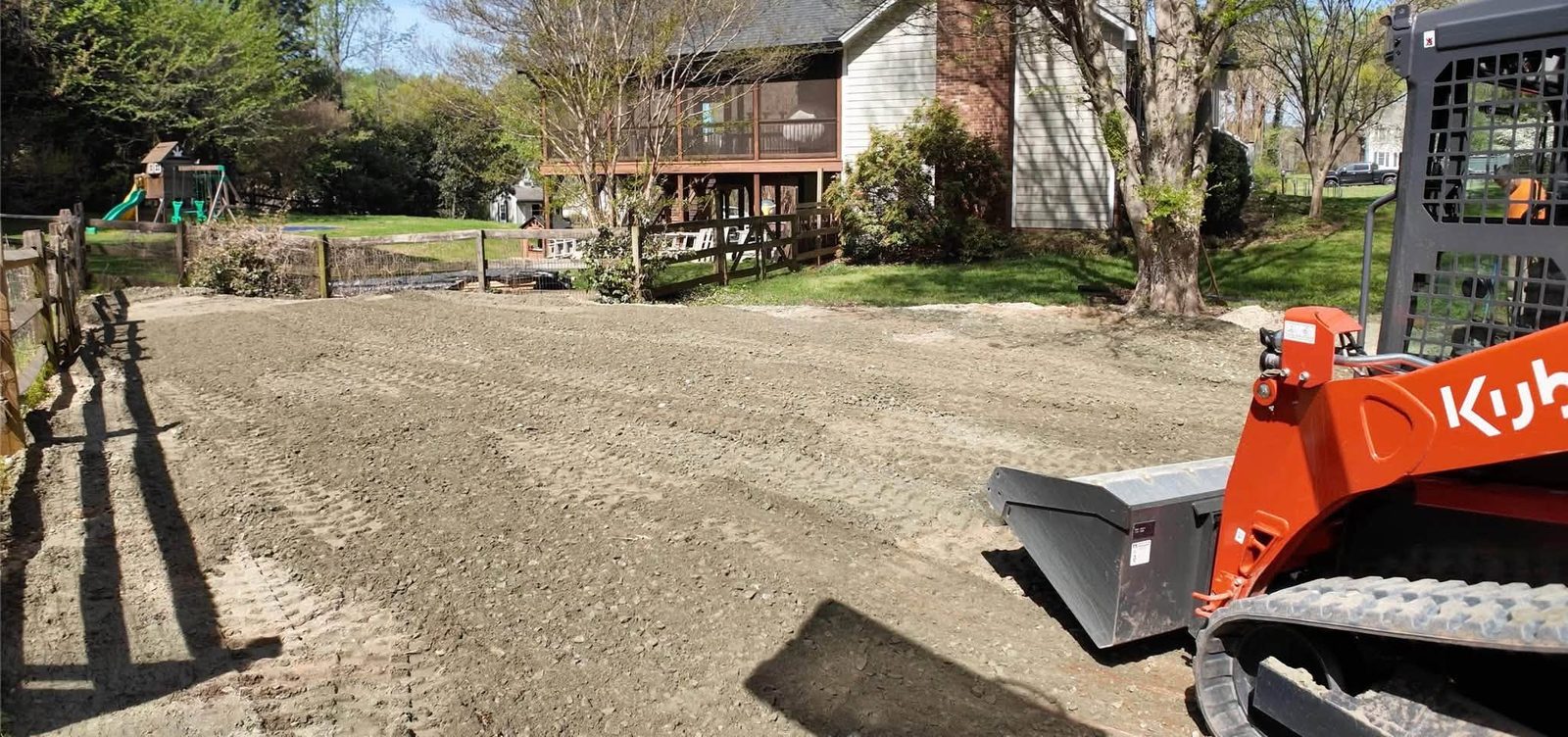
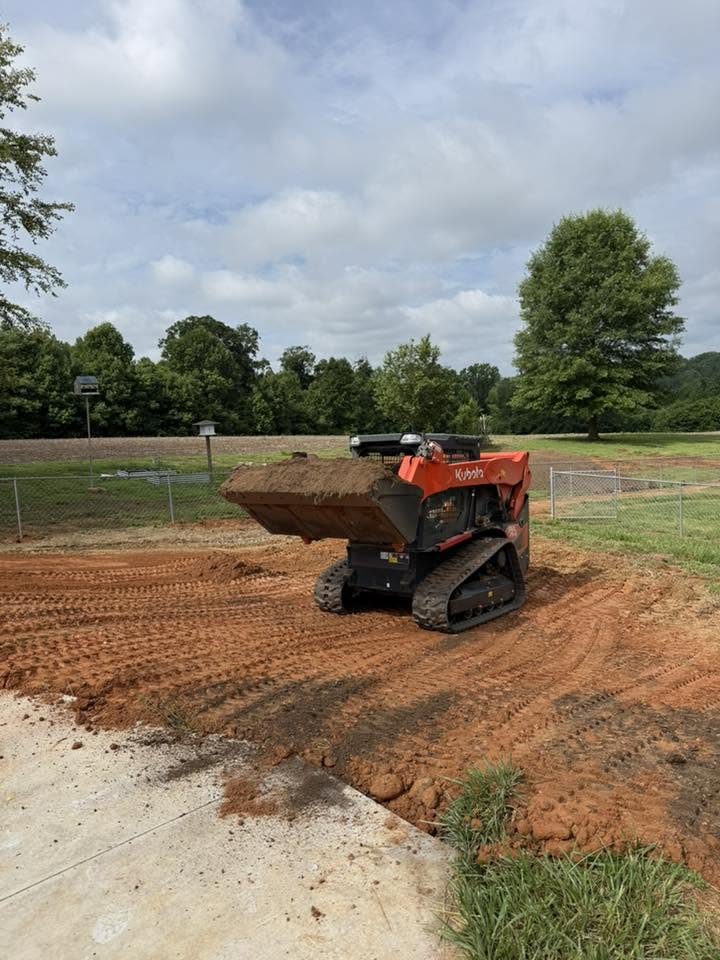
A few factors push jobs toward the top of these ranges on Piedmont clay ground. Subbase material that has fully saturated and lost bearing strength has to be removed and replaced, not just regraded — that moves a re-crown job into rebuild territory. Drainage work involving culvert replacement or extended ditch grading adds line items that a surface-only bid will not include. The re-crown range of $1 to $3 per square foot assumes a road whose base is structurally sound and whose failure is surface crown loss and gravel migration. Any base compromise shifts the conversation to the rebuild column.
Why drainage leads every repair in this county
Forsyth County has seen 22 federally declared disasters over 1977-2026, a record driven largely by storm and flooding events that pushed sustained water volume through drainage systems — including private road ditches and culverts built for lighter loads. Each of those events accelerates the failure timeline on roads that are already marginal on drainage.
The NC Department of Environmental Quality's erosion and sediment control program sets permit thresholds that apply directly to private road work: disturbances over one acre in most NC jurisdictions require an approved sediment and erosion control plan before grading begins (NC DEQ Erosion and Sediment Control). A 200-foot road graded 30 feet wide sits right at that edge; a longer reconstruction project will cross it. A contractor who proceeds without checking that calculation is not protecting you from a stop-work order. For properties near Muddy Creek, Salem Creek, Brushy Fork, or their tributaries, additional stormwater review applies. The FEMA Flood Map Service Center lets you check flood zone status for any Forsyth County parcel before you scope the project — a road in the AE zone gets repaired differently than one on upland ground, and the permit path differs as well.
Before the first blade pass: what a proper scope covers
A complete private road repair scope in Winston-Salem starts with reading the drainage, not the surface. A contractor who arrives, looks at the ruts, and quotes a gravel haul is answering the wrong question. The right first visit identifies where runoff enters the road corridor, how it currently exits (or fails to), and what profile correction will keep water moving off the road laterally rather than channeling down the centerline.
Three things to verify before signing: ask whether the scope addresses the full drainage path from crown to ditch to outlet, not just the visible damage zone; ask for the aggregate specification — Forsyth County's clay-heavy subgrade performs best under angular crushed stone rather than rounded river gravel; and confirm whether the project scope triggers any county or state permit requirements. The Forsyth County engineering offices handle questions about work that touches county-maintained infrastructure or regulated drainage easements. The NC Department of Insurance building codes division is the right contact for grading questions near structures or regulated areas.
The private road repair overview lays out standard scope expectations across job types and describes what a proper site assessment should document. If your primary complaint is surface texture — corrugation, washboard that develops within weeks of a rain, or shallow potholes — the pothole and washboard repair guide covers how to read whether that surface problem is standalone or a symptom of base and drainage failure beneath it.