Forsyth County clay and why drainage comes before gravel
The soils under most of Pfafftown fall in the Cecil-Pacolet clay series, a Piedmont staple that has been putting private road owners through the same cycle for generations. In wet months, the clay swells and softens the material beneath any aggregate cap. In dry months, it contracts and leaves the surface unsupported. The cumulative effect is a road that looks like it needs gravel when what it actually needs is crown and ditch work to move water away from the base.
This changes the order of operations on any private road repair in Pfafftown. A contractor who grades and tops the surface without first correcting where runoff concentrates is selling a repair that will fail on schedule. Forsyth County's rolling Piedmont terrain — the same topography that makes the area west of Winston-Salem feel rural even close to the city — gives water plenty of paths to find and undercut a road that isn't crowned right.
The federal disaster record for this county reflects what years of concentrated runoff can do: 22 declared events over 1977-2026, most of them storm and flood family. Every one of those events stressed private roads that were built without adequate drainage assumptions. The right starting point is always the drainage question. For a baseline on what the full scope involves, the private road repair overview covers how these jobs are typically structured.
What private road repair work actually includes
The repair scope on a Pfafftown private road depends almost entirely on how long a problem has been running. A road that has been properly maintained can often be brought back with regrading and a topping of fresh aggregate. A road that has gone several seasons without attention usually needs ditch work, culvert repair or replacement, and base correction before any surface material makes sense.
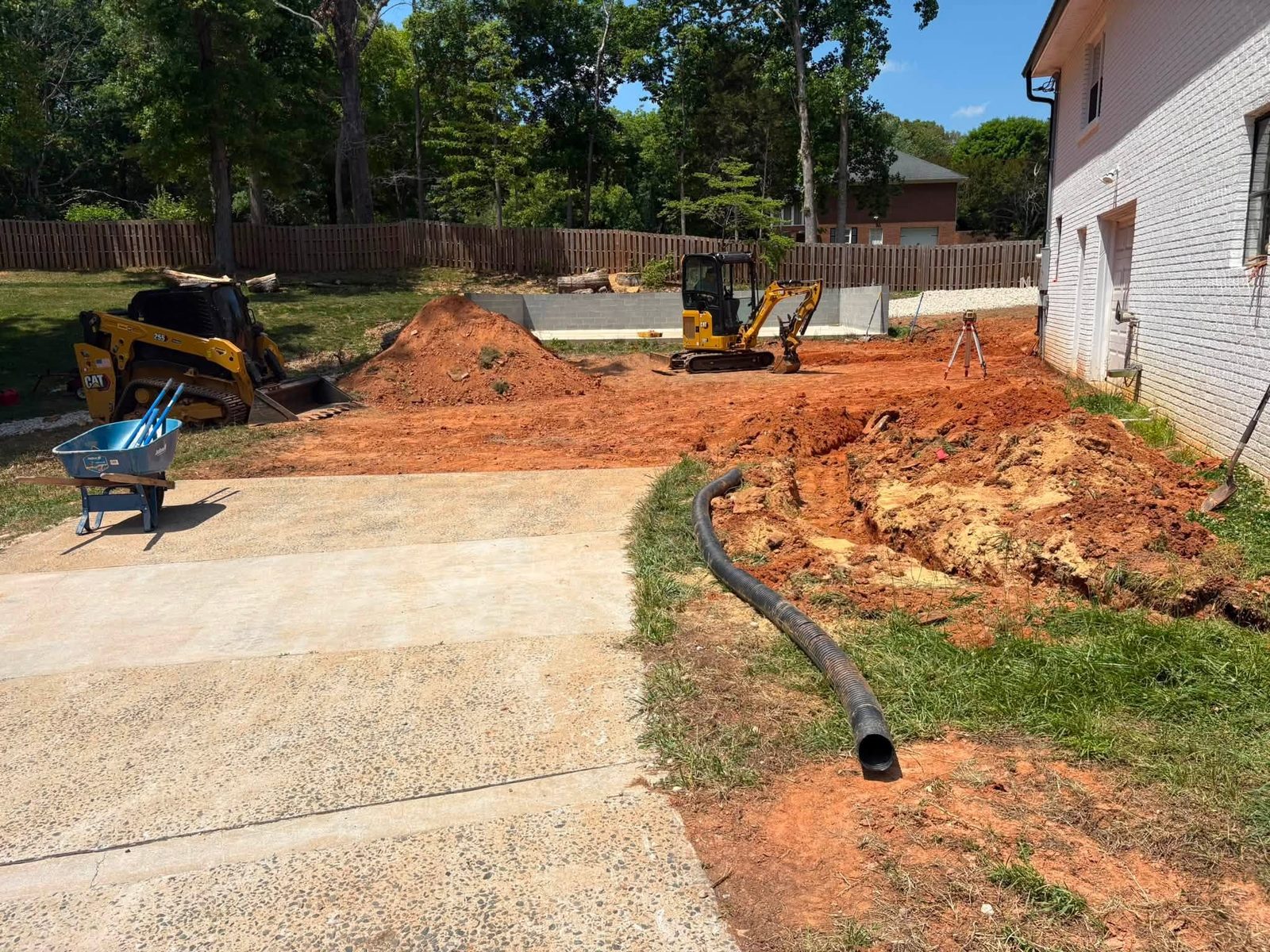
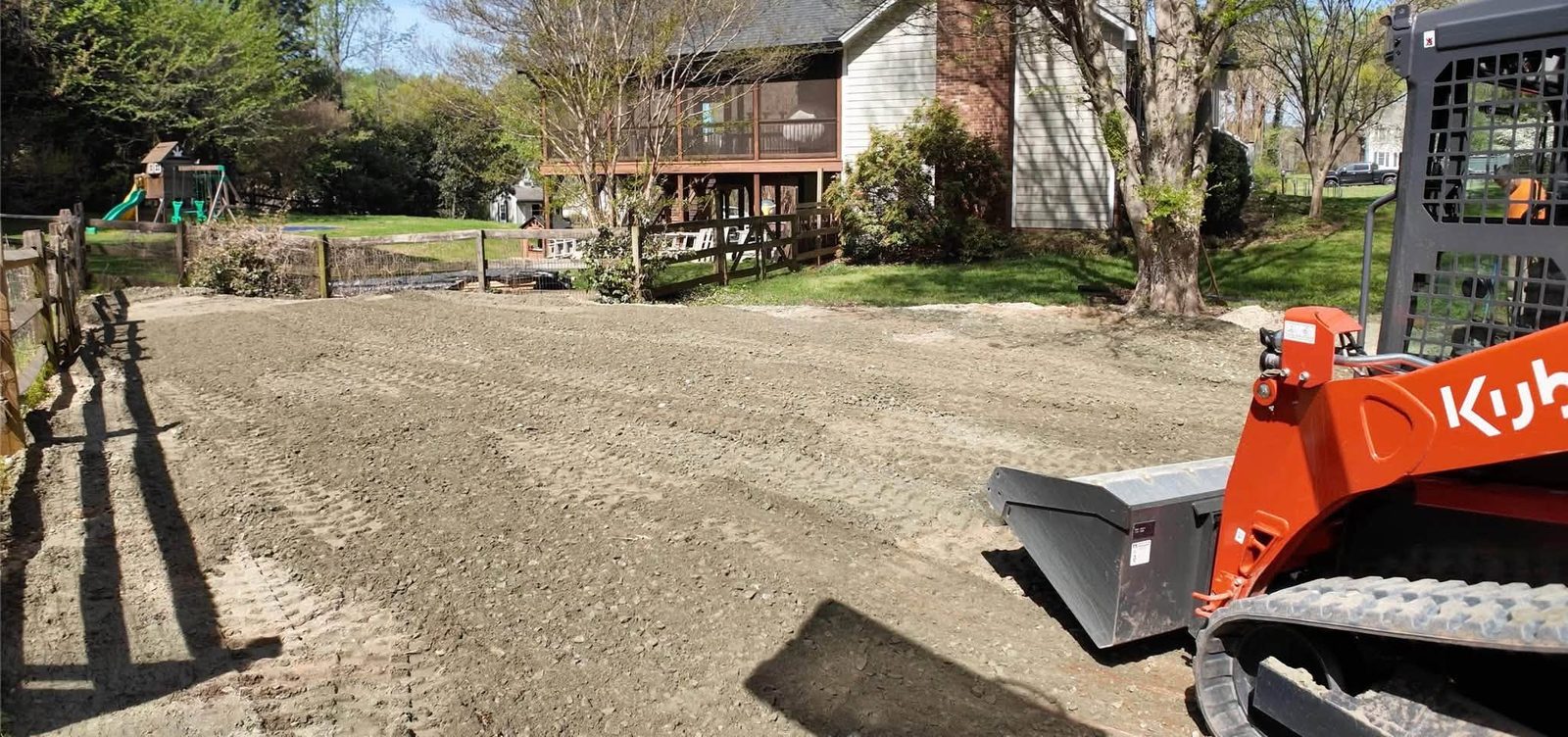
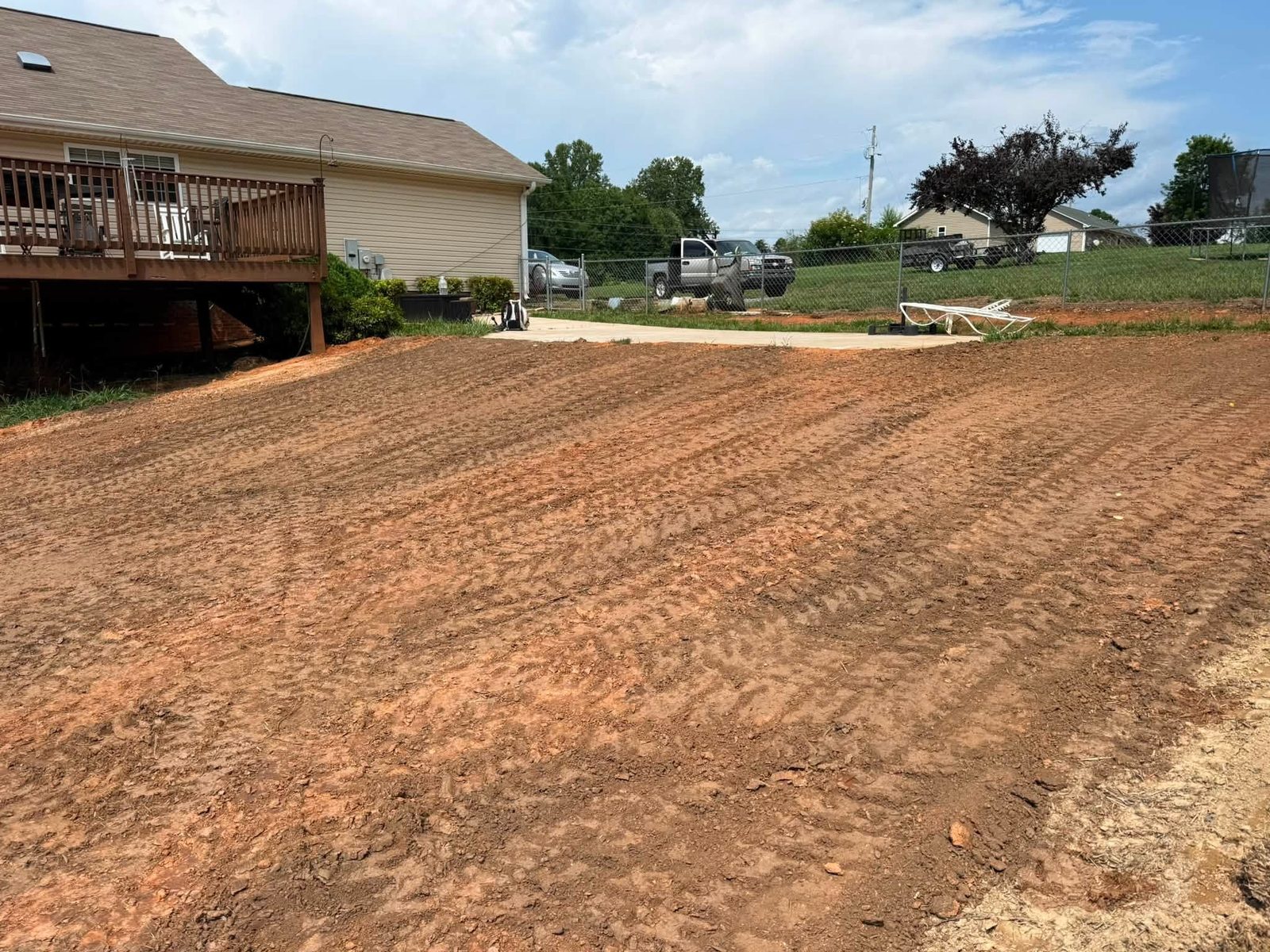
The line items that appear on most honest scopes: reshaping the travel surface to restore positive crown so water drains to the ditches rather than sitting in the wheel tracks, recutting roadside ditches that have filled with sediment or grown over, replacing undersized or collapsed culverts at crossings, and adding compacted aggregate where the base has thinned. On a job where washout has undercut the base entirely, geotextile fabric and structural fill come in before any stone goes down.
Potholes and washboard are the most common complaints, and they are symptoms rather than causes. Potholes form where the base has softened, typically beneath a low point that holds water. Washboard forms where surface fines have been disturbed repeatedly without enough coarse aggregate to stabilize them. The guide to potholes and washboard explains how to read which failure you have and whether regrading alone will address it or whether the base needs work first.
Cost by repair type: a working table for Pfafftown jobs
The ranges below reflect typical private road work in Forsyth County. Roads with steeper grades or proximity to drainage features tend to land toward the higher end; shorter jobs on flatter terrain with intact ditches can come in toward the lower end.
| Scope | Typical range | Primary cost drivers |
|---|---|---|
| Regrade and re-crown existing gravel road | $1–$3 per sq ft | Road width, length, depth of rutting |
| Add fresh aggregate topping (2–3 in.) | $1.50–$2.50 per sq ft | Haul distance, stone specification |
| Replace or add culvert | $800–$2,500 per structure | Pipe diameter, ditch depth, site access |
| Recut and clean roadside ditches | $4–$8 per linear ft | Vegetation density, depth required |
| Rebuild washed-out section (from subbase) | $4,000–$10,000 per 100 ft | Erosion depth, geotextile, fill volume |
Jobs that combine multiple line items — regrading the full road length, replacing culverts, and cleaning a stretch of ditch — add up quickly. The private road repair cost guide breaks down how to estimate a combined scope before calling for bids.
Erosion rules that apply once disturbance adds up
Land disturbance in North Carolina triggers state oversight once a project disturbs an acre or more of ground. For most routine private road repairs in Pfafftown — a culvert swap, ditch cleaning, or a regrade of an existing surface — that threshold is easy to stay under. A washed-out section rebuild or any job requiring equipment staging, fill stockpiling, or new alignment can approach or cross the one-acre mark faster than property owners expect, especially once you account for the full disturbed footprint rather than just the road itself.
The NC DEQ Erosion and Sediment Control program requires an approved plan before work begins on any project meeting the threshold. A contractor working without one on a qualifying job puts the property owner at risk of a stop-work order and civil penalties. For jobs near streams or in a FEMA-mapped flood zone, additional federal rules through the EPA's NPDES stormwater program may require a permit as well. Checking the FEMA Flood Map Service Center for your parcel takes a few minutes and can prevent a costly mid-project complication.
Forsyth County's planning and development resources are accessible through the county website. On jobs that are borderline on the acreage question, a contractor experienced in NC erosion requirements is the right first call before mobilizing equipment.
What to ask before a grading contractor starts
Private grading work in Forsyth County isn't licensed the way mechanical trades are, which means the quality gap between contractors is wide. The questions worth asking before anyone mobilizes: Does the scope include ditch work and culvert inspection, or only the travel surface? Does the contractor understand clay-soil base prep — specifically, whether to add geotextile before stone on a softened subgrade? And on jobs that may approach the one-acre disturbance threshold, can they produce or refer you to someone who can produce an erosion control plan?
NC building and grading requirements, administered through the NC Department of Insurance, govern when a licensed engineer must sign off. Most residential private road repairs don't require an engineer's stamp, but structural fill, a road crossing over a regulated stream, or any feature that functions as a retaining structure may. Asking that question early costs nothing; discovering the requirement mid-project costs real money.
Road-sharing situations, where multiple property owners rely on a common private drive, add a coordination layer that the repair itself doesn't resolve. Confirming easement language and cost-sharing expectations before a contractor mobilizes tends to produce far better results than each owner calling separately and comparing notes after the fact.