Clay subgrade is Davie County's road variable
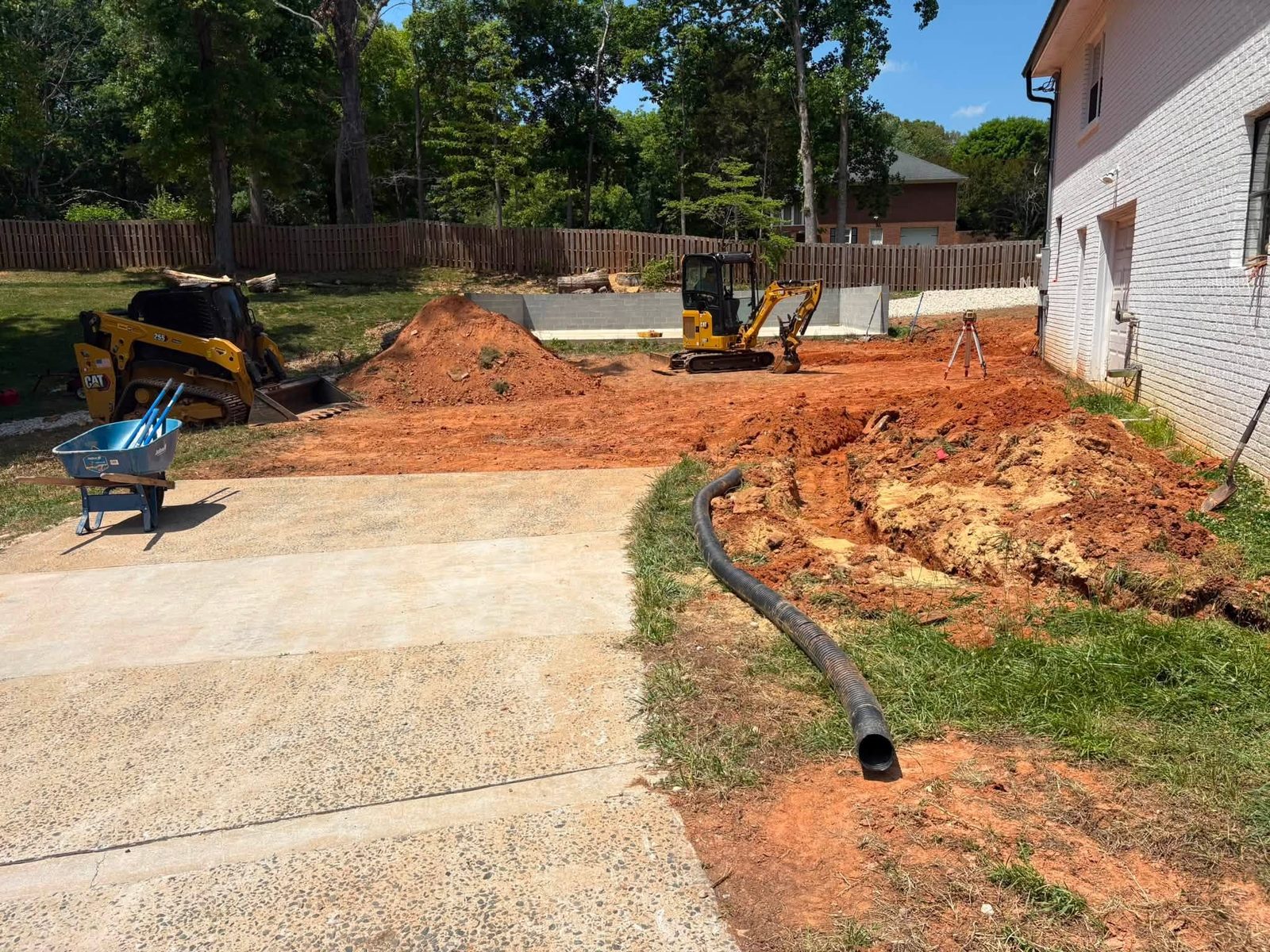
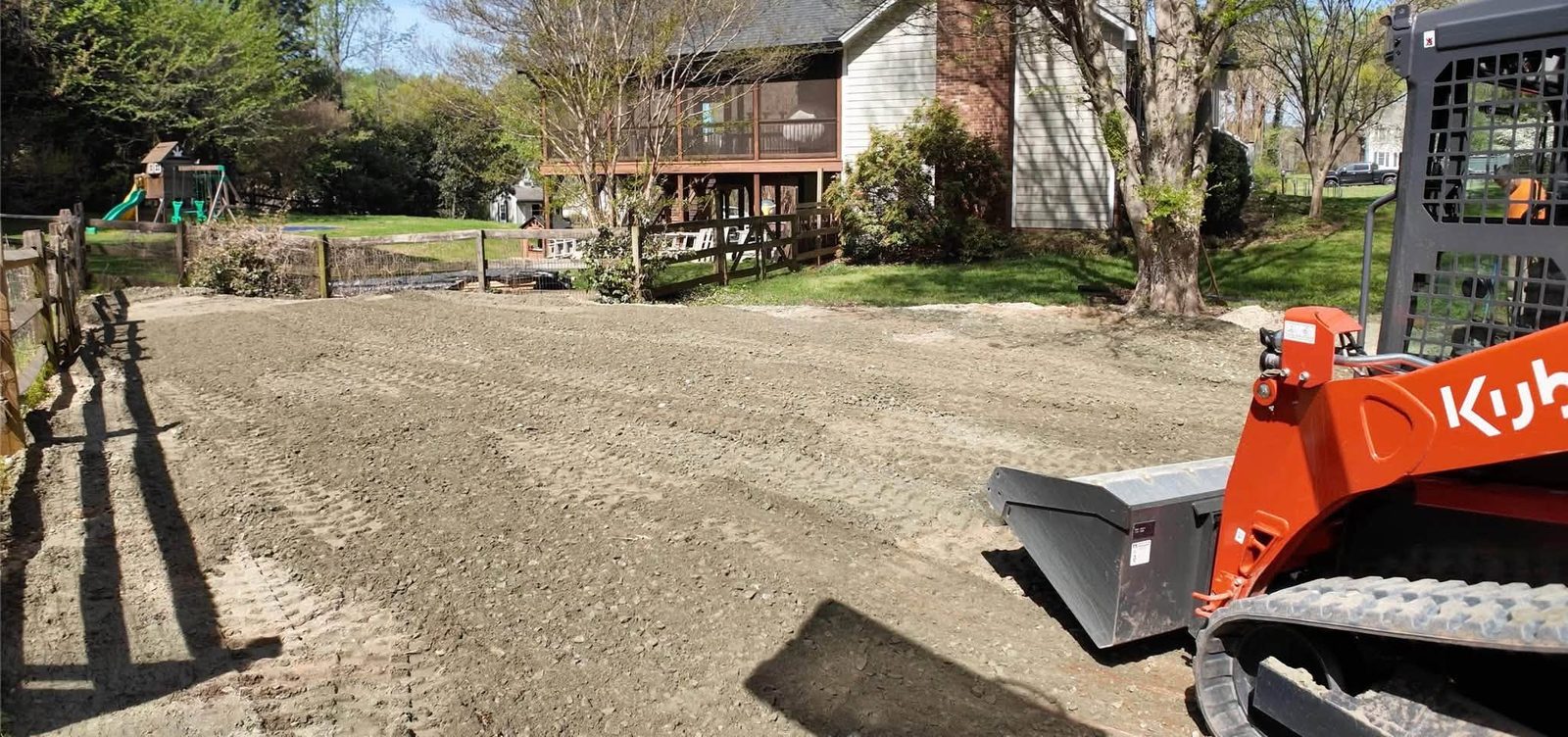
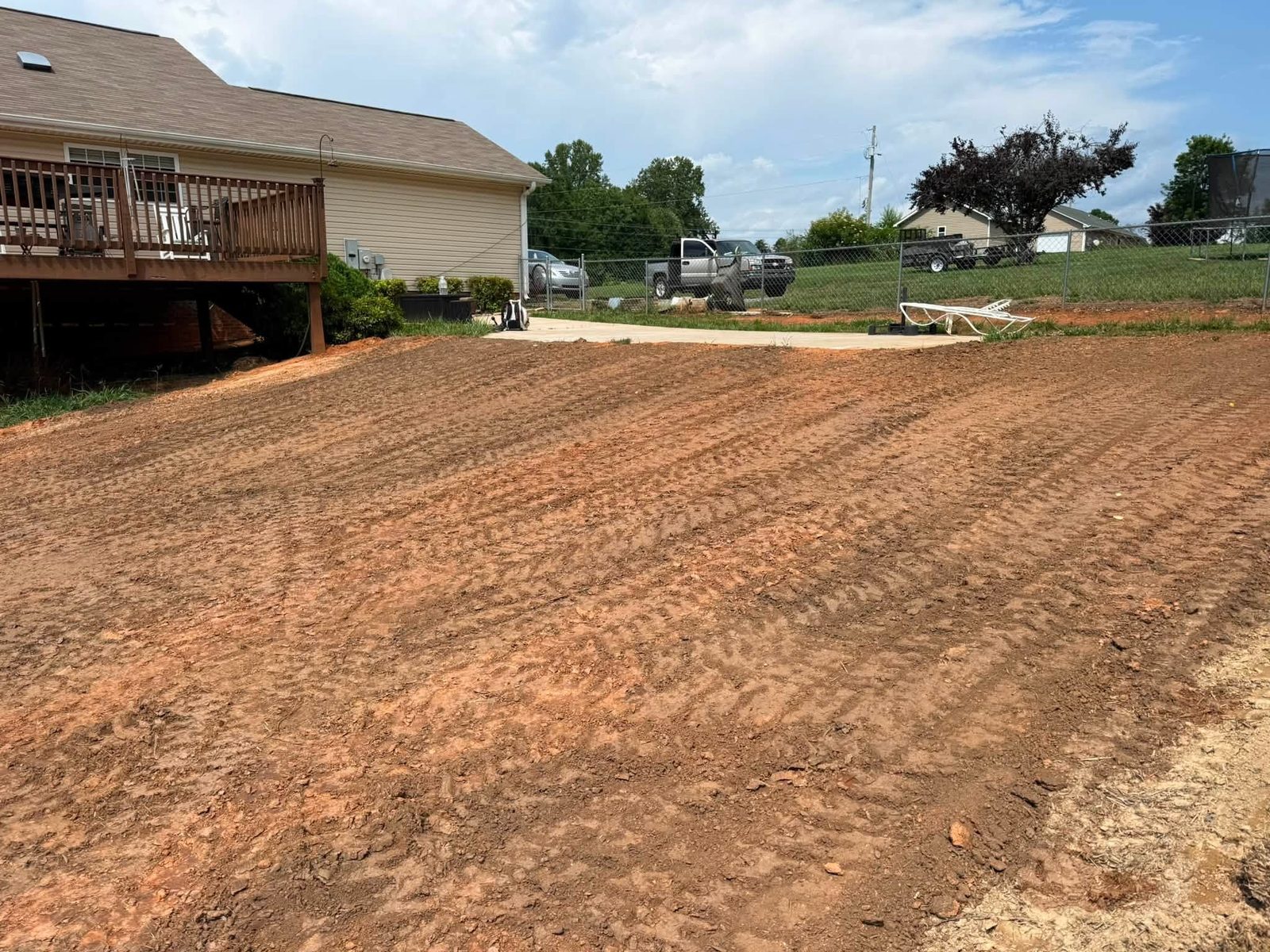
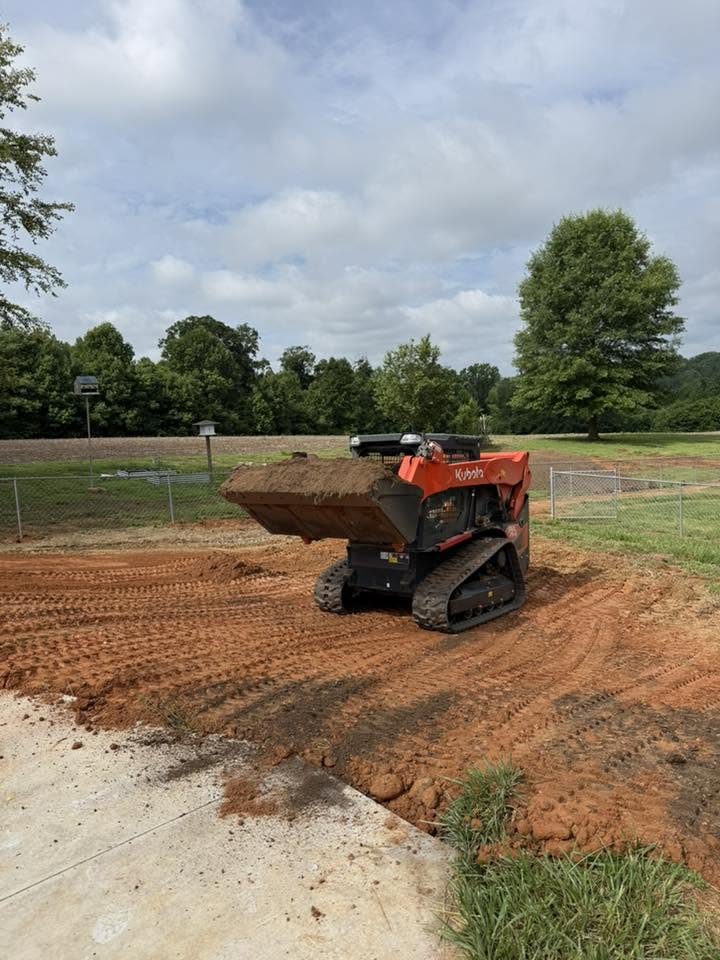
Davie County sits in the NC Piedmont, where the subsoil runs red clay through most rural properties north and south of Mocksville. That geology is what makes the farmland productive and what makes private road repair here a different job than the same work in the sandier coastal counties to the east. A gravel road built on clay subgrade cycles predictably: wet winters soften the base and heave the surface, dry summers bake it hard and corrugate it under repeated passes, and each season of traffic grinds aggregate down into the clay layer until the road has less structural material than when it was built. The result is not a worn road — it is a failed one, and restoring it requires base work, not just more stone on top.
Davie County's private roads fall into a few recognizable types. Farm access lanes off NC 801 and US 64 near Advance, Farmington, and Cooleemee are often the oldest and least maintained — they carry traffic year-round but rarely have a formal upkeep budget. Shared drives splitting off county roads in the rural fringes were frequently never built to a real specification and show it over time. Rural subdivision roads — created when large tracts were divided but never offered to NCDOT for adoption — are a growing category, and they sometimes require documented right-of-way information before physical work can begin. The private road repair overview covers when NCDOT adoption is a realistic path and when private maintenance is the permanent answer for your road.
What repair actually costs in the Mocksville area
Most private road repair projects in and around Mocksville fall into one of four scope categories. The ranges below reflect current area conditions — Piedmont clay subgrade pushes many projects toward the upper end of each band, because the surface problem you can see often has a base problem underneath it that you cannot.
| Scope | Typical Range |
|---|---|
| Pothole fill and spot leveling | $200 – $800 per event |
| Regrade and recrown (stable base) | $1 – $3 per sq ft |
| Drainage correction (ditch regrading, culvert replacement) | $800 – $2,500 per culvert run |
| Full section rebuild (failed base, washed-out lane) | $4,000 – $10,000 per 100 linear feet |
The clay caveat applies most sharply to the regrade line. A road quoted at $1–$3 per square foot after a walk can shift toward the rebuild column once a blade opens the surface and the base proves shallow — two inches of degraded aggregate sitting directly on raw clay is not an uncommon finding on Davie County farm lanes. The way to avoid a mid-job scope change is a proper base assessment before any price is set, not after. For a full breakdown by road type, drainage condition, and linear footage, the private road repair cost guide carries the complete range table with notes on what drives each line item. The single most common inflation factor in this county: clay subgrade that has never been fabric-stabilized or properly modified. Placing fresh ABC stone over unstabilized clay without correcting drainage gives you a road that holds for one dry season and fails at the next sustained wet spell.
Water, runoff, and the regulatory picture
Davie County has recorded 19 federal disaster declarations spanning 1977-2026, and the Yadkin River corridor running through the western part of the county has seen the kind of sustained flooding that tests every drainage assumption a private road was originally built on. Water does not damage roads arbitrarily — it reveals how they were designed. A culvert sized for a moderate storm that now sits in a frequently flooded reach, a ditch that has silted over across years of unmaintained roadsides, or a crown that has flattened until the road sheds nothing laterally: each of those conditions tells a different repair story, and identifying which one applies is the first step of any honest scope.
On the regulatory side, any grading disturbance exceeding one acre in North Carolina triggers permitting requirements under NC DEQ's Erosion and Sediment Control program. Most residential private road repairs stay well below that threshold, but a full-length rebuild on a shared road serving multiple parcels can cross it, and the contractor needs to know before mobilizing. Projects that discharge stormwater to a regulated stream or jurisdictional wetland may also require coordination under U.S. EPA stormwater and NPDES standards — Davie County's creek crossings and farm pond outfalls make this a real consideration on some rural properties. Roads that cycle between washboard and potholes each wet season trace almost always to drainage rather than aggregate; the potholes and washboard diagnostic covers how to read the failure pattern before settling on an approach.
How to hire for a Piedmont clay road
Three questions separate a contractor who understands Davie County conditions from one pricing the surface and hoping. First, what does the base look like? A contractor who writes a number after a surface walk without probing or trenching to verify base depth is pricing what they hope to find. On Piedmont clay, base depth and subgrade condition are not visible from above, and the only way to know is to look. Second, how is drainage addressed in the bid? Crown restoration, ditch regrading, and culvert outlet protection are not add-on line items on a clay-subgrade road — they are core to the repair holding past one season. A bid without those items is not a complete bid, and a lower number that omits them will cost more over three years than a complete bid costs today. Third, what is the erosion control plan? Under the NC DEQ erosion and sediment control program, any contractor disturbing ground in North Carolina should answer this question immediately and specifically — silt fence placement, check dam locations, and stabilized construction entrances are part of the job from mobilization, not an afterthought added if someone asks.
North Carolina contractor licensing thresholds apply to grading and earthwork at defined scope and dollar levels. Verifying that any contractor you authorize is properly licensed for what they are quoting is worth the time it takes before signing. A crew with real Piedmont clay subgrade experience and correct licensing is worth the difference in number over someone who has not worked this soil type before.